Where Does Faucet Water Come From
Your faucet water comes from natural sources like groundwater stored in aquifers and surface water from lakes, rivers, and reservoirs.
These sources undergo assessments to guarantee quality and availability.
At treatment plants, water is filtered, chemically treated, and disinfected using methods like chlorination and ultraviolet light to remove contaminants and pathogens.
Regular testing maintains safe standards, despite seasonal variations affecting supply quality.
Understanding this process reveals how your water is carefully managed from source to tap.
Where Does Faucet Water Come From?
Although it may seem simple, the water that comes out of your faucet undergoes a complex journey. You receive water primarily sourced from two types: groundwater sources and surface water.
Groundwater sources involve water stored beneath the earth’s surface in aquifers, accessed through wells. Surface water, on the other hand, comes from lakes, rivers, and reservoirs. Both sources require rigorous assessment to guarantee quality and availability.
Water originates from underground aquifers and surface bodies, each needing careful quality and availability checks.
Your local water system monitors these sources continuously to manage supply sustainably, considering seasonal fluctuations and contamination risks. Understanding the distinction between groundwater and surface water is essential because each demands specific treatment methods before reaching your tap.
This precise sourcing and management guarantee that the water you use daily meets safety and quality standards consistently.
How Do Natural Sources Supply Faucet Water?
Because natural sources like rivers, lakes, and underground aquifers constantly interact with environmental factors, they supply faucet water through dynamic processes that involve collection, filtration, and treatment. You rely on both surface water and groundwater sources, each contributing uniquely.
Surface water gathers in open bodies, subjected to atmospheric and biological influences, while groundwater sources reside in aquifers, naturally filtered by soil and rock layers. Understanding their characteristics helps manage supply effectively.
| Source Type | Key Feature |
|---|---|
| Surface Water | Exposed, variable quality |
| Groundwater | Filtered, stable quality |
| Collection | Reservoirs, wells |
| Filtration | Sediment removal |
| Treatment | Disinfection, purification |
This table clarifies how natural water sources differ and support the faucet water supply.
What Happens at Water Treatment Plants?
At water treatment plants, you’ll first encounter a filtration process that removes suspended particles and impurities.
Next, disinfection methods like chlorination or UV light eliminate harmful microorganisms to guarantee safety. Understanding these steps helps you grasp how raw water transforms into potable water.
Water Filtration Process
When water arrives at a treatment plant, it undergoes several carefully controlled steps to remove contaminants and confirm safety. First, sediment removal eliminates large particles through physical filtration technologies like screens and settling tanks.
Next, chemical treatments adjust pH and coagulate fine particles, enhancing filtration efficiency. You’ll see filtration systems employing activated carbon to adsorb organic compounds, improving taste and odor while reducing water contaminants.
Advanced methods such as reverse osmosis further purify water by forcing it through semipermeable membranes, removing dissolved solids and microscopic impurities. These layered filtration technologies work synergistically to guarantee that water meets stringent quality standards before distribution.
Disinfection Methods Used
Although filtration removes many contaminants, water treatment plants rely on disinfection methods to eliminate harmful microorganisms that filtration alone can’t address. You’ll find chlorination methods widely used due to their effectiveness in killing bacteria and viruses and providing residual protection within distribution systems.
Ultraviolet disinfection offers a chemical-free approach, using UV light to disrupt microbial DNA, rendering pathogens inactive without altering water chemistry. Ozone treatment serves as a powerful oxidant, rapidly inactivating microorganisms and breaking down organic compounds, though it requires on-site generation and careful handling due to ozone’s instability.
Additionally, reverse osmosis, while primarily a filtration process, contributes to disinfection by physically removing dissolved microbial contaminants at a molecular level. Together, these methods guarantee the water you receive at your faucet is microbiologically safe and meets stringent regulatory standards.
How Does Treated Water Reach Your Home?
Once water has undergone treatment to remove contaminants, it travels through a network of pipes and pumps designed to maintain pressure and quality as it moves toward your home. This water distribution system relies on an extensive pipeline infrastructure that spans underground and above ground, connecting treatment facilities to residential areas.
Pumps regulate flow and pressure, ensuring consistent delivery despite changes in demand or elevation. Valves and sensors within the pipeline infrastructure monitor flow rates and detect leaks to maintain system integrity.
As water approaches your neighborhood, smaller distribution mains branch off to service individual streets and eventually your home’s service line. This precise engineering safeguards treated water quality while optimizing delivery efficiency, so you receive clean, safe water directly from the municipal supply to your faucet without interruption or contamination.
Why Is Water Quality Testing Important?
Because water quality directly affects your health and safety, regular testing is essential to identify contaminants that might compromise its purity. Testing methods detect a range of potential contamination sources, such as industrial runoff, microbial pathogens, and chemical pollutants, ensuring water safety.
By adhering to regulatory standards set by public health authorities, water providers maintain quality within acceptable limits. You benefit from increased consumer awareness, which empowers you to make informed decisions regarding your water use.
Additionally, water quality testing helps mitigate environmental effects by monitoring pollutants that could harm ecosystems. Understanding these factors highlights the critical role of systematic water analysis in protecting both individual health impacts and broader public health outcomes.
Without consistent testing, contamination risks remain undetected, posing serious threats to you and your community.
How Do Seasonal Changes Affect Your Faucet Water?
Seasonal changes greatly influence the quality and composition of your faucet water by altering temperature, precipitation patterns, and runoff levels. These factors cause a seasonal impact that varies regionally, affecting groundwater levels and surface runoff, which feed water sources.
You’ll notice shifts in water temperature and changes in water demand that stress local supplies. Ecosystem changes during different seasons also affect water chemistry and clarity.
Key factors include:
- Variations in precipitation patterns, increasing or decreasing water availability
- Changes in groundwater levels due to recharge rates and water extraction
- Surface runoff fluctuations impacting sediment and contaminant loads
Understanding these dynamics helps you appreciate how your water supply adapts to natural cycles and regional variations throughout the year.
Frequently Asked Questions
Can I Drink Faucet Water During a Boil Advisory?
You shouldn’t drink faucet water during a boil advisory because it may contain harmful pathogens.
Boiling water eliminates health risks by killing bacteria and viruses, ensuring your water is safe for consumption until the advisory lifts.
How Can I Improve the Taste of My Faucet Water?
You can improve your faucet water’s taste by using water filtration systems; studies show 85% of households report better flavor this way. Additionally, adding natural taste enhancers like lemon or cucumber can scientifically reduce off-flavors effectively.
Are There Common Contaminants Not Removed by Treatment Plants?
Yes, you’ll find some treatment methods don’t fully remove lead contamination or certain chemicals.
You should consider additional filtration systems, as standard treatment plants focus mainly on pathogens and common pollutants, not all heavy metals or industrial compounds.
How Often Should I Clean My Faucet Aerator?
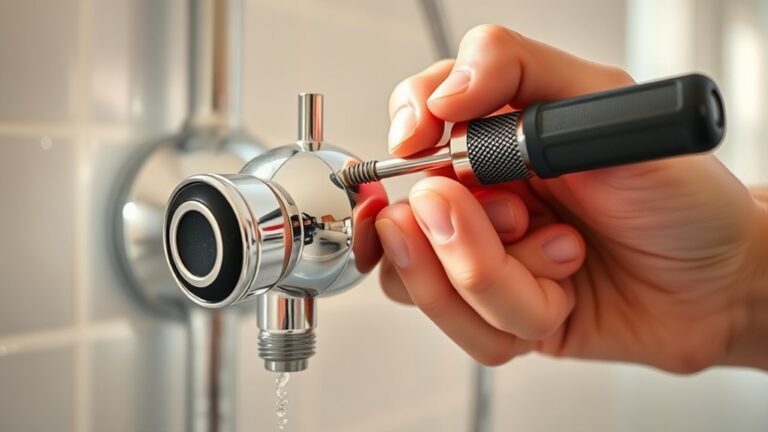
Think of your faucet aerator as a tiny filter battlefield; for ideal aerator maintenance, you should clean it every three months. This cleaning frequency prevents mineral buildup, ensuring precise water flow and maintaining your faucet’s efficiency scientifically.
Does Faucet Water Contain Fluoride for Dental Health?
Yes, your faucet water often contains fluoride, which provides proven fluoride benefits by strengthening tooth enamel and reducing decay. This addition supports dental safety, making tap water a practical, scientifically backed resource for oral health.