Can You Paint Faucets
Yes, you can paint faucets, but success depends on the finish type and proper preparation.
You’ll need to thoroughly clean and sand the surface, especially if the faucet is chrome or brass, to ensure primer and paint adhesion.
Using high-quality, oil-based spray paint designed specifically for metal will give you the best coverage and durability.
Proper curing and gentle cleaning afterward will help maintain the finish over time.
If you want to achieve professional-looking results and extend your faucet’s lifespan, it’s important to understand the full process and materials involved.
Taking the time to follow each step carefully makes all the difference.
Can You Paint Faucets? Which Finishes Work Best?
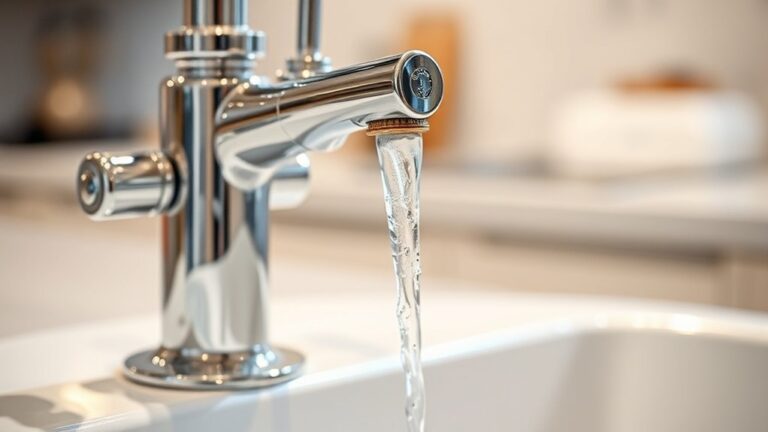
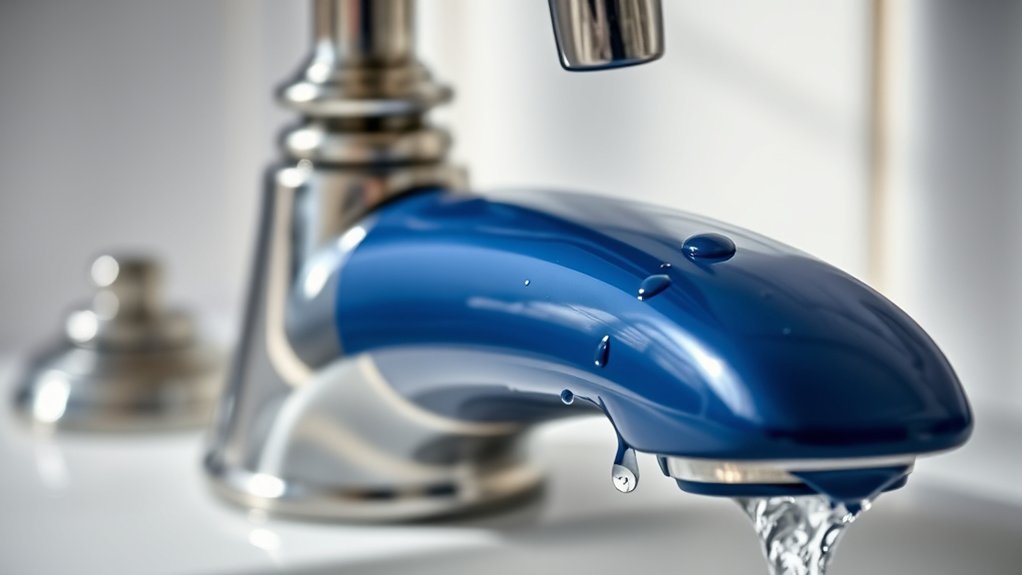
When considering whether you can paint faucets, the answer is yes, but success depends heavily on the finish type. Different faucet types, such as chrome, brass, or matte, each require specific paint techniques for ideal adhesion and durability.
For example, smooth chrome finishes demand thorough surface preparation and the use of specialized primers designed for non-porous metals. Matte and textured finishes can sometimes allow direct painting with less prep but still benefit from primer to guarantee paint longevity.
You’ll want to select high-quality, moisture-resistant paints formulated for metal surfaces. Understanding your faucet type is essential to choosing the right paint technique, whether spray application for even coverage or brush application for detailed areas.
Proper paint selection and technique tailored to the faucet finish ultimately determine the quality and lifespan of your painted faucet.
How to Properly Prepare Faucets for Painting
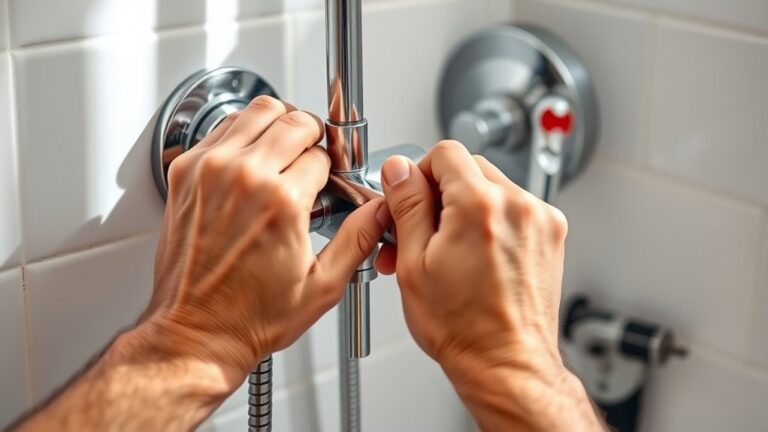
Understanding the finish of your faucet guides the surface preparation steps you’ll need to take before painting. Different faucet materials require tailored surface preparation to guarantee proper paint adhesion and durability.
Begin by cleaning the faucet thoroughly to remove oils and debris. Next, sand the surface lightly to create a rough texture. Finally, wipe down the faucet to remove dust before applying primer.
| Faucet Material | Surface Preparation Step |
|---|---|
| Chrome | Clean with degreaser, sand |
| Brass | Remove tarnish, sand, clean |
| Stainless Steel | Clean, lightly sand |
| Painted | Sand to remove gloss |
| Plastic | Use fine sandpaper, clean well |
Following these steps guarantees the paint bonds effectively to the faucet materials, improving longevity and finish quality.
Best Paints and Tools for Painting Faucets
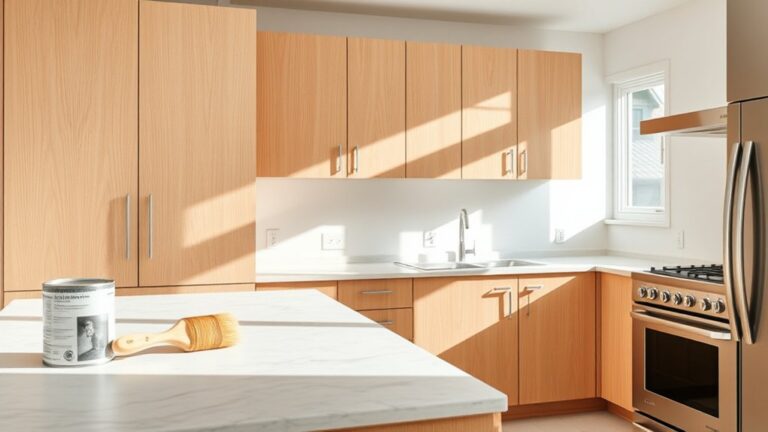
Selecting the right paint and tools is essential to achieving a durable, professional-looking finish on your faucets. For best results, use a high-quality, oil-based or enamel spray paint designed for metal surfaces.
Spray paint guarantees even coverage and a smooth finish, especially on curved faucet parts. When spray painting, maintain a consistent distance and apply thin, multiple coats to avoid drips.
In addition, keep a fine synthetic brush handy for detailed areas where spray paint can’t reach. Employ precise brush techniques. Light, controlled strokes minimize brush marks and guarantee paint adheres properly.
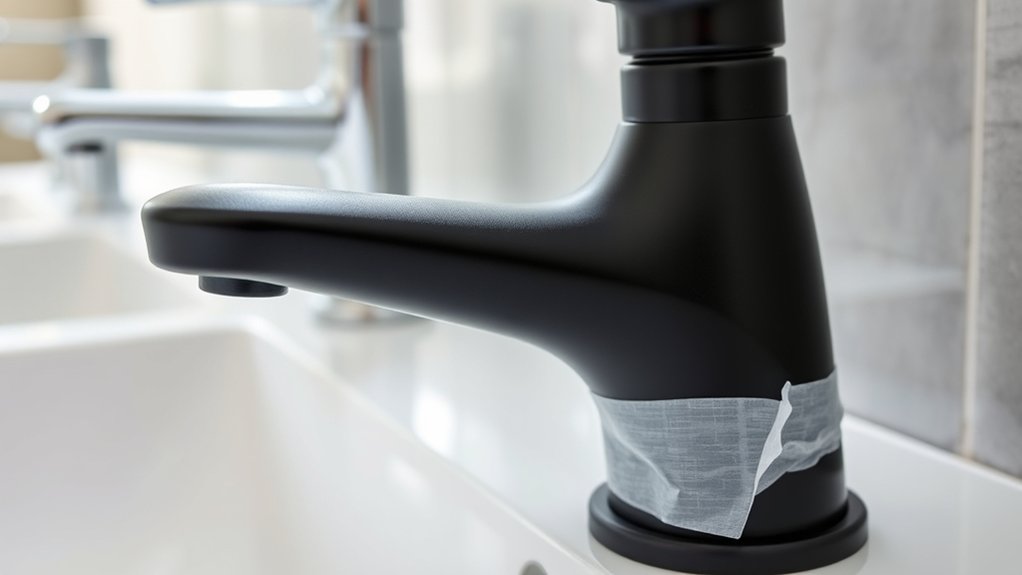
Use painter’s tape to protect surrounding surfaces and a respirator mask to handle fumes safely. Combining spray paint with careful brushwork assures a resilient, attractive faucet finish you’ll be proud of.
How to Make Your Painted Faucets Last Longer
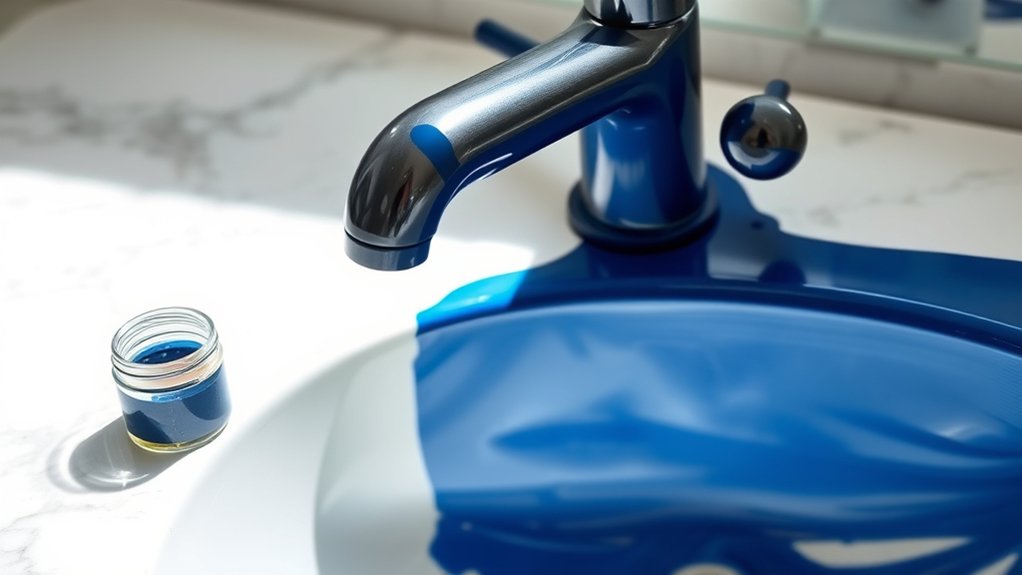
Applying the right paint and tools lays the foundation for a faucet finish that holds up over time. To maximize paint durability and guarantee effective faucet maintenance, follow these steps:
- Cure Properly: Allow the paint to cure fully as per manufacturer instructions before use. This strengthens adhesion and resistance to wear.
- Gentle Cleaning: Use mild, non-abrasive cleaners and soft cloths to prevent chipping or peeling. Avoid harsh chemicals or scrubbing pads.
- Regular Inspection: Routinely check for chips or cracks. Address minor damage promptly by touch-up painting to prevent corrosion and prolong finish life.
Frequently Asked Questions
Can Painted Faucets Withstand High Water Temperatures?
You can expect painted faucets to withstand high water temperatures only if you use heat-resistant paint designed for metal surfaces. This guarantees ideal paint durability, preventing peeling or discoloration under regular temperature fluctuations.
Is It Safe to Paint Faucets in a Kitchen?
Wondering if it’s safe to paint faucets in your kitchen? It depends on faucet types and paint options.
Use heat-resistant, waterproof paints on durable metals only, ensuring proper prep to avoid peeling or damage from daily use.
How Long Does the Paint Take to Fully Cure?
You’ll find paint cure times vary, typically 24-72 hours, depending on paint types and application techniques. Epoxy or enamel paints often cure faster, while multiple thin coats and proper drying conditions speed up full curing effectively.
Can I Change the Faucet Finish Back to Original?
Yes, you can restore your faucet’s original finish using faucet restoration techniques like stripping and refinishing. You can also apply original finish options such as plating or specialized coatings designed to match the factory appearance precisely.
Are Painted Faucets Resistant to Cleaning Chemicals?
When Joe used harsh bleach on his painted faucet, the paint durability suffered quickly. You’ll want to avoid strong chemicals and opt for mild cleaning methods like diluted soap and soft cloths to preserve the finish effectively.