How Many Gallons of Paint for Kitchen Cabinets
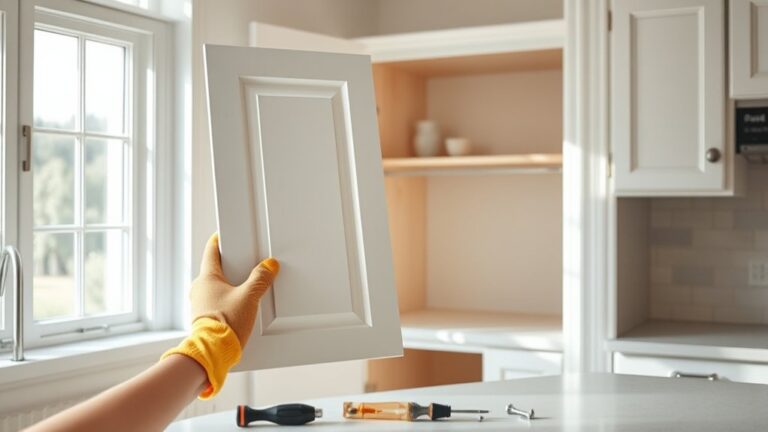
To determine how many gallons of paint for kitchen cabinets you need, start by measuring each door and drawer’s height and width to calculate the total surface area.
Multiply this by two coats to ensure even coverage.
Next, factor in your paint’s coverage rate, which typically ranges from 300 to 400 square feet per gallon.
Add an additional 10-15% to account for absorption and any primer you might use.
Keep in mind that cabinet style and finish can also affect paint coverage.
Counting doors and drawers precisely helps you avoid running short.
Explore more to optimize your paint choice and application technique.
How to Measure Kitchen Cabinets Before Buying Paint
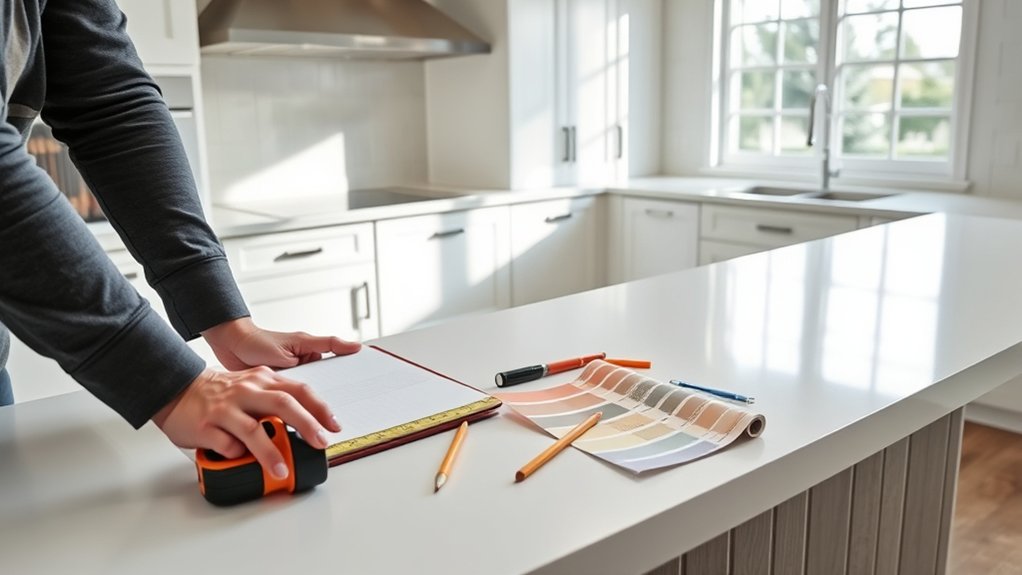
To accurately measure your kitchen cabinets before buying paint, start by calculating the total surface area. Measure the height and width of each cabinet door and drawer front, then multiply to find each surface’s area. Include both sides of open cabinets if applicable.
Sum all areas for a complete surface total. Note the cabinet material, such as wood, laminate, or MDF, as it affects paint adhesion and finish. Different paint types, such as oil-based or latex, have varying coverage rates and drying times, influencing how much paint you’ll need.
Avoid estimating by volume alone. Precise measurements guarantee you purchase the correct paint quantity and type, preventing waste or shortages. Accurate surface area calculations tailored to your cabinet material optimize your painting process and final results.
How to Estimate Paint Needed for Kitchen Cabinets Using Measurements
Calculating the total surface area of your kitchen cabinets sets the foundation for estimating the paint quantity needed. Measure the height, width, and depth of each cabinet door and drawer front, then calculate their surface areas. Add these measurements to the visible cabinet frame areas.
Multiply the total square footage by the number of coats you plan to apply, typically two. Consider paint types, latex or oil-based, since coverage rates differ, usually between 300 to 400 square feet per gallon. If you’re using primer options, factor in an additional coat, as primer affects overall paint absorption.
Divide the total adjusted surface area by the coverage rate to determine gallons required. This method guarantees you buy sufficient paint without excess, optimizing both cost and finish quality.
How Cabinet Size and Layout Affect Paint Quantity
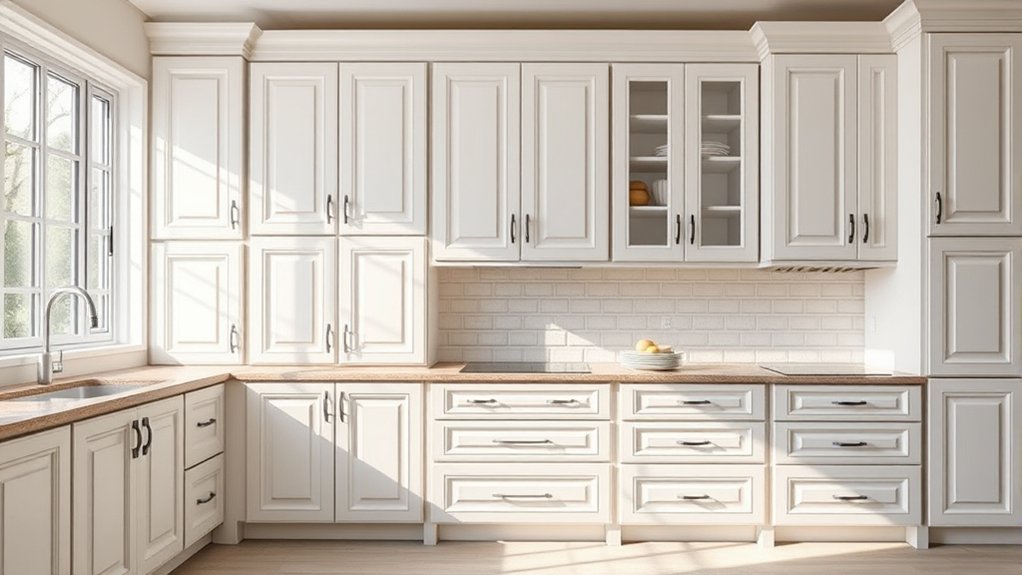
You’ll need accurate cabinet measurements, including height, width, and depth, to calculate paint volume precisely. The cabinet style affects surface area; raised panels require more paint than flat fronts.
Also, complex layouts with many doors and drawers increase paint quantity due to additional edges and surfaces.
Measuring Cabinet Dimensions
Measuring each cabinet’s dimensions accurately plays an essential role in determining the amount of paint you’ll need. Different cabinet types, such as base, wall, or tall, vary in surface area, influencing paint volume.
Use reliable measurement tools like a tape measure and laser distance meter for precision. Follow these steps:
- Measure height, width, and depth of each cabinet face and door.
- Calculate surface area by multiplying height by width for flat panels.
- Account for drawers and shelves separately, noting their exposed surfaces.
- Add all measurements to get total square footage to paint.
Impact of Cabinet Style
Cabinet style greatly influences how much paint you’ll need because size and layout determine the surface area to cover. Larger cabinets with flat surfaces require less paint compared to intricate styles with raised panels or moldings, which increase surface area and absorption.
The type of cabinet materials also matters; porous woods absorb more paint than laminates or MDF, affecting total gallons needed. When selecting paint colors, darker or bolder hues may require additional coats for full coverage, thereby increasing paint quantity. Conversely, lighter colors generally need fewer coats.
Layout Complexity Considerations
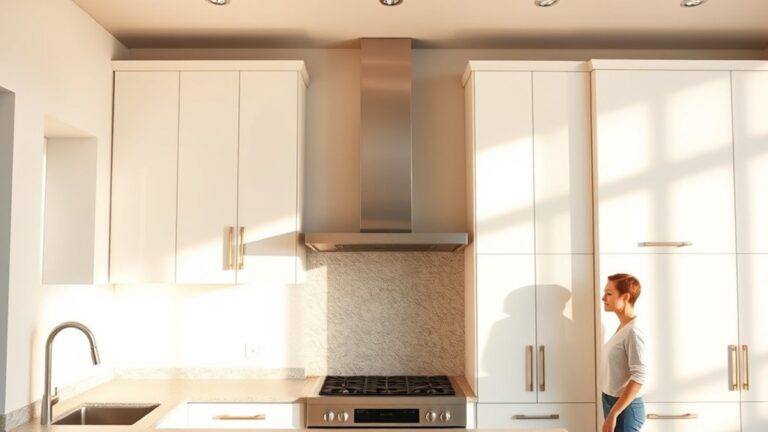
Beyond style and material, the size and arrangement of your kitchen cabinets directly impact how much paint you’ll need. Different layout types and cabinet arrangements require varying paint quantities due to surface area and accessibility. Consider these factors:
- Linear layouts typically use less paint, as cabinets align in a single row with fewer edges.
- L-shaped and U-shaped layouts increase surface area, raising paint volume requirements.
- Island cabinets add complexity and additional surfaces, boosting paint needs.
- Custom arrangements with intricate moldings or multiple tiers demand more precise paint calculations.
Assess your cabinet arrangement carefully to estimate paint volume accurately. Larger, more complex layouts mean you’ll need more gallons, while compact designs minimize waste. Understanding layout types guarantees efficient paint usage without underestimating your project’s scale.
How the Number of Doors and Drawers Changes Paint Requirements
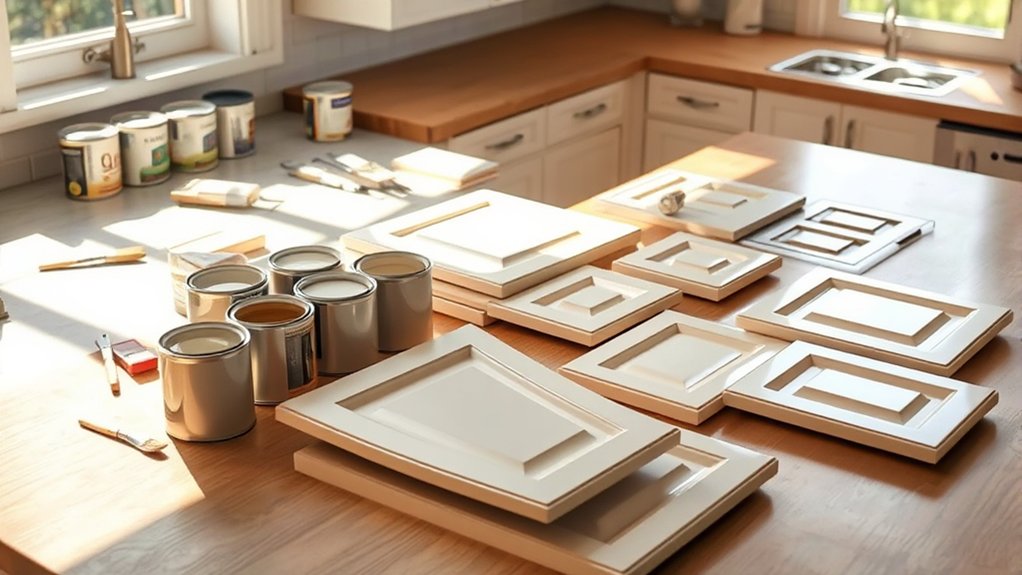
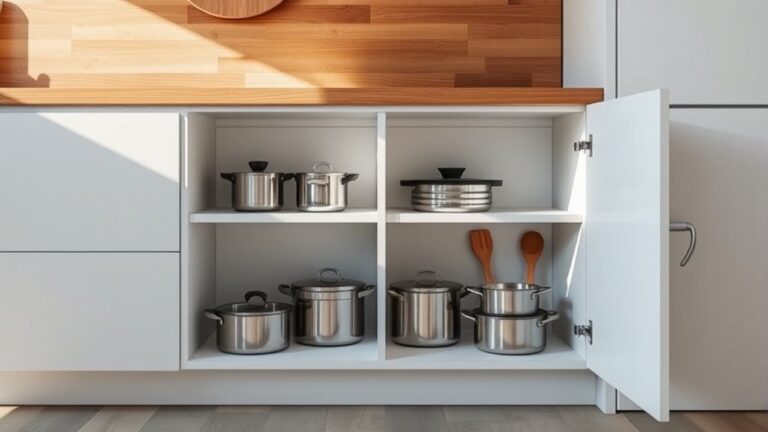
You’ll need to evaluate the number of doors and drawers since each adds to the total surface area to paint. More doors and drawers increase the paint required, impacting your overall gallon estimate.
Accurately measuring these components helps you calculate the exact paint coverage needed.
Door and Drawer Count
Several factors influence how much paint you’ll need, and the number of doors and drawers plays a critical role. The count impacts your total paint volume due to varied door types and drawer styles. Here’s how to assess:
- Count all cabinet doors, noting styles (flat, raised panel, etc.), since intricate door types require more paint.
- Tally drawers separately, considering drawer styles (shallow vs. deep) that affect surface area.
- Multiply the total number of doors and drawers by the average paint needed per unit, adjusting for your specific door types and drawer styles.
- Add extra paint for edge surfaces, especially if doors or drawers have detailed profiles.
Surface Area Impact
One key factor that directly influences your paint requirements is the total surface area of your cabinet doors and drawers. The greater the surface area, the more paint you’ll need due to increased paint absorption.
Each door and drawer adds measurable square footage, which cumulatively impacts the volume of paint required.
| Doors | Drawers | Approximate Surface Area (sq ft) |
|---|---|---|
| 10 | 5 | 120 |
| 12 | 8 | 160 |
| 15 | 10 | 200 |
| 20 | 12 | 260 |
Estimate your total surface area by counting doors and drawers, then multiply by average dimensions. This gives you a solid baseline to plan paint quantity efficiently.
Paint Coverage Estimation
Calculating paint coverage starts with understanding how each cabinet door and drawer affects your total paint needs. Coverage factors vary depending on size, texture, and complexity.
Different paint types also influence the amount required due to varying thickness and drying properties. To estimate accurately, consider these steps:
- Count all cabinet doors and drawers to determine the total surface area.
- Measure average dimensions to calculate square footage per unit.
- Adjust for coverage factors like paneling, molding, and hardware removal.
- Choose paint types suited for cabinetry, noting manufacturer coverage rates per gallon.
How Paint Finishes Affect Coverage and Gallons Needed
Because different paint finishes vary in thickness and opacity, they directly impact how much paint you’ll need for your kitchen cabinets. Paint types with higher finish durability often require fewer coats but may use more paint per coat due to thickness.
Conversely, thinner finishes cover less area per gallon, increasing total gallons needed.
| Paint Finish | Coverage per Gallon (sq ft) |
|---|---|
| Matte | 350 |
| Satin | 400 |
| Semi-Gloss | 375 |
| High-Gloss | 325 |
Choosing a finish balances coverage with durability. For example, satin offers good coverage and finish durability, reducing gallons compared to high-gloss, which demands more paint but offers superior resistance.
Understanding these variables helps you accurately estimate gallons required.
How Many Coats of Paint You’ll Typically Need for Cabinets
Expect to apply at least two coats of paint when refinishing kitchen cabinets to achieve even coverage and durability. The number of coats depends on several factors related to paint types and application methods.
Consider these key points:
Keep in mind these essential factors when planning your cabinet painting project for optimal results.
- Paint Types: Latex and oil-based paints may require different coat counts; oil-based often needs fewer coats due to better adhesion.
- Color Change: Drastic color shifts might demand additional coats to fully cover the old shade.
- Surface Condition: Rough or porous surfaces absorb more paint, increasing the number of coats needed.
- Brush Techniques: Proper use of angled brushes and smooth strokes helps minimize coats by ensuring even paint distribution.
Applying two to three coats is typical for cabinets, balancing thorough coverage with efficiency.
Tips for Calculating Extra Paint for Primer and Touch-Ups
Adding at least one extra quart of paint for primer and touch-ups guarantees you have enough to cover base coats and fix any imperfections after the main application. Start by calculating your cabinet surface area, then add 10-15% more to account for primer types, oil-based or latex, each with different coverage rates.
Oil-based primers typically require more paint, so factor that in. For touch-up techniques, keep a small container of mixed paint for consistent color matching. Use a fine brush or small roller to address chips or uneven spots effectively.
This extra paint assures seamless repair without needing a full repaint. Always measure precisely and consider the primer’s absorption rate to avoid running short during your project.
Where to Buy Paint for Kitchen Cabinets Without Overspending
Where can you find quality paint for kitchen cabinets without overspending? You’ve got several budget friendly options that offer both quality and savings. Consider these four sources:
- Local Paint Stores Often provide expert advice and occasional discounts on cabinet-grade paints.
- Home Improvement Chains Look for sales and bulk purchase deals on durable, cabinet-specific paints.
- Online Retailers Compare prices and customer reviews to find competitive offers on premium brands.
- Manufacturer Outlets Some brands sell directly, cutting out middlemen costs for better prices.
Frequently Asked Questions
What Type of Paint Is Best for Kitchen Cabinets?
You should choose a durable, semi-gloss or satin paint finish for kitchen cabinets; these resist moisture and wear.
Focus on color selection that complements your space, ensuring your cabinets look sleek and maintain their finish longer.
How Long Does Painted Cabinet Paint Take to Dry?
Paint typically takes 1-2 hours drying time to the touch, but the full curing process can last 7-30 days.
You’ll want to avoid heavy use until curing completes for durable, long-lasting cabinet finishes.
Can I Paint Kitchen Cabinets Without Removing the Hardware?
You can paint kitchen cabinets without removing hardware, but you’ll need excellent hardware protection like painter’s tape. Use precise painting techniques to avoid drips and guarantee clean edges.
This will help maintain your cabinets’ professional, smooth finish without extra hassle.
How Do I Prepare Cabinets Before Painting?
You’ll start by cabinet cleaning to remove grease and dirt, then perform surface sanding to create a smooth, adherent base.
Wipe dust away before priming to guarantee paint bonds well and lasts longer on your cabinets.
What Tools Are Needed for Painting Kitchen Cabinets?
Think of painting cabinets like sculpting; you need the right tools. Use angled brushes for edges, foam brushes for smooth cabinet finishes, and a high-quality roller.
These brush types guarantee crisp lines and flawless coverage every time.