How Much Does It Cost to Reface Kitchen Cabinets
You can expect to pay between $1,000 and $3,000 if you reface your kitchen cabinets yourself, mainly covering materials like veneer and hardware.
Hiring a professional ranges from $4,000 to $9,000, including labor, quality materials, and expert finishes.
Costs depend on your kitchen size, cabinet complexity, and material choices.
If you want to know how to balance cost, quality, and effort for the best results, keep exploring your options and tips.
Typical Kitchen Cabinet Refacing Costs: DIY and Professional
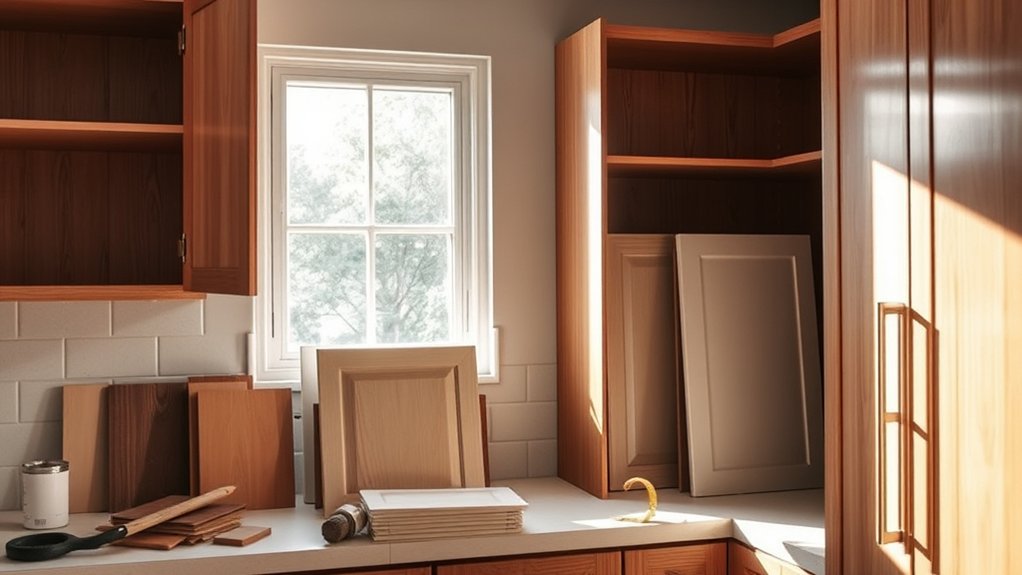
How much does it typically cost to reface kitchen cabinets, whether you do it yourself or hire a professional? If you choose DIY, expect to spend around $1,000 to $3,000, depending on your cabinet design and materials.
You’ll need supplies like veneer, edge banding, and new hardware, plus time to master refacing techniques. Hiring a pro, however, generally costs between $4,000 and $9,000.
Professionals bring expertise in cabinet design and can efficiently apply advanced refacing techniques, ensuring a durable, polished finish. This price range covers labor, materials, and sometimes minor repairs.
Ultimately, your choice depends on your budget, skills, and the complexity of your cabinet design. Knowing these typical costs helps you plan your kitchen upgrade realistically without surprises.
Factors That Affect Kitchen Cabinet Refacing Prices
Choosing between DIY and professional cabinet refacing sets the stage, but several factors will ultimately influence the final cost. Key cost influencers include the size of your kitchen, the complexity of cabinet design, and the quality of material choices you select.
Larger kitchens require more materials and labor, driving up expenses. Intricate designs or damaged cabinets may need additional prep work, increasing costs. Material choices, such as veneer, laminate, or solid wood, greatly affect pricing due to varying durability and aesthetics.
Labor rates fluctuate by region and contractor experience, so it’s crucial to factor these in. Don’t forget hardware updates or custom finishes, which add to the total. Understanding these cost influencers helps you budget wisely and decide which options best fit your kitchen upgrade goals.
Comparing Kitchen Cabinet Materials by Cost
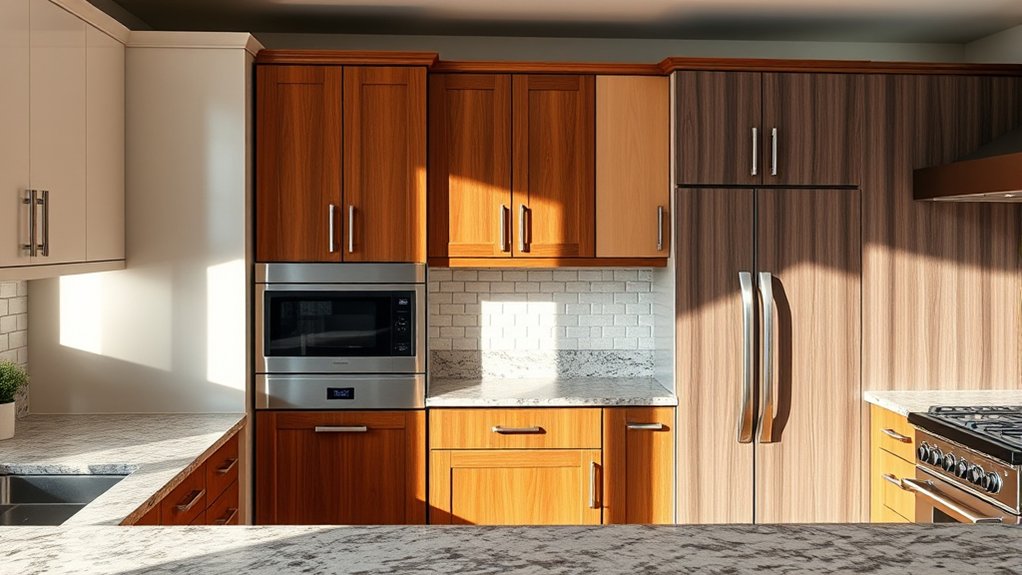
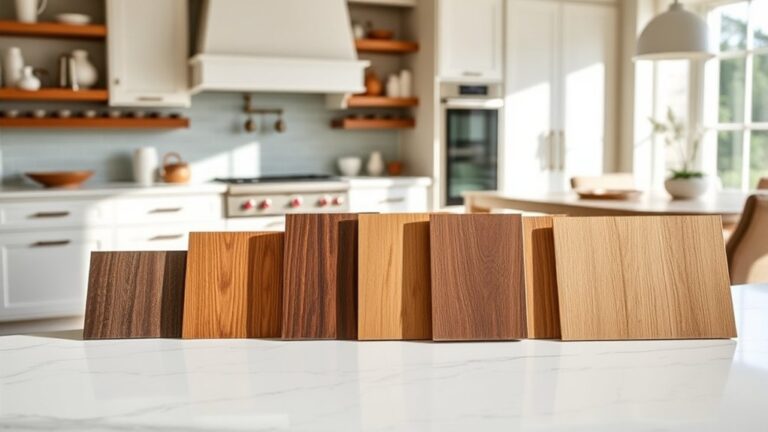
Although material costs vary widely, understanding the price differences between veneer, laminate, and solid wood can help you make informed decisions for your kitchen cabinet refacing project. Solid wood is the priciest option but offers durability and a timeless look.
Veneer types provide a budget-friendly alternative with real wood surfaces bonded to cheaper substrates, balancing cost and appearance. Laminate options are the most affordable and come in diverse colors and patterns, including eco friendly materials that reduce environmental impact.
You can also explore metal finishes for a modern aesthetic, though these tend to be higher in cost. Paint choices offer flexibility and can refresh cabinets without replacing materials, keeping expenses lower. By comparing these materials, you’ll select the best combination of style, durability, and budget for your kitchen.
DIY vs. Professional Cabinet Refacing: Which Is Right for You?
Wondering whether to tackle cabinet refacing on your own or hire a professional? Start with a skill assessment: do you have experience with woodworking, painting, and precise measurements? DIY refacing saves labor costs, but mistakes can increase expenses and extend timelines.
Conduct a cost analysis comparing material prices plus tool rentals against professional fees. Professionals bring expertise, ensuring clean, durable finishes and often source materials at better rates. However, their labor costs can be significant.
If you’re confident in your skills and have time, DIY can be rewarding and budget-friendly. If precision, time constraints, or complex cabinet designs challenge you, hiring a pro might be the safer, cost-effective route.
Weigh your capabilities and budget carefully to decide which option fits your kitchen makeover goals best.
How to Save Money When Refacing Your Kitchen Cabinets
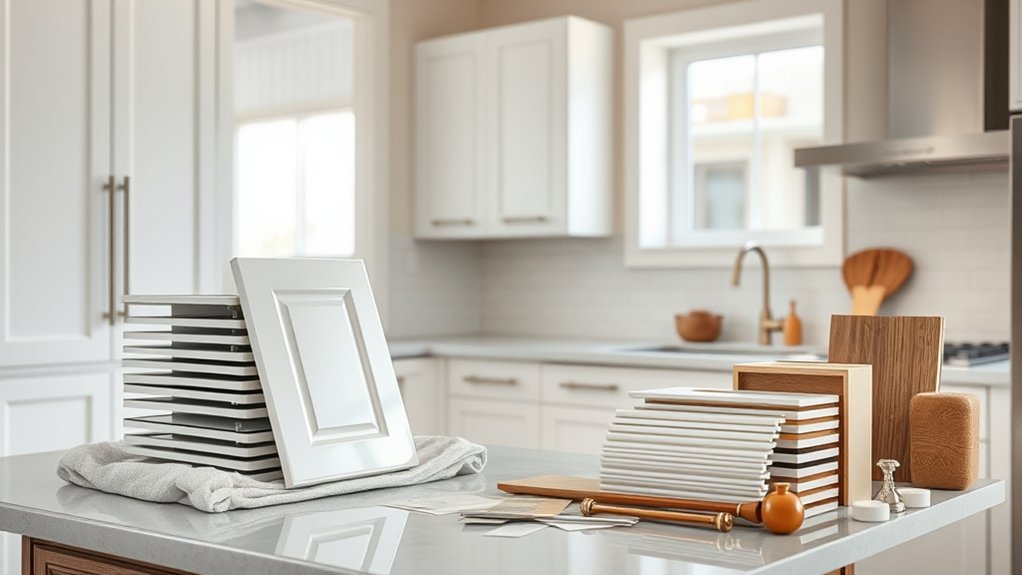
Saving money when refacing your kitchen cabinets starts with careful planning and smart material choices. You can uncover budget-friendly options without sacrificing quality by focusing on these key refacing tips.
First, consider using laminate veneers instead of solid wood for a cost-effective look. Next, reuse existing cabinet boxes to avoid pricey replacements. Also, select standard sizes and finishes that reduce custom work expenses. Finally, tackling minor prep work yourself, like cleaning and sanding, can lower labor costs considerably.
- Choose laminate or thermofoil over hardwood
- Retain cabinet boxes and replace only doors and drawer fronts
- Opt for stock sizes and popular finishes
- Handle simple prep tasks on your own
These strategies help you save money while achieving a refreshed kitchen appearance.
Frequently Asked Questions
How Long Does Kitchen Cabinet Refacing Typically Take to Complete?
You’ll be surprised how fast cabinet refacing usually takes, around 2 to 5 days. Keep in mind, cost factors like materials and labor affect timing, but DIY options can speed things up and save you money.
Can All Types of Cabinets Be Refaced Successfully?
You can reface most cabinet materials, but success depends on their condition and type. Different refacing techniques work better with wood, laminate, or MDF, so you’ll want to choose methods matching your cabinets’ material for best results.
What Are the Maintenance Requirements After Refacing Cabinets?
Think of cabinet care like tending a garden; you’ll want to dust regularly, use gentle cleaners, and avoid moisture. These maintenance tips keep your refaced cabinets shining and sturdy, ensuring they last beautifully for years to come.
Does Refacing Kitchen Cabinets Increase Home Resale Value?
Yes, refacing kitchen cabinets boosts your kitchen aesthetics and can improve resale potential. Buyers appreciate updated, stylish kitchens, so investing in refacing often offers a practical way to enhance your home’s market appeal and value.
Are There Eco-Friendly Materials Available for Cabinet Refacing?
Like choosing the right superhero, you’ll find sustainable options like bamboo or reclaimed wood for cabinet refacing. Material comparisons reveal these eco-friendly choices offer durability and style while minimizing environmental impact, making your kitchen greener and smarter.