How to Clean Sticky Wood Kitchen Cabinets
To clean sticky wood kitchen cabinets, start by wiping them with a microfiber cloth to remove dust and surface dirt. This initial step helps prepare the cabinets for a deeper clean without spreading grime.
Next, mix mild dish soap with warm water and gently clean the sticky areas. Be careful to avoid soaking the wood, as excess moisture can cause damage.
For tougher sticky spots, try a vinegar-and-water solution, but be sure to test it on a small, hidden area first to prevent discoloration.
After cleaning, dry the cabinets immediately to prevent moisture damage. Regular polishing and avoiding harsh chemicals will help protect the cabinet finishes.
Following these steps helps restore your cabinets’ smoothness and durability—explore further techniques for long-lasting care.
Why Do Wood Cabinets Get Sticky?
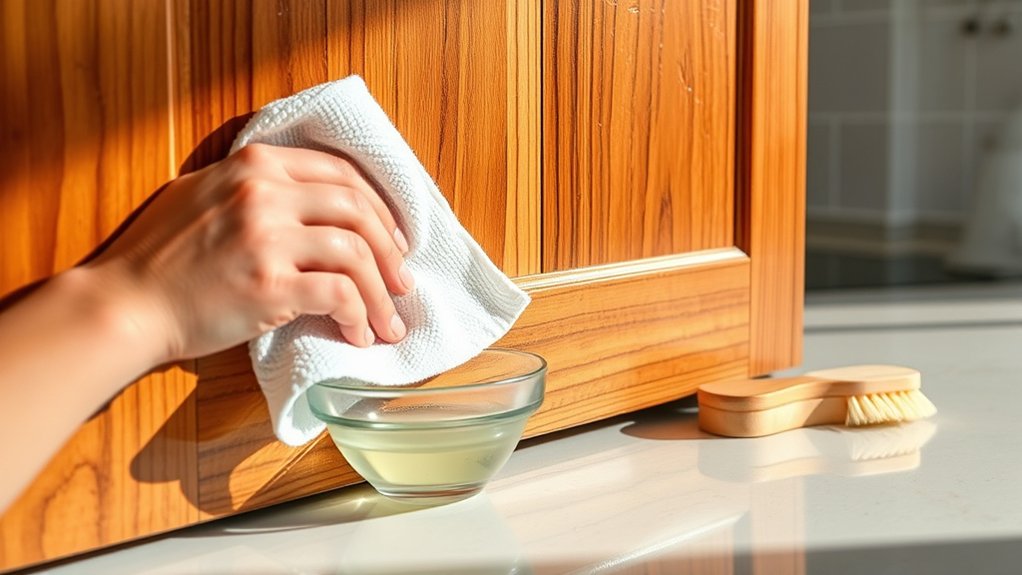
Although wood cabinets add warmth and elegance to your kitchen, they can become sticky over time due to the buildup of grease, dirt, and cleaning product residues. This sticky residue often results from routine cooking splatters and inadequate cabinet maintenance.
When oils and food particles accumulate, they mix with dust, creating a tacky film that’s hard to remove. Additionally, using harsh or improper cleaning products can leave behind residues that attract more dirt. Over time, this cycle worsens, causing your cabinets to feel unpleasantly sticky.
Understanding why wood cabinets get sticky helps you implement better cabinet maintenance practices, preventing buildup and preserving their finish. Regular, proper cleaning is essential to avoid sticky residue and keep your kitchen looking fresh and polished.
How to Prepare Wood Cabinets for Cleaning
Sticky residue on wood cabinets can be stubborn, but proper preparation makes cleaning more effective. Start by gathering your cleaning supplies: a soft cloth, mild detergent, warm water, and a gentle brush.
Remove all items from the cabinet surfaces to prevent damage and allow full access. Next, dust the cabinets thoroughly using a dry microfiber cloth to eliminate loose dirt and debris.
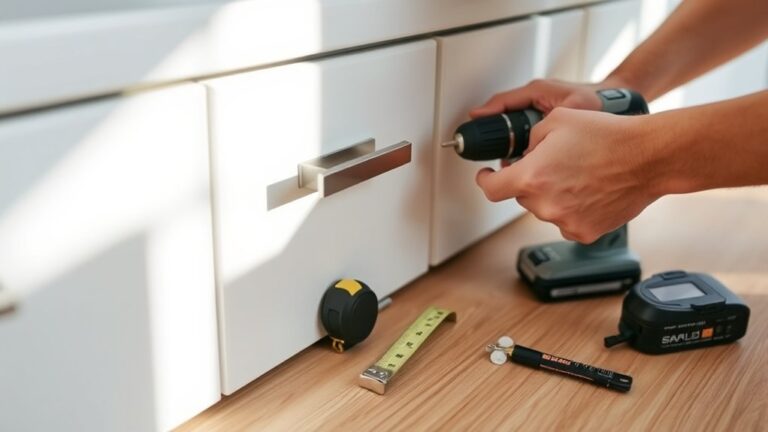
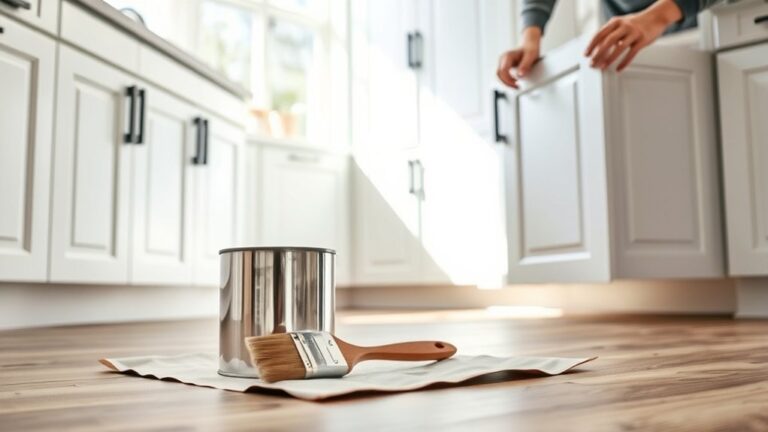
Check for any hardware, such as knobs or handles, that can be removed to guarantee a more thorough clean. Protect nearby surfaces and floors with a drop cloth or towels.
Finally, test your chosen cleaning solution on a small, inconspicuous area to avoid discoloration or damage. Once prepared, your cabinets will be ready for a deep, effective cleaning.
Best Household Items for Cleaning Sticky Wood Cabinets
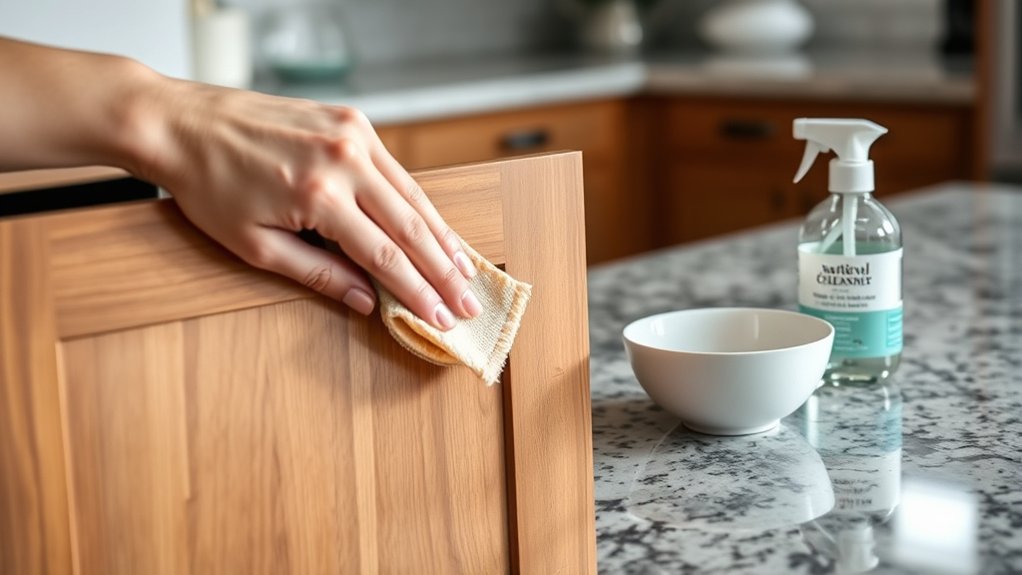
Several common household items can effectively tackle the sticky residue on your wood cabinets without causing damage. Using natural cleaners preserves the wood’s finish while removing grime. A vinegar solution, diluted with water, breaks down sticky buildup gently.
Baking soda acts as a mild abrasive to lift stubborn spots without scratching. Essential oils like lemon or orange add a pleasant scent and enhance cleaning power with citrus extracts. Microfiber cloths are perfect for applying these solutions, as they trap dirt and prevent scratching.
- Vinegar solution (1 part vinegar to 3 parts water)
- Baking soda paste (baking soda mixed with water)
- Essential oils with citrus extracts (lemon, orange)
- Soft microfiber cloths for gentle scrubbing
These items combine effectiveness with safety for your wood cabinets.
How to Clean Sticky Wood Cabinets Step-by-Step
To clean your sticky wood cabinets effectively, follow these five clear steps to restore their smooth finish without causing damage. First, remove all items from the cabinets to access every surface.
Next, dust the cabinets using a microfiber cloth to eliminate loose dirt. Third, prepare a gentle cleaning solution with warm water and mild dish soap. Dip a soft cloth into the solution, wring it out well, and wipe the cabinet surfaces, focusing on sticky areas.
Fourth, rinse the cloth with clean water and wipe again to remove soap residue. Finally, dry the cabinets thoroughly with a dry cloth to prevent moisture damage. These cabinet maintenance cleaning techniques guarantee you preserve your cabinets’ finish while eliminating stickiness effectively.
How to Remove Tough Grease and Grime From Wood Cabinets
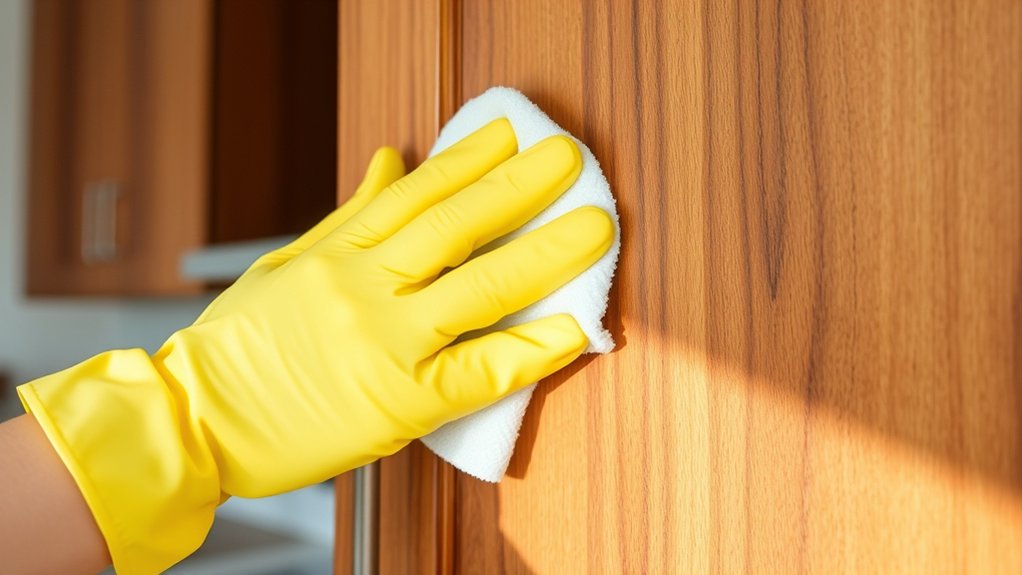
Once you’ve tackled the general stickiness on your wood cabinets, you might notice some stubborn grease and grime that won’t come off with mild soap and water. For effective grease removal and deep cleaning, you need to use stronger but safe methods.
Start by mixing a solution of warm water with a few drops of dish soap and a splash of white vinegar or baking soda. Apply it with a soft cloth or sponge, gently scrubbing the affected areas.
For tougher spots:
- Use a soft-bristled toothbrush to reach crevices
- Avoid abrasive cleaners to protect wood finish
- Rinse surfaces with clean water promptly
- Dry immediately to prevent moisture damage
These steps guarantee deep cleaning without harming your cabinets.
How to Dry and Polish Wood Cabinets for a Lasting Shine
Three essential steps guarantee your wood cabinets dry properly and achieve a lasting shine. First, wipe cabinets with a clean, dry microfiber cloth to remove all moisture. Next, apply a high-quality wood polish sparingly to enhance the finish and protect the surface.
Finally, buff the cabinets gently in circular motions to bring out a smooth, glossy shine. Regular cabinet maintenance with wood polish not only beautifies but extends cabinet life.
| Step | Action |
|---|---|
| Drying | Use microfiber cloth to remove moisture |
| Polishing | Apply a thin layer of wood polish |
| Buffing | Buff gently for an even shine |
Follow these steps methodically to keep your wood cabinets looking pristine and well cared for.
How to Avoid Damaging Wood Cabinet Finishes
Although wood cabinets add warmth and character to your space, their finishes can be easily damaged without proper care. To maintain wood finish protection, you need to adopt careful cleaning techniques that preserve the surface integrity. Avoid harsh chemicals or abrasive tools that strip or dull the finish. Instead, use soft cloths and gentle, pH-balanced cleaners.
Keep these tips in mind:
- Test any cleaner on a hidden spot before full application.
- Wipe spills immediately to prevent staining or warping.
- Use microfiber cloths to avoid scratches.
- Avoid excessive water which can penetrate and damage the finish.
Choosing Commercial or Homemade Cleaners for Sticky Wood Cabinets
You can choose between commercial cleaners, which offer convenience and formulated effectiveness, or homemade solutions made from simple ingredients like vinegar, baking soda, and mild soap.
Each option has its strengths depending on the severity of the stickiness and your preference for natural products. Understanding these differences will help you select the best cleaner for your wood cabinets.
Benefits of Commercial Cleaners
When tackling sticky wood cabinets, commercial cleaners often provide a reliable and efficient solution. They’re formulated to break down grease and grime quickly, making your cleaning process smoother compared to many homemade options.
If you’re considering eco-friendly options, many brands now offer effective, less toxic formulas that balance cleaning power with environmental safety. When weighing effectiveness comparison, commercial cleaners typically deliver consistent results due to standardized ingredients and testing.
Here are key benefits to keep in mind:
- Designed specifically for wood surfaces, protecting finish integrity
- Consistent performance backed by product testing
- Availability of eco-friendly options with reduced chemical impact
- Time-saving due to concentrated formulas and easy application
Using commercial cleaners guarantees you tackle stickiness effectively while minimizing potential damage.
Homemade Cleaner Ingredients
Commercial cleaners offer convenience and tested effectiveness, but some prefer to create their own solutions using common household ingredients. When choosing homemade cleaner ingredients, focus on natural alternatives like white vinegar, baking soda, and mild dish soap.
These components combine to break down sticky residues without harsh chemicals that can damage wood finishes. Mix one cup of warm water with a tablespoon of vinegar and a few drops of dish soap for a balanced, effective cleaner.
Baking soda can be used as a gentle abrasive for stubborn spots. Always test your mixture on a small, hidden area first to guarantee it doesn’t harm the cabinet’s finish.
This method provides reliable cleaning efficacy while maintaining a safer, eco-friendly approach to wood cabinet care.
How to Maintain Wood Cabinets to Prevent Stickiness
Although sticky wood cabinets can be frustrating, regular maintenance can effectively prevent this issue from developing. To guarantee wood cabinet maintenance keeps your kitchen surfaces smooth and free of sticky residue, you need a consistent routine targeting common causes of stickiness.
Focus on these key steps for sticky residue prevention:
- Wipe cabinets weekly with a damp, soft cloth to remove grease and dirt buildup.
- Avoid harsh chemical cleaners that can degrade wood finishes and attract grime.
- Apply a quality wood conditioner or polish monthly to protect and seal surfaces.
- Control kitchen humidity levels to prevent moisture-related stickiness and warping.
Quick Fixes for Spot Cleaning Sticky Areas Between Deep Cleans
How can you quickly tackle sticky spots on your wood cabinets without a full deep clean? Start with spot cleaning using a mild, quick solution. Mix a few drops of dish soap with warm water, dip a soft cloth in the mixture, and gently wipe the sticky areas.
Avoid soaking the wood to prevent damage. For tougher spots, a 50/50 blend of white vinegar and water works well as a natural degreaser. Always test any solution on a small, hidden area first.
After wiping, dry the surface immediately with a clean, dry cloth to avoid moisture absorption. These quick solutions keep your cabinets clean between deep cleans and prevent sticky buildup from worsening, saving you time and effort in maintaining your wood cabinets’ finish and function.
Frequently Asked Questions
Can Sticky Residue Damage the Wood Over Time?
Yes, sticky residue effects can damage wood over time by trapping dirt and moisture, leading to discoloration and deterioration.
For long term wood care, you should clean residue promptly and use appropriate wood-safe products regularly.
Are Sticky Cabinets a Sign of Mold or Pests?
Imagine finding sticky cabinets caused by mold behind them. That’s a clear sign to act. Sticky cabinets can indicate mold or pests, so you should prioritize mold prevention and pest control to protect your kitchen and health effectively.
How Often Should I Deep Clean Wood Cabinets?
You should deep clean wood cabinets every three to six months. Regular cleaning frequency prevents buildup, while maintenance tips like wiping spills promptly and avoiding harsh chemicals help preserve their finish and extend their lifespan.
Can Humidity Levels Affect Wood Cabinet Stickiness?
Yes, high humidity levels can cause your wood cabinets to become sticky. You should maintain proper humidity control to prevent moisture buildup, which helps with wood preservation and keeps your cabinets from sticking or warping over time.
Is It Safe to Use Vinegar on All Wood Finishes?
You wouldn’t use a quill on a smartphone, right? Vinegar isn’t safe for all wood finishes.
Instead, try safe alternatives like diluted dish soap or commercial cleaners designed specifically for wood to protect your cabinets’ finish.