How to Clean Oak Kitchen Cabinets
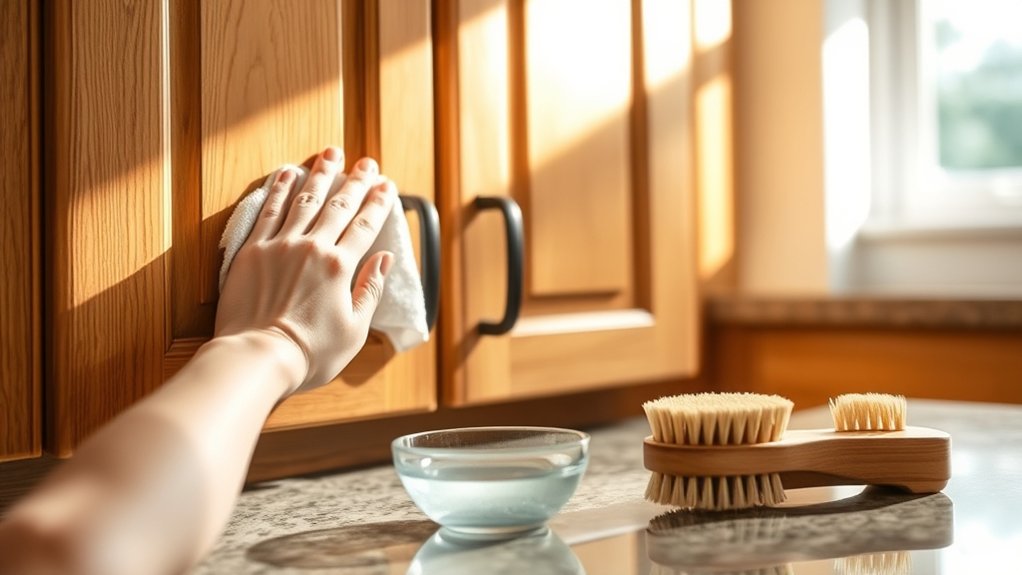
To clean your oak kitchen cabinets, start by removing all items from the surfaces and dusting them thoroughly with a microfiber cloth. This initial step helps prevent scratching the wood during cleaning.
Next, prepare a gentle cleaning solution by mixing equal parts white vinegar and water with a small amount of mild dish soap. Before applying the solution broadly, test it on a small, hidden area to ensure it doesn’t damage the finish.
Use a soft cloth to wipe the cabinets gently, always following the direction of the wood grain. Avoid using harsh chemicals or excessive water, as these can harm the wood over time.
For stubborn stains or grease buildup, carefully apply the mild soap solution and gently rub the affected areas. Taking these precautions helps preserve your cabinets’ finish and keeps them looking their best.
Following these steps consistently will maintain the beauty of your oak kitchen cabinets. Additional detailed tips can further enhance their care and longevity.
Preparing Oak Cabinets for Cleaning
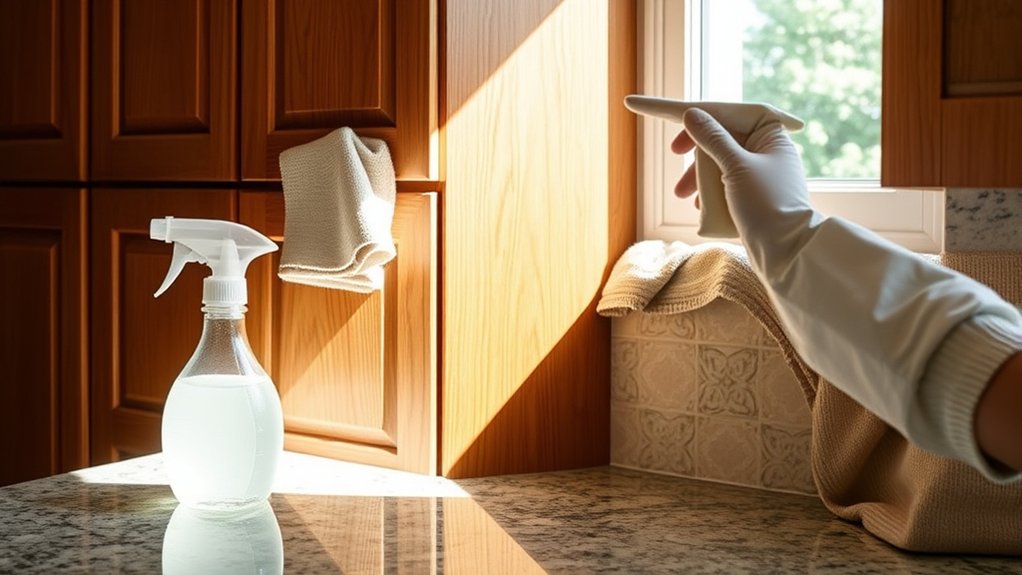
Before you start cleaning your oak kitchen cabinets, you need to prepare the area properly to guarantee effective and safe cleaning. Begin by removing all items from the cabinets to give you unobstructed access.
Next, perform thorough cabinet dusting using a microfiber cloth or soft brush to eliminate loose dirt and dust. This step is essential for preventing scratches during cleaning.
Use a microfiber cloth or soft brush to remove loose dust and prevent scratches during cleaning.
After dusting, focus on surface preparation by wiping the cabinets with a damp cloth to remove any grease or grime buildup. Avoid soaking the wood; use minimal water to protect the oak’s finish.
Finally, make sure the kitchen is well-ventilated to help the cabinets dry quickly. Proper surface preparation sets the foundation for an efficient cleaning process and preserves your cabinets’ natural beauty.
Top Natural and Commercial Cleaning Solutions for Oak Cabinets
With your oak cabinets prepped and dust-free, the next step is choosing the right cleaning solution to maintain their appearance without causing damage. For eco-friendly options, mix equal parts white vinegar and water, adding a few drops of mild dish soap. This solution cleans effectively while preserving the wood’s natural finish.
Alternatively, commercial wood cleaners designed specifically for oak provide powerful cleaning without harsh chemicals. When selecting commercial products, confirm they’re labeled safe for oak and free from ammonia or bleach.
Use soft cleaning tools like microfiber cloths or non-abrasive sponges to apply solutions gently, avoiding scratches. Always test your chosen cleaner on a small, inconspicuous area first.
These methods balance cleanliness with care, extending your cabinets’ life while keeping them looking their best.
How to Clean Oak Kitchen Cabinets Safely
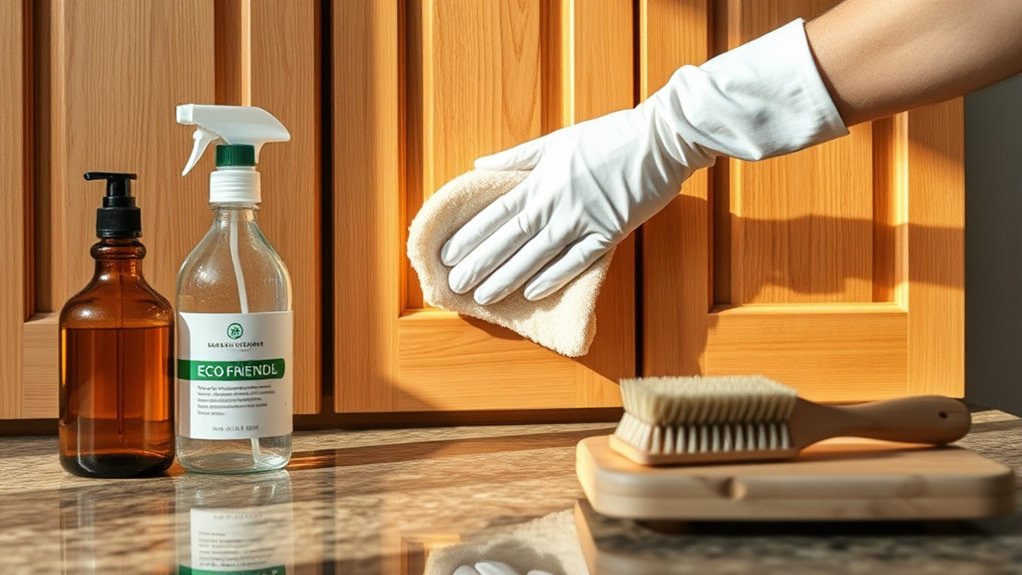
Several key precautions guarantee you clean oak kitchen cabinets safely without damaging their finish. Start by selecting gentle cleaning tools, such as soft microfiber cloths or non-abrasive sponges, to avoid scratching the wood. Avoid harsh chemicals that can strip protective finishes, opting for mild soap solutions instead.
Always test any cleaner on a small, inconspicuous area first to check for adverse reactions. Work in small sections, wiping gently in the direction of the wood grain to maintain the cabinets’ appearance.
- Use soft cleaning tools to prevent surface damage
- Choose mild cleaners that preserve protective finishes
- Test cleaning solutions before full application
- Clean along the wood grain to avoid streaks and scratches
Following these steps guarantees your oak cabinets stay both clean and well-protected.
Removing Tough Stains and Grease From Oak Kitchen Cabinets
Tackle tough stains and grease on your oak kitchen cabinets by using targeted cleaning methods that break down residue without harming the wood. For effective stain removal, mix a solution of mild dish soap and warm water, then apply it with a soft cloth, gently rubbing the affected area.
For grease cutting, use a vinegar and water solution (equal parts) or a commercial grease-cutting cleaner designed for wood surfaces. Always test your cleaner on a small, hidden spot first.
Avoid harsh chemicals or scrubbing pads that can damage oak’s finish. After cleaning, wipe the cabinets with a damp cloth to remove any residue, then dry thoroughly.
This method guarantees stubborn stains and grease won’t penetrate or damage the oak, maintaining your cabinets’ natural beauty.
Tips to Maintain and Protect Oak Cabinets
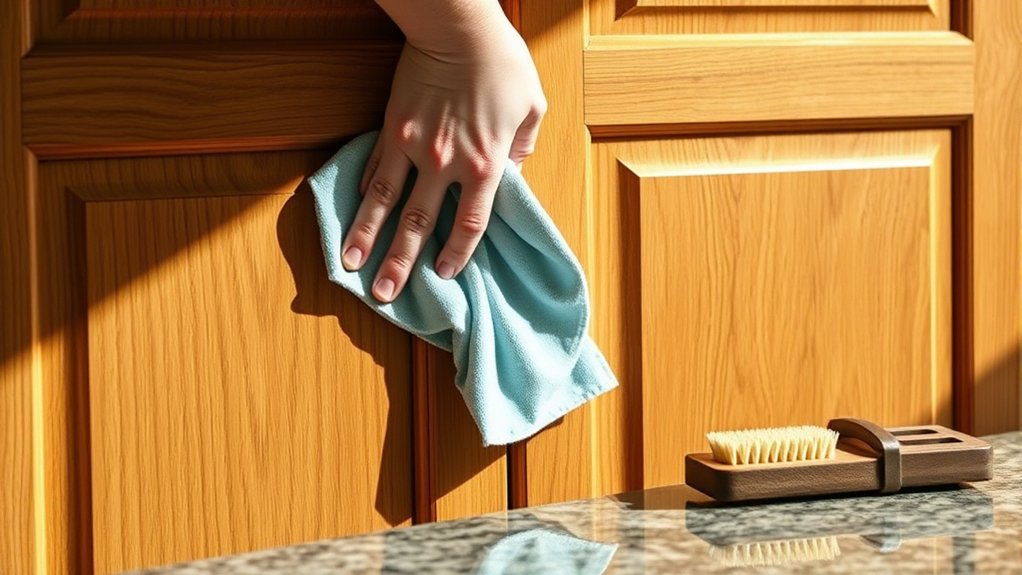
Although oak cabinets are durable, they still need regular care to stay looking their best. To maintain and protect them, you should adopt a consistent routine that preserves their natural beauty and prevents damage. Use a high-quality cabinet polish regularly to enhance the finish and shield the wood from moisture.
Applying a wood conditioner occasionally will nourish the oak, preventing it from drying out and cracking.
Follow these essential tips:
- Clean spills immediately to avoid stains.
- Dust cabinets weekly with a soft cloth.
- Avoid harsh chemicals that strip finishes.
- Use cabinet polish monthly to maintain shine.
Frequently Asked Questions
Can Oak Cabinets Be Refinished Instead of Cleaned?
Yes, you can refinish oak cabinets using proper refinishing techniques. This option revitalizes their appearance and extends their life.
Regular cabinet maintenance helps prevent damage, reducing the need for frequent refinishing and preserving your kitchen’s beauty.
How Often Should Oak Cabinets Be Professionally Cleaned?
You should schedule professional cleaning frequency every 12 to 18 months for ideal cabinet maintenance. Regular upkeep, like wiping spills and dusting, complements professional care, ensuring your oak cabinets stay in excellent condition longer.
Are There Specific Wood Types That Should Not Be Cleaned Like Oak?
You might be surprised. Some woods, like unfinished or delicate exotic species, require gentler wood care and specialized cleaning techniques. Using harsh methods can damage them, so always research your wood type before cleaning to protect its beauty.
Can Cleaning Oak Cabinets Affect Their Color or Finish?
Yes, improper cleaning can damage oak cabinets’ finish and affect color preservation. You should use gentle, wood-safe cleaners and avoid harsh chemicals to protect the finish and maintain the cabinets’ natural color over time.
What Is the Environmental Impact of Commercial Cleaning Products?
Commercial cleaning products often contain harsh chemicals that harm ecosystems and water sources.
You can reduce this impact by choosing eco-friendly alternatives and biodegradable options, which break down naturally and minimize environmental damage effectively.