Why Is My Faucet Water Cloudy
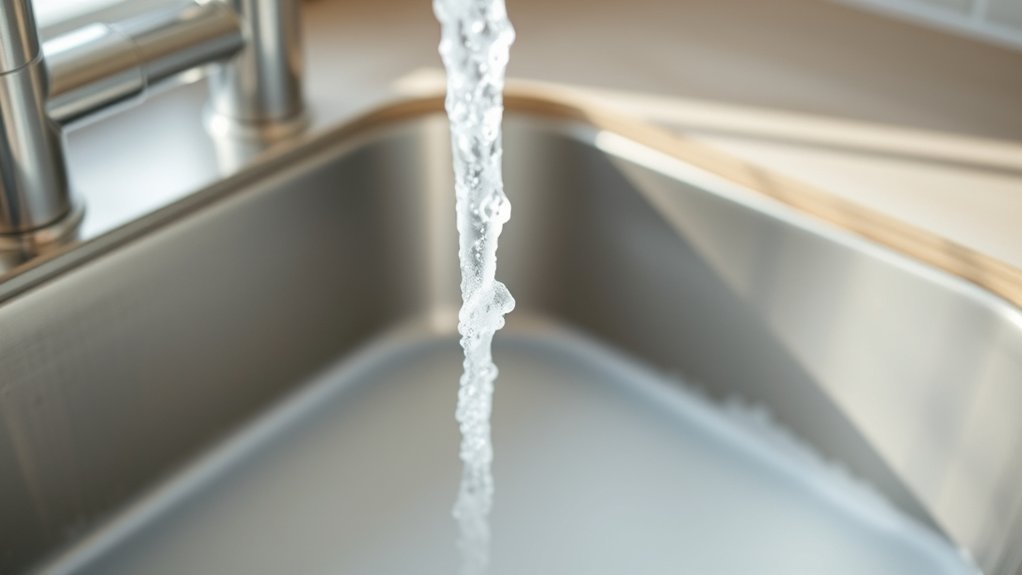
Your faucet water gets cloudy mainly due to tiny air bubbles released when pressure drops, especially after plumbing work or maintenance.
This cloudiness in faucet water is most often caused by these microscopic bubbles that form as the water adjusts to normal pressure.
Warm water encourages bubble formation because it holds less dissolved gas. Additionally, hard water minerals and corroded pipes can add particles, increasing cloudiness.
Usually, this cloudiness clears quickly and isn’t harmful. However, if the problem persists or worsens, it could signal deeper plumbing or water quality issues.
Keep exploring to understand what else might be causing it and how to fix it.
Causes of Cloudy Faucet Water When First Turned On
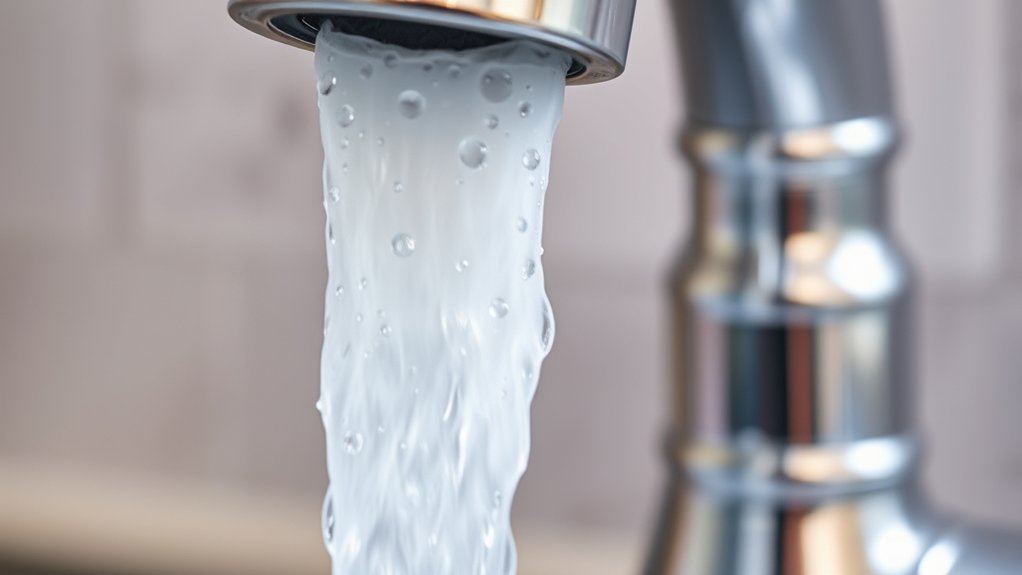
When you first turn on your faucet and see cloudy water, it’s usually due to tiny air bubbles trapped in the water. These bubbles form when water pressure changes suddenly, especially after faucet maintenance or plumbing work.
Cloudy water at first use often comes from tiny air bubbles caused by sudden pressure changes.
If air enters the pipes during repairs or filter replacement in your water filtration system, it can cause temporary cloudiness. This issue is common and typically clears within a minute as bubbles rise and dissipate.
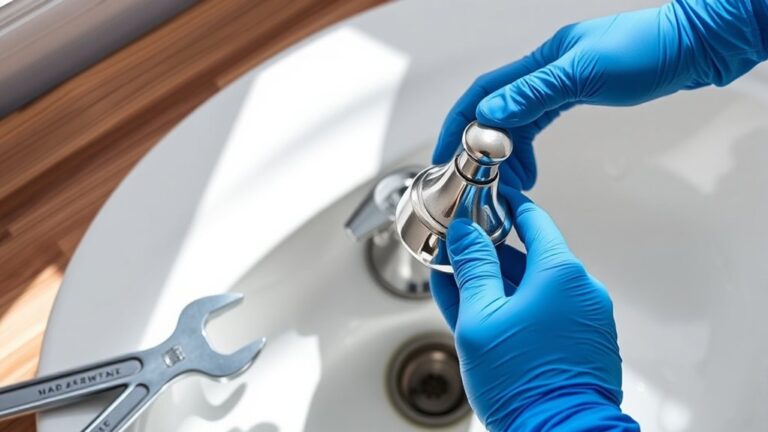
To minimize this, guarantee proper faucet maintenance by checking for leaks or loose fittings that allow air intrusion. Additionally, maintaining your water filtration system according to manufacturer guidelines prevents excessive air from entering your water supply.
Regular inspection and timely servicing help maintain clear water flow and improve overall water quality at your tap.
How Air Bubbles Cause Milky Tap Water
You’ll notice milky tap water when tiny air bubbles form as water pressure changes inside your pipes.
Cold water holds more dissolved air, so when it warms up, the air escapes, creating those bubbles. Give it a few moments, and the bubbles will rise and dissipate, clearing the water.
Formation of Air Bubbles
Although air bubbles in tap water may seem alarming, they’re a common cause of cloudy or milky water. These bubbles form when changes in air pressure cause dissolved gases to come out of solution.
You can understand the formation process by considering:
- Air Pressure Drop: When water pressure decreases, such as after pipe repairs or valve adjustments, dissolved air escapes, creating bubbles.
- Water Quality Factors: High levels of dissolved gases or minerals can increase bubble formation.
- Turbulence and Flow Rate: Fast-moving water or sudden pressure changes introduce air and encourage bubble formation.
Once the water sits, bubbles rise and disappear, clarifying the water. So, if you notice cloudy tap water, it’s often a harmless result of air pressure changes affecting water quality rather than contamination.
Temperature Effects on Water
Air pressure changes aren’t the only factor influencing the presence of air bubbles in your tap water; temperature plays a significant role as well. When water temperature rises due to heating effects, its ability to hold dissolved gases decreases. This happens because warmer water reduces gas solubility, causing dissolved air to come out of solution and form microscopic bubbles.
Proper temperature regulation in your plumbing system can minimize this effect by preventing rapid temperature fluctuations. For example, hot water from your heater often contains more visible bubbles than cold water because the heating process encourages gas release. Understanding how temperature impacts gas solubility helps explain why your tap water appears cloudy and how adjusting water temperature can reduce milky appearances caused by these suspended air bubbles.
Time for Bubble Dissipation
How long does it take for the tiny air bubbles in your tap water to disappear? The dissipation time largely depends on bubble size and water pressure. Smaller bubbles take longer to rise and vanish, causing the cloudy appearance to persist briefly after you turn on the faucet.
Higher water pressure tends to produce smaller bubbles, extending cloudiness duration.
Here’s what influences bubble dissipation time:
- Bubble Size: Larger bubbles rise faster, clearing water quicker.
- Water Pressure: Increased pressure creates finer bubbles, slowing dissipation.
- Temperature: Warmer water reduces gas solubility, accelerating bubble release.
Typically, cloudiness fades within 30 seconds to a minute as bubbles escape. Understanding these factors helps you anticipate how long milky water will last before clarity returns.
Why Hard Water Minerals Make Your Water Cloudy
When hard water minerals dissolve in your faucet water, they create tiny particles that scatter light and give the water a cloudy appearance. This cloudiness stems from mineral buildup, primarily calcium and magnesium compounds.
These minerals remain suspended, causing water to look milky rather than clear. Over time, mineral buildup can also affect your plumbing and fixtures, reducing efficiency.
| Mineral | Source | Effect on Water | Common Signs |
|---|---|---|---|
| Calcium | Groundwater | Cloudiness, scaling | White deposits |
| Magnesium | Groundwater | Cloudiness, scaling | Soap scum |
| Iron | Corroded pipes | Reddish tint | Rust stains |
| Manganese | Groundwater | Dark particles | Black deposits |
Understanding these minerals helps you address cloudy water and prevent mineral buildup.
How Temperature Changes Affect Cloudy Faucet Water
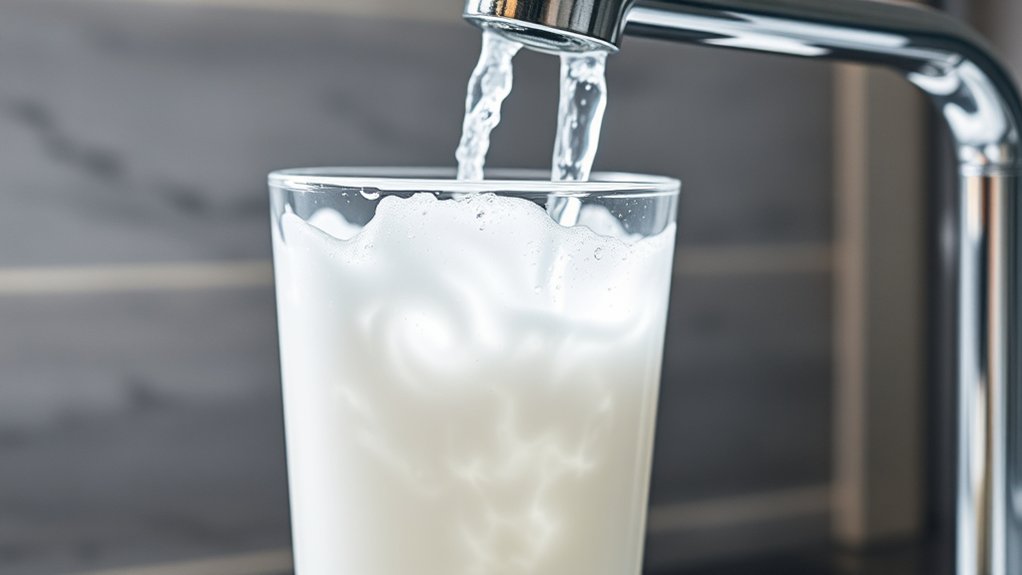
You’ll notice cloudy water more when temperature changes because solubility of gases decreases as water warms, causing dissolved air to escape. This escaping air forms tiny bubbles that create the cloudy appearance.
Understanding this mechanism helps you identify temperature as a key factor in your faucet’s water clarity.
Temperature Impact On Solubility
Although cloudy faucet water can stem from various causes, temperature changes play a crucial role by affecting the solubility of gases dissolved in your water. As temperature varies, solubility factors shift, influencing how much gas water can hold. When water warms, its capacity to retain gases decreases, leading to gas release and temporary cloudiness.
Consider these key points:
- Cold water holds more dissolved gases due to higher solubility.
- As temperature rises, solubility decreases, causing gases to exit solution.
- Rapid temperature changes amplify this effect, increasing cloudiness.
Understanding how temperature variations impact solubility helps you diagnose cloudy water issues. Monitoring water temperature and anticipating solubility shifts can clarify whether cloudiness results from dissolved gas behavior rather than contaminants or sediment.
Air Bubbles Formation Mechanism
Since temperature changes reduce the solubility of gases in water, dissolved air escapes as tiny bubbles when water pressure drops as it flows from your pipes. When water warms, it holds less dissolved air, causing this gas to come out of solution.
As water leaves high-pressure pipes and enters lower-pressure environments, like your faucet, the sudden drop in air pressure triggers bubble formation. These bubbles start microscopic but grow quickly as trapped gas expands.
The bubble size depends on the magnitude of pressure change and temperature difference. Larger pressure drops produce bigger bubbles, which scatter light and create the cloudy appearance you see.
Understanding this mechanism helps you realize that cloudy water isn’t contamination but temporary air release. Letting the water sit clears the bubbles, returning clarity as the air escapes.
Could Your Plumbing Be Causing Cloudy Faucet Water?
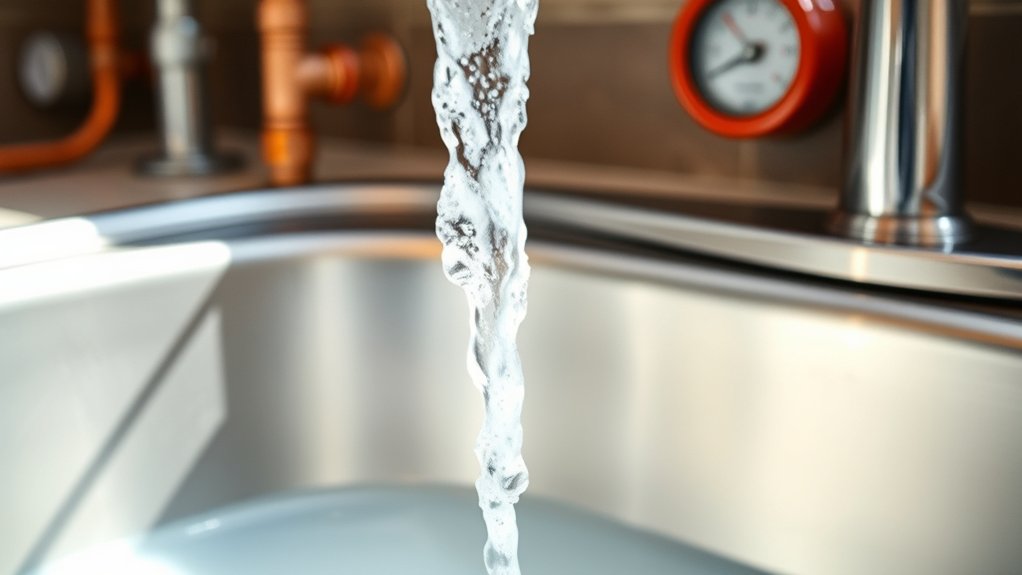
When your faucet water appears cloudy, your plumbing system might be the culprit. Plumbing issues like pipe corrosion can introduce particles that cause water turbidity. Corroded pipes release minerals and rust, leading to cloudy water.
To assess if your plumbing causes cloudiness, consider these factors:
- Age of Pipes: Older metal pipes corrode more, increasing sediment in water.
- Pipe Material: Galvanized steel or iron pipes are prone to corrosion compared to PVC or copper.
- Recent Plumbing Work: Disturbances during repairs can dislodge buildup, temporarily clouding water.
Understanding these elements helps identify if your plumbing is responsible for cloudy water. If pipe corrosion or plumbing issues are suspected, professional inspection is advisable to prevent further water quality degradation.
How to Clear Up Cloudy Faucet Water
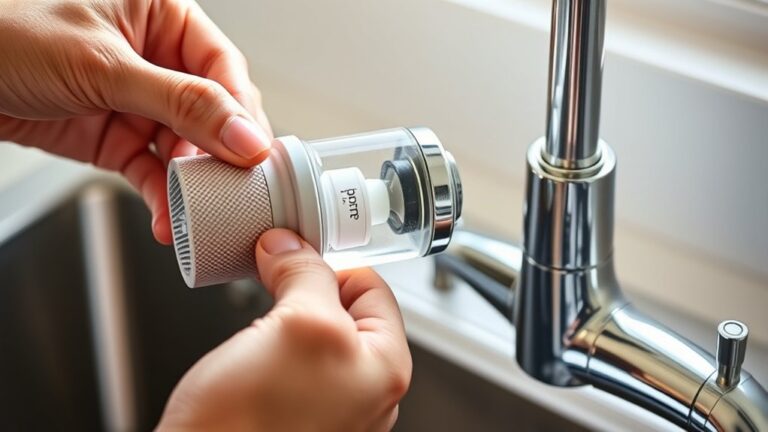
If your plumbing system isn’t the cause of cloudy water, there are several effective steps you can take to clear it up. Start with regular faucet maintenance: clean aerators and replace washers to prevent buildup. Installing a water filtration system can also remove air bubbles and impurities causing cloudiness.
Additionally, flush your pipes by running cold water for several minutes to clear trapped air.
| Action | Purpose | Recommended Frequency |
|---|---|---|
| Clean Faucet Aerator | Remove mineral deposits | Every 3 months |
| Replace Washers | Prevent leaks and buildup | Annually |
| Install Water Filter | Remove impurities and air bubbles | As needed |
| Flush Pipes | Clear trapped air | Weekly or after plumbing work |
These steps help maintain clear faucet water without plumbing intervention.
When to Contact a Professional
Although many causes of cloudy faucet water can be resolved with routine maintenance, you should contact a professional if the cloudiness persists despite your efforts or if you notice accompanying issues like discolored water, unusual odors, or fluctuating water pressure. A professional assessment will identify underlying problems that DIY methods might miss.
Consider scheduling a plumbing inspection when you encounter:
- Persistent cloudiness after basic cleaning and flushing.
- Water discoloration, indicating potential pipe corrosion or contamination.
- Unusual odors or inconsistent water pressure, suggesting systemic plumbing issues.
These signs warrant expert evaluation to prevent health risks and costly damage. A licensed plumber can perform thorough diagnostics, including water quality testing and pipe integrity checks, ensuring accurate identification and effective resolution of your cloudy water problem. Don’t delay professional help when symptoms indicate deeper plumbing concerns.
Frequently Asked Questions
Is Cloudy Water Harmful to Drink?
You might find it odd, but cloudy water causes no immediate health implications if it’s just air bubbles. However, if particles or contaminants cause the cloudiness, you should avoid drinking it until tested for safety.
Can Cloudy Water Stain Laundry or Dishes?
Yes, cloudy water can leave mineral deposits that stain laundry and dishes. You should adjust laundry tips by using water softeners and improve dish care by rinsing thoroughly to prevent spotting and residue buildup.
Does Cloudy Water Affect Water Taste or Odor?
About 85% of consumers detect taste changes from mineral content shifts. You’ll notice cloudy water may alter water quality, affecting taste or odor due to suspended minerals, but it usually poses no health risk or persistent flavor issues.
How Often Should I Flush My Water Heater?
You should flush your water heater at least once a year to prevent sediment buildup. Regular water heater maintenance guarantees efficiency and longevity.
If you have hard water, increase flushing frequency to twice a year for maximum performance.
Can Water Filters Remove Cloudiness From Faucet Water?
Yes, water filters can improve filter effectiveness by removing particles causing cloudiness. Depending on cloudiness causes, like air bubbles or sediment, you’ll need a filter designed for particulate removal to clear your faucet water efficiently.