Is Bottled Water Better Than Faucet Water
You might choose bottled water for purity and convenience, but when considering if bottled water is better than faucet water, tap water often matches or surpasses it in safety and taste.
Tap water is strictly regulated and typically contains beneficial minerals, while bottled water’s plastic packaging can affect taste and environmental impact.
Bottled water’s cost and carbon footprint are considerably higher, making tap water the more sustainable and economical choice.
Understanding these factors helps clarify when and why one might be preferable over the other.
What Are the Key Differences Between Bottled and Tap Water?
Although both bottled and tap water serve the same basic purpose, they differ considerably in source, treatment, and regulation. You’ll find bottled water often undergoes specific filtration methods, such as reverse osmosis or distillation, which can alter mineral content and flavor variations.
Tap water, regulated under strict health regulations by municipal authorities, generally retains more natural minerals. Packaging materials for bottled water, like plastic or glass, influence storage conditions and may affect taste and environmental impact.
Accessibility issues also play a role: tap water is widely available and inexpensive, whereas bottled water depends on commercial distribution. Public perception often favors bottled water for purity and convenience, despite these objective differences. Understanding these factors helps you make informed choices based on your preferences and needs.
How Safe Is Bottled Water Compared to Tap Water?
How safe is the water you drink daily, bottled or from the tap? Both bottled and tap water undergo safety measures, but they differ in oversight. Bottled water is regulated by the FDA, which enforces bottled regulations ensuring minimal contaminants and microbial safety.
Tap water, monitored by the EPA, must meet strict standards but can still contain trace tap contaminants like lead or chlorine byproducts, especially in older infrastructure. Studies show that bottled water is not inherently safer than tap water; in some cases, tap water quality surpasses bottled options.
However, risks like plastic leaching or improper storage can affect bottled water safety. Ultimately, both sources are generally safe, but knowing local water quality reports and storage practices helps you make an informed choice.
Does Bottled Water Taste Better Than Tap Water?
While safety remains a key factor in choosing your drinking water, taste often plays a significant role in preference. Your flavor preferences can be influenced by the mineral content, treatment processes, and water sources behind both bottled and tap water.
Bottled water often comes from springs or purified sources, which may contain different mineral profiles that some find more appealing. Conversely, tap water flavor can vary widely depending on your local water treatment and source, sometimes imparting chlorine or metallic notes.
Scientific studies show that taste tests yield mixed results, with some people favoring bottled water’s crispness, while others prefer tap water’s familiarity. Ultimately, your perception of taste depends on individual sensitivity and expectations, making flavor preferences highly subjective rather than universally favoring one over the other.
When Is Bottled Water More Convenient or Practical?
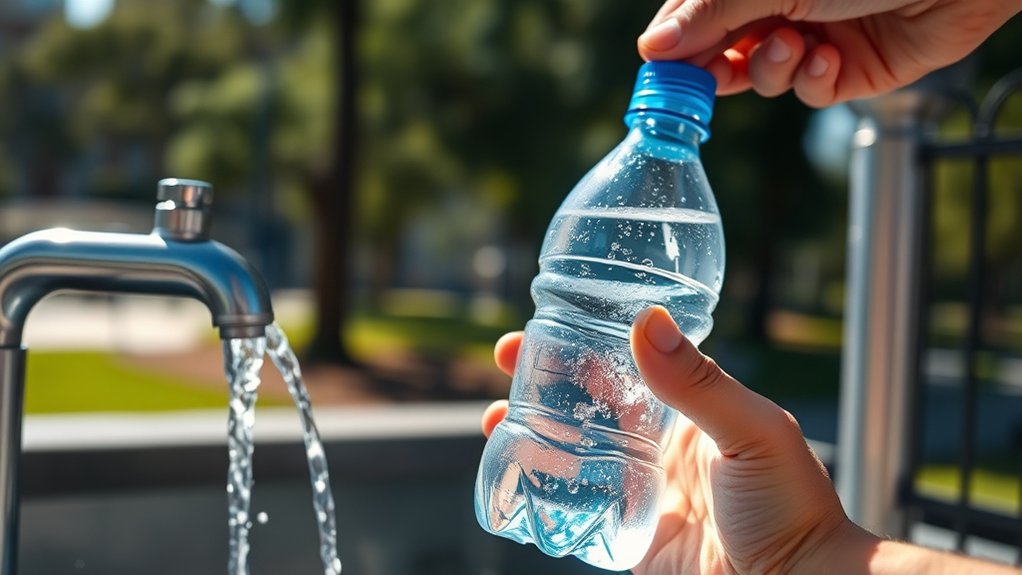
Because access to clean, safe water isn’t always assured, bottled water becomes more convenient or practical in certain situations. When you travel, bottled water guarantees reliable hydration without worrying about local water quality.
During outdoor activities like hiking or camping, it offers a portable, sealed source of water that reduces contamination risk. In emergency preparedness scenarios, having bottled water stored can be vital when tap water systems are compromised.
Additionally, for daily convenience, bottled water can save time and effort, especially in places without easy faucet access or when you’re on the go. While faucet water often meets safety standards, these contexts highlight when bottled water’s portability, reliability, and ease of use provide clear practical advantages for maintaining hydration and health.
Environmental and Cost Impact of Bottled vs Tap Water
Although bottled water offers convenience, it carries significant environmental and financial costs compared to tap water. Producing plastic bottles contributes to pollution and resource depletion, raising sustainability concerns.
The energy required for manufacturing, transportation, and refrigeration of bottled water results in a larger carbon footprint than tap water, which uses existing infrastructure. Economically, you’ll spend markedly more on bottled water, sometimes hundreds of times the cost of tap water per gallon. These economic implications extend beyond personal expense, as communities bear costs linked to plastic waste management.
Choosing tap water reduces environmental strain and saves money. By understanding these factors, you can make informed decisions that align with both your budget and environmental values, supporting a more sustainable and cost-effective water consumption approach.
Frequently Asked Questions
How Is Bottled Water Regulated Worldwide?
Like a puzzle with shifting pieces, you find bottled water regulations vary worldwide, lacking uniform global standards. You must navigate differing safety, labeling, and quality rules shaped by local authorities and international guidelines to stay informed.
Can Tap Water Contain Beneficial Minerals?
Yes, tap water can contain beneficial minerals like calcium and magnesium, offering mineral benefits.
You’ll appreciate tap advantages such as cost-effectiveness and regulation, which guarantee these minerals support your health while providing safe hydration.
What Are Common Contaminants Found in Bottled Water?
Think of bottled water sourcing as a sieve. Sometimes impurities slip through. Common contaminants include microplastics, bacteria, and trace chemicals.
Purification methods vary, but they don’t always eliminate these particles entirely, so quality can differ markedly.
How Does Water Storage Affect Bottled Water Quality?
You’ll find bottled water quality declines if storage temperature is high or fluctuates. Packaging materials like plastic can leach chemicals over time, especially when exposed to heat, affecting taste and safety.
Store it cool and shaded.
Are There Health Risks From Reusing Plastic Water Bottles?
Picture tiny cracks forming as plastic degradation sets in; you risk microbial growth inside reused bottles. This can lead to health issues, so you should avoid reusing plastic water bottles to minimize potential risks.