How to Organize a Corner Kitchen Cabinet
To organize your corner kitchen cabinet effectively, start by measuring its dimensions precisely. This step ensures you avoid buying mismatched organizers that won’t fit properly.
Next, use pull-out shelves and Lazy Susans to maximize deep, hard-to-reach spaces. Place frequently used items near the front for easy access.
Group similar items together and label containers clearly to enhance visibility and maintain order.
Regularly declutter to keep the space efficient.
With the right setup and strategies, you’ll transform that tricky corner into a practical, accessible storage area—and uncover tips to optimize it even further.
Understand Why Corner Cabinets Are Hard to Organize
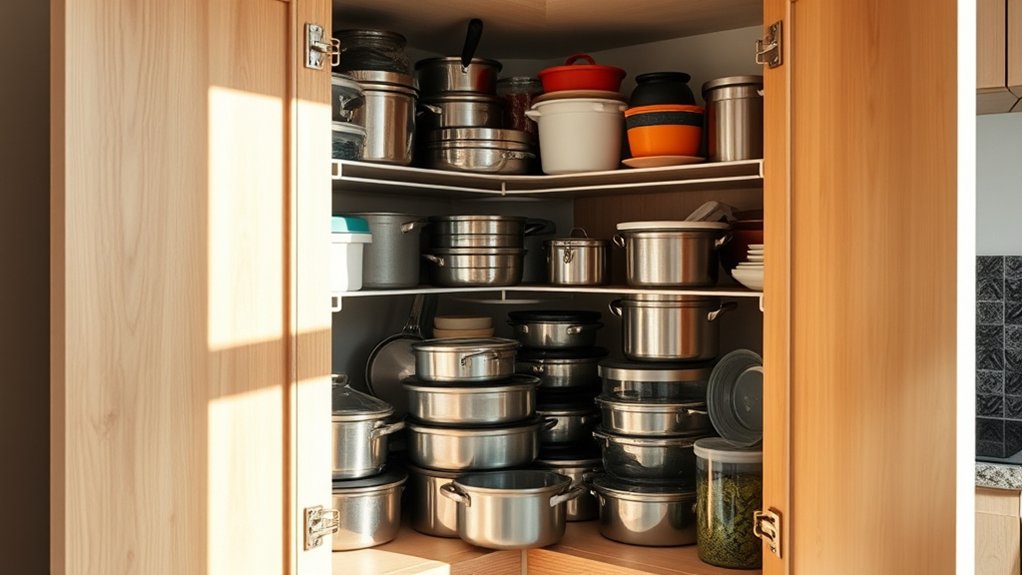
Although corner kitchen cabinets offer valuable storage space, they’re often tricky to organize because their deep, awkward shapes limit accessibility. You face several corner cabinet challenges, such as hard-to-reach areas at the back and wasted space in the cabinet’s depth.
These design limitations make it difficult to store items efficiently and find what you need quickly. You can’t just treat a corner cabinet like a regular one; its unique shape requires thoughtful solutions.
Recognizing these challenges helps you avoid frustration and plan better. Once you understand why corner cabinets are hard to organize, you can start exploring specific strategies that tackle these design limitations, turning your cabinet into a functional, easy-to-use storage area.
Measure Your Corner Cabinet to Plan Efficiently
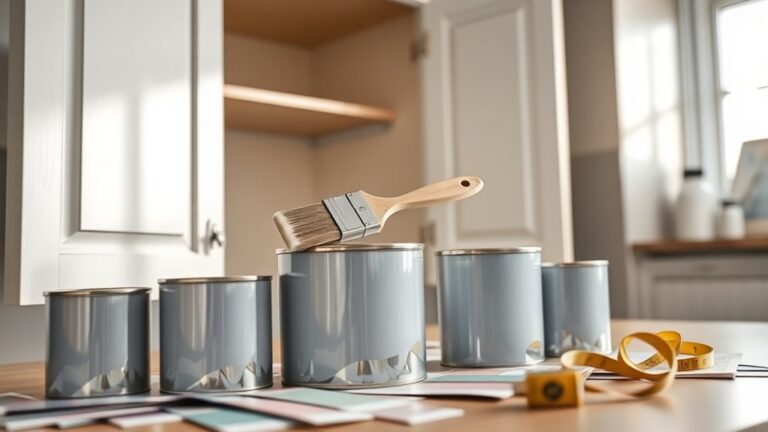
Before you start reorganizing, measure your corner cabinet carefully to create an accurate plan. Use a tape measure to record the cabinet dimensions, including height, width, and depth.
Don’t forget to note the corner measurements where the two walls meet, as these affect usable space. Measure inside the cabinet to account for shelves, hinges, and any obstructions.
Write down these corner measurements and cabinet dimensions precisely to understand how much room you have to work with. Accurate measurements help you visualize storage options and prevent buying organizers that won’t fit.
Taking the time to measure guarantees your plan will maximize space and functionality. Once you have these details, you’re ready to move on to selecting storage solutions tailored to your unique corner cabinet.
Choose the Best Storage Solutions for Corner Cabinets
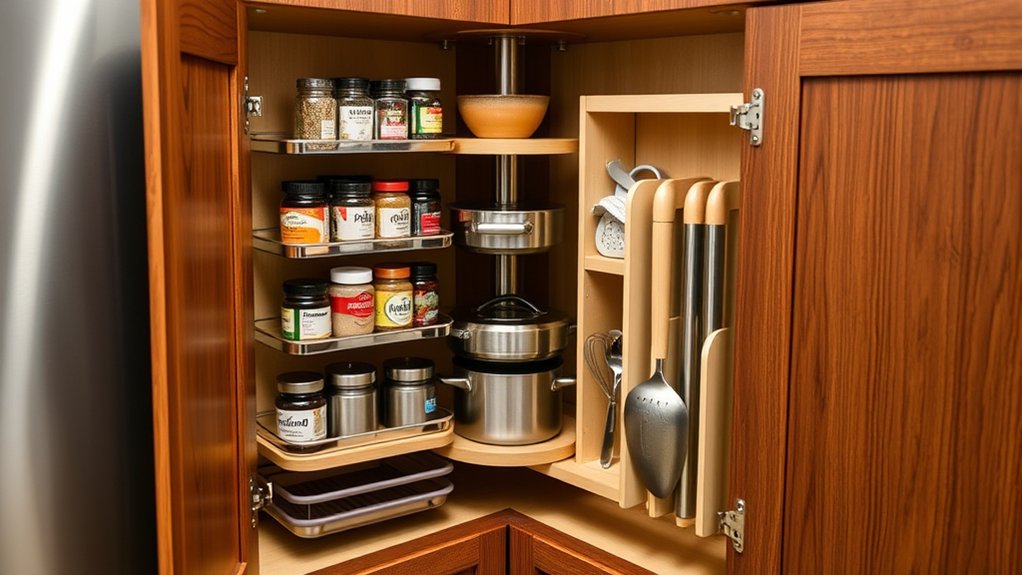
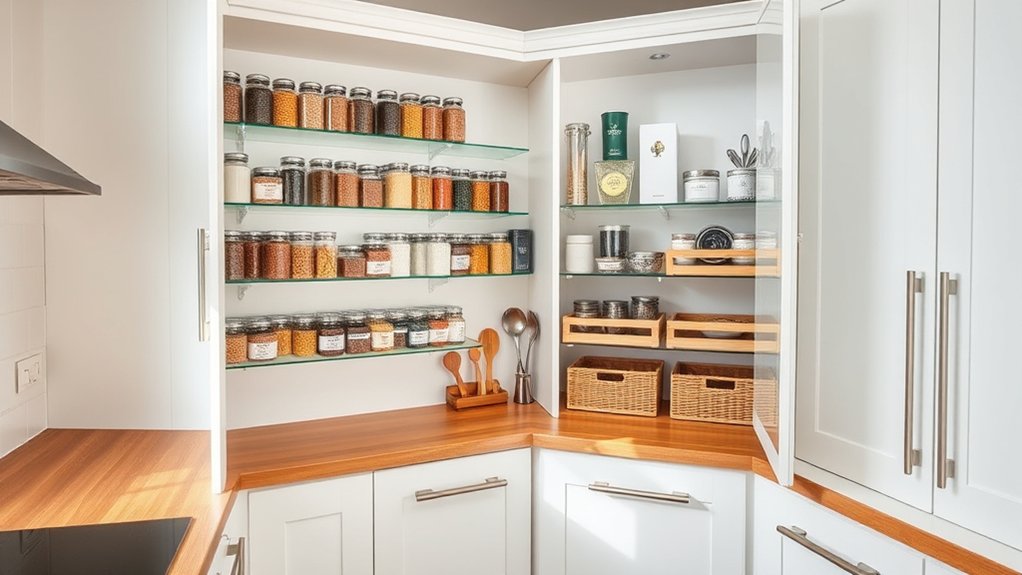
You’ll want to maximize every inch of your corner cabinet by choosing the right storage solutions. Pull-out shelves and lazy Susans make accessing items easier and keep everything organized.
Let’s explore how these options can transform your corner space.
Maximize Corner Space
One of the best ways to maximize corner space in your kitchen cabinet is by selecting storage solutions designed specifically for those hard-to-reach areas. Start by evaluating your corner cabinet design to identify unused or awkward spaces.
Consider installing lazy Susans or rotating trays to improve storage efficiency, allowing you to access items without digging through clutter. Vertical dividers can also help organize baking sheets and cutting boards, making the most of narrow spaces.
Avoid overcrowding by grouping similar items together, which enhances visibility and accessibility. Thoughtful placement of frequently used items near the cabinet’s opening further boosts storage efficiency.
Utilize Pull-Out Shelves
Maximizing corner space often means overcoming limited accessibility, and pull-out shelves offer an effective solution. These shelves use smooth pull-out mechanisms that allow you to extend storage fully, making items at the back easy to reach.
When selecting pull-out shelves, consider the cabinet height to guarantee they fit comfortably without restricting vertical space. Adjustable pull-out mechanisms can accommodate varying cabinet heights, giving you flexibility in organizing different items.
Installing these shelves transforms awkward corners into functional storage by improving visibility and access. By utilizing pull-out shelves, you’ll reduce clutter and make better use of every inch inside your corner cabinet.
This practical upgrade streamlines your kitchen routine and keeps everything within easy reach.
Incorporate Lazy Susans
Although corner cabinets can be tricky to organize, incorporating Lazy Susans can make accessing items effortless. Lazy Susan benefits include maximizing space, improving visibility, and reducing clutter.
To choose the right Lazy Susan dimensions for your cabinet, consider these steps:
- Measure the cabinet’s interior width and depth accurately.
- Select a Lazy Susan size that fits comfortably, allowing smooth rotation.
- Opt for tiered or divided trays to separate items and optimize storage.
- Install sturdy, smooth-turning hardware for easy access and durability.
Use Lazy Susans and Pull-Out Shelves to Maximize Access
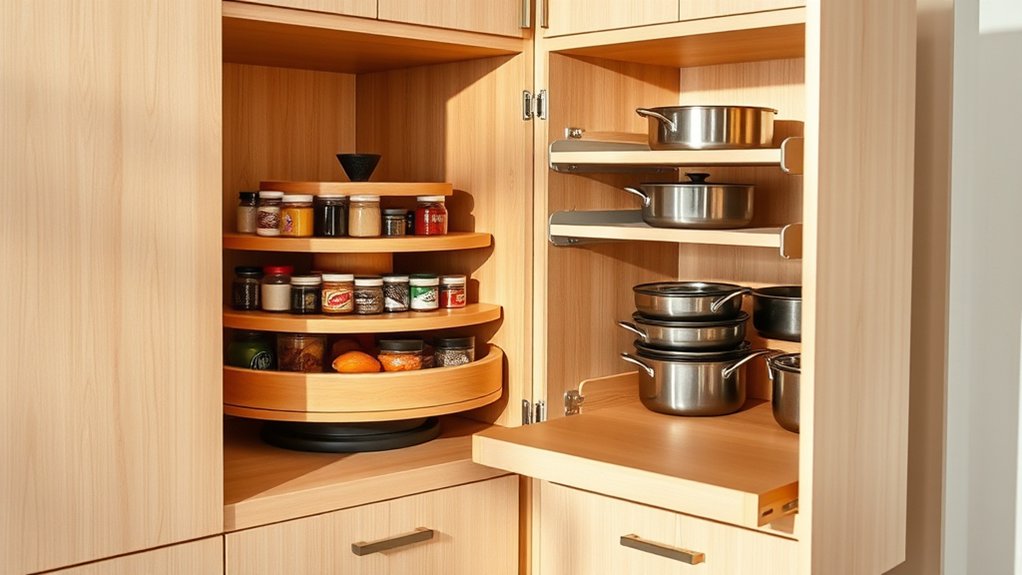
You can make corner cabinets much easier to use by adding Lazy Susans and pull-out shelves. Lazy Susans bring items to you with a simple spin, while pull-out shelves let you reach deep corners without stretching.
I’ll walk you through the types available and share tips for smooth installation.
Benefits of Lazy Susans
When you install a Lazy Susan in your corner kitchen cabinet, you gain easy access to items that usually get lost in the back. Lazy Susan types vary, including two-tier and kidney-shaped designs, each tailored to fit different cabinet shapes. The choice of lazy Susan materials, like wood, metal, or plastic, affects durability and ease of cleaning.
Here’s why you should consider adding one:
- Maximizes storage by utilizing awkward corner space efficiently.
- Enhances accessibility, letting you reach items with a simple spin.
- Reduces clutter, keeping your kitchen organized and tidy.
- Saves time during meal prep by making frequently used items easy to find.
With these benefits, Lazy Susans transform your corner cabinet into a functional, user-friendly space.
Types of Pull-Out Shelves
Three popular types of pull-out shelves can dramatically improve access and organization in your corner kitchen cabinet. Sliding shelves let you glide items out smoothly, making everything easy to reach.
Adjustable racks offer flexibility, allowing you to customize shelf heights for different storage needs. Wire baskets provide sturdy storage and good visibility, perfect for canned goods or snacks.
| Type | Features | Best For |
|---|---|---|
| Sliding Shelves | Smooth glide, easy access | Pots, pans, small appliances |
| Adjustable Racks | Customizable height, versatile | Mixing bowls, bakeware |
| Wire Baskets | Ventilated, sturdy | Canned goods, snacks |
Using these pull-out shelves alongside Lazy Susans maximizes space and keeps your corner cabinet organized and accessible.
Installation Tips and Tricks
Pull-out shelves and Lazy Susans can transform your corner kitchen cabinet, but proper installation guarantees they work smoothly and last longer. You’ll face installation challenges like tight spaces and uneven surfaces, so prepare with the right installation materials. Here’s how to tackle it:
- Measure precisely to avoid misalignment and confirm smooth operation.
- Choose sturdy installation materials, such as screws, brackets, and tracks, that fit your cabinet’s weight and size.
- Install Lazy Susans first, centering the rotating base to prevent wobbling.
- Mount pull-out shelves carefully, testing glide mechanisms before securing them fully.
Following these steps helps you maximize access and durability, turning a tricky corner cabinet into a functional storage space.
Organize Corner Cabinet Items by Type for Easy Access
Sorting your corner cabinet items by type makes finding what you need faster and keeps the space tidy. Start by categorizing items into groups like pots and pans, baking supplies, or small appliances. This separation prevents clutter and streamlines your search process.
Next, prioritize accessibility by placing frequently used categories near the cabinet’s opening. Less-used items can go deeper inside, ensuring you don’t have to dig through everything for everyday essentials.
Use adjustable shelves or pull-out racks to maximize space and visibility for each category. By organizing with clear categories and accessibility in mind, you’ll maintain an orderly cabinet that supports your kitchen workflow.
This methodical approach saves time and reduces frustration every time you open your corner cabinet.
Label and Group Corner Cabinet Items for Quick Identification
When you label and group items in your corner cabinet, you make it easier to find what you need quickly. Start by choosing effective labeling techniques, such as clear, durable labels or color-coded tags, to mark containers and shelves.
Use grouping strategies that cluster similar items together, like baking goods, canned foods, or snacks. Follow these steps:
- Sort items by category to streamline storage.
- Assign visible labels to each group for instant recognition.
- Use consistent labeling techniques to avoid confusion.
- Store labeled groups in designated sections for easy retrieval.
These labeling techniques and grouping strategies reduce search time and keep your corner cabinet organized, so you spend less time digging and more time cooking.
Keep Frequently Used Corner Cabinet Items Within Easy Reach
To make your cooking routine smoother, keep the five to seven items you use most often within easy reach in your corner cabinet. Organize these frequent items so you grab them quickly without digging through clutter.
Use pull-out shelves or lazy Susans to enhance easy access, ensuring your daily essentials stay visible and accessible.
Here’s a simple way to categorize and place frequent items:
| Item Type | Example | Placement Tip |
|---|---|---|
| Spices | Salt, pepper, herbs | Front, eye-level shelf |
| Cooking oils | Olive oil, vegetable oil | Side shelf, easy grab |
| Utensils | Measuring cups, spoons | Drawer or pull-out bin |
| Baking essentials | Flour, sugar, baking soda | Back shelf, grouped |
This method keeps frequent items handy and boosts kitchen efficiency.
Keep Your Corner Cabinet Clutter-Free With Regular Decluttering
Although corner cabinets are often deep and spacious, they can quickly become a catch-all for unused or expired items. To keep your corner cabinet clutter-free, stick to a decluttering schedule.
Here’s how you can manage it effectively:
- Set a monthly reminder to review all items, checking expiration dates and usability.
- Remove anything broken, expired, or no longer needed.
- Use organizing tips like grouping similar items and labeling containers for easy access.
- Wipe down shelves during each decluttering session to maintain cleanliness.
Frequently Asked Questions
Can Corner Cabinets Be Converted Into Pantry Storage?
Yes, you can convert corner cabinets into a corner pantry. Use smart storage solutions like pull-out shelves or lazy Susans to maximize space, making it easy for you to organize and access your pantry items efficiently.
What Lighting Options Work Best Inside Corner Cabinets?
You’ll find LED strip cabinet lighting with motion sensors works best inside corner cabinets, offering bright, energy-efficient illumination.
Pair it with ambient lighting to enhance visibility and create a welcoming atmosphere in your kitchen’s hidden spaces.
How Do I Prevent Moisture Buildup in Corner Cabinets?
You can prevent moisture buildup by installing moisture barriers inside your corner cabinets and ensuring proper cabinet ventilation. Use vented grilles or small fans to keep air circulating, reducing dampness and protecting your items from mold or damage.
Are Corner Cabinet Organizers Compatible With All Cabinet Materials?
You’ll find most corner cabinet organizers work with various cabinet materials, but compatibility depends on corner cabinet styles and organization tools.
Always check installation requirements to confirm your cabinet’s material supports the hardware and style you choose.
Can Corner Cabinets Accommodate Large Kitchen Appliances?
You might think corner cabinet accessibility limits large appliance storage, but it doesn’t. With smart appliance storage solutions like pull-out shelves or lazy Susans, you can easily store and access bulky kitchen gadgets in corner cabinets.