How to Clean Tub Faucet
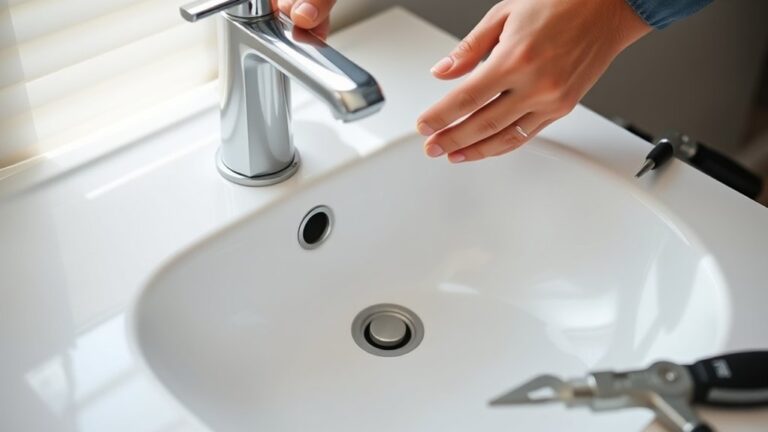
To clean your tub faucet effectively, start by gathering soft cloths, a small firm brush, mild dish soap, and white vinegar. These tools will help you tackle dirt and buildup without damaging the fixture.
Mix equal parts vinegar and water, then apply the solution to stained areas. Let it sit for about 10 minutes to loosen grime. Afterward, gently scrub with a non-abrasive sponge to avoid scratching the surface.
For tough hard water stains, use a baking soda paste. Apply it directly to the stains and scrub gently.
Clean handles and tight spots with a small brush or cotton swabs to reach difficult areas.
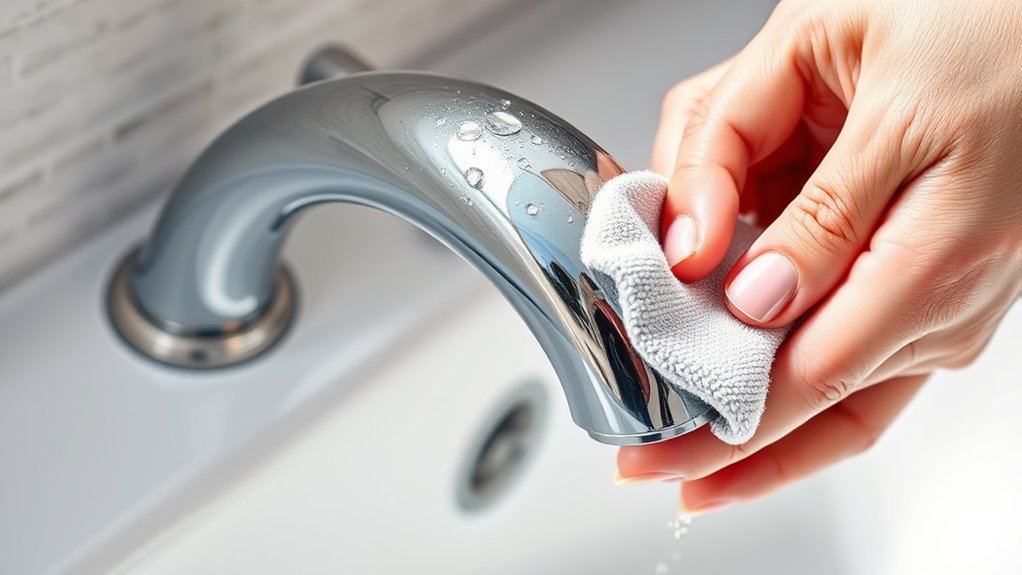
Finally, dry the faucet thoroughly to prevent future buildup. Following these steps helps maintain your tub faucet’s shine and proper function. Explore more tips to keep it spotless longer.
What You Need to Clean Your Tub Faucet
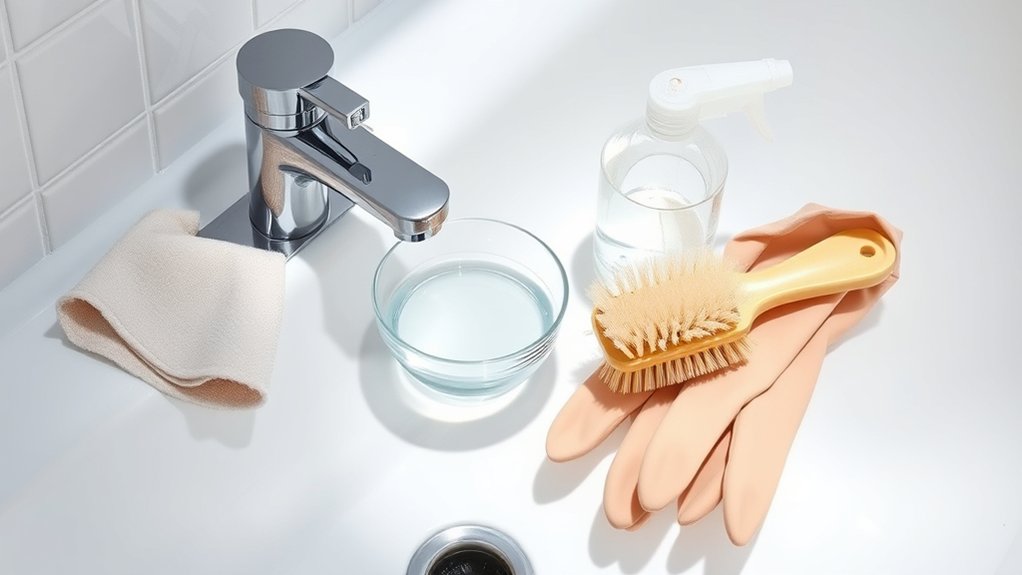
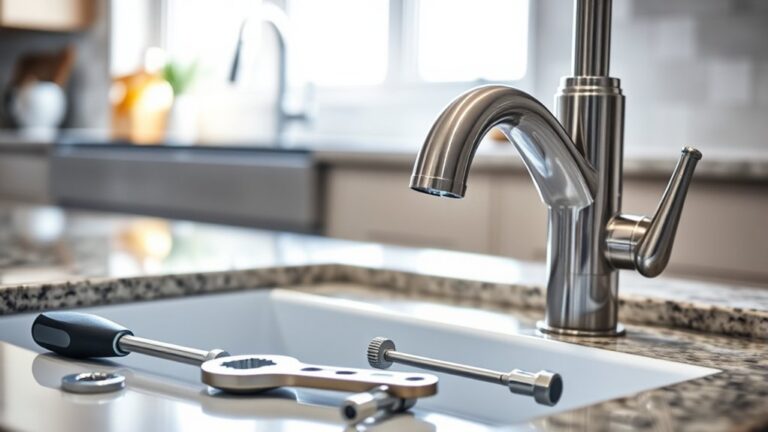
To clean your tub faucet effectively, you’ll need a few essential tools and supplies. Gather a soft cloth, a small brush with firm bristles, mild dish soap, white vinegar, and a spray bottle. These cleaning supplies are vital for removing dirt without damaging the faucet’s finish.
You’ll also want rubber gloves to protect your hands and a microfiber towel for drying. For peak results, prepare a solution of equal parts water and vinegar in the spray bottle, which helps break down buildup gently.
Incorporate regular maintenance tips by wiping your faucet weekly with a damp cloth to prevent grime accumulation. Avoid abrasive cleaners that could scratch the surface. Having these supplies and habits in place guarantees your tub faucet remains functional and visually appealing over time.
How to Remove Soap Scum and Hard Water Stains
Maintaining your tub faucet’s cleanliness regularly helps prevent buildup, but soap scum and hard water stains can still accumulate over time. To remove soap scum, apply a mixture of equal parts white vinegar and water directly onto the affected areas.
Let it sit for 10 minutes to break down residue, then scrub gently with a non-abrasive sponge. For hard water stains, use a paste made from baking soda and water; apply it to the stains and allow it to sit for 15 minutes before scrubbing.
Rinse thoroughly with warm water to guarantee no residue remains. Repeat these steps weekly or as needed to maintain a spotless faucet and prevent further soap scum and hard water buildup, assuring peak function and appearance.
Cleaning Faucet Handles and Hard-to-Reach Areas
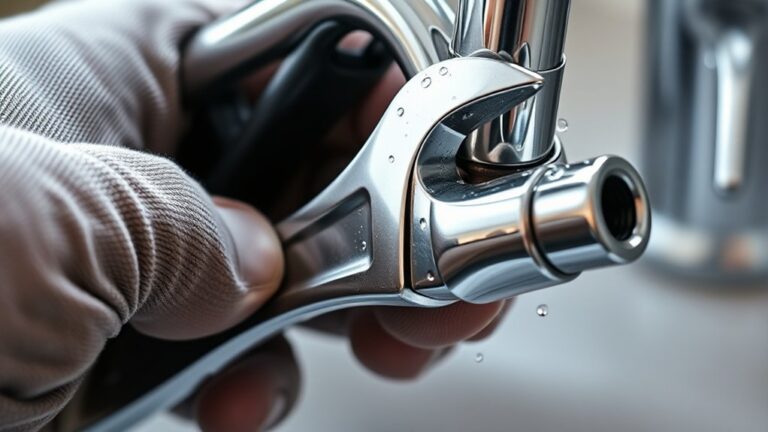
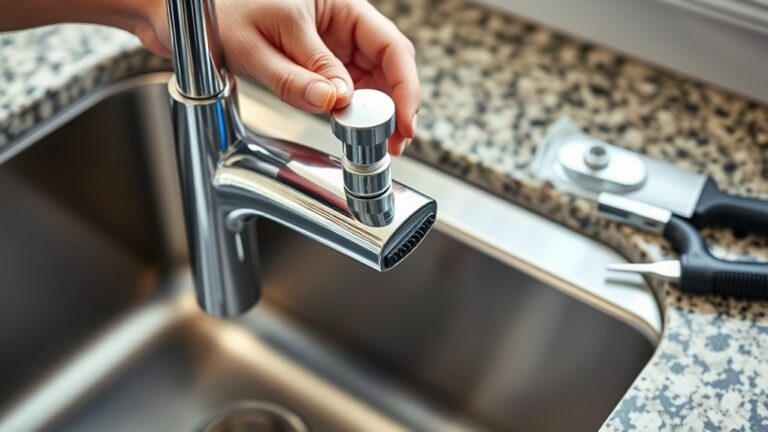
Three essential tools will make cleaning faucet handles and hard-to-reach areas more effective: a small brush, cotton swabs, and a microfiber cloth. Start by identifying your handle materials, metal, plastic, or ceramic, as this determines the appropriate cleaning agents and tools.
Use the small brush to scrub around the base and crevices, where grime accumulates. Cotton swabs are perfect for narrow gaps and intricate detailing, allowing you to remove dirt without damaging surfaces.
Finish by wiping the handles and nearby areas with a microfiber cloth to eliminate residue and polish the finish. Select non-abrasive cleaning tools to avoid scratching delicate handle materials. Consistent attention to these areas prevents buildup and maintains your tub faucet’s functionality and appearance.
How to Prevent Soap Scum and Buildup on Your Tub Faucet
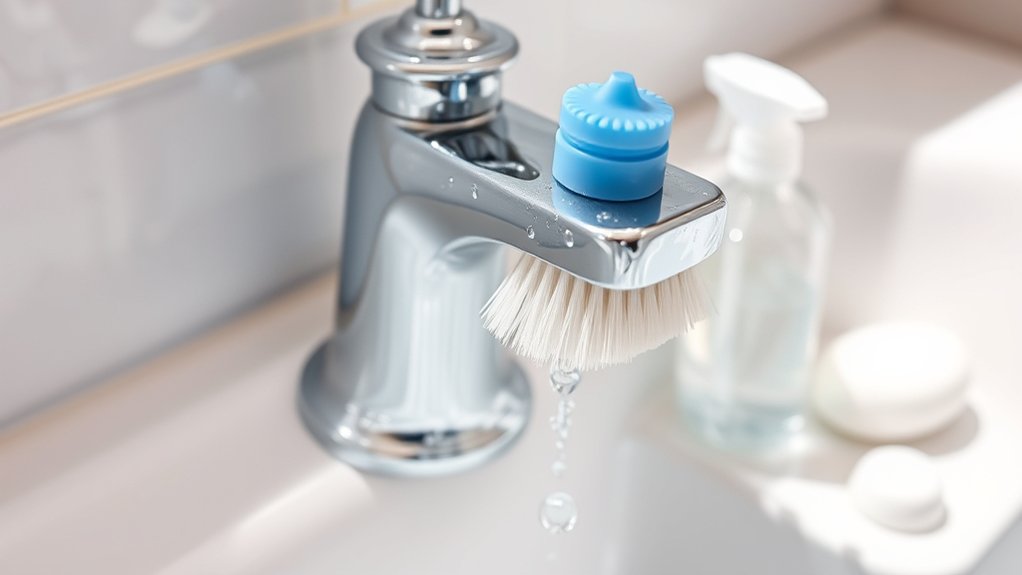
Although soap scum and mineral buildup are common issues with tub faucets, you can greatly reduce their occurrence by adopting a few targeted habits. Implement preventive maintenance by wiping down your faucet after each use to remove water droplets and soap residue before they harden. Use a squeegee or microfiber cloth for effective drying.
Choose appropriate cleaning solutions, such as mild vinegar-based sprays, to dissolve minerals without damaging the finish. Avoid harsh chemicals that can degrade faucet components. Schedule regular cleanings at least once a week to prevent buildup from becoming stubborn.
Additionally, consider installing a water softener if you have hard water to minimize mineral deposits. These practical steps guarantee your tub faucet remains clean and functional, reducing the need for intensive future cleaning efforts.
Troubleshooting Common Tub Faucet Cleaning Issues
When you encounter persistent stains or buildup that won’t respond to regular cleaning, it’s important to identify the root cause before applying more aggressive methods. First, consider the faucet materials. Metal finishes like brass or chrome require specific cleaners to avoid damage. Using abrasive products on delicate surfaces can worsen stains or cause corrosion.
Next, evaluate your cleaning frequency. Infrequent maintenance allows mineral deposits and soap scum to harden, making removal difficult. If buildup persists, try a targeted solution such as a vinegar soak for mineral deposits, but always test in an inconspicuous spot.
Additionally, inspect for underlying issues like leaks or water hardness, which accelerate deposits. Adjusting cleaning routines based on faucet materials and water quality guarantees effective maintenance without compromising the fixture’s integrity.
Frequently Asked Questions
Can I Use Bleach to Clean My Tub Faucet?
You shouldn’t use bleach on your tub faucet, as it can damage certain faucet materials like chrome or brass. Instead, opt for bleach alternatives like vinegar or baking soda, which clean effectively without causing corrosion.
How Often Should I Replace My Tub Faucet?
You should replace your tub faucet every 15-20 years, matching its average faucet lifespan. Watch for replacement signs like leaks, corrosion, or reduced water pressure to maintain efficiency and prevent costly water damage.
Are There Eco-Friendly Cleaning Products for Faucets?
Yes, you can use eco-friendly cleaning products for faucets by choosing natural alternatives like vinegar, baking soda, or lemon juice.
Homemade solutions combine these ingredients for effective, chemical-free cleaning that’s safe for you and the environment.
Can Cleaning Damage the Faucet Finish?
Yes, improper cleaning techniques can damage faucet materials like brass or chrome. You should avoid abrasive scrubbers and harsh chemicals, opting instead for gentle, non-abrasive cleaners tailored to your faucet’s specific finish to preserve its integrity.
How Do I Fix a Leaking Tub Faucet?
Think of your faucet as a puzzle. Fixing leaks requires precise faucet repair techniques. Start by identifying common leaks, then replace worn washers or cartridges.
Next, tighten connections and test for drips to guarantee a watertight seal and efficient flow.