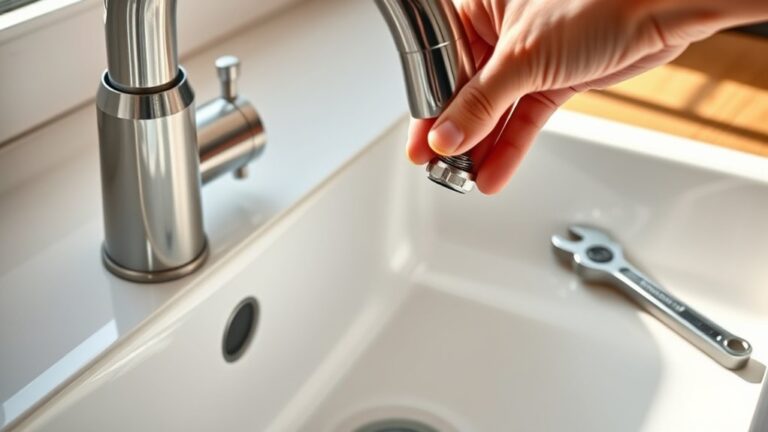
How Do You Say Faucet in Spanish
When you say “faucet” in Spanish, the term changes depending on the country. In Spain, you’ll use “grifo,” while in Argentina, “canilla” is the go-to word.
Mexico prefers “llave,” which also means “key” in Chile, so context matters there.
Using the right term helps you communicate clearly, especially in hotels or fixing leaks.
Keep exploring, and you’ll uncover how these regional differences shape everyday conversations.
Common Faucet Terms in Spanish by Country
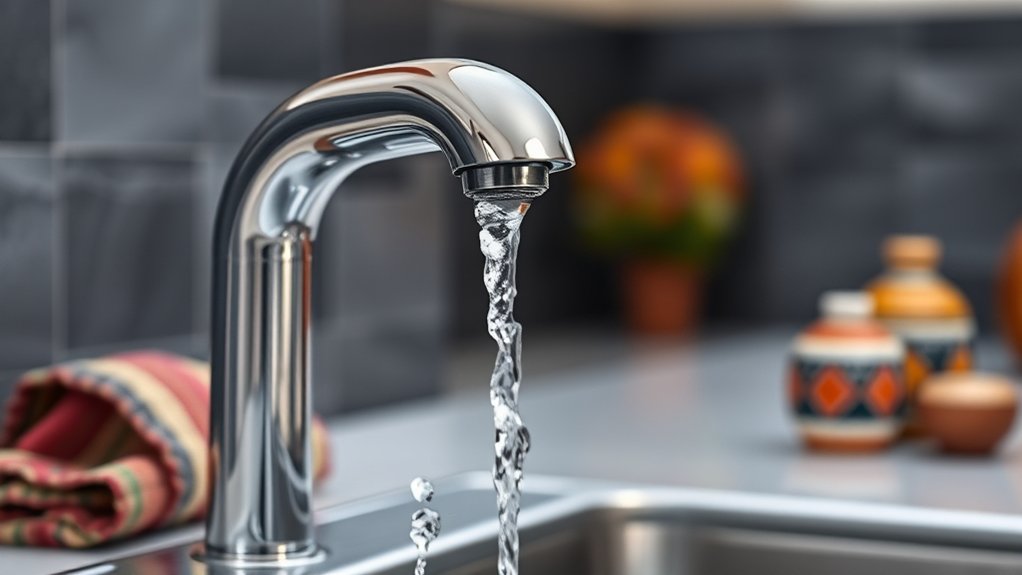
Although the word for faucet generally revolves around a few key terms, the specific word you’ll hear can vary depending on the Spanish-speaking country you’re in. When discussing faucet maintenance or different faucet styles, knowing the right term helps you communicate clearly.
For example, in many places, “grifo” is the common term, while others prefer “llave” or “canilla.” When you’re handling faucet maintenance, understanding these terms guarantees you get the correct parts or advice.
Different faucet styles, like single-handle or double-handle, might also have local names that vary slightly. By familiarizing yourself with these common faucet terms in Spanish, you’ll navigate conversations about plumbing or home improvement with greater ease and accuracy, regardless of where you are.
Regional Variations in Faucet Vocabulary
Knowing the common faucet terms like “grifo,” “llave,” and “canilla” is a great start, but understanding how these words change across regions will help you communicate even better. Variations in terminology often reflect cultural significance and local preferences, so knowing them helps you avoid confusion.
Here’s a quick look:
| Country | Common Term | Cultural Note |
|---|---|---|
| Spain | Grifo | Widely used in everyday language |
| Argentina | Canilla | Often used in households and public spaces |
| Mexico | Llave | Commonly refers to faucet or valve |
| Chile | Llave | Also means key, but context clarifies |
Using Faucet Terms: Contexts Like Hotels and Homes
When you stay in hotels or visit homes across Spanish-speaking countries, you’ll notice that faucet terms like “grifo,” “llave,” and “canilla” appear in different contexts. In hotels, “grifo” is often used to describe water fixtures in bathrooms and kitchens, while “llave” commonly refers to the tap handle you turn to control water flow.
At home, especially in countries like Argentina, “canilla” is a familiar term for faucets in everyday plumbing. Understanding these nuances helps you communicate clearly about water fixtures, whether you’re reporting a leak or asking for assistance. Being familiar with local plumbing terminology guarantees you recognize the right term in context, making your interactions smoother and more effective in both residential and hospitality settings.
How to Ask for a Faucet When Traveling in Spanish
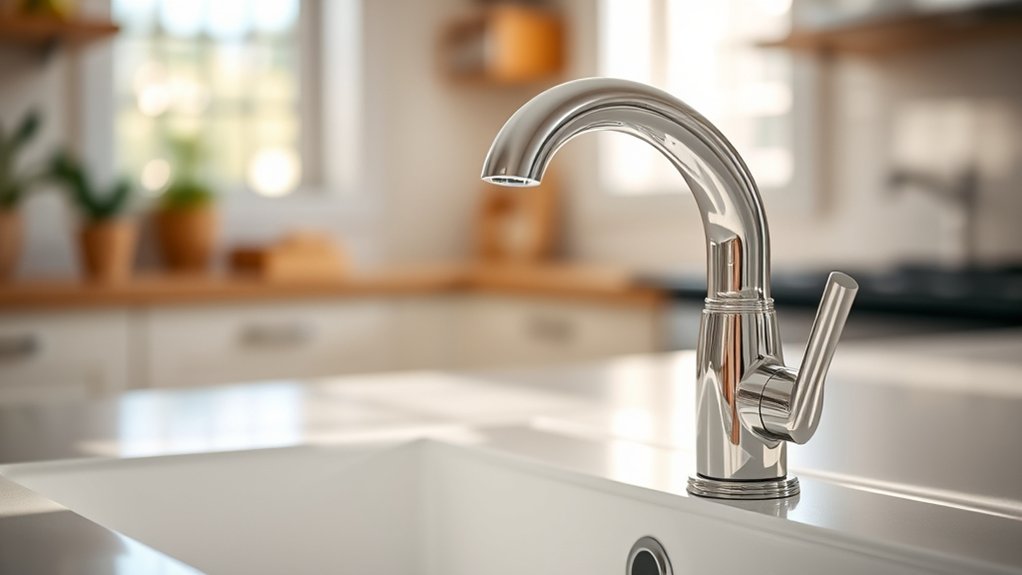
Wondering how to ask for a faucet while traveling in a Spanish-speaking country? It’s helpful to learn key travel phrases and bathroom vocabulary to communicate clearly.
If you need to fix or locate a faucet, say, “¿Dónde está el grifo?” (Where is the faucet?) or “¿Puede ayudarme con el grifo, por favor?” (Can you help me with the faucet, please?). In hotels or public places, staff will understand these phrases, making your request straightforward.
Knowing related words like “lavabo” (sink) can also help, as faucets are usually found there. Practice these travel phrases before your trip to confidently handle any bathroom-related questions or issues involving faucets.
This preparation guarantees smooth communication and a stress-free travel experience.
Frequently Asked Questions
What Is the Origin of the Word “Faucet”?
You’ll find the faucet’s history traces back to Old English “focsæt,” meaning a device to control water flow. Its linguistic evolution reflects practical design changes and language shifts, showing how everyday terms adapt over time.
How Do You Pronounce “Faucet” in Spanish?
You pronounce “faucet” in Spanish as “grifo” (GREE-fo). For clear faucet terminology, emphasize the first syllable and soften the ‘r.’
Practice pronunciation tips by repeating slowly, focusing on crisp vowel sounds for accuracy.
Are There Slang Terms for Faucet in Spanish?
Slang terms swirl like water drops; you’ll find regional variations like “llave” or “canilla,” but watch out for gringo slang mixing English and Spanish.
Your best bet is to learn local words to avoid confusion.
What Materials Are Common for Faucets in Spanish-Speaking Countries?
You’ll find brass, stainless steel, and chrome as common material types for faucets in Spanish-speaking countries. Installation methods vary, including wall-mounted or countertop, so choose based on durability and plumbing compatibility for the best fit.
How Has Faucet Technology Evolved in Latin America?
You’ve seen faucet technology bloom like a desert flower. Latin America now embraces smart faucets that conserve water, blending innovation with tradition to save resources.
These designs enhance everyday life with sleek, efficient features that respect the environment.