How to Connect Hose to Faucet
To connect a hose to your faucet, first choose compatible hose and faucet fittings, guaranteeing the hose diameter matches the faucet thread size. Make sure to select the right connection to ensure a secure fit and prevent leaks.
Clean your faucet’s threads and confirm it’s typically a ¾-inch garden hose thread. Align the hose connector with the faucet, seat the rubber washer properly, and hand-tighten clockwise to avoid cross-threading.
Turn on water slowly to check for leaks, tightening gently if needed. Following these steps guarantees a secure, leak-free connection, with additional tips available to optimize your setup.
Choose the Right Hose and Faucet Fittings
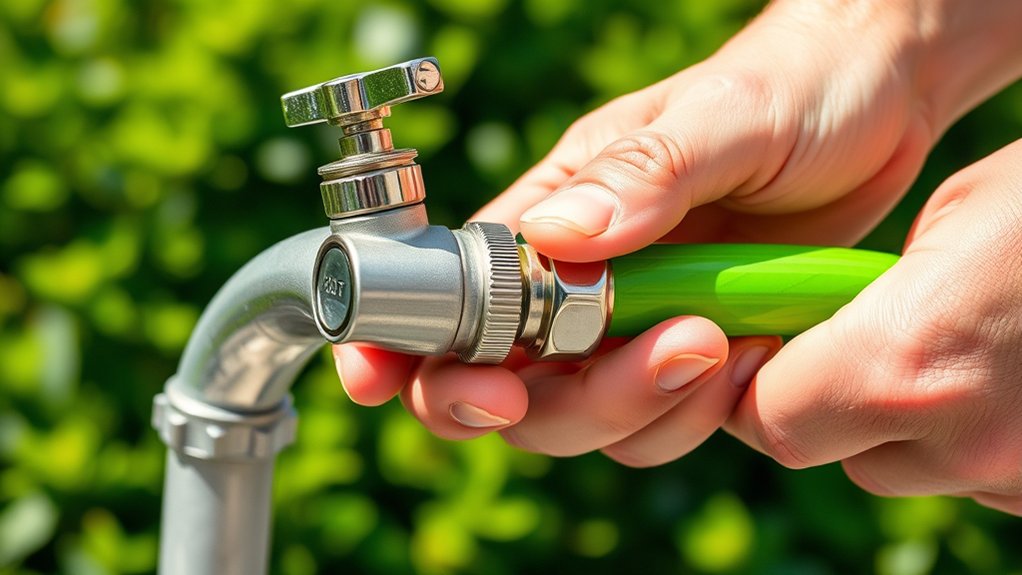
Selecting the correct hose and faucet fittings is essential for a secure and leak-free connection. First, identify your faucet types. Common ones include threaded, quick-connect, and compression fittings. Match these with compatible hose fittings to guarantee proper attachment.
Next, consider hose materials: rubber, vinyl, or reinforced options each have different flexibility and durability. Choose hose fittings designed to accommodate your hose material’s thickness and flexibility. Avoid mixing incompatible fittings, as this can cause leaks or damage.
Use fittings with corrosion-resistant materials like brass or stainless steel for longevity. Finally, verify that hose diameter aligns with the faucet fitting size to maintain ideal water flow and pressure. Following these steps guarantees a reliable, efficient hose-to-faucet connection every time.
Get Your Faucet Ready for Hose Connection
Prepare your faucet by thoroughly cleaning its threads or connection points to remove dirt, debris, and old sealant. Use a wire brush or cloth to guarantee the surface is smooth and free from corrosion, which can affect the seal.
Identify your faucet type, whether it’s a standard outdoor faucet, a bibcock, or a threaded spigot, as each requires compatible fittings. Inspect the hose materials you plan to use, noting that rubber and vinyl hoses may need different connectors due to flexibility and diameter variations.
Verify the faucet’s thread size and type, usually ¾-inch garden hose thread, to match your hose fittings precisely. Confirming a clean, compatible, and well-prepared faucet connection point prevents leaks and extends the durability of your hose attachment.
Attach Your Hose: Step-by-Step Instructions
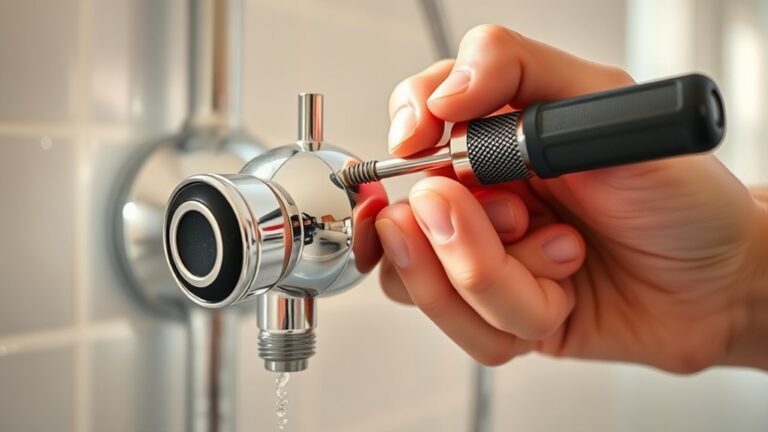
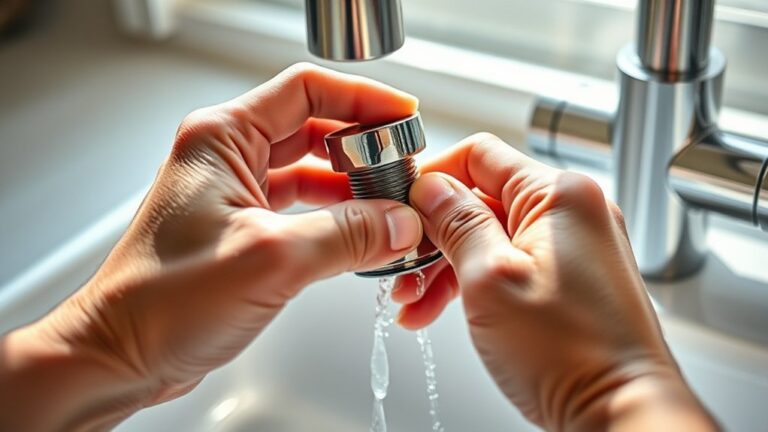
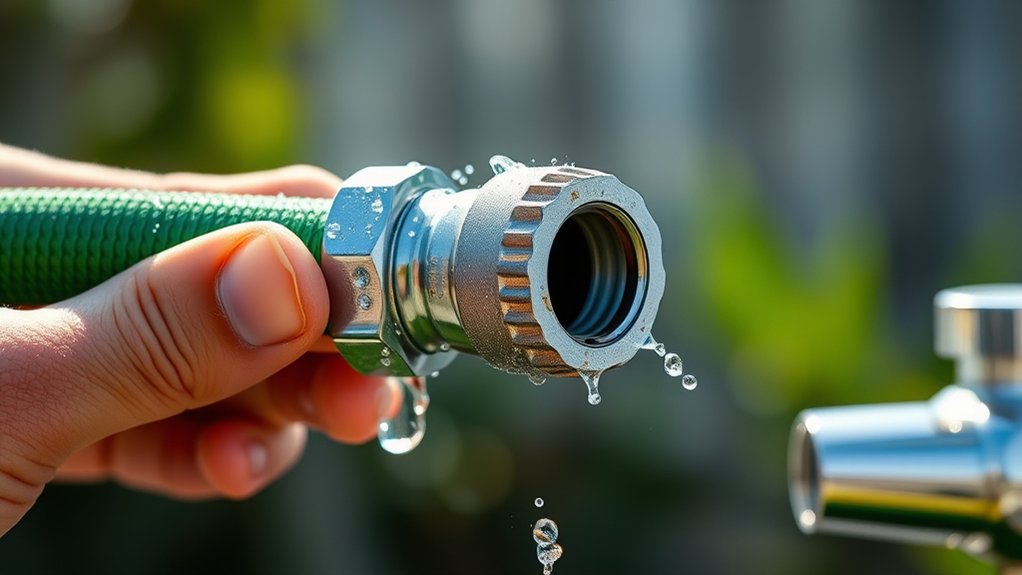
Begin by aligning the hose connector with the faucet’s threaded spout, making certain the rubber washer inside the connector is properly seated to create a tight seal. Depending on your hose type, such as vinyl or reinforced rubber, select the appropriate fitting materials, commonly brass or plastic, for durability and corrosion resistance.
Firmly hand-tighten the connector clockwise onto the faucet threads, avoiding cross-threading by maintaining alignment. Use a wrench only if necessary, applying gentle pressure to prevent damaging the fitting materials. For quick-connect hoses, push the connector onto the faucet until you hear a click, confirming a secure fit.
Verify the hose end is compatible with the faucet and fittings to guarantee peak performance. Following these steps precisely guarantees a secure, leak-resistant connection.
Check for Leaks and Fix Common Problems
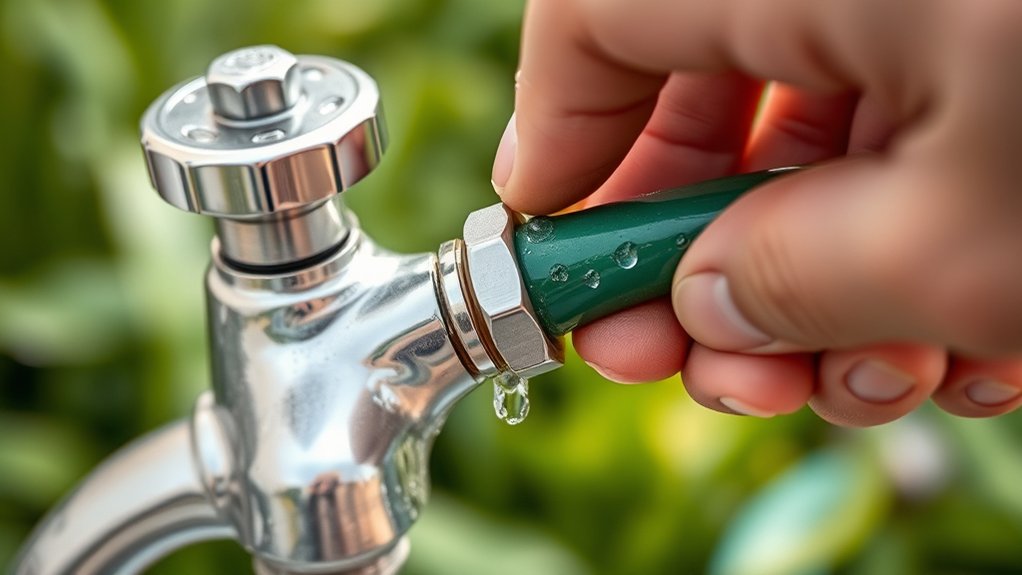
After securely attaching your hose to the faucet, turn the water supply on slowly and observe the connection point closely. Perform leak detection by inspecting for any water dripping or moisture accumulation at the joint.
If you notice a leak, first tighten the connector by hand, then use a wrench for a slight additional turn. Avoid overtightening. If leaks persist, disconnect the hose and check the rubber washer inside the hose connector; replace it if it’s cracked or deformed.
Also, verify the faucet threads for damage or debris that might prevent a proper seal. For fixing leaks caused by damaged threads, apply plumber’s tape evenly around the faucet threads before reconnecting the hose. These steps guarantee a secure, leak-free connection for effective water flow.
Maintain Your Hose and Faucet Connection
To guarantee a long-lasting and efficient hose-to-faucet connection, you should regularly inspect and maintain the components. Begin with hose maintenance by checking for cracks, bulges, and leaks; replace damaged sections promptly.
Clean the hose interior to prevent debris buildup, which can impair water flow. For faucet care, inspect the threads and washers to verify they’re intact and free from corrosion. Apply plumber’s tape to threads if needed to improve the seal.
Store the hose properly by disconnecting it during freezing temperatures to prevent damage. After use, drain excess water to avoid pressure buildup. Performing these routine checks and maintenance tasks will extend the lifespan of your hose and faucet connection, assuring reliable performance and preventing costly repairs.
Frequently Asked Questions
Can I Connect Multiple Hoses to One Faucet?
Yes, you can connect multiple hoses using hose splitter options. Choose faucet adapter types that fit your faucet, like Y-shaped or manifold splitters, ensuring secure connections and proper water pressure distribution for efficient simultaneous hose usage.
What Type of Hose Is Best for Drinking Water?
You’ll want a hose made from “health-conscious” materials, specifically those labeled safe for drinking water. Choose hoses constructed with safe materials like food-grade PVC or polyurethane to guarantee your drinking water remains uncontaminated and fresh.
How Do I Winterize My Hose and Faucet?
You’ll winterize your hose and faucet by draining the hose completely, disconnecting it, and storing it indoors to prevent freezing.
Perform faucet maintenance by shutting off outdoor valves and insulating exposed pipes to avoid damage.
Can I Use a Hose Connector on a Gas Line?
You shouldn’t use hose connectors on a gas line due to gas line safety risks. Only approved gas line fittings guarantee secure, leak-free connections.
Hose connector types aren’t designed to handle gas pressure or prevent leaks safely.
What Are the Health Risks of Using Old Hoses?
Like using a quill pen today, relying on old hoses risks lead contamination and chemical leaching. You’ll expose yourself to toxins that degrade water quality and pose serious health threats, so always inspect and replace aging hoses promptly.