How to Remove Limescale From Faucet
To remove limescale from your faucet, start by shutting off the water and clearing the area around the faucet.
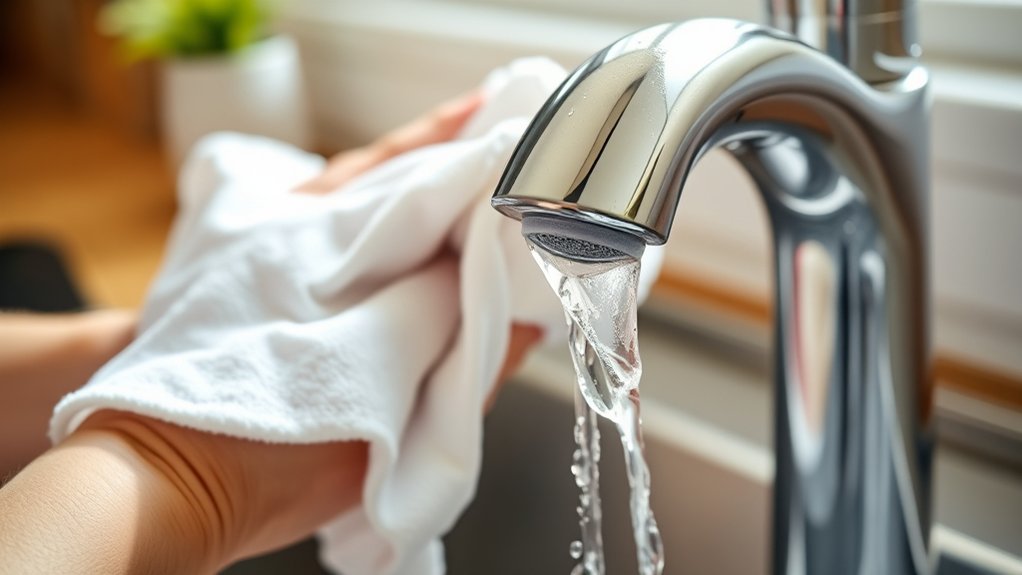
Soak a cloth in white vinegar and wrap it around the limescale buildup. Leave it for about 30 minutes to help dissolve the deposits.
After soaking, scrub gently to remove the loosened limescale.
For tougher spots, create a paste using baking soda and lemon juice. This combination offers both abrasiveness and acidity to tackle stubborn scale.
Rinse the faucet thoroughly afterward to prevent any corrosion from the acidic treatments.
Regular maintenance and using water softeners can help avoid limescale from recurring.
Explore further to uncover specialized tips and methods for hard-to-reach areas and persistent scale.
What Causes Limescale Buildup on Faucets
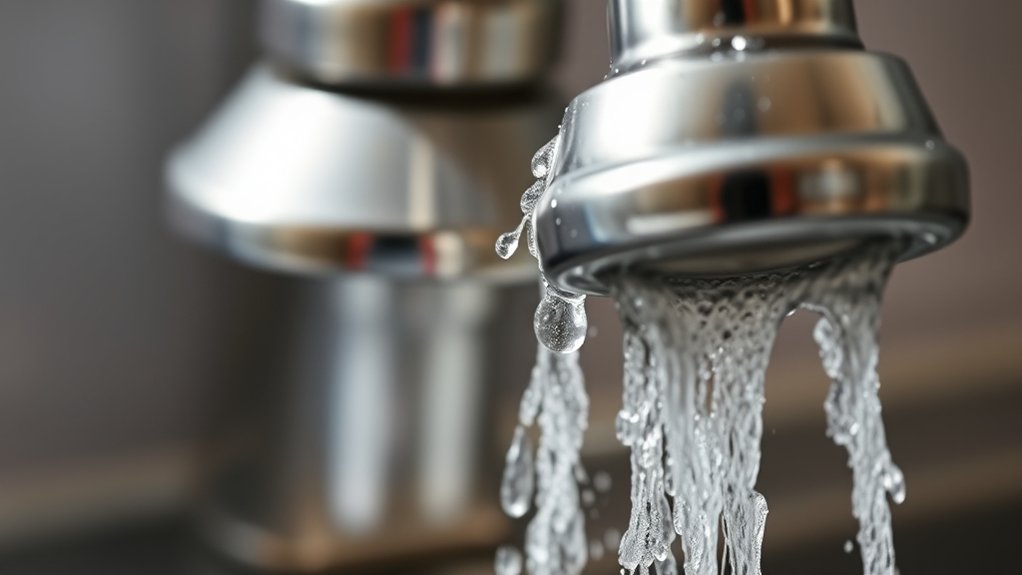
Although you might not notice it immediately, limescale builds up on faucets primarily due to hard water, which contains high levels of calcium and magnesium minerals. When this water flows through your faucet, it leaves behind mineral deposits as it evaporates.
These deposits accumulate over time, forming a hard, chalky layer known as limescale. The severity of buildup directly correlates with your water hardness. Higher concentrations of dissolved minerals mean more rapid and extensive scaling.
Understanding this process is essential because mineral deposits not only affect the appearance of your faucet but can impair its function by clogging aerators and reducing water flow. Regular exposure to hard water accelerates this buildup, so recognizing the impact of water hardness helps you anticipate and manage limescale formation effectively.
Preparing Your Faucet for Limescale Removal
Begin by shutting off the water supply to your faucet to prevent any accidental leaks during the cleaning process. Next, clear the area around the faucet to facilitate easy access for thorough limescale removal.
Since water hardness affects limescale buildup, check your water hardness level to anticipate cleaning intensity. Gather necessary tools like a soft brush and cloth, avoiding abrasive materials that can damage your faucet.
| Step | Action |
|---|---|
| 1. Shut off water | Prevent leaks during cleaning |
| 2. Clear workspace | Allow unobstructed access |
| 3. Assess hardness | Determine limescale severity |
| 4. Prepare tools | Use non-abrasive cleaning aids |
Proper faucet maintenance before removal improves cleaning efficiency and prolongs faucet lifespan.
Removing Limescale Naturally With Vinegar
You’ll start by soaking a cloth or paper towel in white vinegar and wrapping it tightly around the limescale buildup on your faucet. Make sure the vinegar stays in contact with the affected area for at least 30 minutes to break down the deposits effectively.
To maximize results, avoid rinsing too soon and consider repeating the process for stubborn spots.
Vinegar Soaking Technique
One effective method to dissolve limescale buildup on your faucet is the vinegar soaking technique. Vinegar’s acetic acid breaks down calcium carbonate deposits efficiently, demonstrating high vinegar effectiveness.
To apply this, soak a cloth or paper towel in white vinegar and wrap it securely around the limescaled area. Guarantee full contact between the vinegar and the affected surface to maximize chemical reaction.
The ideal soaking duration ranges from 30 minutes to 1 hour; shorter times may leave residues, while longer soaks won’t provide significant added benefit. After soaking, scrub gently with a soft brush or sponge to remove loosened deposits.
Rinse thoroughly with water to remove vinegar residues and prevent corrosion. This technique offers a practical, chemical-free solution for regular limescale maintenance on faucets.
Vinegar Application Tips
After soaking your faucet in vinegar, applying it correctly can enhance the removal of stubborn limescale deposits. Use white distilled vinegar for its acidity and cost-effectiveness, key vinegar benefits that break down mineral buildup efficiently.
Apply vinegar with a spray bottle or a cloth soaked in it to target affected areas precisely. Let it sit for 10-15 minutes before scrubbing gently with a soft brush or sponge to avoid surface damage.
If you prefer vinegar alternatives, lemon juice or citric acid solutions offer similar acidity but may require longer contact time. Always rinse thoroughly with water after treatment to prevent corrosion.
Repeat the process as needed for heavy buildup, but avoid prolonged exposure to protect faucet finishes and maintain their longevity.
Removing Limescale With Baking Soda and Lemon
Two common household ingredients, baking soda and lemon, create an effective solution for breaking down limescale deposits on faucets. The baking soda benefits include mild abrasiveness and alkalinity, which help loosen and scrub away mineral buildup without damaging surfaces.
Lemon acidity complements this by chemically dissolving calcium carbonate, the primary component of limescale. To apply, sprinkle baking soda directly on the faucet, then rub it gently with a lemon half, focusing on areas with heavy deposits.
Let the mixture sit for 10 to 15 minutes to maximize the chemical reaction. Rinse thoroughly with warm water and wipe dry to prevent new deposits. This method is practical, non-toxic, and uses readily available ingredients, making it an efficient alternative to harsher chemical cleaners.
Best Commercial Products to Remove Tough Limescale
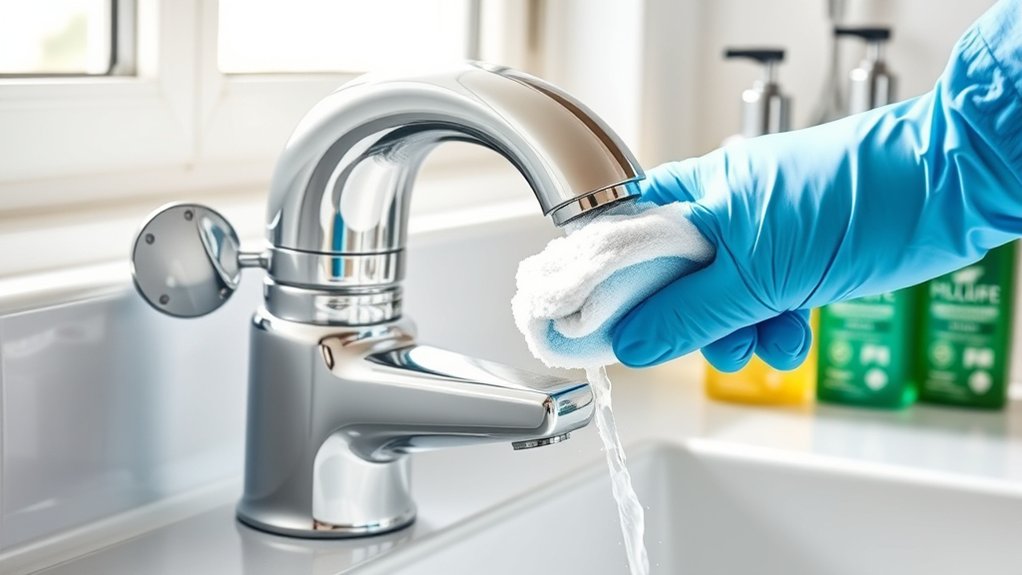
When natural remedies like baking soda and lemon aren’t enough to tackle stubborn limescale, you’ll need commercial products formulated for heavy mineral buildup. Effective limescale removvers often contain stronger acids like hydrochloric or sulfamic acid, which dissolve deposits quickly without damaging metal finishes when used correctly.
Look for commercial solutions specifically labeled for faucets to guarantee compatibility and safety. Apply the remover according to the manufacturer’s instructions, typically letting it sit for 5 to 10 minutes before scrubbing lightly with a non-abrasive cloth.
Always wear gloves and ventilate the area to protect yourself from fumes. These commercial solutions offer a practical, time-efficient method to restore your faucet’s appearance and functionality when natural alternatives fall short.
How to Remove Limescale From Faucet Aerators and Hard-to-Reach Spots
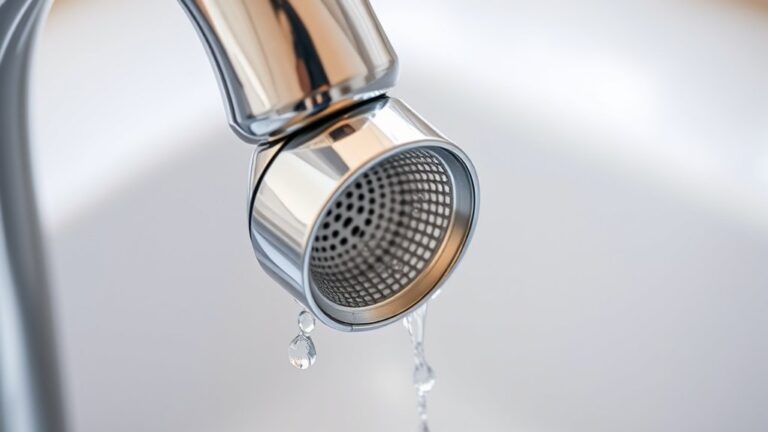
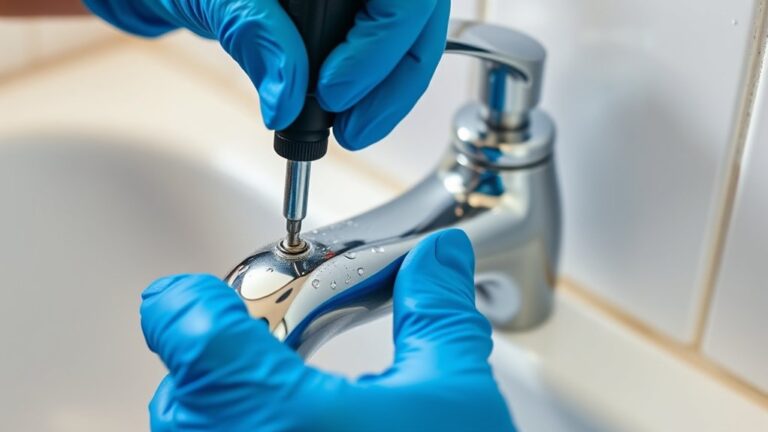
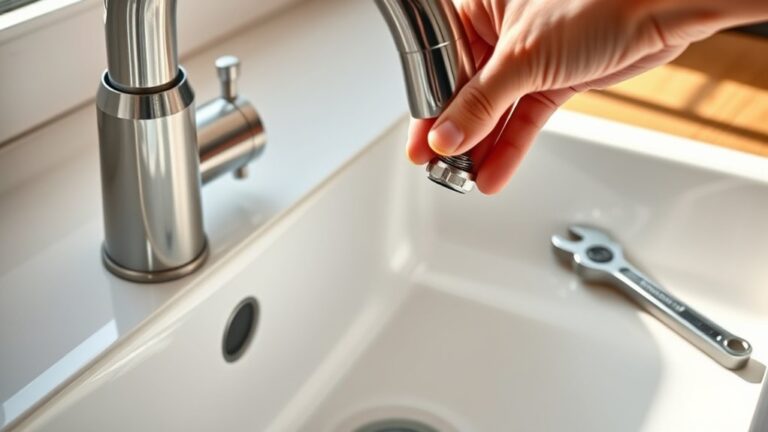
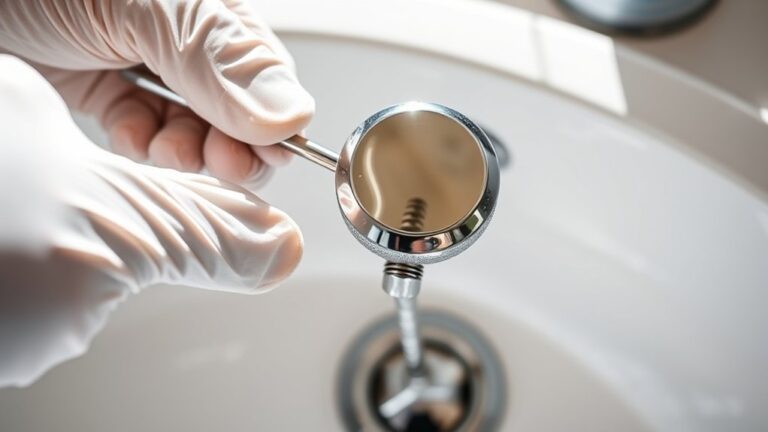
If commercial products effectively remove limescale from faucet surfaces, addressing buildup in aerators and hard-to-reach spots requires a more targeted approach. Start by unscrewing the aerator carefully using pliers wrapped in a cloth to avoid damage.
Soak the aerator components in white vinegar for 30 minutes to dissolve mineral deposits. Use a small brush or toothpick to remove residual debris from the mesh screen and internal parts. Rinse thoroughly with water and reassemble.
For hard-to-reach spots around the faucet base or handles, apply a vinegar-soaked cloth or cotton swab, allowing it to sit for 15 minutes before scrubbing gently with a toothbrush.
Regular aerator cleaning and following these maintenance tips will sustain peak water flow and prevent limescale buildup in tight areas.
Tips to Prevent Limescale From Coming Back
Although removing limescale is essential, preventing its return saves time and preserves your faucet’s functionality. To minimize mineral deposits, install water softeners or filtration systems that reduce hardness in your water supply. These devices effectively limit calcium and magnesium buildup, which cause limescale.
Perform regular cleaning using mild descaling agents to keep surfaces clear and avoid accumulation. Implement routine inspection as part of your maintenance tips. Check faucet joints, aerators, and visible pipes for early signs of deposits. Addressing these areas promptly prevents scaling from worsening.
Consistent application of these measures guarantees your faucet operates efficiently, extending its lifespan and reducing repair costs. By integrating water treatment solutions with systematic upkeep, you’ll maintain a limescale-free faucet environment.
Frequently Asked Questions
Can Limescale Damage My Faucet’s Finish or Material?
You might not realize it, but limescale can slowly erode your faucet’s finish and weaken its material. For effective faucet maintenance, focus on limescale prevention to protect both appearance and longevity, ensuring your faucet stays durable.
Is It Safe to Use Bleach to Remove Limescale?
You shouldn’t use bleach to remove limescale; it can damage finishes and plumbing. Opt for bleach alternatives like vinegar or citric acid.
To minimize buildup, implement limescale prevention methods such as water softeners or regular cleaning.
How Often Should I Descale My Faucet to Maintain It?
Don’t wait for the straw to break the camel’s back. Descale your faucet every 3-6 months.
Following faucet maintenance tips guarantees ideal descaling frequency, preventing buildup and maintaining water flow and fixture longevity efficiently.
Can Limescale Buildup Affect Water Pressure?
Yes, limescale formation can reduce water pressure by narrowing faucet openings and clogging aerators.
You’ll notice decreased flow, so regularly removing buildup guarantees peak performance and consistent water pressure in your plumbing fixtures.
Are There Any Health Risks Associated With Limescale?
You won’t exactly enjoy limescale health benefits. Mineral buildup isn’t toxic but can harbor bacteria, affecting water quality.