Where to Put Hardware on Kitchen Cabinets
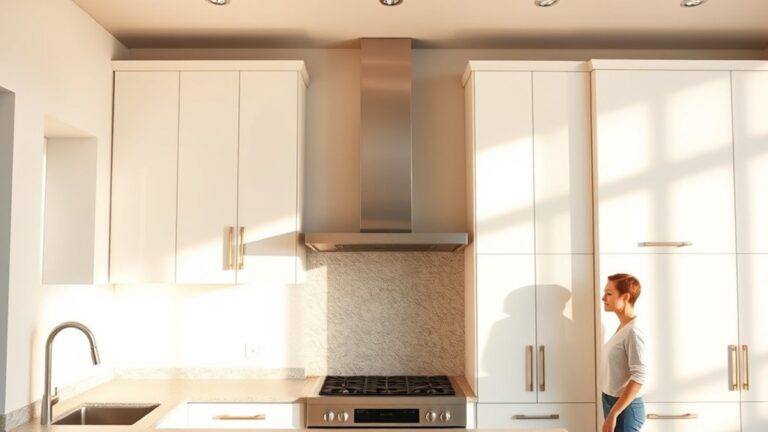
When placing hardware on kitchen cabinets, align handles near edges for smooth access and ergonomic comfort—position upper cabinet handles two-thirds down from the top and lower cabinet handles two-thirds up from the bottom.
Maintain consistent horizontal alignment and distance from edges across doors and drawers to guarantee visual harmony.
Adjust placement based on cabinet size, using compact hardware for smaller cabinets and larger handles for big ones.
Proper placement improves workflow and design balance; uncover the nuances that refine your kitchen’s function and style.
Where to Place Hardware on Cabinet Doors
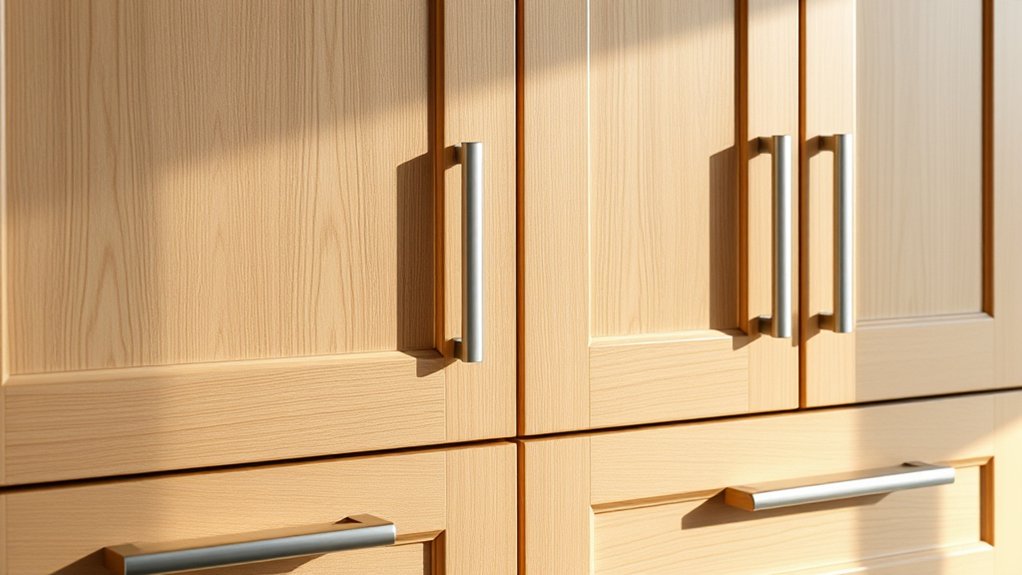
When you install hardware on cabinet doors, placing handles or knobs correctly guarantees both functionality and visual balance. Start by aligning the hardware with the door’s edge for ideal ergonomics and aesthetics. Use door alignment tips such as making sure the handle sits parallel to the door’s vertical edge, which prevents visual imbalance.
For handle height considerations, position handles roughly two-thirds down from the top of the door for upper cabinets, and two-thirds up from the bottom for lower cabinets. This placement enhances reachability and maintains consistent sightlines across your cabinetry. Measure precisely, and use templates or jigs for repeatability.
Avoid placing hardware too close to the edge to prevent interference with adjacent doors. Proper alignment and height guarantee your cabinet doors open smoothly while complementing your kitchen’s design.
Best Hardware Placement on Drawer Fronts
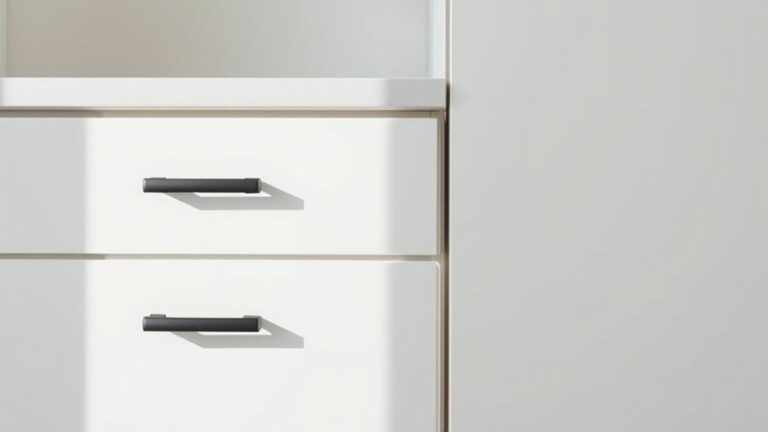
When installing hardware on drawer fronts, position handles so they offer ergonomic access and maintain visual balance. You’ll want to keep placement consistent across all drawers to create a cohesive look.
This precision enhances both functionality and the cabinet’s overall design.
Optimal Handle Position
Although hardware placement might seem straightforward, positioning handles on drawer fronts requires careful consideration to secure ergonomic efficiency and visual balance. You’ll want to focus on handle height to make sure it aligns naturally with your hand’s resting position, promoting grip comfort and minimizing strain.
Ergonomic positioning isn’t just about function; it also enhances aesthetic balance, making your kitchen feel cohesive and thoughtfully designed. Precision in placement can transform daily interactions into effortless motions.
Consider these key points:
- Position handles at a height that suits your average reach for easy access.
- Choose a placement that allows a natural, comfortable grip.
- Balance handles symmetrically on each drawer front for visual harmony.
- Avoid obstructing drawer edges to maintain smooth operation and clean lines.
Optimal handle position blends form with function, elevating both style and usability.
Consistency Across Drawers
Maintaining consistent hardware placement across all drawers guarantees a seamless and polished look that enhances your kitchen’s overall design. When installing handles, confirm precise drawer alignment to avoid visual disruptions.
Measure the same distance from the drawer edges for each handle, and use a level to maintain uniform height. This exactness in placement supports visual harmony and makes your cabinetry appear professionally finished.
Even slight deviations can draw unwanted attention and break the flow of your kitchen’s aesthetics. By standardizing handle positions, whether centered or offset, you create a cohesive look that complements both traditional and modern styles.
Consistency across drawers not only improves functionality but also elevates the entire space, making your kitchen feel thoughtfully designed and balanced.
How Cabinet Size Affects Cabinet Hardware Placement
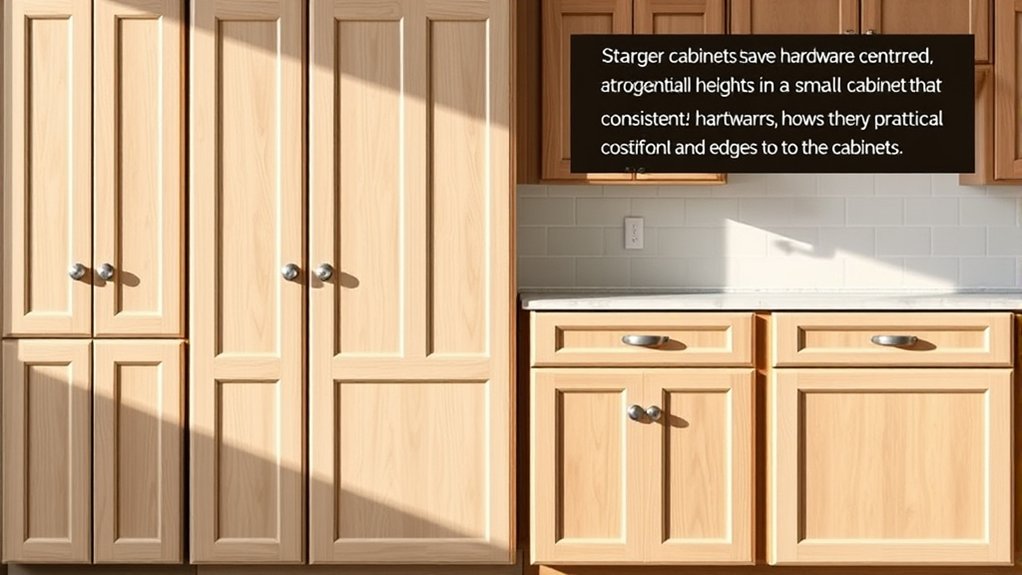
When placing hardware, you’ll find small cabinets require compact, unobtrusive pulls to maintain balance and function. For large cabinets, position handles to optimize leverage and ease of use without overwhelming the design.
Medium-sized cabinets demand a precise, centered placement to blend ergonomics with aesthetics seamlessly.
Small Cabinets Hardware Tips
Small cabinets demand careful hardware placement to maximize both functionality and visual balance. When working with limited surface area, choosing small hardware styles with unique hardware textures helps maintain elegance without overwhelming the cabinet face.
Positioning is key: place knobs or pulls where they’re easy to reach yet complement the cabinet’s proportions. Consider these tips to perfect your small cabinet hardware:
- Opt for compact knobs that enhance rather than clutter the design
- Use unique hardware textures like brushed metals or matte finishes to add depth
- Position hardware closer to edges for ergonomic access without sacrificing symmetry
- Avoid oversized pulls that disrupt the cabinet’s scale and clean lines
Large Cabinets Handle Placement
Large cabinets require strategic handle placement to secure both ease of use and visual harmony. Because of their size, you need to position handles where they balance the cabinet’s proportions and complement your chosen handle styles.
Placing hardware too high or too low can disrupt cabinet aesthetics and reduce functionality.
| Cabinet Size | Handle Placement Height | Recommended Handle Styles |
|---|---|---|
| 30″+ Width | 2/3 down from top edge | Bar pulls, large cup pulls |
| 24″-30″ | Centered vertically | Arch pulls, decorative knobs |
| 18″-24″ | Upper third | Slim bars, minimalistic knobs |
Following these guidelines assures your large cabinets not only look cohesive but also function smoothly, enhancing your kitchen’s overall design.
Medium Cabinets Optimal Position
Medium cabinets demand precise hardware placement to balance ergonomics and design integrity. When working with medium cabinet styles, positioning your hardware slightly above the cabinet’s vertical midpoint guarantees comfortable reach and visual harmony.
This placement enhances functionality without disrupting the clean lines typical of medium-sized cabinetry. Your hardware color choices should complement both the cabinet finish and overall kitchen palette to maintain a cohesive aesthetic. Consider how contrasting or matching tones affect perception and style.
Feel the seamless flow as your hand naturally finds the handle
Experience the joy of a balanced, polished kitchen look
Embrace hardware that highlights your cabinet’s unique style
Enjoy effortless access paired with flawless design integration
How to Measure and Mark the Perfect Hardware Spot
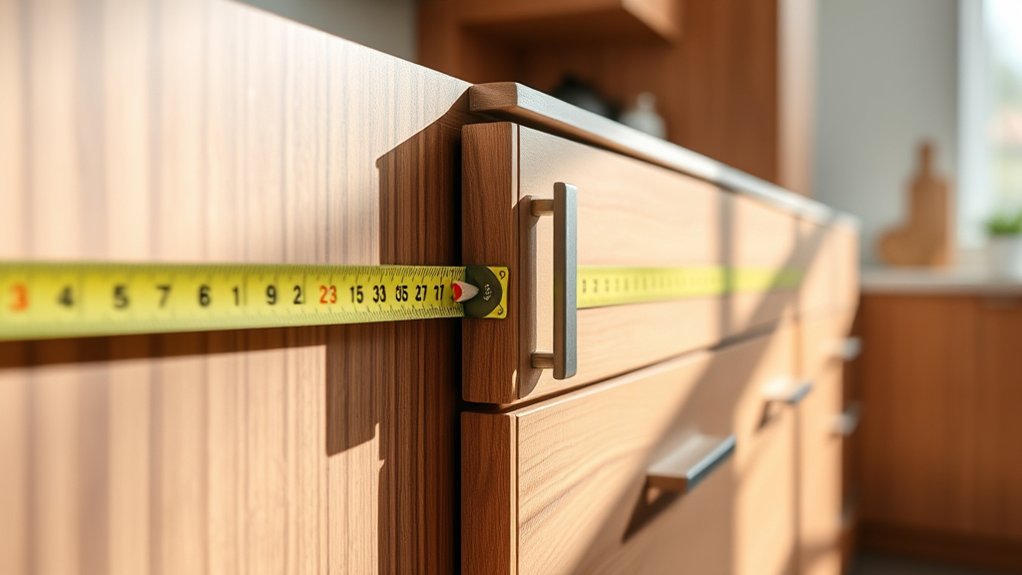
Before drilling any holes, you’ll need to accurately measure and mark the hardware placement to guarantee both functionality and visual balance. Start by selecting precise measuring techniques, such as using a ruler or tape measure, to determine the exact distance from edges or corners.
Consistency is key; measure each cabinet door or drawer face carefully to secure uniform hardware alignment. Next, employ reliable marking tools like a fine pencil or a specialized marking pen to create subtle, precise guide points. Double-check your measurements before proceeding to avoid misalignment.
Position your marks where the hardware will be installed, considering ergonomic reach and aesthetic proportions. This meticulous approach secures your cabinet hardware complements the design while functioning effortlessly, setting a professional standard for your kitchen renovation.
Installing Hardware on Upper vs. Lower Cabinets
When installing hardware, position handles on upper cabinets near the bottom corners for easy reach, while placing lower cabinet handles near the top corners. You’ll want to maintain consistent alignment and spacing between both upper and lower hardware to create a cohesive look.
Precision in placement guarantees functionality and enhances your kitchen’s visual balance.
Upper Cabinet Hardware Placement
Installing hardware on upper kitchen cabinets requires careful consideration of both functionality and aesthetics. You need to select hardware styles that complement the overall kitchen design while guaranteeing ease of use.
Positioning handles or knobs too high or low can disrupt the aesthetic balance and impair functionality. Typically, hardware is placed near the bottom corner of upper doors for convenient access.
- Achieve seamless integration with your cabinet’s style
- Enhance visual symmetry across your kitchen
- Secure comfortable reach without straining
- Maintain consistent hardware placement to unify design
Lower Cabinet Handle Position
Although upper cabinet hardware focuses on ease of reach near the bottom corners, lower cabinet handles require a different placement strategy to optimize both ergonomics and visual harmony. You should position the handle height to align with natural grip comfort, typically around the mid to upper third of the lower cabinet door.
This ergonomic placement guarantees effortless opening while maintaining aesthetic balance. Pay close attention to visual alignment with adjacent cabinetry to uphold design continuity. Consider hardware materials and color contrast carefully; they must complement the cabinet finish for style coordination without disrupting the overall functionality focus.
Consistency Between Cabinets
Ensuring consistency between upper and lower cabinet hardware enhances both the kitchen’s functionality and visual flow. When installing hardware, you want to maintain a harmonious cabinet design that supports aesthetic balance. Aligning handle placement on upper and lower cabinets creates a seamless look, preventing visual clutter.
Consistent hardware height and orientation also improve usability, letting you open doors intuitively.
Consider these elements to achieve consistency:
- Match handle styles and finishes across all cabinets
- Align handles horizontally for a uniform appearance
- Position handles at the same distance from edges on upper and lower cabinets
- Balance ergonomic comfort with visual symmetry
How Hardware Placement Affects Kitchen Style
When you position hardware thoughtfully on kitchen cabinets, you shape not only functionality but also the room’s visual rhythm and style. Strategic placement enhances modern aesthetics by creating clean lines and balanced proportions that complement minimalist designs.
For example, aligning handles horizontally on drawers and vertically on doors supports a cohesive, streamlined look. This approach emphasizes functional design, where hardware isn’t just decorative but integral to ease of use.
Precise positioning can make cabinets appear taller or wider, influencing spatial perception. Additionally, hardware style paired with its placement can reinforce a contemporary or traditional ambiance.
How Cabinet Hardware Placement Improves Kitchen Workflow
By placing cabinet hardware thoughtfully, you streamline your kitchen workflow and reduce unnecessary movements. Optimizing hardware placement enhances workflow efficiency by aligning handles and knobs with natural hand positions, minimizing strain and saving time.
Ergonomic design principles guide you to position hardware where your grip feels intuitive, promoting smooth, fluid motions in meal prep and cleanup.
Consider these benefits of precise hardware placement:
- Effortless access to frequently used drawers and cabinets
- Reduced wrist fatigue during extended cooking sessions
- Faster retrieval and storage of kitchen tools
- A harmonious kitchen rhythm that feels natural and satisfying
Strategic hardware placement isn’t just aesthetic; it’s a technical improvement that elevates your kitchen’s functional flow.
Should You Place Cabinet Handles in the Center or on the Edge?
Where exactly should you place cabinet handles to maximize both function and style? Choosing between center alignment and edge preference hinges on your cabinet design and usage.
Center alignment offers symmetrical aesthetics, ideal for larger cabinet doors, promoting balanced visual appeal. However, it can be less ergonomic when reaching, especially on wider doors.
Edge preference, often near the door’s opening side, enhances accessibility and ease of use, reducing strain during frequent access. This placement aligns with natural hand movements, improving workflow efficiency.
Technically, edge placement suits modern kitchens prioritizing function, while center alignment complements traditional or decorative cabinetry. Ultimately, consider door size, style, and user comfort.
You’ll find edge mounting often outperforms center placement by combining practicality with a sleek, minimalist look, ensuring your hardware placement serves both form and function.
How to Fix Common Cabinet Hardware Placement Mistakes
Although placing cabinet hardware might seem straightforward, incorrect positioning can disrupt both functionality and visual harmony. To fix common hardware placement mistakes, start by reassessing hardware alignment to guarantee consistent spacing and height across all cabinets. Misaligned handles create visual clutter and hinder ease of use.
Next, restore aesthetic balance by positioning pulls and knobs to complement cabinet design lines rather than interrupt them. Avoid placing hardware too close to edges or corners, which can cause awkward grips and damage. If holes were drilled incorrectly, use wood filler and redrill precisely.
Remember, hardware should enhance both form and function seamlessly.
- Realign mispositioned hardware for uniformity
- Maintain consistent height and spacing
- Use quality tools for accurate drilling
- Prioritize ergonomic placement for comfort and style
Creative Hardware Placement Ideas to Elevate Your Kitchen
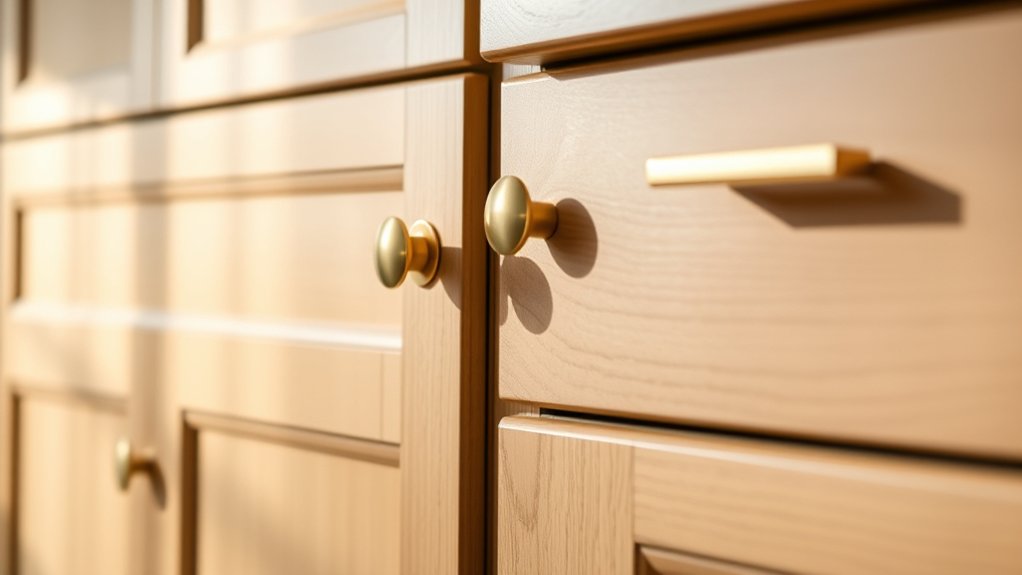
Hardware placement offers a unique opportunity to infuse personality and sophistication into your kitchen design. By exploring creative layouts, you can transform standard cabinetry into a statement piece. Consider mixing hardware styles, pairing sleek bar pulls on upper cabinets with vintage knobs below to create visual interest while maintaining balance.
Positioning hardware asymmetrically or at unconventional angles can also elevate aesthetics, breaking monotony without compromising functionality. For drawers, installing handles horizontally near the top edge optimizes access, while vertical placement on cabinets enhances ergonomic reach.
Don’t shy away from integrating integrated or recessed hardware styles for a minimalist, modern appeal. Ultimately, your hardware choices and placements should complement the cabinetry’s architecture and your kitchen’s overall style, ensuring each element contributes cohesively to an elevated, personalized environment.
Frequently Asked Questions
What Types of Cabinet Hardware Materials Are Most Durable?
Imagine choosing between sleek metal vs. plastic handles; metal, like brushed stainless steel, offers superior durability and timeless style.
You’ll find metal handle styles resist wear better, ensuring lasting function and refined kitchen aesthetics.
How Do I Choose Hardware Finishes to Match My Kitchen Decor?
You’ll want hardware color coordination that complements your kitchen’s palette and style. Choose finishes that resist fingerprints and corrosion, then follow finish maintenance tips like gentle cleaning to preserve their aesthetic and functional integrity over time.
Can Cabinet Hardware Affect the Overall Kitchen Lighting?
You might feel like a Victorian inventor adjusting mirrors; cabinet reflections from hardware can subtly enhance or disrupt lighting placement. Choosing reflective or matte finishes directly influences how light bounces, affecting your kitchen’s brightness and ambiance.
What Tools Are Needed for Hardware Installation on Cabinets?
You’ll need a drill, measuring tape, pencil, and screwdriver for precise hardware placement. Using installation techniques like pilot holes guarantees accuracy and prevents damage. This helps you achieve a clean, aesthetic finish on your cabinets.
How Often Should Cabinet Hardware Be Replaced or Updated?
Like clockwork, you should replace cabinet hardware every 5-10 years, considering hardware lifespan and aesthetic updates. This guarantees peak functionality and style, maintaining your kitchen’s precision and timeless elegance without sacrificing modern design trends.