How to Repair Kitchen Cabinets
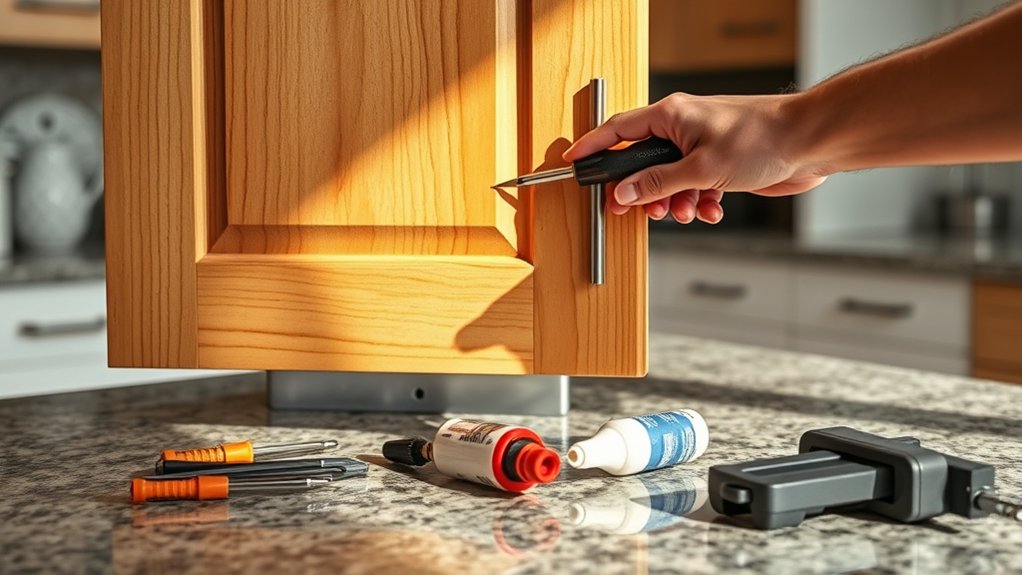
To repair kitchen cabinets, start by gathering quality tools like screwdrivers, clamps, and wood filler that match your cabinet type.
Inspect for loose hinges, cracks, or water damage, then tighten or replace hardware as needed. Use wood filler and touch-up paint to fix chips or scratches, sanding surfaces before sealing to protect against moisture.
Address structural issues by reinforcing weak frames or shelves. Proper maintenance prevents future damage.
If you want to guarantee your cabinets last, the next steps cover detailed repair techniques.
Gather Tools and Materials for Cabinet Repair
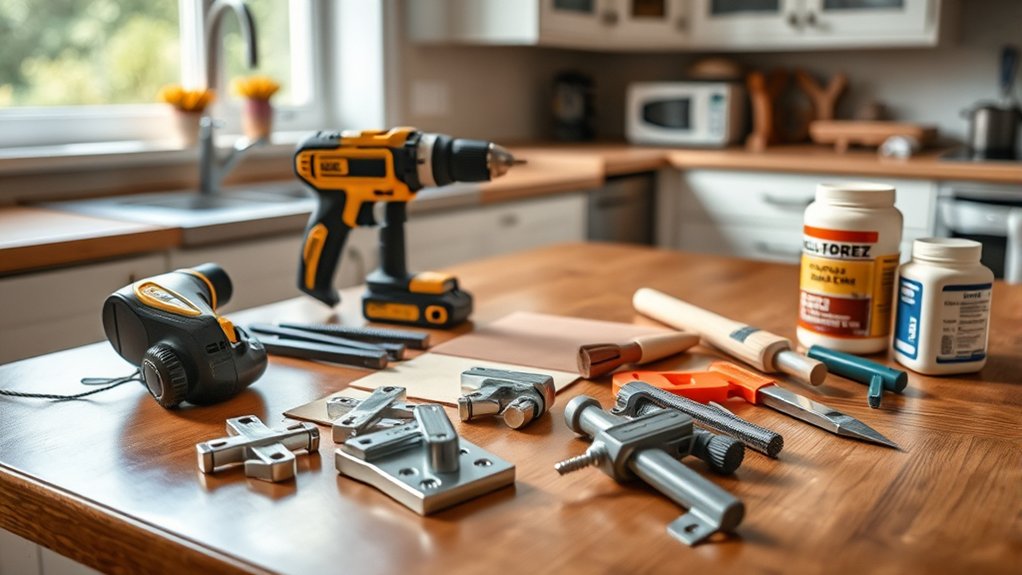
To begin your kitchen cabinet repair, gather the essential tools and materials to guarantee efficiency and accuracy. Start with tool organization by arranging screwdrivers, clamps, chisels, a hammer, drill, and sandpaper systematically. This setup minimizes downtime and prevents misplacement.
For material selection, choose quality wood filler, replacement hinges, screws, wood glue, and touch-up paint matching your cabinet finish. Prioritize durable materials to assure long-lasting repairs. Verify that all tools are in good working condition and that materials meet the specific needs of your cabinet type, whether solid wood or laminate.
With well-organized tools and carefully chosen materials, you’ll streamline the repair process, reduce errors, and achieve professional results. This methodical preparation lays a solid foundation for your kitchen cabinet restoration.
Spot Common Kitchen Cabinet Problems
Start by inspecting your cabinets for visible damage like cracks, chips, or water stains that could indicate underlying issues. Next, test the structural integrity by gently pressing on panels and joints to spot any looseness or weakness.
Identifying these problems early helps you target repairs effectively and prevent further deterioration.
Identifying Visible Damage
How can you quickly spot the most common issues affecting your kitchen cabinets? Start by examining surfaces for scratches, chips, and peeling finishes. These often indicate damage to cabinet materials like wood veneer or laminate.
Look closely at edges and corners, where wear tends to concentrate. Water stains or discoloration signal moisture exposure, which can warp or weaken materials.
Check for loose or missing hardware, such as hinges and handles, as these affect cabinet function and require specific repair techniques. Identify cracks or dents on solid wood or MDF panels, which may need filling or replacement.
Checking Structural Integrity
A thorough evaluation of your kitchen cabinet’s structural integrity reveals underlying issues that visible inspections might miss. Begin your structural assessment by gently pressing on cabinet corners and edges to detect any looseness or movement.
Check the joints and fasteners, looking for gaps, rust, or missing screws that compromise cabinet stability. Inspect the cabinet’s frame, guaranteeing it remains square and free from warping or swelling caused by moisture.
Don’t overlook the cabinet’s attachment to walls and countertops; secure mounting guarantees overall stability. Use a level to confirm alignment, as misalignment signals deeper structural problems. This precise inspection helps you pinpoint weaknesses before they worsen, guiding effective repairs that restore your cabinets’ durability and function.
Fix Loose or Squeaky Cabinet Hinges and Adjust Doors
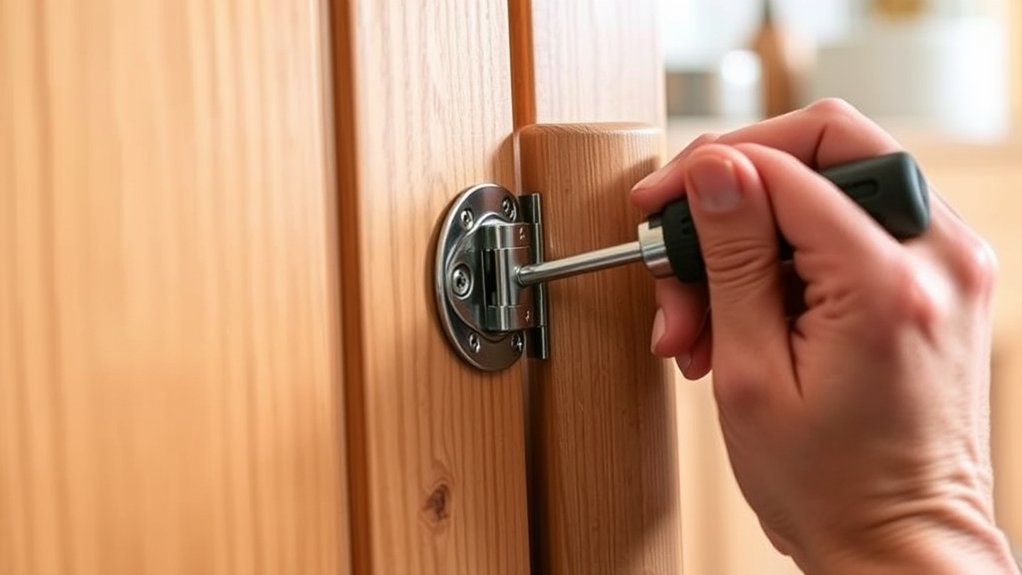
First, check each cabinet hinge for looseness by gently wiggling the door and inspecting the screws.
Next, apply a suitable lubricant to any squeaky joints to restore smooth operation.
Finally, adjust the hinge screws to properly align the doors for an even, secure fit.
Identifying Loose Hinges
When cabinet doors start to sag or squeak, you’ll want to inspect the hinges closely for looseness or wear. Begin by identifying the hinge types: concealed, surface-mounted, or inset to understand the specific installation tips relevant to each.
Check all screws securing the hinge plates to the cabinet frame and door; loose screws are a common cause of misalignment. Use a screwdriver to gently tighten them without stripping the holes.
Examine the hinge pin and barrel for signs of wear or damage, as these affect door stability. If the hinge moves excessively when you wiggle the door, it likely needs adjustment or replacement.
Accurate identification of loose hinges allows you to apply the correct repair method, ensuring your cabinet doors function smoothly and align properly.
Lubricating Squeaky Joints
After securing loose hinges and verifying their condition, you’ll want to address any squeaking caused by friction in the joints. Squeaky hinges often result from dried-out or insufficient lubrication.
Start by cleaning the hinge area with a dry cloth to remove dust and debris. Then apply a lubricant specifically designed for metal joints, such as silicone spray or a light machine oil, directly onto the hinge pivot points. Avoid heavy grease, which can attract dirt and worsen squeaks over time.
Operate the door several times to distribute the lubricant evenly within the joint. Repeat the process if any noise persists. These lubrication techniques guarantee smooth operation, prolong hinge life, and eliminate squeaky hinges without compromising cabinet functionality.
Aligning Cabinet Doors
Check the alignment of your cabinet doors by observing gaps and uneven edges, as misaligned doors can cause improper closing and wear on hinges. Start with door alignment techniques by tightening loose screws on the hinges.
Adjust hinges vertically, horizontally, or in-depth using the screws to correct cabinet door gaps. If hinges are damaged, replace them to guarantee smooth operation.
Use a level to confirm door straightness after adjustments. Regularly inspect and maintain hinges to prevent future misalignment.
| Adjustment Type | Purpose |
|---|---|
| Vertical | Correct door height alignment |
| Horizontal | Adjust side-to-side gaps |
| Depth | Align door flush with cabinet |
| Screw Tightening | Secure loose hinges |
| Hinge Replacement | Fix damaged or worn hinges |
Repair or Replace Cabinet Doors
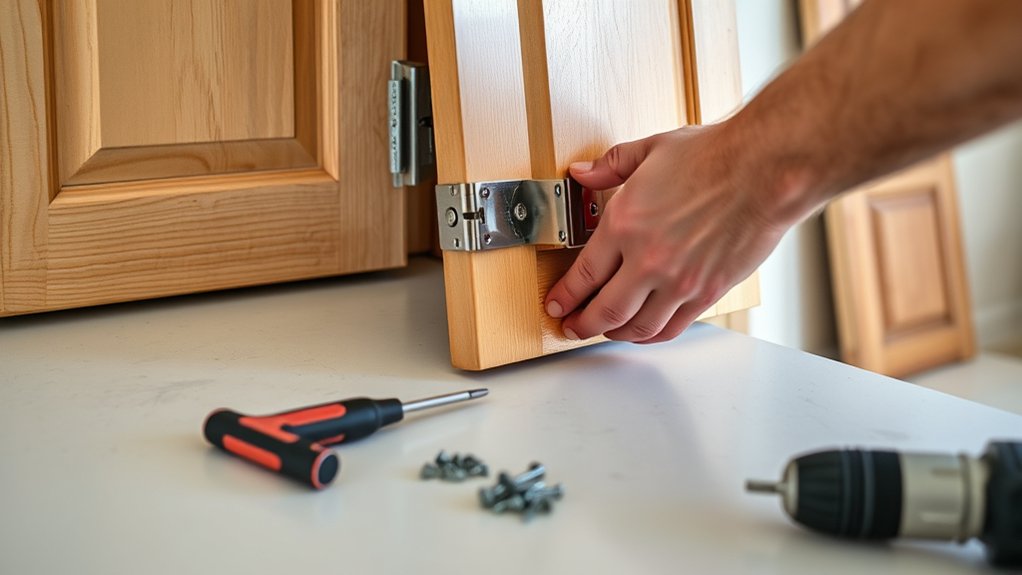
Why choose to repair or replace your cabinet doors? If your doors suffer from warping, severe damage, or outdated aesthetics, replacement can restore function and style efficiently. Begin by evaluating door styles and cabinet materials; solid wood doors withstand repairs better than MDF or particleboard.
For minor damage like cracks or loose panels, repair is practical. Use wood filler or clamps to restore integrity. Hinges and hardware should be inspected and replaced if corroded.
When replacing, match door styles precisely to maintain design consistency, considering overlays, panel types, and finishes. Measure dimensions accurately to guarantee fit.
Touch Up Cabinet Surface Scratches and Chips
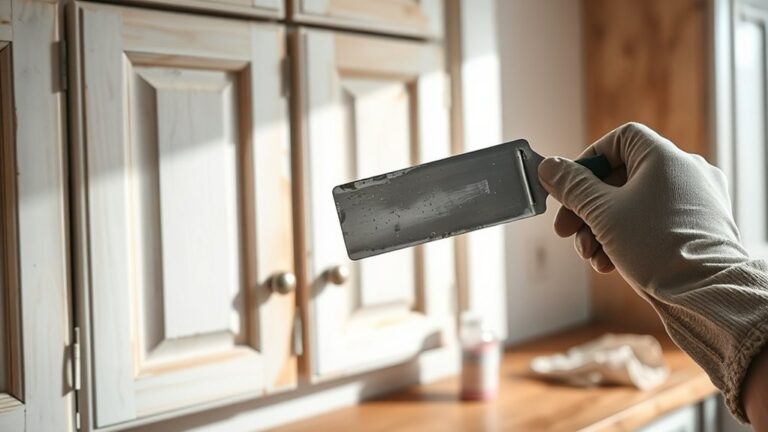
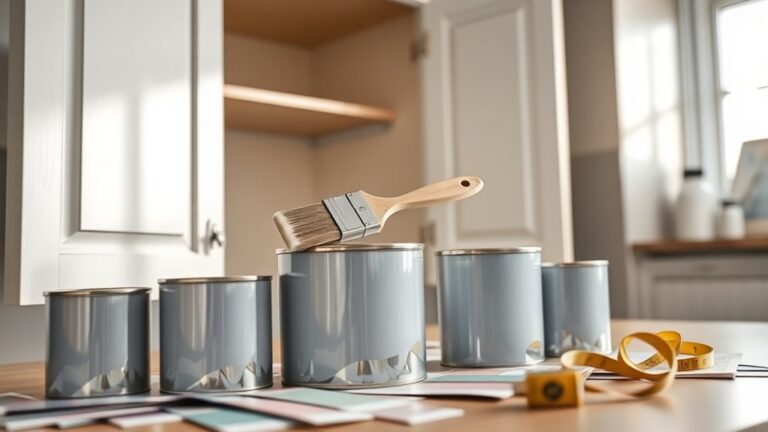
Once you’ve addressed door repairs or replacements, focus on restoring the cabinet surfaces to maintain a uniform appearance. Start with thorough surface preparation by cleaning and lightly sanding the damaged areas. Then, use scratch fillers to level out chips and scratches effectively.
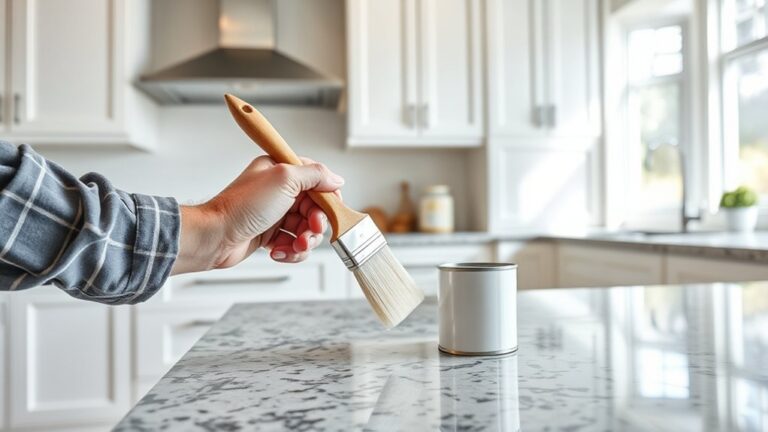
Next, apply paint touch ups that match your cabinet finish, employing blending colors to seamlessly integrate the repair. Finally, seal the area with protective coatings to enhance durability and preserve cabinet aesthetics.
Follow these steps for precise DIY solutions:
- Prepare the surface to promote adhesion and smoothness.
- Apply scratch fillers and blend colors carefully for an invisible repair.
- Use finishing techniques and protective coatings to maintain long-lasting results.
This approach guarantees a professional, lasting restoration.
Strengthen Weak Cabinet Frames and Shelves
Although cabinet frames and shelves often bear significant weight over time, you can reinforce them effectively with the right tools and materials. Start by inspecting joints for looseness or cracks. To reinforce joints, apply wood glue to the connections, clamp them firmly, and allow adequate drying time.
For added stability, add brackets inside cabinet corners or under shelves using screws sized appropriately for your cabinet material. When shelves sag, install metal or wooden support brackets beneath them at regular intervals to distribute weight evenly.
If the frame is warped, consider shimming weak areas before securing them with screws to prevent further damage. These targeted reinforcements restore structural integrity and extend the life of your cabinets without extensive reconstruction.
Maintain Your Cabinets to Prevent Future Damage
Reinforcing cabinet frames and shelves greatly enhances their durability, but ongoing maintenance is key to preventing future damage. You’ll want to adopt a routine of preventative maintenance to extend your cabinets’ lifespan effectively. Start with these steps:
- Use appropriate cleaning techniques. Avoid harsh chemicals and opt for mild detergents to protect surfaces.
- Regularly inspect hinges and handles, tightening or replacing hardware as needed to prevent structural stress.
- Control moisture levels by promptly wiping spills and using a dehumidifier if necessary to avoid warping or mold.
Troubleshoot Common Cabinet Repair Issues
When you encounter issues with your kitchen cabinets, identifying the root cause quickly can save time and prevent further damage. Start by inspecting hinges and drawer slides; loose or worn hardware often causes misalignment or sticking. Use hardware replacement options to upgrade or fix faulty components efficiently.
Check for water damage or warping on cabinet surfaces, which often require immediate attention. Employ cabinet refinishing techniques like sanding and sealing to restore damaged finishes and protect against future wear.
For loose cabinet doors, tighten screws or replace stripped hinges to guarantee proper alignment. Address gaps or cracks by applying wood filler before refinishing.
Frequently Asked Questions
Can I Repair Kitchen Cabinets Without Professional Help?
About 75% of homeowners successfully use DIY techniques for common issues like loose hinges or scratches.
You can repair kitchen cabinets yourself by following precise steps, using proper tools, and addressing typical problems with careful attention.
What Is the Average Cost of Kitchen Cabinet Repairs?
You’ll typically spend $100 to $500 depending on repair techniques like patching, sanding, or hinge replacement. The cost breakdown includes materials, labor, and complexity, so evaluating damage precisely helps you budget effectively for kitchen cabinet repairs.
How Long Does a Typical Cabinet Repair Take?
Swiftly solving substantial scratches or simple splits usually shortens repair timeframes to an hour or two. However, severe cabinet damage demands detailed diagnostics, extending repair timeframes to several hours or even a full day, depending on complexity.
Are There Eco-Friendly Materials for Cabinet Repair?
Yes, you can use sustainable materials like bamboo plywood and reclaimed wood for repairs. Choose eco-friendly finishes such as water-based varnishes or low-VOC paints to guarantee durability while minimizing environmental impact during your cabinet restoration.
Can Cabinet Repairs Increase Home Resale Value?
You can boost your home’s resale potential by up to 81% through kitchen aesthetics improvements like cabinet repairs. Focusing on precise fixes enhances visual appeal, directly increasing buyer interest and maximizing your property’s market value efficiently.