How to Replace Kitchen Cabinet Doors
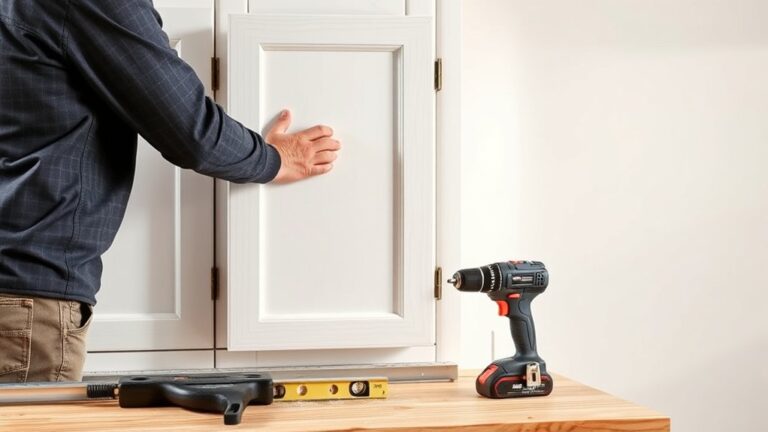
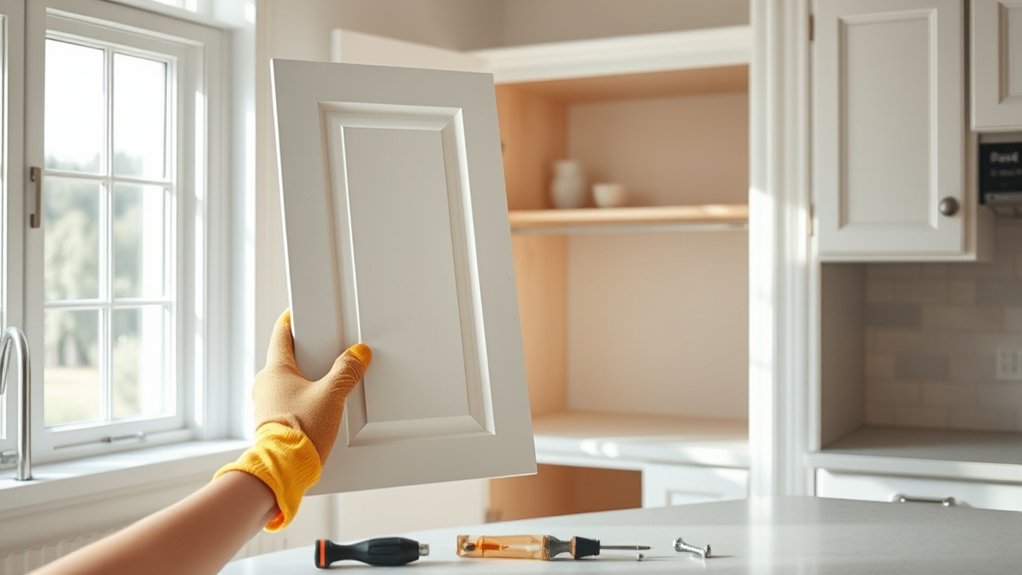
To replace your kitchen cabinet doors, start by carefully removing the old doors. Support them as you unscrew the hinges to avoid any damage.
Next, measure your cabinet frames accurately to guarantee a precise fit for the new doors. Choose doors that match your kitchen’s style and materials.
Then, align and attach the hinges securely to the cabinet frames. Adjust the hinges for proper door alignment.
Maintain them regularly for smooth operation.
For a detailed, step-by-step approach, keep exploring these essential tips.
Tools and Materials for Replacing Kitchen Cabinet Doors
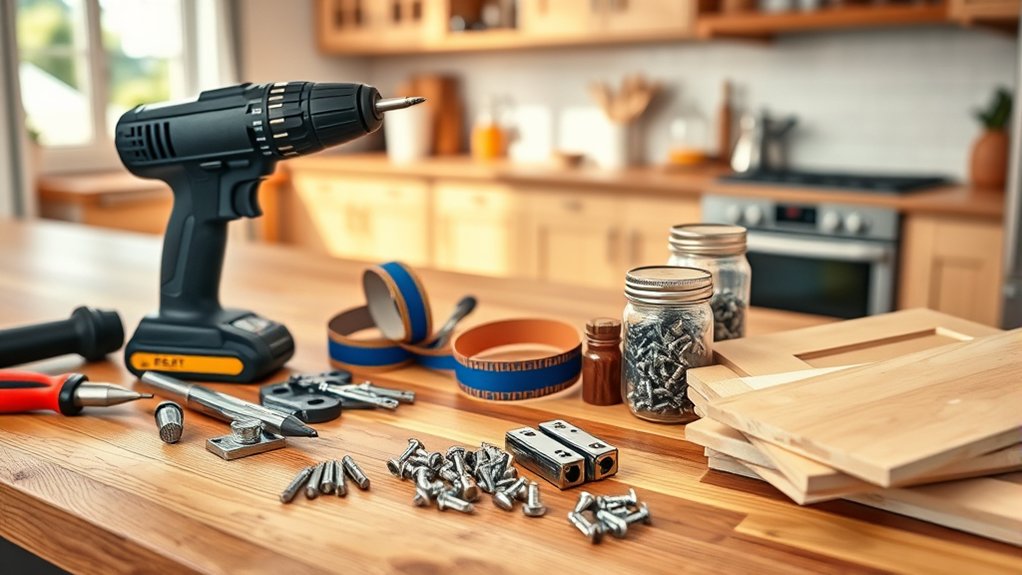
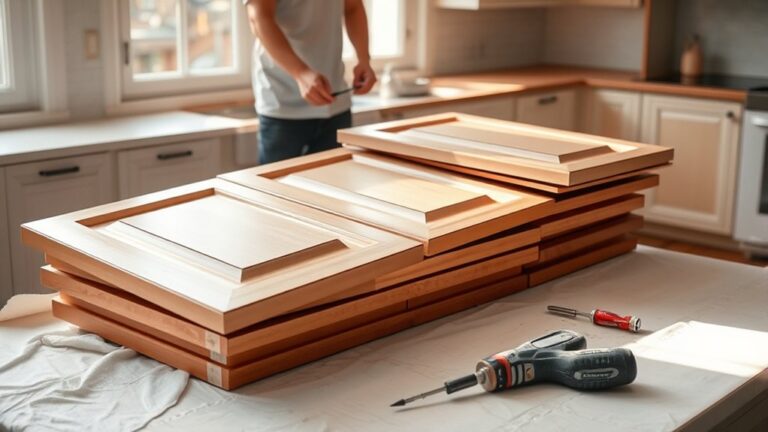
To replace kitchen cabinet doors efficiently, you’ll need a specific set of tools and materials prepared in advance. Start by selecting the appropriate cabinet door styles that match your kitchen’s design and dimensions.
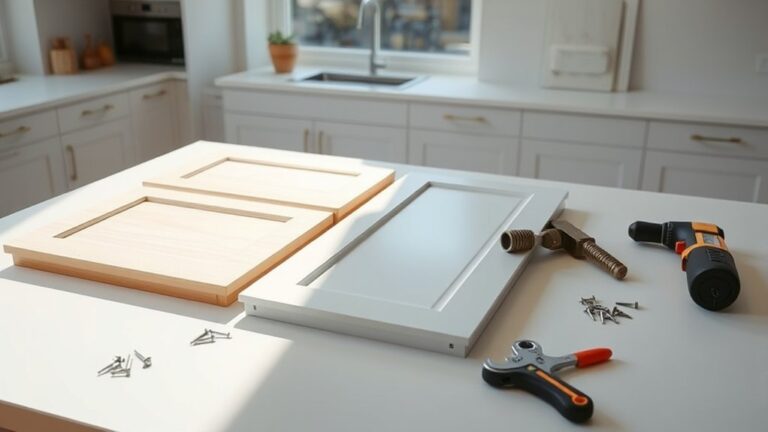
Gather a power drill with various bits, a screwdriver set, a tape measure, and a level to guarantee accurate alignment. You’ll also require hinge types compatible with your cabinets, either overlay, inset, or full wrap-around hinges, depending on the door style chosen.
Additional materials include screws, wood filler, and sandpaper for finishing touches. Don’t forget safety gear like gloves and safety glasses. Having these tools and materials ready will streamline the replacement process, reduce errors, and ensure your new cabinet doors fit perfectly and operate smoothly.
Remove Old Cabinet Doors Without Damaging Frames
Start by gathering a screwdriver and any other tools needed to remove the hinges. Protect the edges of the cabinet frames with painter’s tape to prevent scratches or dents.
Then, carefully unscrew the door hinges, supporting the door to avoid putting stress on the frame.
Gather Necessary Removal Tools
Three essential tools will make removing your kitchen cabinet doors safe and efficient: a screwdriver, a putty knife, and a soft cloth. Start by selecting a screwdriver compatible with the screws on your cabinet door types, typically Phillips or flathead. Using the wrong screwdriver can strip screws, complicating removal.
The putty knife serves to gently pry hinges or paint seals without damaging the frame, an important removal technique for older cabinets. Finally, the soft cloth protects surfaces from scratches while you work.
Have these tools ready before you begin to guarantee smooth detachment of doors, regardless of hinge style or mounting method. Proper preparation with the right tools minimizes risk of frame damage and speeds up the removal process, making your cabinet door replacement straightforward and precise.
Protect Cabinet Frame Edges
Although removing cabinet doors might seem straightforward, protecting the cabinet frame edges during the process is essential to prevent chipping or dents. You need to prioritize edge protection to guarantee frame maintenance remains intact throughout the removal.
To safeguard the cabinet edges, follow these practical steps:
Apply painter’s tape along frame edges to create a protective barrier. Use a thin, flat tool like a putty knife to gently separate the door without forcing it against the frame. Work slowly and avoid sudden movements that can damage delicate edges.
Carefully Unscrew Door Hinges
Loosen the screws on each hinge carefully to avoid stripping or damaging the cabinet frame. Identify the hinge types, whether they’re European concealed hinges or traditional butt hinges, as removal techniques differ slightly.
For concealed hinges, open the door fully and use a screwdriver to remove the mounting plate screws first, then the hinge arm screws. For butt hinges, unscrew the hinge leaves attached to both the door and the frame.
Apply steady, controlled pressure to prevent screw heads from rounding. If screws resist, apply a penetrating lubricant and wait a few minutes before retrying. Support the door firmly as you remove the final screws to prevent it from falling.
Follow these hinge removal techniques precisely to guarantee you remove old cabinet doors without damaging frames.
Measure Your Cabinets for Replacement Doors
Accurate measurements are essential when replacing your kitchen cabinet doors to guarantee a proper fit and smooth installation. Start by applying precise measuring techniques to obtain accurate dimensions of each door. Use a reliable tape measure and record the width and height of the cabinet opening, not the current door.
Accurate measurements of cabinet openings ensure replacement doors fit perfectly for a seamless installation.
Follow these steps:
Measure the cabinet’s exterior frame where the door will mount, noting any irregularities.
Record measurements to the nearest 1/16 inch for exactness.
Double-check each dimension before ordering replacement doors.
Taking these careful measurements verifies your new doors will fit seamlessly without gaps or overlaps. Accurate dimensions prevent costly adjustments and delays during installation. Remember, precise measuring techniques are the foundation for a professional-looking cabinet upgrade.
Choose Replacement Doors That Match Your Style
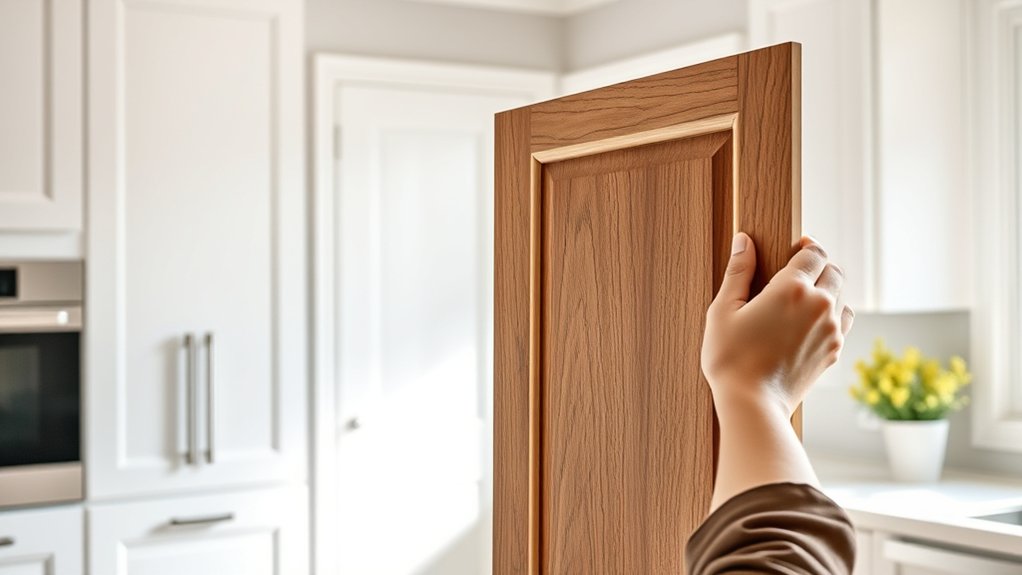
You’ll want to select replacement doors that align with your kitchen’s overall theme, whether modern, traditional, or changeover. Evaluate material options like solid wood, MDF, or laminate based on durability and maintenance.
Finally, guarantee the door finish matches or complements your existing cabinetry to maintain a cohesive look.
Consider Your Kitchen Theme
Although selecting new cabinet doors might seem straightforward, aligning them with your kitchen’s existing theme guarantees a cohesive and polished look. Prioritize kitchen aesthetics to maintain style coherence throughout the space.
Before purchasing, assess your current design elements, such as color palette, hardware finishes, and overall decor, to confirm compatibility.
Focus on these key factors:
- Match door styles (shaker, flat-panel, raised-panel) to your kitchen’s architectural style.
- Coordinate door colors and finishes with countertops, backsplashes, and flooring.
- Consider the impact on lighting and spatial perception to preserve balance.
Explore Material Options
When selecting replacement cabinet doors, understanding the material options is essential because each type affects durability, maintenance, and appearance differently. You can opt for solid wood if you want natural durability and a classic look, though it requires regular care.
MDF choices provide a smooth surface ideal for painted finishes and are cost-effective but less moisture-resistant. Laminate options offer high durability and easy maintenance with various textures and colors.
For a modern touch, consider glass inserts combined with metal accents, adding both style and functionality. If sustainability matters, eco friendly materials like bamboo or reclaimed wood are practical choices.
Textured surfaces enhance visual interest and hide minor wear. Assess your kitchen’s use and style to select the material that best balances performance and aesthetics.
Match Door Finish
Since the door finish directly influences your kitchen’s overall aesthetic, selecting a finish that complements your existing décor is vital. When choosing replacement doors, consider how door styles and finish options will integrate with your cabinetry and hardware. Matching finish guarantees visual cohesion and durability.
Focus on these key points:
- Assess current cabinet colors and textures for seamless blending.
- Evaluate door styles to maintain a consistent architectural theme.
- Choose finish options that resist wear and are easy to maintain.
How to Install Replacement Kitchen Cabinet Doors
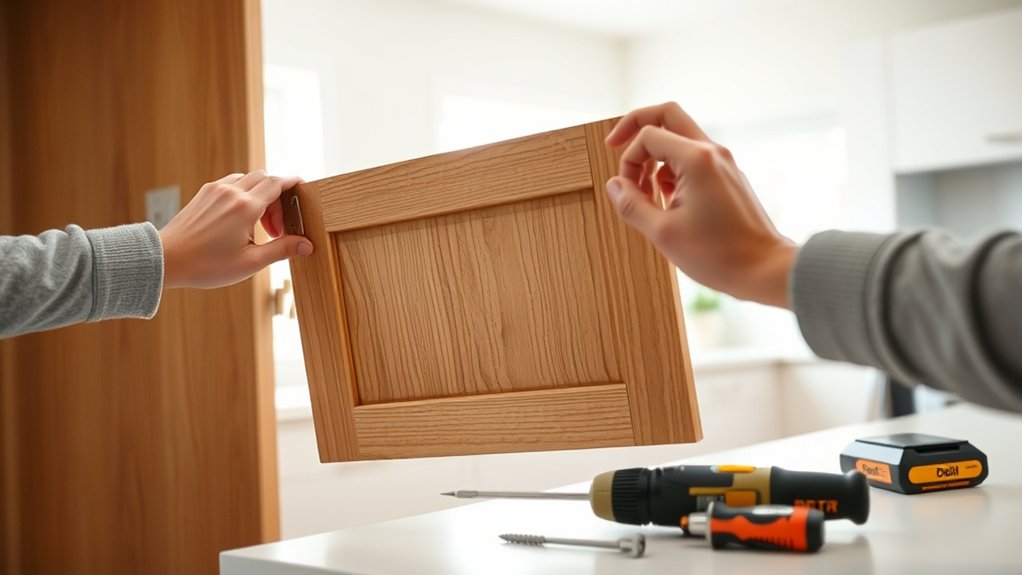
Start by aligning the replacement cabinet doors with the existing frame to confirm proper fit and function. Use a level to guarantee the doors sit straight and mark hinge positions carefully.
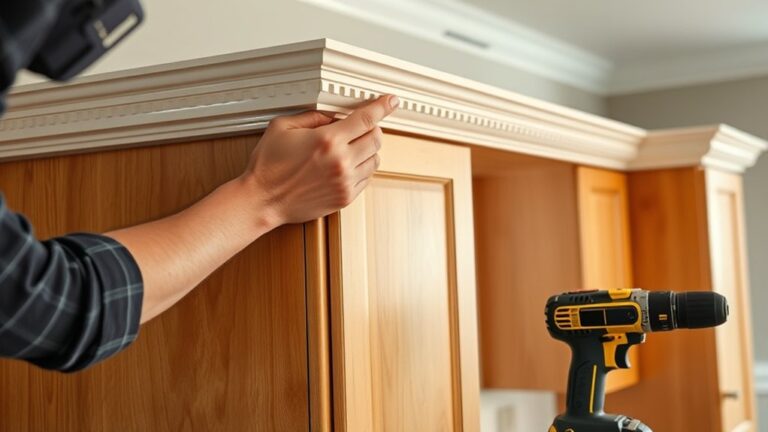
Attach the door hardware, such as handles or knobs, before mounting, as this allows easier handling and precise placement, enhancing kitchen aesthetics.
Next, secure the hinges to the doors, then to the cabinet frame, tightening screws firmly but avoiding overtightening to prevent damage. Verify the doors open and close smoothly without binding.
If the doors come pre-drilled, check hole alignment with the hardware; if not, measure and drill carefully. Installing replacement doors with attention to alignment and hardware placement not only restores functionality but also greatly improves the overall kitchen aesthetics.
Adjust Hinges and Maintain Your New Cabinet Doors
After securing your replacement cabinet doors, you’ll need to adjust the hinges to confirm proper alignment and smooth operation. Precise hinge alignment guarantees your doors close evenly and prevents wear over time. Use the following steps for effective door adjustments:
Loosen the hinge screws slightly to fine-tune the door position vertically and horizontally. Adjust the tension screws on the hinges for ideal door closing force and smooth motion. Check the gap between doors and cabinet frame, making incremental changes until gaps are uniform.
Regularly inspect hinge alignment and tighten screws as needed to maintain door functionality. Proper maintenance prevents sagging and misalignment, extending the lifespan of your new cabinet doors. By carefully performing door adjustments, you’ll confirm a professional finish and reliable daily use.
Frequently Asked Questions
Can I Replace Cabinet Doors Without Removing the Entire Cabinet?
Yes, you can replace cabinet doors without removing the entire cabinet. Simply detach the doors, choose new door styles, and update hardware options.
This approach saves time and maintains cabinet structure integrity during upgrades.
How Do I Paint or Finish Replacement Cabinet Doors?
You’ll prep surfaces by sanding, then apply a primer. Use paint techniques like spraying or brushing for smooth coats.
Choose finish options such as matte, satin, or semi-gloss for durability and desired look. Let each coat dry thoroughly.
What Are the Best Cabinet Door Materials for Humid Kitchens?
You should choose moisture resistant materials like PVC, marine-grade plywood, or thermofoil for humid kitchens. Pair them with durable finishes such as polyurethane or epoxy to guarantee longevity and prevent warping or peeling in high humidity.
How Do I Childproof New Cabinet Doors?
You’ll guarantee child safety by installing cabinet locks designed for your door type. Choose magnetic or adhesive locks, position them out of reach, and test their effectiveness regularly to prevent accidental access and enhance protection.
Can I Upgrade to Soft-Close Hinges During Replacement?
Of course, you can avoid soft close options if you enjoy noisy slams. But if not, you’ll find hinge installation straightforward when upgrading.
Just guarantee correct alignment for smooth, silent operation and lasting durability in your cabinet doors.