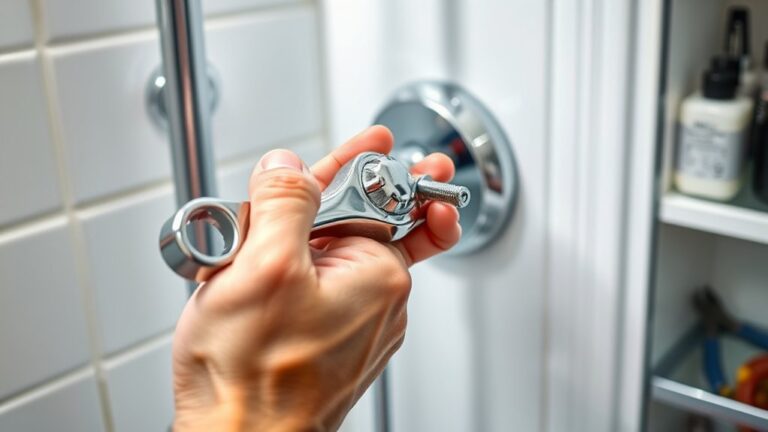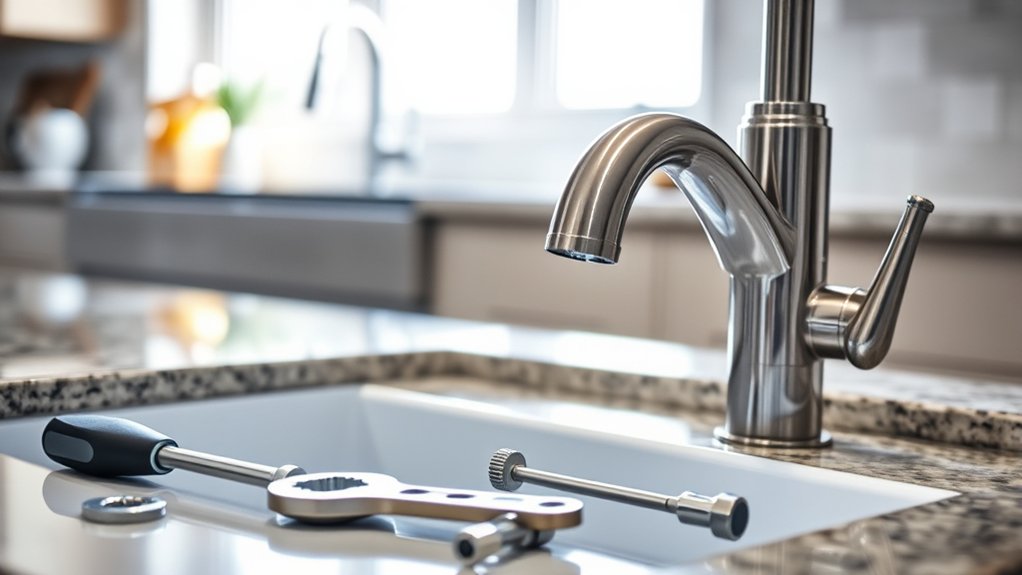
How Much to Replace Kitchen Faucet
You’ll typically spend between $150 and $450 to replace a kitchen faucet, including parts and labor.
The cost to replace a kitchen faucet varies based on materials like brass or plastic, installation complexity, and added features such as pull-down sprayers or touchless sensors.
If you choose DIY installation, make certain you have plumbing knowledge and proper tools; otherwise, a licensed plumber can provide code-compliant, warranty-backed service.
Understanding these factors helps you make an informed choice about cost, style, and installation options.
How Much Does It Cost to Replace a Kitchen Faucet?
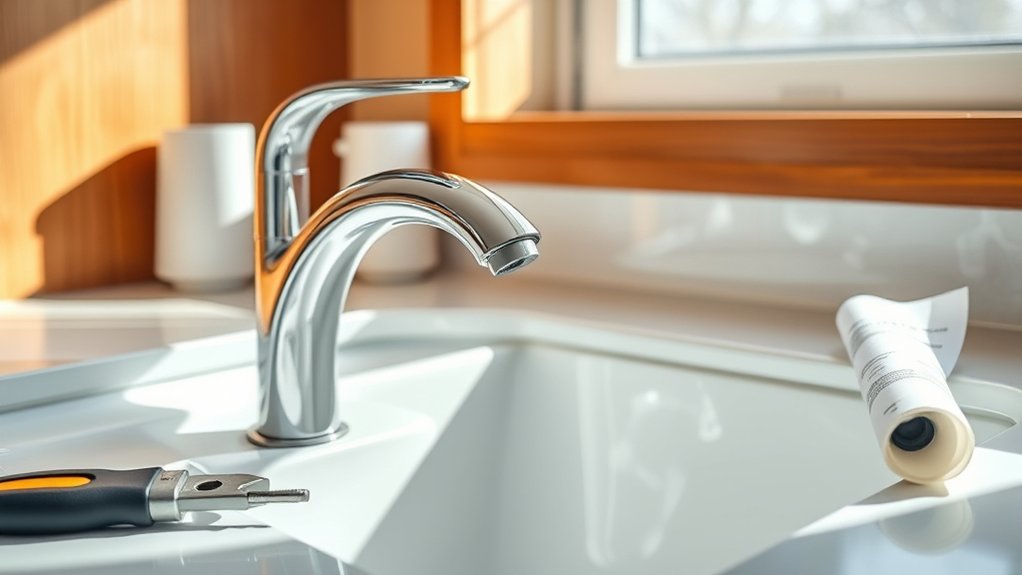
How much does it cost to replace a kitchen faucet? Typically, replacement expenses range from $150 to $450, including parts and labor. The cost depends largely on the faucet brands you choose, as premium brands with advanced features command higher prices.
When selecting a faucet, consider durability and compatibility with your existing plumbing. For installation, follow these tips: shut off water supply valves, use plumber’s tape on threads to prevent leaks, and guarantee proper alignment of mounting hardware.
If you’re replacing a single-handle faucet with a similar model, expect a straightforward swap. However, complex installations requiring additional holes or plumbing adjustments will increase labor costs.
What Factors Influence the Price of a Kitchen Faucet?
Because kitchen faucets vary widely in design and functionality, several key factors influence their price. First, faucet materials greatly affect cost; solid brass or stainless steel models tend to be pricier due to durability and corrosion resistance, while plastic or lower-grade metals reduce expenses.
Second, installation requirements impact overall investment. Faucets needing specialized mounts, additional plumbing modifications, or professional installation drive up costs compared to simple replacements.
Features like pull-down sprayers, touchless sensors, or integrated filtration systems also add to the price but relate more to functionality than basic factors. Understanding these elements helps you anticipate expenses accurately, focusing on faucet materials and installation demands to evaluate the price range realistically without considering aesthetic or brand preferences.
How Do You Choose a Kitchen Faucet That Fits Your Budget and Style?
Where should you start when selecting a kitchen faucet that balances budget constraints and design preferences? Begin by evaluating your needs against available faucet styles and budget options.
- Identify Your Style: Choose from modern, traditional, or versatile faucet styles that complement your kitchen’s design while considering finish durability.
- Determine Functional Requirements: Consider features like pull-down sprayers, single vs. double handles, and water efficiency to match practical use without overspending.
- Set a Realistic Budget: Research price ranges for your preferred styles and prioritize faucets offering quality materials within your budget options to guarantee longevity and performance.
Should You Install the Faucet Yourself or Hire a Plumber?
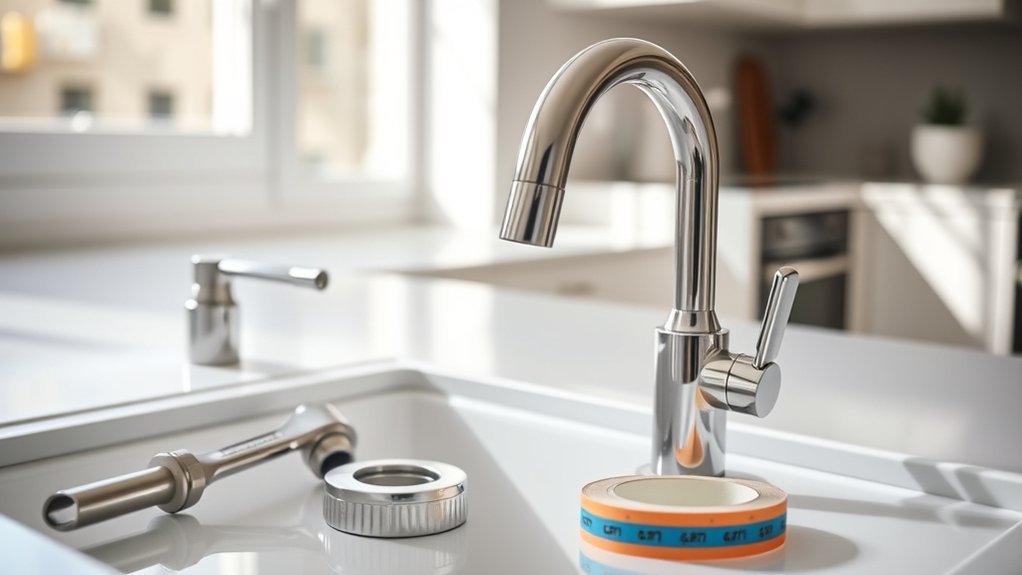
When deciding whether to install your kitchen faucet yourself or hire a plumber, consider your skill level, tools, and the complexity of the job. DIY installation can save money but requires familiarity with plumbing basics, proper tools, and the ability to troubleshoot leaks or alignment issues.
If your faucet involves multiple connections, specialized fittings, or outdated plumbing, professional plumbing is advisable. A licensed plumber guarantees compliance with codes, preventing costly damage or future repairs. Additionally, professional installation often comes with warranties for both labor and parts.
If you have moderate experience and the installation is straightforward, DIY installation is feasible. However, for complex setups or if you lack confidence, hiring a professional limits risks and assures a reliable, code-compliant faucet replacement.
Frequently Asked Questions
What Tools Are Needed to Replace a Kitchen Faucet?
You’ll need an adjustable wrench, basin wrench, plumber’s tape, screwdriver, and bucket. Knowing faucet types helps you choose proper tools.
Follow installation tips carefully to avoid leaks and guarantee a secure, efficient faucet replacement.
How Long Does It Typically Take to Replace a Faucet?
Replacing a faucet usually takes about 1 to 2 hours. With faucet installation tips, you’ll dodge common faucet issues like leaks or misalignment, ensuring a smooth, precise fit that saves you time and frustration.
Can I Reuse My Old Faucet’s Plumbing Connections?
You can reuse your old faucet’s plumbing connections if they match the new faucet’s compatibility. Conduct a plumbing inspection to verify seals and threads are intact, preventing leaks and guaranteeing a secure, functional installation.
Are There Eco-Friendly Kitchen Faucet Options Available?
Yes, you’ll find eco-friendly kitchen faucets made from sustainable materials like recycled brass or stainless steel. These faucets enhance efficiency by reducing water flow without sacrificing performance, helping you conserve water and lower your utility bills practically.
What Maintenance Is Required for a New Kitchen Faucet?
You’ll extend your faucet lifespan by performing regular cleaning to prevent mineral buildup, checking for leaks, and lubricating moving parts.
Promptly replace worn washers and cartridges to maintain peak function and avoid costly repairs.