What Is the Best Kitchen Faucet
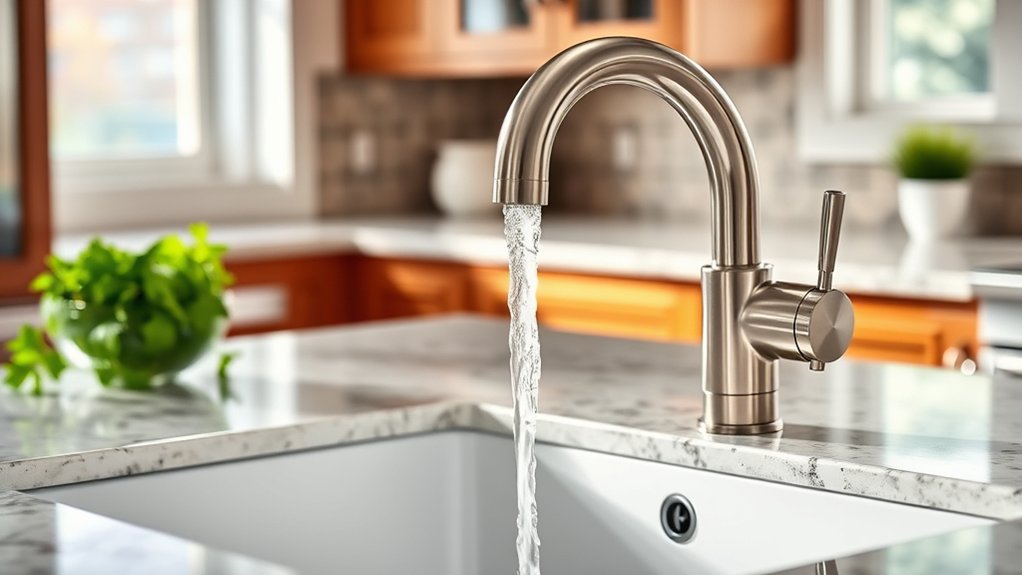
The best kitchen faucet suits your space and cooking habits, balancing height for pot clearance and splash control.
Choosing durable materials like brass ensures longevity, while matching water pressure and installation needs to your sink’s configuration is essential.
Styles like pull-down sprayers offer flexibility, and touchless models boost hygiene in busy kitchens.
Don’t overlook the importance of finish maintenance or your budget—both impact functionality and appearance.
Explore these factors carefully, and you’ll uncover which faucet truly enhances your kitchen’s performance and style.
Key Factors to Consider When Choosing a Kitchen Faucet
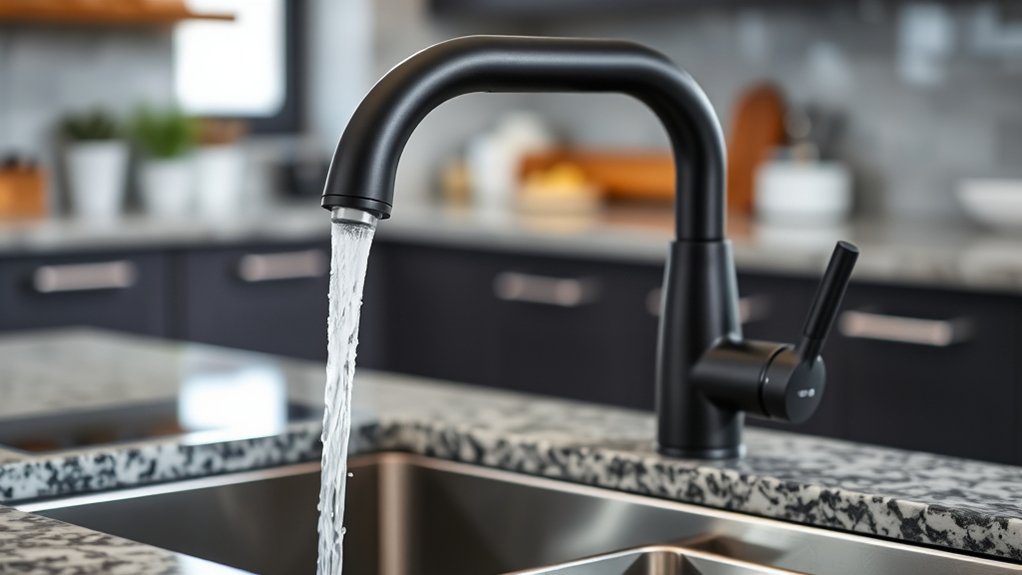
Why does choosing the right kitchen faucet matter so much? Because it directly impacts your kitchen’s functionality and comfort. When selecting a faucet, start by considering faucet height. A taller faucet offers more clearance for washing large pots but may splash water if your sink is shallow.
You’ll want to balance height with sink depth to avoid messes. Next, evaluate installation requirements. Check the number of holes in your sink or countertop and the compatibility of the faucet’s mounting system. Some faucets need single-hole setups, while others require three.
Also, consider water pressure compatibility and whether additional plumbing modifications are necessary. Paying close attention to these factors guarantees a seamless fit and peak performance, making your kitchen tasks easier and more efficient.
Popular Kitchen Faucet Styles and Their Benefits
You’ll find that single handle faucets offer streamlined control and easy temperature adjustment, making them a practical choice for busy kitchens.
Pull-down sprayers provide flexibility and reach, helping you tackle everything from rinsing vegetables to cleaning large pots efficiently. If you prefer a classic look, bridge faucets combine vintage charm with durable construction, adding both style and functionality to your space.
Single Handle Faucets
Single-handle faucets dominate modern kitchen designs due to their streamlined functionality and ease of use. With an ergonomic design, they allow you to control water temperature and flow with one smooth motion, enhancing efficiency. They’re ideal if you want a minimalist look without sacrificing performance.
To keep yours in top shape, focus on maintenance tips like regularly cleaning the cartridge and checking for leaks to avoid costly repairs.
| Feature | Benefit |
|---|---|
| Ergonomic Design | Smooth handle operation |
| Space-saving | Fits small or crowded sink areas |
| Easy Installation | Simple setup for most kitchens |
| Single Control | Quick temperature and flow adjustments |
Choosing a single-handle faucet means you get practicality and style in one package.
Pull-Down Sprayer Benefits
While single-handle faucets offer streamlined control, incorporating a pull-down sprayer adds versatile functionality that can elevate your kitchen experience. The ergonomic design of pull-down sprayers guarantees comfortable handling, reducing strain during extended use.
You’ll appreciate how easily the sprayer head detaches and retracts, offering flexibility to rinse large pots, clean sink corners, or fill containers outside the sink. Spray versatility is another key benefit; many models provide multiple spray settings—from gentle rinsing to powerful bursts—allowing you to tailor water flow precisely to your task.
This adaptability not only improves efficiency but also helps conserve water. When choosing a kitchen faucet, opting for a pull-down sprayer means investing in an intuitive, user-friendly tool that enhances both functionality and convenience in your daily kitchen routine.
Bridge Faucet Appeal
Though modern designs dominate many kitchens, bridge faucets continue to captivate homeowners who value both classic aesthetics and robust functionality. You’ll appreciate how bridge faucet styles blend vintage charm with practical dual-handle control, making temperature adjustments precise.
When choosing a bridge faucet, consider that its exposed plumbing requires regular bridge faucet maintenance to prevent mineral buildup and guarantee longevity. The design also offers easier repairs compared to single-handle models.
| Feature | Benefit |
|---|---|
| Dual handles | Precise temperature control |
| Elevated bridge | Classic, elegant appearance |
| Durable materials | Long-lasting performance |
| Visible plumbing | Easier maintenance access |
Understanding these factors helps you select a bridge faucet that complements your kitchen’s style while delivering reliable performance.
How Pull-Down, Pull-Out, and Touchless Kitchen Faucets Differ
Because your kitchen faucet plays an essential role in daily tasks, choosing between pull-down, pull-out, and touchless models requires understanding their unique designs and functionalities. Each type offers distinct advantages in faucet ergonomics and installation complexity, impacting your kitchen’s efficiency.
- Pull-down faucets extend from the spout, ideal for deep sinks, offering smooth reach and better control.
- Pull-out faucets have shorter hoses and heads, perfect for compact spaces and precise rinsing.
- Touchless faucets use sensors for hands-free operation, enhancing hygiene but increasing installation complexity due to electrical components.
- Both pull-down and pull-out models rely on manual control, offering simpler installation and repair.
Consider your kitchen layout and daily needs to select a faucet that optimizes ergonomics without complicating installation.
Key Features That Make a Kitchen Faucet Work Better
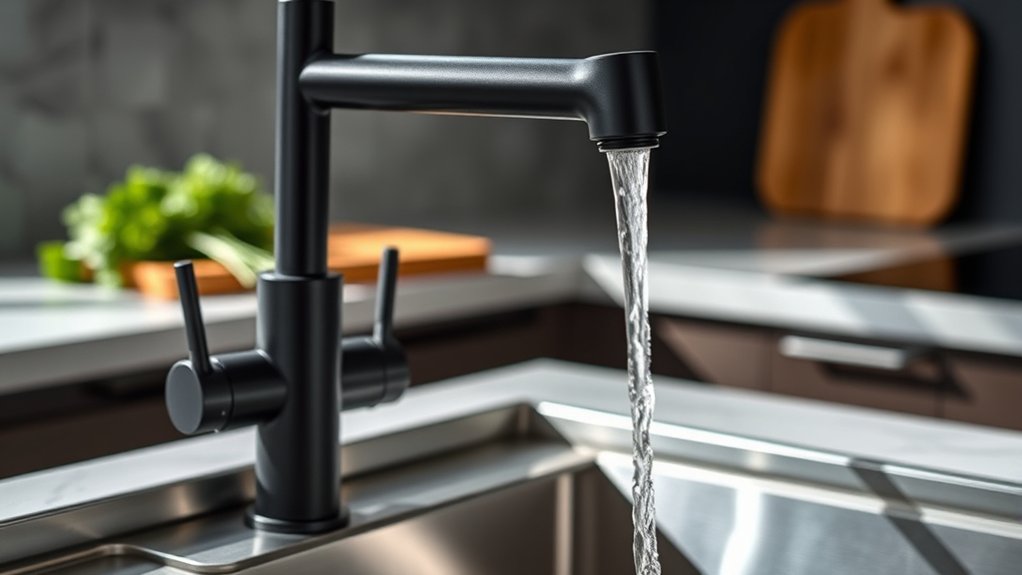
You’ll want to focus on faucets made from durable materials to guarantee long-lasting performance and resistance to wear.
Efficient water flow not only saves resources but also improves your overall kitchen experience.
Plus, choosing a model with an easy installation process can save you time and reduce frustration.
Durable Materials Matter
Selecting kitchen faucets made from durable materials greatly impacts their longevity and performance. When you invest in quality materials, you guarantee your faucet withstands daily use and resists corrosion, extending its lifespan.
Focus on these key factors for material longevity and corrosion resistance:
- Brass Construction Offers excellent durability and natural corrosion resistance.
- Stainless Steel Combines strength with high resistance to rust and tarnish.
- Ceramic Disc Valves Prevent leaks and withstand wear better than traditional valves.
- Protective Finishes Look for finishes like PVD or chrome plating that guard against scratches and corrosion.
Choosing faucets built with these materials means fewer repairs and consistent performance, making your kitchen experience seamless and worry-free.
Water Flow Efficiency
When enhancing your kitchen faucet, water flow efficiency plays a crucial role in improving both performance and water conservation. You want a faucet that balances water pressure with an ideal flow rate. Too high, and you waste water; too low, and tasks take longer.
Look for faucets with aerators that maintain steady pressure while reducing flow, typically around 1.5 to 2.2 gallons per minute. This guarantees you get strong water pressure without excess consumption. Also, consider models with adjustable flow settings, letting you tailor water use for different tasks.
Efficient flow reduces utility bills and environmental impact without compromising functionality. By prioritizing water flow efficiency, you make certain your kitchen faucet delivers reliable performance while conserving water effectively.
Easy Installation Process
Although many factors influence a kitchen faucet’s overall performance, an easy installation process greatly enhances user experience and long-term satisfaction. When selecting your faucet, prioritize models designed for straightforward setup, ensuring faucet compatibility with your sink and plumbing.
Follow these installation tips to streamline the process:
- Verify your sink’s hole configuration matches the faucet’s mounting requirements.
- Turn off water supply lines before removal or installation to prevent leaks.
- Use included gaskets and mounting hardware to secure the faucet firmly without overtightening.
- Test connections for leaks after installation and adjust fittings as needed.
Comparing Faucet Finishes: Style and Durability
Because your faucet finish impacts both the kitchen’s aesthetic and its longevity, choosing the right one requires careful consideration. Popular finishes like brushed nickel, chrome, and matte black each offer distinct style and durability.
Chrome shines with a reflective surface but demands frequent finish maintenance to prevent water spots. Brushed nickel hides fingerprints and scratches better, fitting well with evolving color trends leaning toward muted, natural tones.
Matte black provides a modern look but may show soap scum more visibly, requiring regular cleaning for upkeep. Stainless steel finishes excel in corrosion resistance and blend seamlessly into most kitchens.
When selecting a finish, balance your style preference with how much maintenance you’re willing to perform to keep your faucet looking new and complement your kitchen’s evolving color trends.
Budgeting Tips for Quality Kitchen Faucets
To guarantee you invest wisely in a kitchen faucet, start by setting a clear budget that reflects both your functional needs and design preferences. Balancing quality with cost requires strategic planning.
Set a clear budget aligning your kitchen faucet needs with style for smart, balanced investment decisions.
Consider these steps:
- Research cost effective brands known for durability and good warranty coverage.
- Factor in faucet maintenance tips. Choosing models with easily replaceable parts can save money long-term.
- Prioritize essential features over luxury add-ons to stay within budget without sacrificing performance.
- Compare prices across retailers and check for seasonal sales or rebates.
Finding the Right Faucet for Your Cooking Style and Space
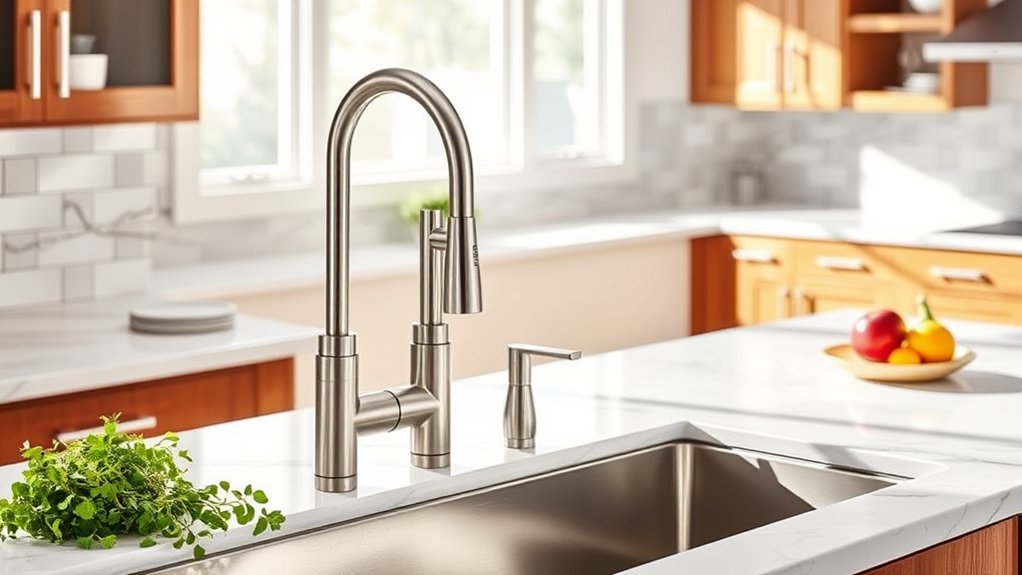
Once you’ve set a budget that balances quality and cost, the next step is choosing a faucet that suits how you cook and the layout of your kitchen. Consider faucet compatibility with your sink and countertop, and review installation requirements to avoid costly adjustments.
| Cooking Style | Recommended Faucet Type | Installation Requirements |
|---|---|---|
| Heavy-duty cooking | Pull-down sprayer | Single or double hole |
| Casual cooking | Single-handle | Standard deck mount |
| Entertaining | Touchless | Requires electrical outlet |
Match the faucet’s features to your workflow for efficiency. For example, a pull-down sprayer aids heavy cooking with easy rinsing, while touchless faucets enhance hygiene for frequent entertaining. Always verify your sink’s hole configuration to ascertain faucet compatibility and smooth installation.
Frequently Asked Questions
How Do I Install a Kitchen Faucet Myself?
Don’t bite off more than you can chew. Start by gathering installation tools and identifying faucet types.
Turn off water, remove old faucet, follow manufacturer steps precisely, tighten connections securely, then test for leaks to guarantee success.
What Maintenance Is Required for a Kitchen Faucet?
You should perform regular faucet cleaning to prevent mineral buildup and maintain water flow. Inspect seals and handles for wear, addressing leaks promptly.
When repairs become frequent or parts fail, consider a faucet replacement to avoid bigger issues.
Are Kitchen Faucet Warranties Typically Transferable?
Kitchen faucet warranties typically aren’t transferable, but some faucet brands offer limited warranty coverage to new owners.
Always check your specific brand’s policy to verify you understand if warranty benefits extend beyond the original purchaser.
Can I Use a Kitchen Faucet With Hard Water?
You face hard water, mineral buildup, and corrosion, but you can use a kitchen faucet with water softeners and specific faucet features like ceramic discs and stainless steel construction. These prevent damage and guarantee durability effectively.
How Do I Fix a Leaking Kitchen Faucet?
To fix a leaking kitchen faucet, first identify your faucet type: ball, cartridge, or ceramic disc. Use proper repair tools like wrenches and screwdrivers to replace worn seals or cartridges, ensuring a tight, leak-free fit.