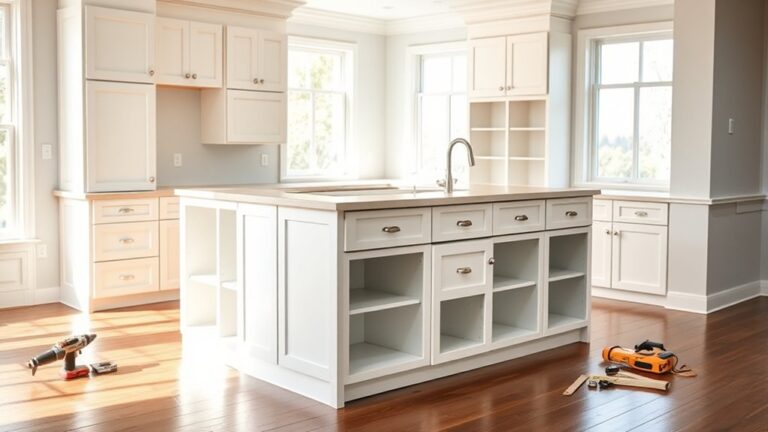
How to Repaint Kitchen Cabinets Without Sanding
You can repaint kitchen cabinets without sanding by first cleaning them thoroughly with a degreaser to remove oils and dirt. This step is crucial to ensure the paint adheres well to the surface.
Next, apply a high-quality bonding primer designed for slick surfaces to guarantee strong paint adhesion.
Choose a durable, washable paint like acrylic enamel and apply thin, even coats using good brushes.
Lightly scuff between coats for better bonding, and restore your cabinets without the mess of sanding.
Keep exploring to master each step for a flawless finish.
Why You Don’t Need to Sand Kitchen Cabinets
You don’t need to sand kitchen cabinets because modern paints and primers are designed to adhere well to most surfaces without extensive surface preparation. Advances in paint adhesion technology allow you to skip sanding, even on varied cabinet materials like laminate, wood veneer, or solid wood.
Specialized bonding primers create a strong base that grips these surfaces firmly, ensuring durability and a smooth finish. While older finishes demanded roughening surfaces to promote paint adherence, today’s products have enhanced chemical formulations that penetrate and bond without compromising the cabinet’s integrity.
This means you save time and avoid dust while maintaining a professional-quality repaint. Understanding your cabinet materials helps you select the right primer and paint for maximum adhesion, eliminating sanding as a necessary step in most repainting projects.
Preparing Kitchen Cabinets for Paint Without Sanding
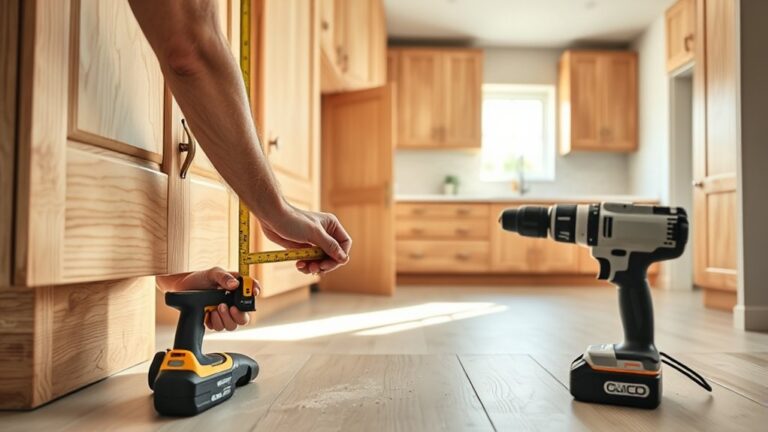
Skipping sanding doesn’t mean you can start painting right away. Proper surface preparation is essential for paint adhesion and durability. Begin by thoroughly cleaning your cabinets using effective cleaning techniques that remove grease, dirt, and grime. Use a degreasing cleaner or a mixture of trisodium phosphate and water for stubborn residues.
After cleaning, wipe down with a damp cloth and let the surface dry completely. Inspect for any damage or loose hardware and address those before painting.
| Step | Description |
|---|---|
| 1. Cleaning | Use degreaser or TSP solution |
| 2. Rinse | Wipe with damp cloth to remove residue |
| 3. Drying | Allow cabinets to air dry thoroughly |
| 4. Inspection | Check for damage, fill holes if needed |
| 5. Hardware Removal | Remove knobs and hinges for easy painting |
This guarantees a smooth, paint-ready surface without sanding.
Best Primers and Paints for Kitchen Cabinets
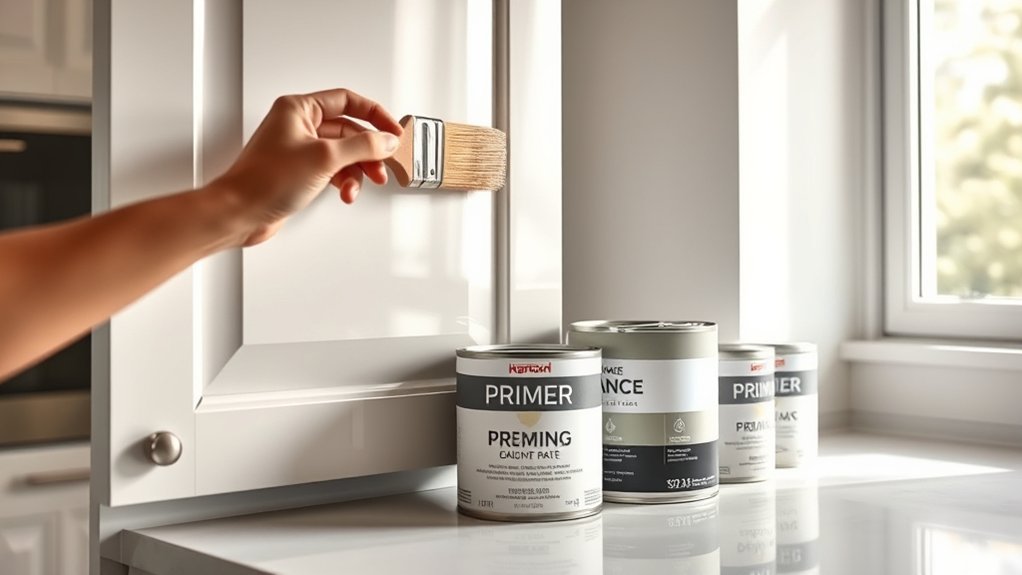
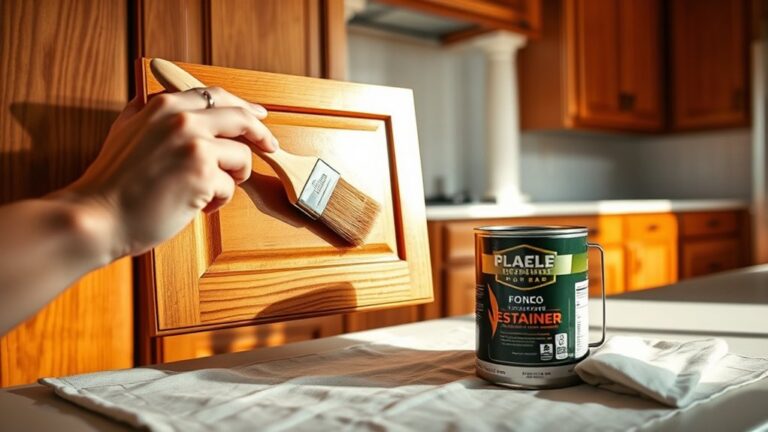
Choosing the right primer and paint is essential to achieving a durable, professional-looking finish on your kitchen cabinets. To avoid sanding, opt for a high-quality bonding primer designed specifically for slick surfaces.
Selecting a premium bonding primer ensures a smooth, durable finish on kitchen cabinets without the need for sanding.
When selecting paint, consider cabinet color trends like muted greens, deep blues, or classic whites to modernize your kitchen. Also, prioritize eco-friendly options with low VOCs to guarantee safety and sustainability.
- Use a stain-blocking primer to prevent tannins and knots from showing through.
- Select a paint with a hard, washable finish like acrylic enamel or alkyd.
- Focus on paints labeled as low odor and low VOC for healthier indoor air quality.
This careful selection guarantees longevity, style, and environmental responsibility in your cabinet makeover.
How to Paint Kitchen Cabinets Without Sanding: Step-by-Step
Selecting the right primer and paint sets the foundation for a smooth application, but proper preparation is equally important when painting kitchen cabinets without sanding. Start by thoroughly cleaning the cabinet surfaces with a degreaser to remove oils and dirt.
Next, apply a high-quality bonding primer designed for slick surfaces, ensuring even coverage. Choose your color selection carefully, opting for durable, washable paint suited to kitchens.
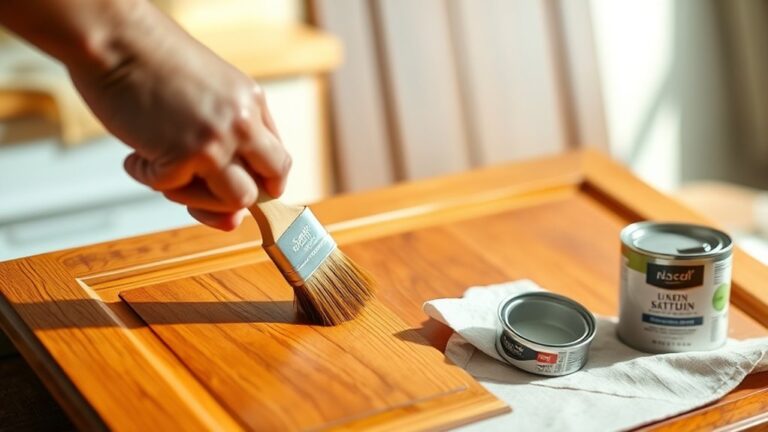
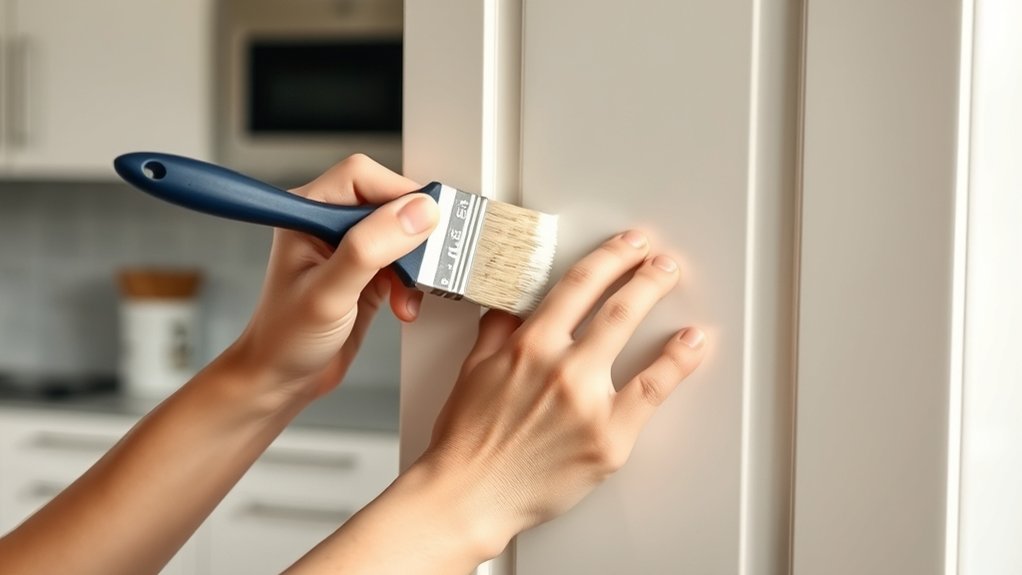
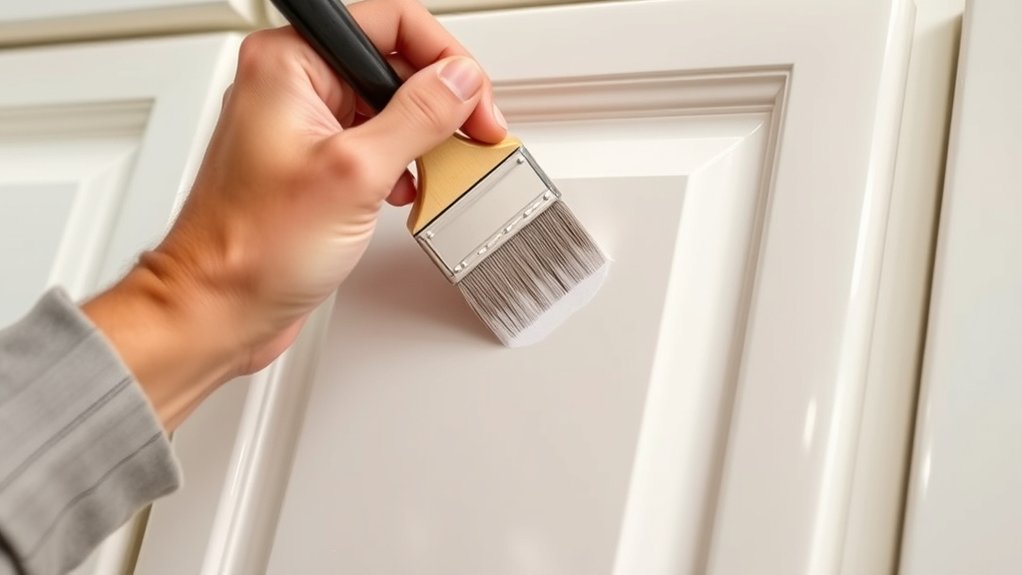
Use high-quality brushes and master brush techniques. Apply thin, even coats with long, smooth strokes to avoid brush marks. Allow each coat to dry fully before applying the next.
For the best finish, lightly scuff between coats with a fine synthetic pad, not sandpaper. Finally, reattach hardware once the paint cures completely, ensuring a professional, lasting result without sanding.
How to Keep Your Painted Cabinets Looking Fresh
Although repainting your kitchen cabinets takes effort, maintaining their fresh appearance requires consistent care and attention. To keep your cabinets looking pristine, follow essential cabinet maintenance tips that prevent wear and preserve the paint’s integrity. Use appropriate cleaning solutions designed for painted surfaces to avoid damage or discoloration.
Focus on these key practices:
- Clean regularly with a mild, non-abrasive cleaning solution to remove grease and dirt without stripping paint.
- Wipe spills immediately to prevent stains and moisture damage.
- Avoid harsh scrubbing tools that can scratch or dull the finish.
Frequently Asked Questions
Can I Repaint Kitchen Cabinets Made of Laminate Without Sanding?
Yes, you can repaint laminate cabinets without sanding by thoroughly cleaning for laminate preparation and choosing a high-quality bonding primer. This guarantees paint adheres well, providing a durable, smooth finish without damaging the surface.
How Long Does the Paint Typically Last on Non-Sanded Cabinets?
You can expect paint durability on non-sanded cabinets to last around 3 to 5 years. However, without thorough surface preparation, chips and peeling may appear sooner.
Meticulous cleaning and priming are essential for lasting results.
Are There Eco-Friendly Paints Suitable for Kitchen Cabinets?
You’ll find eco-friendly options like low-VOC or zero-VOC paints specifically designed for kitchen cabinets. These provide excellent paint durability while reducing harmful emissions, ensuring your cabinets stay vibrant and safe for years without compromising environmental health.
Can I Use a Paint Sprayer Instead of Brushes for Cabinets?
You can absolutely use a paint sprayer for cabinets; sprayer techniques guarantee even, smooth paint finishes without brush marks. Just control overspray carefully, maintain consistent distance, and thin your paint for professional, durable results.
What Safety Precautions Should I Take When Repainting Cabinets Indoors?
You should wear protective gear like gloves and a mask, and guarantee proper ventilation by opening windows and using fans. These ventilation tips help reduce fumes, keeping your indoor air safe while you repaint your cabinets.