Does Wd-40 Remove Grease From Kitchen Cabinets
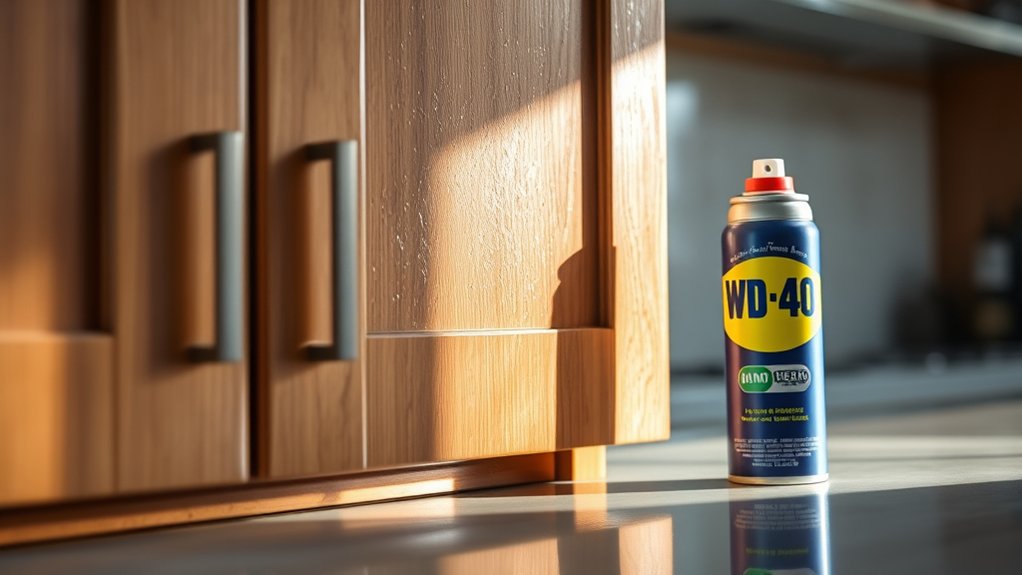
You can use WD-40 to remove grease from kitchen cabinets because its solvent properties break down oily residues effectively.
However, it’s not specially formulated for kitchen surfaces, and its petroleum-based solvents may affect finishes or leave an oily film that attracts dust.
You should test it on a hidden spot and wipe residue thoroughly to avoid buildup.
If you want a detailed understanding of safety, application steps, and better alternatives, there’s more to explore ahead.
Does WD-40 Remove Grease From Kitchen Cabinets?
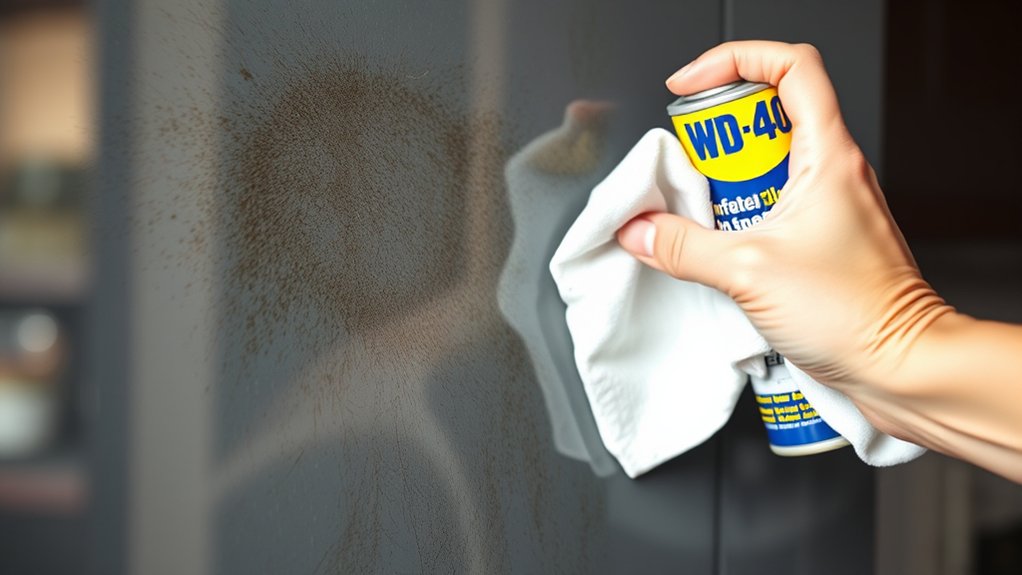
How effectively does WD-40 remove grease from kitchen cabinets? When tackling kitchen cleaning, WD-40 serves as a potent grease solution due to its solvent properties. You’ll find it breaks down tough grease residues by penetrating and loosening the oily film on cabinet surfaces.
However, it’s important to apply WD-40 sparingly and wipe thoroughly to prevent residue buildup. Unlike traditional degreasers designed for food-contact areas, WD-40 isn’t formulated specifically for kitchen cleaning but excels in dissolving grease quickly on sealed wood or laminate cabinets.
For best results, test a small hidden area to verify no surface damage occurs. To sum up, WD-40 offers an effective grease solution for kitchen cabinets, but you should complement it with proper cleaning techniques to maintain surface integrity and hygiene.
How WD-40 Affects Grease and Grime
WD-40 penetrates grease and grime by breaking down their molecular bonds, allowing you to lift and wipe away oily residues more efficiently. Its formulation includes solvents that disrupt the adhesion of grease to surfaces, which facilitates grease removal from kitchen cabinets.
When you apply WD-40, it reduces surface tension between the grime and the cabinet finish, making it easier to clean without excessive scrubbing. This chemical interaction enhances kitchen cleanliness by targeting stubborn oil-based contaminants that typical detergents might leave behind.
However, its efficacy depends on the grease type and the duration of application. You should use it sparingly and allow the product to sit briefly to maximize bond disruption. Overall, WD-40 provides a methodical approach to loosening and removing grease and grime, contributing to a cleaner kitchen environment.
Is WD-40 Safe to Use on Kitchen Cabinets?
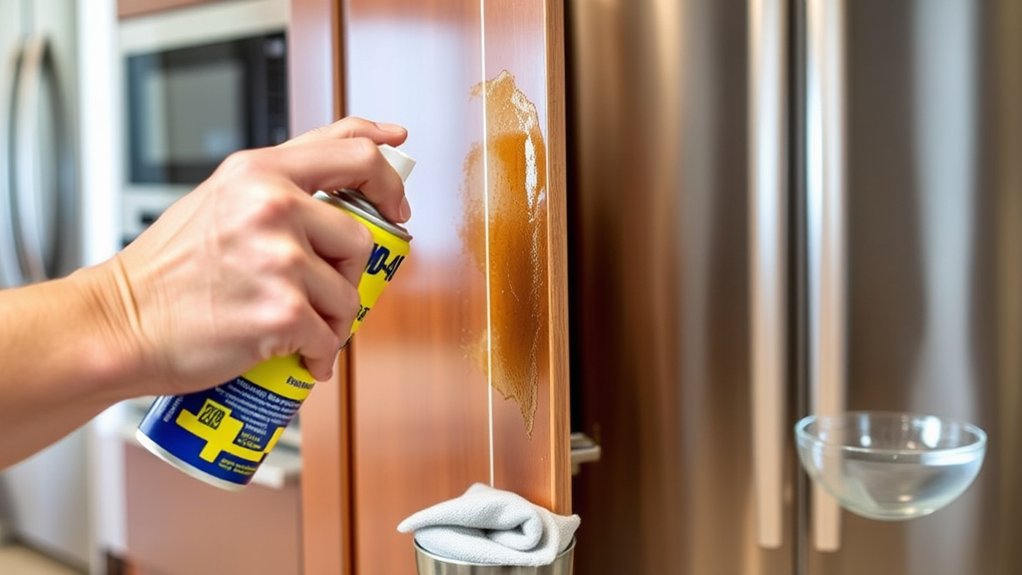
You need to understand WD-40’s chemical makeup before applying it to kitchen cabinets, as its solvents can interact with various finishes. Not all surfaces tolerate these ingredients well, which raises compatibility concerns.
Evaluating potential risks like discoloration or residue buildup is essential for safe use.
Chemical Composition Overview
The chemical composition of WD-40 primarily consists of lubricating oils, hydrocarbons, and corrosion inhibitors, which work together to displace moisture and reduce friction. These chemical properties enable WD-40 to break down and dissolve grease effectively by penetrating its molecular structure.
When you apply WD-40 to greasy surfaces, the hydrocarbons interact with grease, loosening its grip without water-based solvents. This interaction facilitates easier removal of oily residues.
However, because WD-40 is oil-based, it leaves a thin lubricating film after use. While this film aids in corrosion prevention, it can also attract dust or cause surface sheen changes.
Understanding these chemical properties helps you evaluate WD-40’s effectiveness for grease removal and informs cautious application, especially on delicate finishes.
Surface Compatibility Concerns
Although effective at breaking down grease, using WD-40 on kitchen cabinets requires careful consideration of surface materials and finishes. Different wood types, such as oak, maple, or MDF, respond variably to WD-40’s solvent properties.
The product can penetrate and potentially alter surface finishes like varnish, lacquer, or polyurethane, leading to discoloration or finish degradation. You should test WD-40 on an inconspicuous area before application to assess its impact on the cabinet’s finish.
Additionally, cabinets with delicate or untreated wood surfaces may absorb the product, causing staining or surface damage. Understanding your cabinets’ specific wood types and surface finishes helps you avoid unintended damage while effectively targeting grease residues.
Always apply WD-40 sparingly and wipe off excess promptly to minimize interaction with the finish.
Potential Risks Explained
When evaluating whether WD-40 is safe for kitchen cabinets, you must consider its chemical composition and interaction with various surface materials. WD-40 contains petroleum-based solvents and lubricants that can penetrate finishes, potentially causing discoloration or degradation over time.
You should also weigh health concerns; prolonged exposure to its volatile organic compounds (VOCs) may irritate respiratory pathways or skin. While occasional use might not pose immediate hazards, repeated application could lead to long term effects on both your cabinets’ integrity and indoor air quality.
Consequently, you need to assess if the benefits of grease removal outweigh these risks. Testing on an inconspicuous area and ensuring proper ventilation are essential preventative steps. Ultimately, WD-40’s safety on kitchen cabinets isn’t absolute and requires cautious, informed use.
Using WD-40 on Greasy Cabinets: Step-by-Step
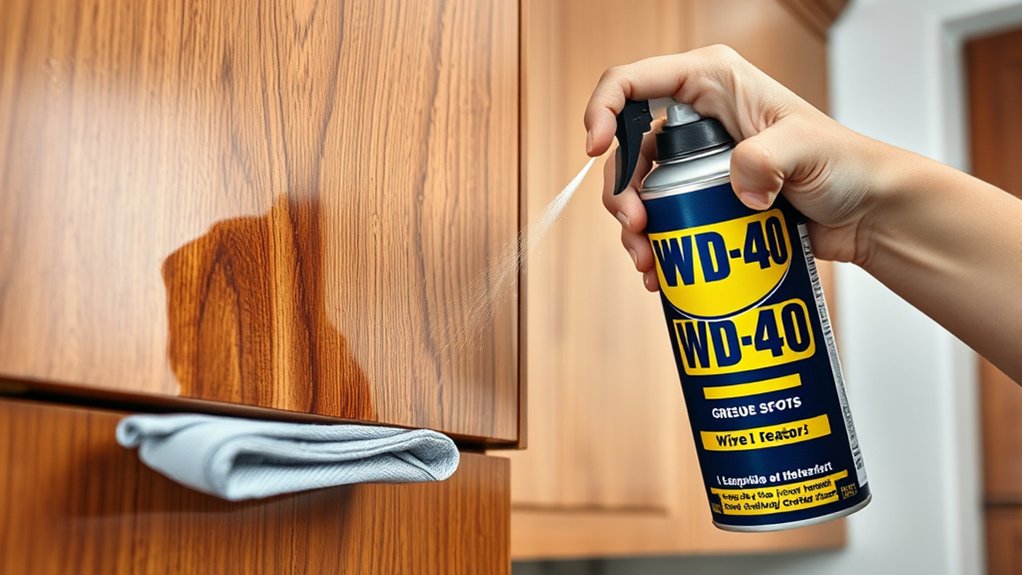
You’ll start by thoroughly preparing the cabinet surface to guarantee effective grease removal. Next, apply WD-40 carefully to avoid excess buildup and potential damage. Finally, wipe off the residue completely to restore the cabinet’s finish without leaving oily traces.
Preparing The Cabinet Surface
Start by identifying all greasy areas on your cabinet surface to guarantee targeted application of WD-40. Effective cabinet preparation begins with a thorough surface cleaning to remove loose dirt and dust that could interfere with WD-40’s penetration.
Use a mild detergent solution and a soft cloth to gently wipe the surface, ensuring you don’t spread grease further. After cleaning, allow the cabinet to dry completely to prevent dilution of the WD-40.
Inspect the surface for any residual sticky spots, and if necessary, repeat the cleaning process in those specific areas. Proper cabinet preparation is essential, as it maximizes WD-40’s ability to break down grease efficiently, ensuring ideal results during the subsequent application phase.
This methodical approach minimizes potential surface damage and enhances overall cleaning performance.
Applying WD-40 Safely
Although WD-40 is a versatile solvent, applying it safely on greasy cabinets requires careful attention to technique and protective measures. First, observe essential safety precautions: work in a well-ventilated area to avoid inhaling fumes, and wear nitrile gloves to protect your skin from chemical exposure. Avoid contact with eyes and keep away from open flames.
For application techniques, spray WD-40 directly onto a microfiber cloth instead of the cabinet surface to control the amount and prevent oversaturation. Gently rub the greasy area in a circular motion, targeting stubborn grease spots without damaging the finish. Use minimal product to reduce residue buildup.
Following these steps guarantees efficient grease removal while maintaining cabinet integrity and adhering to safety standards throughout the cleaning process.
Wiping Off Residue
After treating the greasy cabinet with WD-40, it’s critical to thoroughly wipe off any remaining residue to prevent buildup and potential damage to the surface. Use a clean microfiber cloth dampened with warm soapy water for effective residue removal.
This step is essential in kitchen maintenance, ensuring no slippery film remains that attracts dirt or degrades finishes.
| Step Number | Action | Purpose |
|---|---|---|
| 1 | Spray WD-40 | Loosen grease |
| 2 | Wait 5 minutes | Allow penetration |
| 3 | Wipe with microfiber cloth | Remove grease and WD-40 residue |
| 4 | Clean with soapy water | Eliminate oily film |
| 5 | Dry with a lint-free cloth | Prevent moisture damage |
Follow these steps precisely for ideal residue removal and cabinet longevity.
Cleaning Up WD-40 Residue From Cabinets
A common challenge when using WD-40 on cabinets is dealing with the oily residue it leaves behind. To guarantee effective residue removal, start by applying a small amount of dish soap mixed with warm water to a microfiber cloth.
Gently scrub the affected areas to break down the oily film without damaging the cabinet finish. Afterward, rinse the cloth and wipe down the surface to remove any soap traces.
For stubborn residue, isopropyl alcohol diluted with water can be used cautiously to avoid surface degradation. Consistent cabinet maintenance involves promptly addressing WD-40 residue to prevent buildup, which can attract dirt and complicate future cleaning.
This methodical approach guarantees your cabinets remain clean and well-preserved after WD-40 application.
Risks of Using WD-40 on Kitchen Cabinets
While effectively removing WD-40 residue from cabinets is possible, you should be aware of the potential risks associated with applying WD-40 on kitchen cabinet surfaces. WD-40 is not formulated for cabinet maintenance, and improper use can lead to issues such as:
Removing WD-40 from cabinets is possible, but using it on kitchen surfaces carries risks and potential damage.
- Attracting more grease buildup due to its oily composition
- Degrading or discoloring wood finishes and paint over time
- Creating a slippery surface that complicates routine cleaning
- Potentially leaving residues that trap dust and dirt
These factors can compromise the cabinet’s aesthetic and structural integrity. If you rely on WD-40 for grease removal regularly, you might inadvertently worsen cleaning challenges and accelerate wear. Understanding these risks helps you make informed decisions about maintaining your kitchen cabinets effectively without causing unintended damage.
Best Alternatives to WD-40 for Kitchen Grease Removal
Although WD-40 can remove grease, you’ll find more effective and safer alternatives designed specifically for kitchen use. Natural cleaners like a vinegar solution effectively break down grease without harsh chemicals.
Mixing equal parts vinegar and water creates a potent degreaser that’s safe on cabinet surfaces. Baking soda acts as a mild abrasive, perfect for scrubbing stubborn grease without scratching.
Combining baking soda with lemon juice enhances its grease-cutting ability through natural acidity. Dish soap, formulated to dissolve oils, is another reliable option. Using a few drops in warm water readily emulsifies kitchen grease.
Adding essential oils, such as tea tree or eucalyptus, can improve cleaning power while imparting a fresh scent. These alternatives provide targeted, non-toxic solutions superior to WD-40 for kitchen grease removal.
Frequently Asked Questions
Can WD-40 Damage Cabinet Paint or Finish?
Don’t worry, WD-40 can damage cabinet paint if you’re not careful. Always test for paint compatibility first to guarantee cabinet protection. Its solvents may degrade finishes, so precise application and quick wiping minimize risk effectively.
How Long Should WD-40 Sit Before Wiping Grease Off?
You should let WD-40 sit for about 5 minutes before wiping to optimize grease removal techniques.
For sensitive surfaces, consider cleaning product alternatives like vinegar or baking soda, which offer effective, less abrasive grease removal options.
Does WD-40 Have a Strong Odor?
Yes, WD-40 has a strong scent due to its petroleum base. You’ll need proper odor control measures, like ventilation, when using it indoors to minimize discomfort from its distinctive, pungent odor during application and drying.
Can WD-40 Be Used on Other Kitchen Surfaces?
Yes, you can use WD-40 on some kitchen surfaces for grease removal, but it’s not ideal for food-contact areas. Its solvent properties break down grease, yet it may leave residues unsuitable for direct food prep surfaces.
Is WD-40 Safe to Use Around Food Preparation Areas?
You shouldn’t use WD-40 around food preparation areas due to food safety concerns. Its chemical residues can contaminate surfaces.
Instead, opt for alternative cleaners specifically designed to be food-safe and non-toxic for kitchen use.