How to Fix Kitchen Faucet
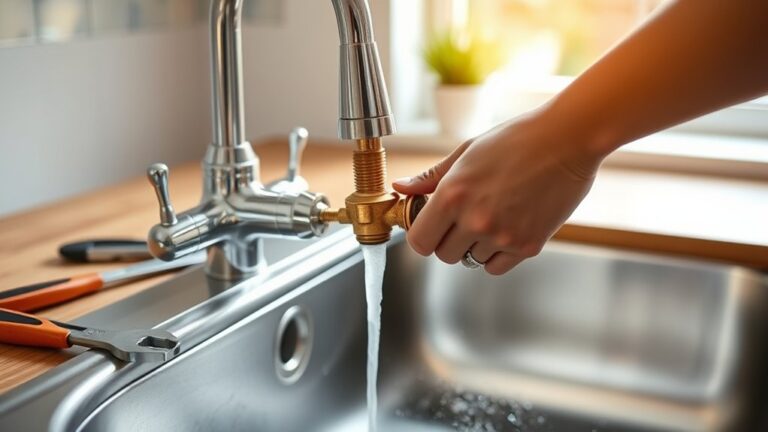
If your kitchen faucet leaks, start by identifying worn components like O-rings, washers, or cartridges. Fixing a kitchen faucet often begins with gathering essential tools such as wrenches, screwdrivers, and plumber’s tape to replace faulty parts.
Tighten loose connections under the sink and clean aerators if water pressure is low. Regularly inspect seals and fittings to prevent future leaks.
For persistent or complex issues, professional help may be necessary.
Keep going to understand precise repair steps and preventive maintenance techniques.
What’s Causing Your Kitchen Faucet to Leak?
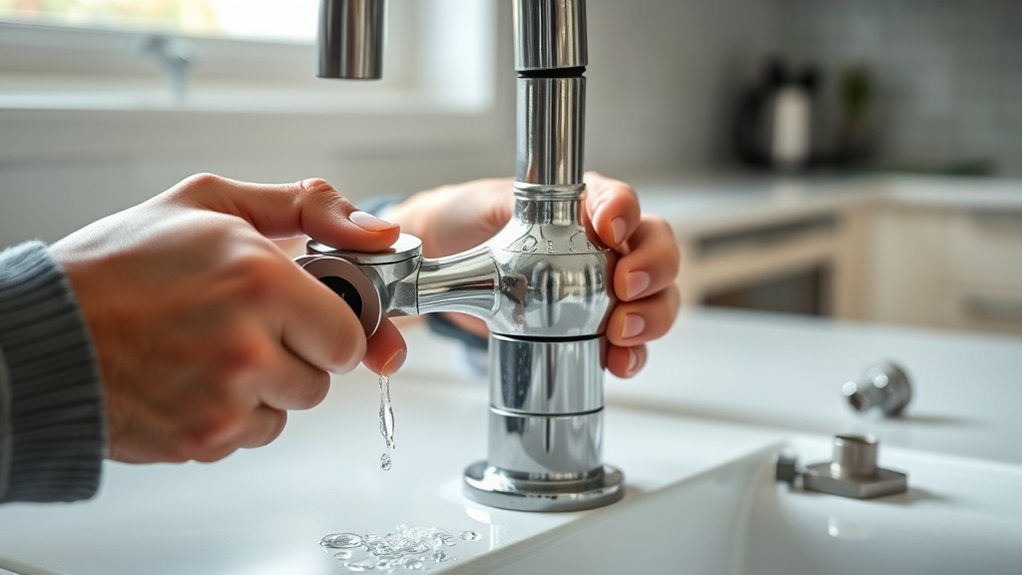
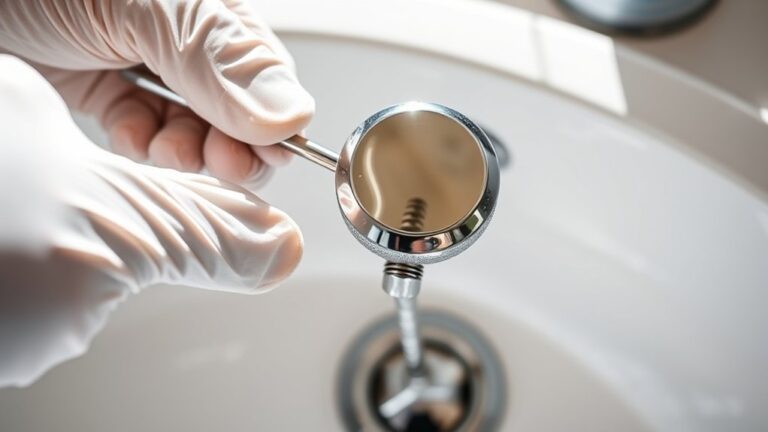
Before you start repairing your kitchen faucet, it’s essential to identify the cause of the leak. Leaks often stem from worn-out or damaged faucet components such as O-rings, cartridges, washers, or seals. Inspect these parts carefully to pinpoint the source.
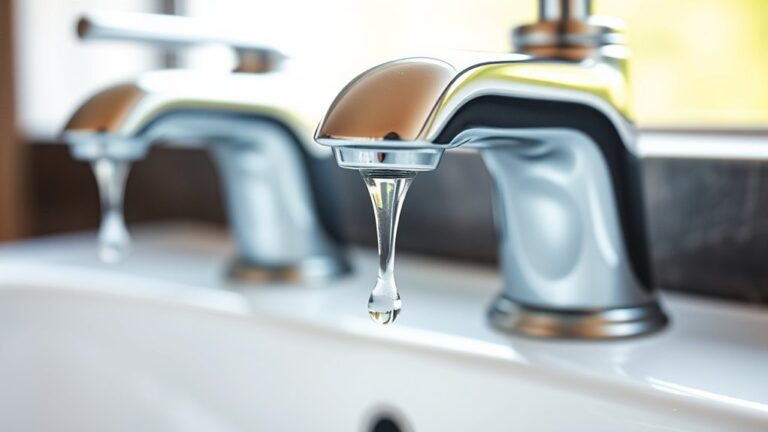
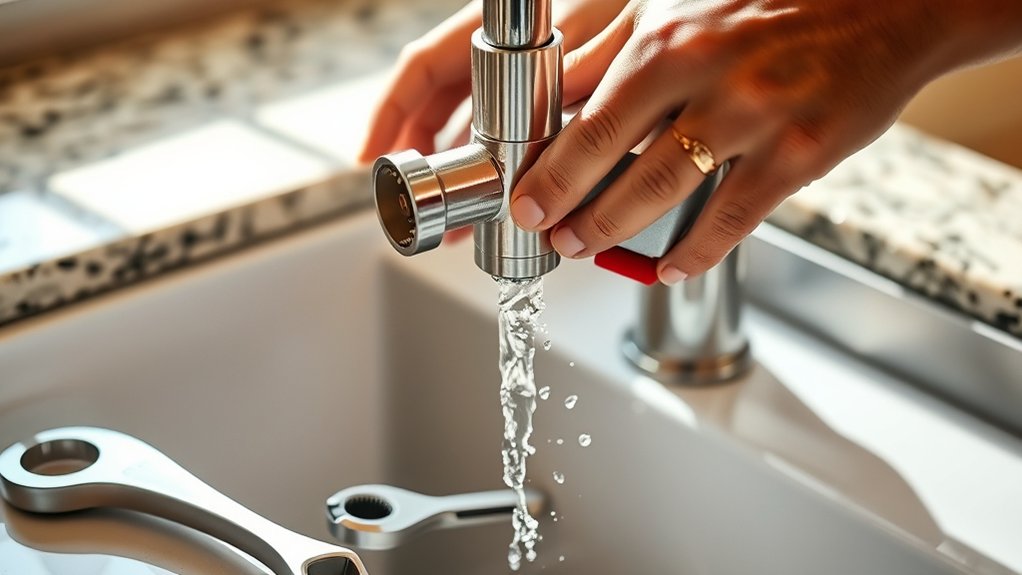
Common leaks include drips from the spout, water pooling around the base, or leaks under the sink. Dripping usually indicates a faulty cartridge or worn washer, while leaks at the base often result from degraded O-rings.
Corrosion and mineral buildup can also affect seals and cause leaks. Understanding which component is compromised helps you prepare the right tools and replacement parts. By accurately diagnosing the leak type and affected faucet components, you’ll avoid unnecessary repairs and guarantee a targeted, efficient fix.
How to Fix Common Kitchen Faucet Problems
Start by gathering the necessary tools and replacement parts based on your diagnosis. For dripping faucets, replace worn-out washers or cartridges specific to your faucet type. Single-handle, double-handle, or pull-out models require different components.
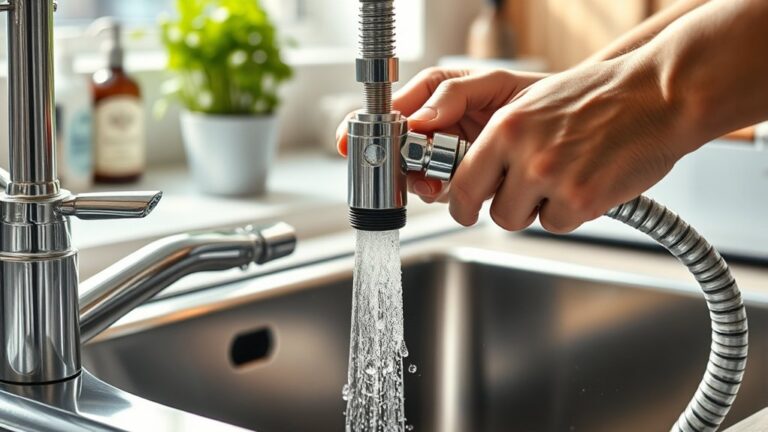
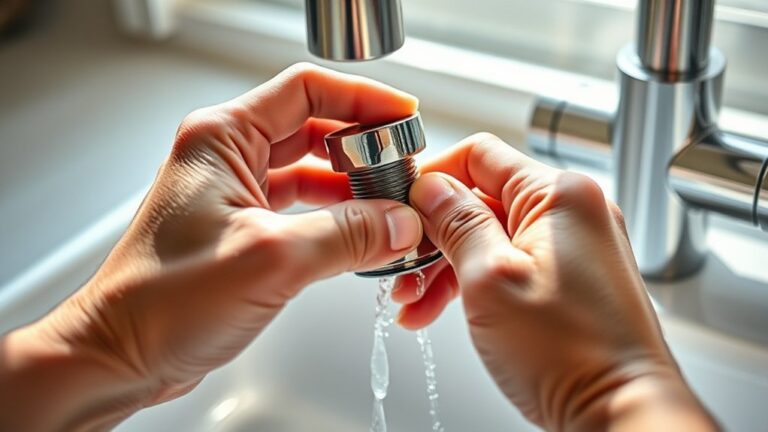
If water pressure is low, check aerators for clogs and clean or replace them. For leaks beneath the sink, tighten loose connections or replace damaged supply lines.
When reinstalling parts, follow installation tips: verify all seals and O-rings are properly seated, avoid overtightening, and test the faucet after each adjustment. Familiarize yourself with your faucet’s design, as repair steps vary among faucet types.
Addressing these common problems methodically will restore function efficiently and prevent further damage.
Get the Tools You’ll Need for Kitchen Faucet Repair
You’ll need a few essential tools to tackle most kitchen faucet repairs efficiently. Start with a basin wrench, a key faucet tool designed to reach tight spaces under the sink. Include an adjustable wrench and channel-lock pliers to loosen and tighten nuts and fittings.
A flathead and Phillips screwdriver are repair essentials for removing handles and securing components. Keep plumber’s tape on hand to guarantee watertight seals when reassembling connections.
A hex key or Allen wrench set is often necessary for cartridge or handle adjustments. Finally, have a bucket and rag ready to catch water drips and clean spills.
Gathering these faucet tools upfront streamlines your repair process, minimizes frustration, and helps you fix leaks, replace cartridges, or tighten fittings with precision.
Keep Your Kitchen Faucet Leak-Free With Easy Maintenance
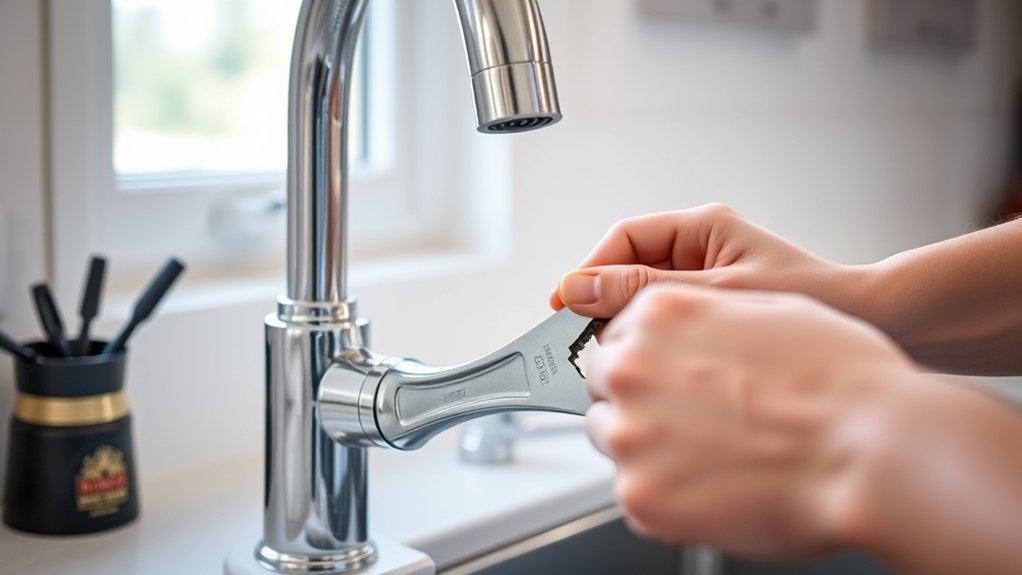
Although kitchen faucets are built for durability, regular maintenance is essential to prevent leaks and extend their lifespan. Taking simple preventative measures and performing routine inspections can save you time and costly repairs.
- Check for Drips and Leaks: Inspect faucet joints and spouts weekly to catch small leaks early. Replace worn washers or O-rings immediately.
- Clean Aerators and Screens: Mineral buildup restricts water flow and stresses faucet components. Remove and soak aerators monthly in vinegar to dissolve deposits.
- Tighten Loose Parts: Vibrations and daily use loosen screws and fittings. Use a wrench to secure any loose connections during your inspections.
When It’s Time to Call a Plumber for Kitchen Faucet Issues
When should you call a plumber for kitchen faucet issues? If you notice persistent leaks, low water pressure, or corrosion that cleaning can’t fix, these are faucet replacement signs indicating professional help is needed.
Also, if your faucet’s internal components are damaged or if repairs require specialized tools, avoid DIY attempts to prevent further damage. Complex problems like broken valves or supply line issues usually exceed basic troubleshooting.
Calling a plumber guarantees accurate diagnosis and efficient repair. Keep in mind, professional plumbing costs vary but investing in expert service can save money in the long run by preventing water damage and repeated repairs.
When in doubt, prioritize safety and quality by consulting a licensed plumber for your kitchen faucet problems.
Frequently Asked Questions
Can I Replace My Kitchen Faucet Myself Without Plumbing Experience?
You can tackle your kitchen faucet swap like a puzzle master with the right tools required: adjustable wrench, plumber’s tape.
Follow installation tips closely, stay patient, and you’ll transform your sink without plumbing experience.
What Types of Kitchen Faucets Are Best for Hard Water Areas?
You should choose faucets made from brass or stainless steel for hard water areas, as these materials resist corrosion and mineral buildup. Avoid chrome finishes, which wear quickly.
Ceramic disc valves also improve durability in hard water.
How Long Does a Typical Kitchen Faucet Last Before Needing Replacement?
A typical kitchen faucet lasts 10–15 years. For example, Sarah noticed leaks and low water pressure, signs replacement was needed.
Faucet lifespan factors include water quality, usage frequency, and maintenance. Monitor these to decide when to replace yours.
Are There Eco-Friendly Kitchen Faucet Options to Save Water?
Yes, you can choose eco-friendly kitchen faucets with water saving features like aerators and flow restrictors.
Look for durable faucet materials such as stainless steel or brass to guarantee longevity while minimizing environmental impact.
What Warranty Should I Expect With a New Kitchen Faucet Purchase?
You know what they say, “A stitch in time saves nine.” Check faucet warranty details carefully; expect coverage types like limited lifetime, parts, and finish.
This guarantees lasting performance and safeguards your investment practically.