How to Upgrade Kitchen Cabinets
You can upgrade your kitchen cabinets by choosing repainting, refacing, or full replacement based on your budget, style, and cabinet condition. Upgrading kitchen cabinets is a great way to enhance your kitchen’s look without a complete remodel.
Start by emptying and cleaning surfaces, sanding for paint adhesion, and inspecting for damage. For simple upgrades, repaint with multiple thin coats and swap hardware precisely.
Refacing replaces doors and veneers while preserving boxes, offering a budget-friendly refresh. Full replacement lets you customize structurally damaged cabinets.
Understanding these steps helps you decide the most efficient approach.
Understand Your Kitchen Cabinet Upgrade Options
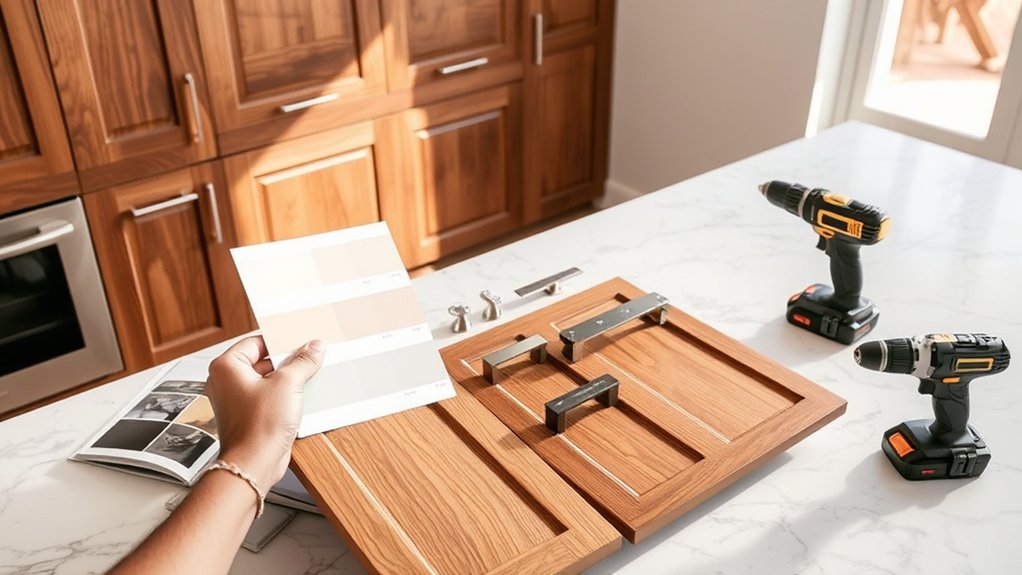
When upgrading your kitchen cabinets, you have three primary options: refacing, repainting, or full replacement. Each option depends on your cabinet materials, existing design styles, and budget considerations.
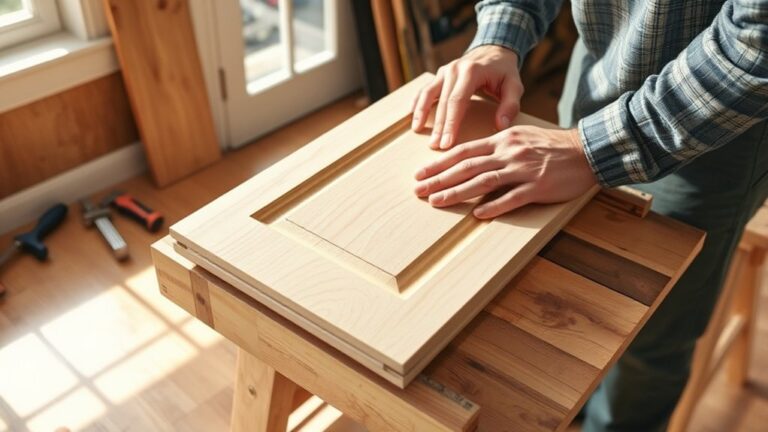
Refacing involves replacing cabinet doors and veneers while preserving the cabinet boxes. It is ideal for wood or laminate materials.
Repainting suits cabinets in good structural condition and allows you to change design styles with various colors or finishes.
Full replacement is necessary when cabinet materials are damaged or outdated beyond repair. It offers complete customization but at a higher cost.
Consider DIY methods for repainting and refacing to reduce expenses, but recognize full replacement often requires professional skills.
Evaluate your kitchen’s current state, desired aesthetic, and financial limits before choosing the most efficient upgrade path.
Prep Your Cabinets for a Smooth Makeover
Preparing your cabinets properly involves five key steps: emptying, cleaning, sanding, repairing, and masking. First, remove all contents and hardware to create a clear workspace.
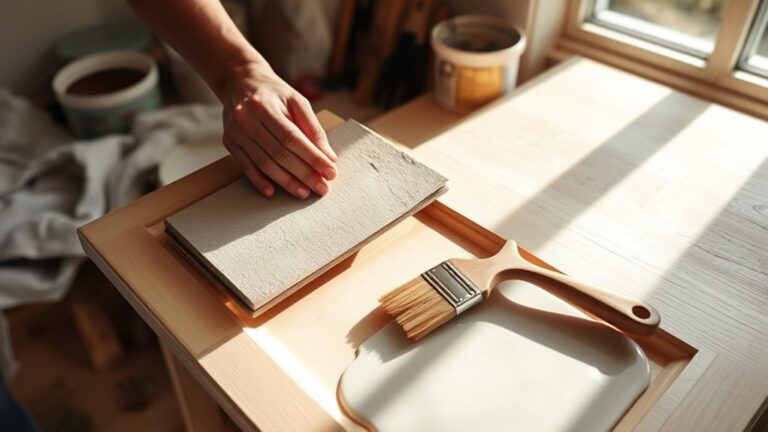
Next, perform thorough cabinet cleaning using a degreaser to eliminate oils and residues, which is vital for effective surface preparation. After drying, sand all surfaces with medium-grit sandpaper to promote adhesion for new finishes.
Thoroughly clean with degreaser, then sand with medium-grit paper to ensure proper finish adhesion.
Inspect for damages. Fill cracks or holes with wood filler, then sand smooth once dry. Finally, mask adjacent areas with painter’s tape to protect walls and countertops during your upgrade.
Each step guarantees your cabinets are primed for a flawless makeover, eliminating common issues like peeling or uneven texture. Meticulous surface preparation sets the foundation for lasting results.
Simple Upgrades: Painting and Hardware Swaps
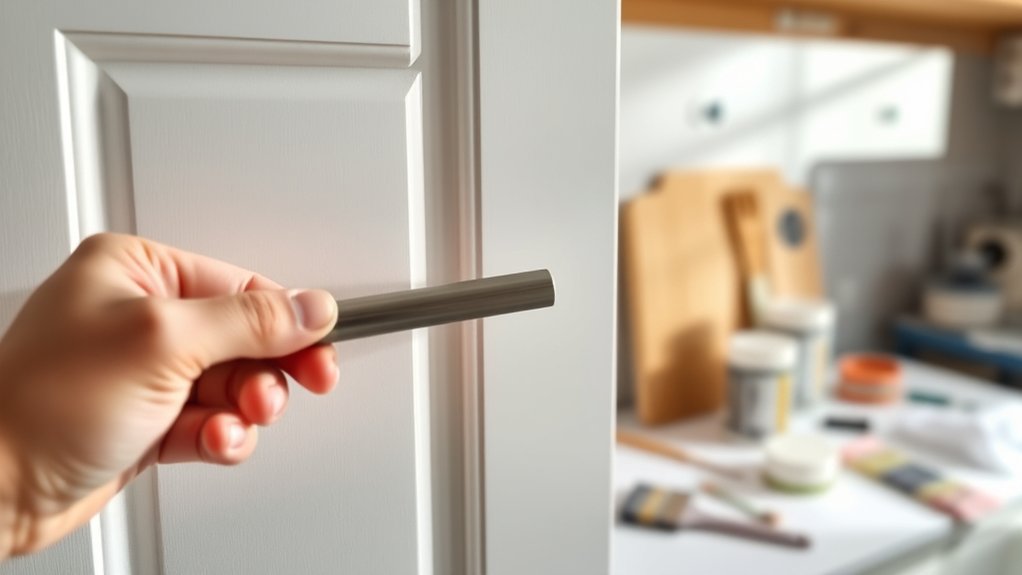
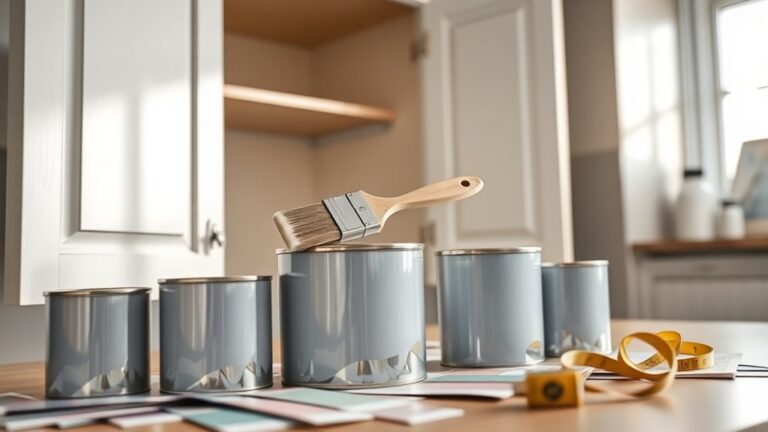
With your cabinets fully prepped, you can now focus on enhancing their appearance through painting and hardware replacement. Begin by selecting color choices that complement your kitchen’s existing palette and current design trends. Muted tones and bold contrasts work well.
Apply painting techniques such as sanding between coats and using high-quality brushes or rollers for a smooth, durable finish. Opt for at least two thin layers of paint to avoid drips and guarantee even coverage.
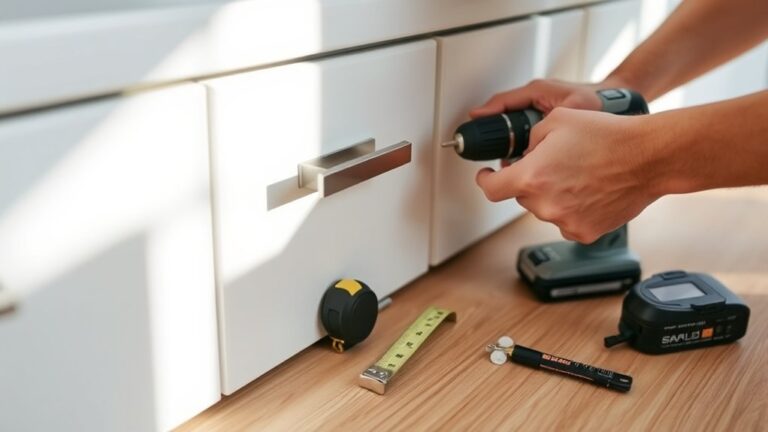
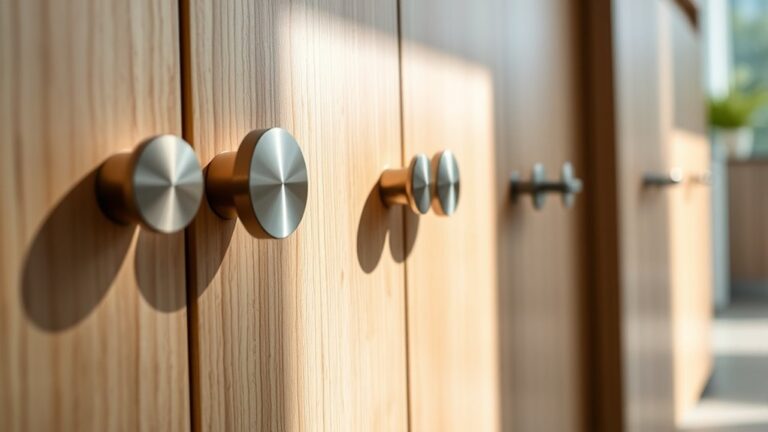
Next, choose hardware styles that match your updated cabinet look. Sleek, modern pulls or vintage knobs can dramatically alter the overall aesthetic. Carefully measure and mark screw placements before installation to maintain alignment.
These simple upgrades provide an efficient way to refresh your kitchen cabinets without extensive remodeling.
Advanced Upgrades: Refacing and Replacement
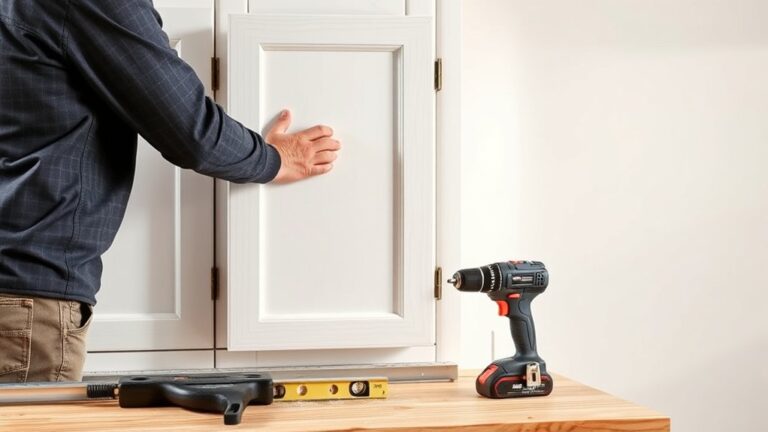
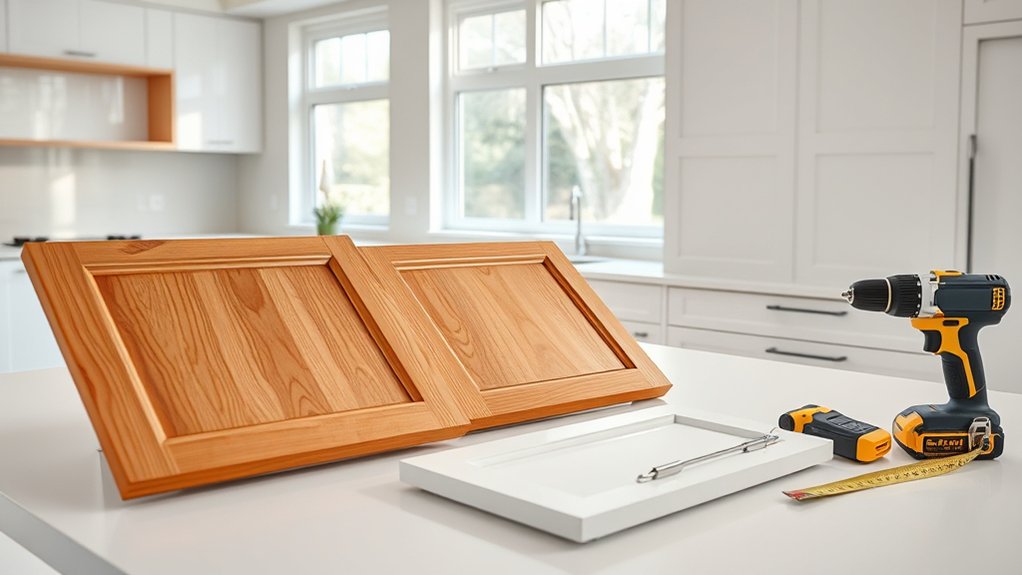
Although simple upgrades can refresh your cabinets’ look, refacing and replacement offer more thorough solutions for outdated or damaged cabinetry. Refacing involves replacing cabinet doors and veneers, preserving the cabinet boxes. Replacement requires removing entire units, allowing flexibility in cabinet materials and design styles.
Both methods demand precise measurements and attention to structural integrity.
| Aspect | Refacing |
|---|---|
| Cabinet Materials | Limited to veneer and doors |
| Design Styles | Matches existing layout |
| Installation | Less invasive, quicker |
| Cost | Generally lower than replacement |
| Aspect | Replacement |
| Cabinet Materials | Full range, including custom |
| Design Styles | Complete redesign possible |
| Installation | Extensive, involves demolition |
| Cost | Higher, but more transformative |
Choose refacing for budget-conscious improvements; opt for replacement when structural or style changes are essential.
How to Choose the Right Upgrade for Your Kitchen
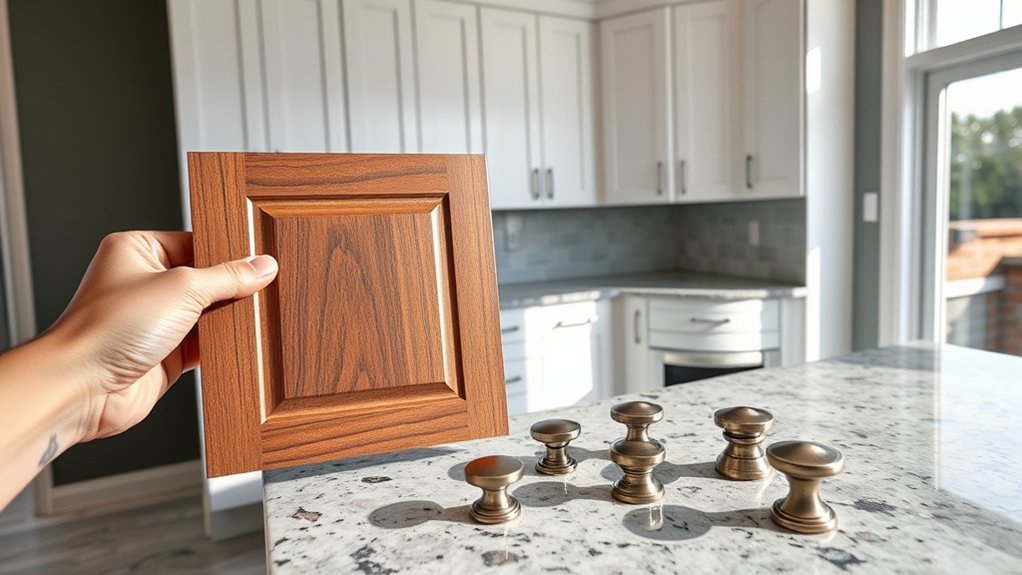
When selecting the right upgrade for your kitchen cabinets, you’ll need to assess factors such as budget, desired aesthetics, and the condition of your existing cabinetry. Start by defining your budget considerations; this will narrow your options between simple cosmetic changes like painting and more extensive solutions such as refacing or full replacement.
Evaluate your style preferences carefully. Modern, traditional, or transitional designs require different materials and finishes. Inspect your current cabinets for structural integrity. If damage or warping exists, replacement may be more cost-effective than refacing.
Consider the long-term value of each upgrade relative to your kitchen’s usage and resale potential. By methodically balancing budget constraints with style preferences and cabinet condition, you’ll select an upgrade that optimizes both function and appearance efficiently.
Frequently Asked Questions
How Do I Dispose of Old Cabinet Materials Responsibly?
You should explore cabinet recycling options like donating usable parts or contacting local recycling centers. Utilize sustainable disposal methods by separating materials such as wood, metal, and hardware.
Ensure hazardous substances are handled according to regulations to minimize environmental impact.
What Tools Are Essential for a DIY Cabinet Upgrade?
Tools are your Swiss Army knife here: a drill for cabinet hardware, sandpaper for prep, paintbrushes or sprayers to master painting techniques.
A screwdriver set, measuring tape, and a level guarantee precision and professional results every step.
Can Upgrading Cabinets Increase My Home’s Resale Value?
Yes, upgrading cabinet design can markedly boost your home’s resale potential. Modern, well-executed designs appeal to buyers, enhancing perceived value and functionality. This makes your property more competitive in the market and justifies a higher asking price.
How Long Does a Typical Cabinet Upgrade Project Take?
A typical cabinet upgrade project takes one to two weeks, depending on cabinet styles and installation techniques. You’ll need time for removing old units, customizing new cabinets, precise measurements, and careful installation to guarantee proper fit and finish.
Are There Eco-Friendly Materials for Kitchen Cabinet Upgrades?
Yes, you can choose sustainable options like bamboo, reclaimed wood, or low-VOC plywood. Comparing materials involves evaluating durability, environmental impact, and cost to methodically select the best eco-friendly solution for your cabinet upgrade.