What Is Refacing Kitchen Cabinets
Refacing kitchen cabinets lets you transform your kitchen’s look by updating just the cabinet exteriors, rather than replacing whole units.
This method focuses on the cabinet frames that are still in good condition, so you keep the original structure intact.
Then, new veneers or laminates are applied, and fresh doors, drawer fronts, and hardware are installed.
This approach is cost-effective, eco-friendly, and quick, usually taking just a few days with minimal disruption.
If you want to explore how it works, costs involved, and design options, there’s more to contemplate ahead.
What Is Cabinet Refacing?
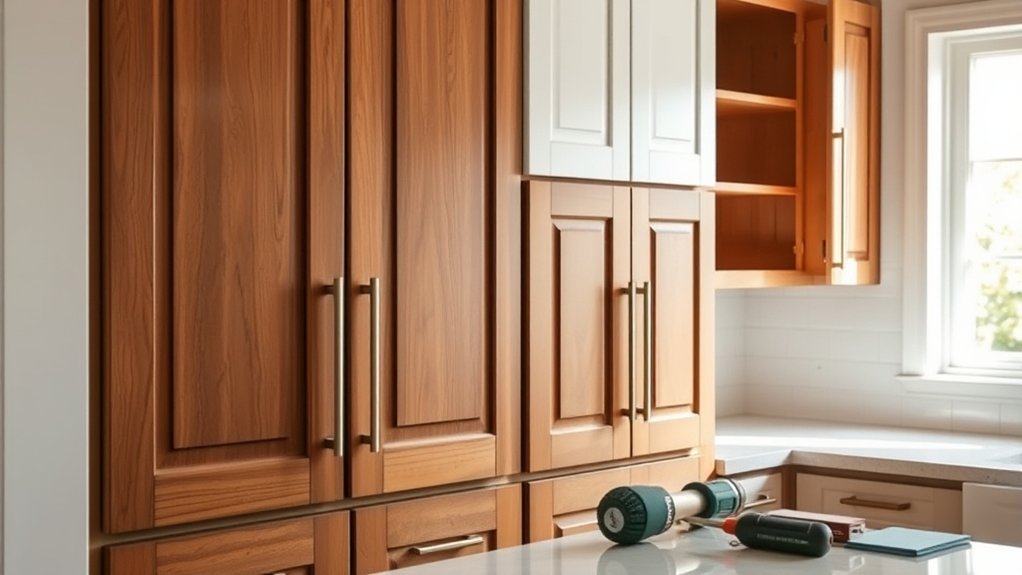
Cabinet refacing transforms your kitchen’s appearance by updating the exterior surfaces of your existing cabinets without replacing the entire structure. You’ll appreciate the cabinet refacing benefits, such as cost savings, reduced waste, and minimal disruption compared to full cabinet replacement.
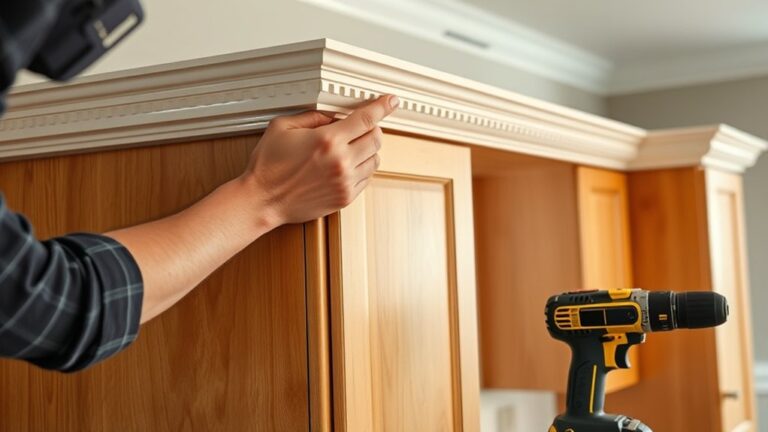
The refacing process overview begins with removing your cabinet doors and drawer fronts. Then, professionals apply a veneer or laminate to the visible cabinet boxes and install new doors, drawer fronts, and hardware that match your style preferences.
This approach not only rejuvenates your kitchen’s look but also maintains the original cabinet frame’s integrity. By choosing cabinet refacing, you get a streamlined, aesthetically pleasing upgrade that enhances your kitchen’s value while saving time and resources.
When Should You Reface Instead of Replace Cabinets?
Although replacing your kitchen cabinetry might seem like the obvious choice for a complete makeover, refacing offers an excellent alternative when the existing cabinet frames are structurally sound and well-maintained. You should consider refacing if your cabinets function well but their appearance feels outdated.
Refacing benefits include significant aesthetic upgrades without the disruption and cost of a full replacement. It’s ideal when you want to update door styles, finishes, or hardware to match current trends or your evolving taste.
This approach preserves the cabinet’s durable framework, minimizing waste and installation time. Ultimately, if you’re looking for a cost-effective, eco-friendly way to refresh your kitchen’s look while maintaining quality, refacing is the smart choice over replacement.
How Does Cabinet Refacing Work?
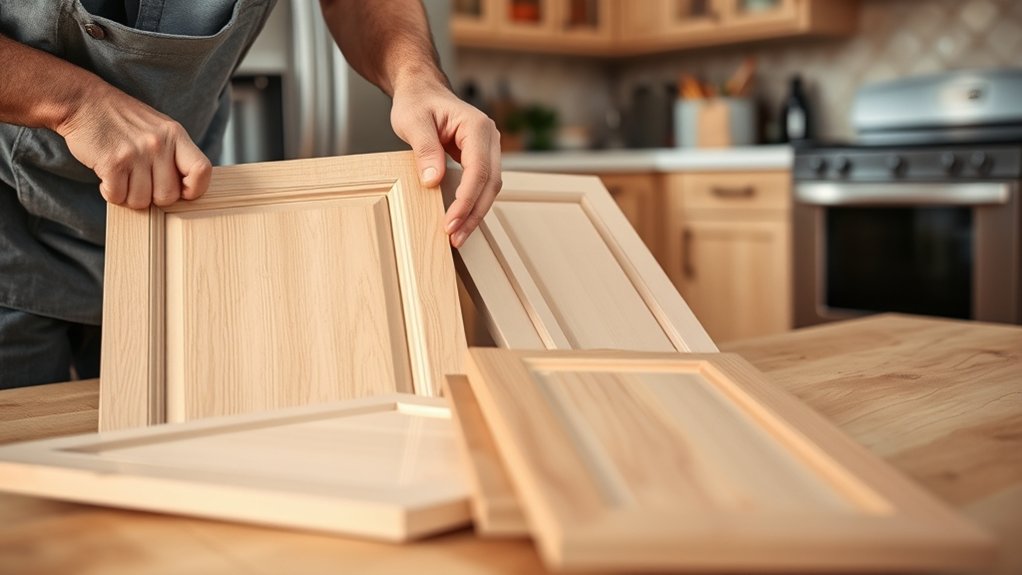
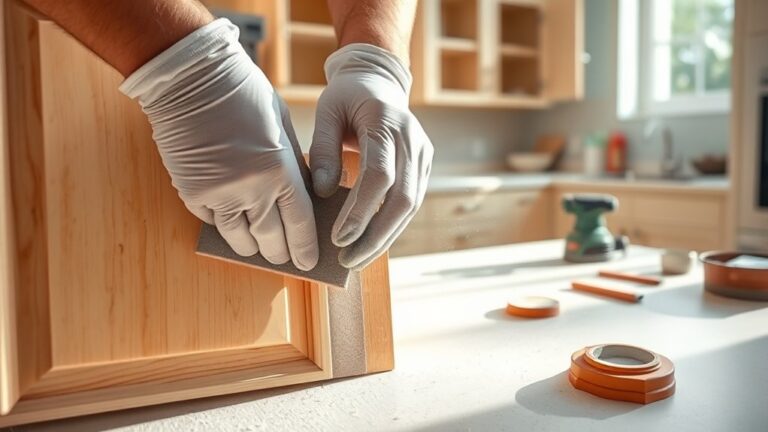
Transforming your kitchen’s look through refacing involves carefully replacing the visible surfaces of your existing cabinetry without disturbing the underlying structure. You begin by using precise cabinet preparation techniques, such as cleaning and sanding the cabinet frames to guarantee proper adhesion.
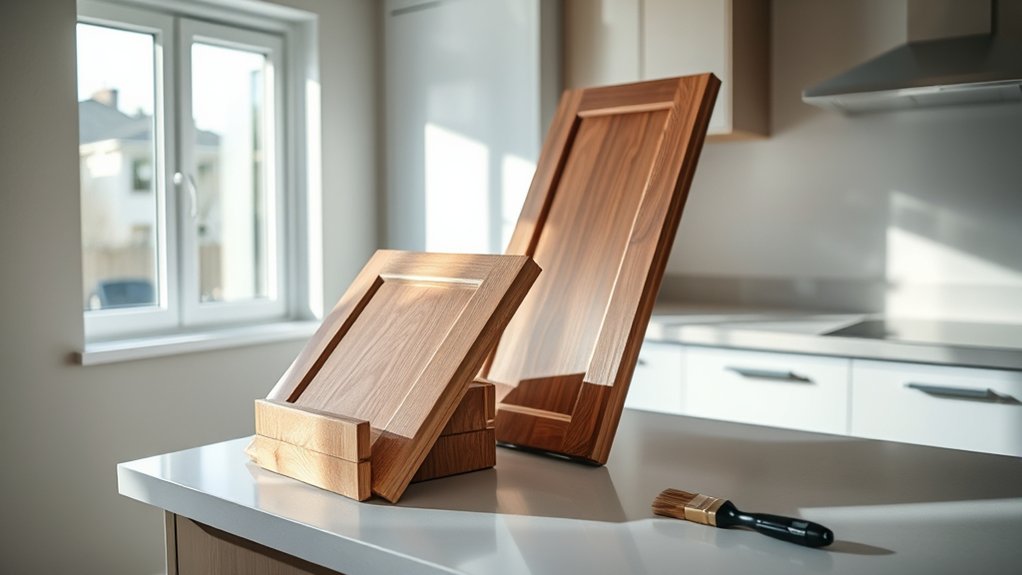
Next, you remove the old doors and drawer fronts, keeping the boxes intact. Refacing tools guide you through cutting and applying veneer or laminate sheets to the cabinet frames. You then attach new doors and drawer fronts, aligning them carefully for a seamless finish.
Finally, hardware like handles and hinges are installed to complete the aesthetic transformation. By following this methodical process, you refresh your kitchen’s appearance efficiently and elegantly, avoiding the mess and cost of a full cabinet replacement.
Materials Used for Refacing Kitchen Cabinets
Choosing the right materials plays an essential role in achieving a durable and visually appealing kitchen cabinet refacing. You’ll find a variety of options, including sustainable materials that support eco-friendly choices.
Laminate options offer excellent finish durability and come in numerous texture variations, making it easier to match your kitchen’s style and color scheme. Wood veneers provide a natural, warm aesthetic, enhancing texture and depth while maintaining eco-friendly practices when sourced responsibly.
Pay close attention to adhesive types, as high-quality adhesives guarantee long-lasting bonds between new surfaces and existing cabinets. Proper color matching is critical to achieve a seamless look, especially when blending old and new elements. Selecting the right combination of these materials will ensure your refaced cabinets remain both beautiful and resilient for years.
How Much Does Cabinet Refacing Cost?
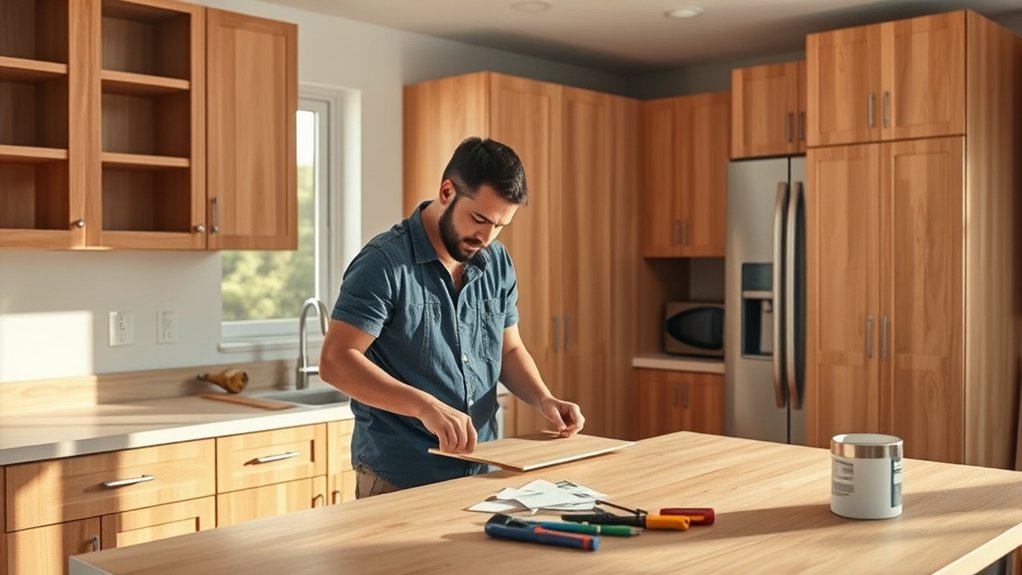
Understanding the materials and adhesives involved in cabinet refacing helps you anticipate the overall investment required for the project. When evaluating budget considerations, keep in mind these key cost factors:
- Material choices: Veneers, laminates, or solid wood affect both price and appearance considerably.
- Labor costs: Skilled craftsmanship guarantees successful application and durability.
- Additional components: New hardware, moldings, or repairs can add to expenses.
Typically, refacing costs range between $4,000 and $9,000 for an average kitchen, depending on these elements. By selecting quality materials aligned with your budget and prioritizing essential updates, you’ll maximize value without overspending.
Understanding these aspects empowers you to make informed decisions and achieve a stunning, cost-effective cabinet transformation.
How Long Does Cabinet Refacing Take?
While the exact duration varies based on kitchen size and project complexity, cabinet refacing typically takes between three to five days to complete. Your refacing timeline starts with careful measurement and removal of existing cabinet doors and drawer fronts.
Next, skilled professionals apply new veneers or laminate to the cabinet boxes, ensuring a seamless, durable finish. Finally, they install new doors, drawer fronts, and hardware.
The overall project duration depends on factors like the number of cabinets, material choices, and any additional repairs needed. By understanding this timeline, you can plan accordingly and minimize disruptions in your kitchen.
Trust that experienced contractors will work efficiently without compromising quality, delivering a refreshed kitchen that meets your aesthetic and functional goals within a reasonable timeframe.
Styles and Finishes for Refacing Kitchen Cabinets
When refacing your kitchen cabinets, choosing the right door style sets the tone for the entire space, whether you prefer classic Shaker or sleek flat-panel designs. You’ll also want to evaluate finish options, from matte and glossy to textured surfaces, that complement your kitchen’s lighting and layout.
Finally, staying aware of current color trends can help you create a timeless look that enhances both style and resale value.
Popular Cabinet Door Styles
Since cabinet doors set the tone for your kitchen’s overall style, choosing the right door design is essential when refacing. You’ll find several popular styles that balance aesthetics with functionality:
- Shaker style offers timeless simplicity with clean lines, blending well with modern minimalism or rustic charm.
- Raised panel doors add depth and detail, perfect if you want a classic or vintage design feel.
- Flat front doors provide a sleek, contemporary look, especially when paired with glass inserts or two-tone cabinetry for added contrast.
Each style lets you tailor your kitchen’s personality, whether you lean towards understated elegance or bold statements. By selecting the right door style, you guarantee your refaced cabinets enhance your home’s overall appeal.
Finish Options Explained
Choosing the right cabinet door style sets a strong foundation for your kitchen’s look, but the finish you select will truly define its character and durability. You’ll find various finish types, from matte and satin to high-gloss and textured options, each offering unique appeal and finish durability.
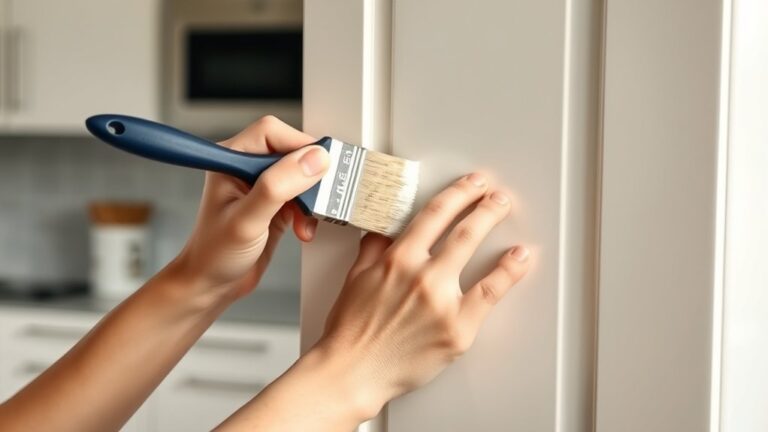
Consider how the finish textures influence both aesthetic and wear resistance. Finish colors should complement your overall design while reflecting current finish trends. Finish applications vary, including paint, stain, and laminate, all requiring different finish maintenance routines.
It’s essential to assess finish compatibility with your cabinet material to guarantee longevity. By understanding these elements, you can confidently choose a finish that balances beauty, durability, and upkeep, enhancing your kitchen’s style for years to come.
Trends in Cabinet Colors
Although cabinet colors might seem like a simple choice, they play an essential role in defining your kitchen’s atmosphere and style. When refacing kitchen cabinets, you can enhance your space by choosing from several trending options:
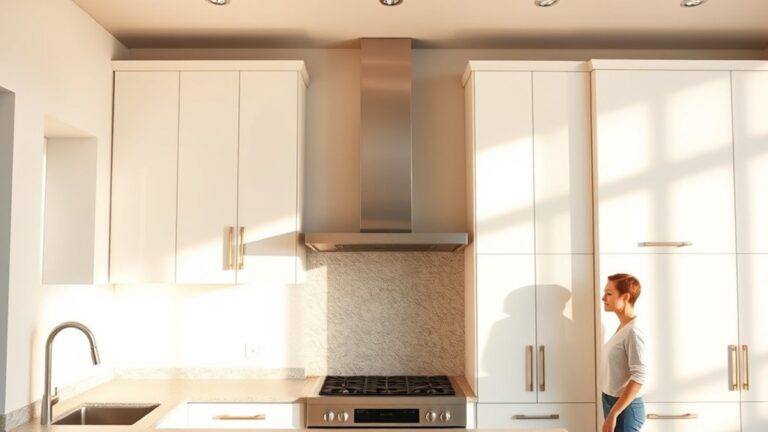
- Classic whites and muted tones offer timeless elegance, perfect for minimalist designs that emphasize clean, airy environments.
- Modern palettes often incorporate bold contrasts and two tone cabinetry, combining natural wood with vibrant hues to create dynamic, eye-catching statements.
- For a more adventurous approach, vibrant hues bring energy and personality, while natural wood finishes add warmth and organic appeal.
Pros and Cons of Refacing Cabinets
When considering refacing your kitchen cabinets, you’ll want to weigh cost savings against the quality and longevity of materials. You’ll also appreciate how much time you can save compared to a full replacement, but keep durability and maintenance needs in mind.
Understanding these factors will help you decide if refacing is the best fit for your kitchen renovation.
Cost Comparison Benefits
While refacing kitchen cabinets can greatly reduce expenses compared to a full replacement, you should carefully weigh the cost benefits against potential limitations. Conducting a thorough cost analysis helps you understand how refacing fits into your budget planning and overall renovation goals. Consider these key points:
- Lower Material Costs Refacing uses existing cabinet frames, reducing the need for new wood and hardware.
- Reduced Labor Expenses Since the structure remains intact, labor time decreases, lowering overall costs.
- Limited Scope for Customization While budget-friendly, refacing restricts major layout changes, potentially impacting long-term value.
Time Efficiency Gains
Because refacing kitchen cabinets preserves the existing framework, you’ll save significant time compared to a full cabinet replacement. This streamlined process means less demolition and cleanup, allowing you to complete your kitchen update faster.
Effective time management becomes easier as refacing typically takes a few days rather than weeks, fitting well into tight project planning schedules. You won’t disrupt daily routines for long, which is a major advantage if you rely on your kitchen daily.
However, precise measurements and quality materials are essential. Any errors can cause delays. While refacing accelerates progress, be mindful that rushing through project planning could compromise results.
Durability and Maintenance
Although refacing kitchen cabinets offers a fresh, updated look, you should carefully consider how durable the materials are and what maintenance they require. Durability factors largely depend on the quality of veneers, adhesives, and finishes used during refacing.
To guarantee your cabinets remain in excellent condition, keep these maintenance tips in mind:
- Clean surfaces regularly with mild, non-abrasive cleaners to prevent damage to veneers and finishes.
- Avoid excessive moisture exposure, which can weaken adhesives and cause warping.
- Inspect cabinet edges and joints periodically for signs of wear or lifting and address them promptly.
How to Maintain Refaced Cabinets
Preserving the beauty and functionality of your refaced cabinets requires consistent care and attention. Begin with routine cabinet cleaning using a soft cloth and mild detergent to remove grease and dust without damaging the finish. Avoid harsh chemicals that can erode surface coatings.
Protect the surfaces by immediately wiping spills and using coasters or mats under heavy items to prevent scratches. Regularly inspect and tighten hardware, such as hinges and handles, to guarantee smooth operation and prevent wear.
For any minor scratches or chips, apply finish touch ups with manufacturer-recommended products to maintain the cabinet’s pristine look. By integrating these practices into your maintenance routine, you’ll extend the lifespan of your refaced cabinets, keeping them attractive and functional for years to come.
DIY vs. Hiring a Professional for Cabinet Refacing
When considering cabinet refacing, you’ll want to weigh the cost differences between doing it yourself and hiring a professional. Your skill level plays a vital role, as precision and experience can affect the final look and durability.
Let’s explore how these factors impact your decision and project outcome.
Cost Comparison Insights
Since refacing kitchen cabinets can markedly transform your space, understanding the cost differences between doing it yourself and hiring a professional is crucial. When weighing budget considerations against aesthetic impact, consider these factors:
- Materials and Tools: DIY projects often save labor costs but require upfront purchases of tools and quality materials, which can add up.
- Labor Costs: Professionals charge for expertise and time, but their efficient workflow might save you money in the long run by avoiding costly mistakes.
- Finish Quality: A pro’s work usually guarantees a polished, durable aesthetic impact that might be challenging to replicate on your own.
Balancing these points helps you decide whether to invest in professional services or embrace a DIY approach while keeping your budget and desired look in mind.
Skill Requirements Overview
Understanding the costs involved gives you a clearer picture, but mastering the skills required for cabinet refacing is equally important. Before deciding whether to tackle refacing yourself or hire a professional, conduct a thorough skill assessment.
Cabinet refacing demands precision in removing doors, preparing surfaces, and applying veneers or laminates flawlessly. If you have experience in woodworking or home improvement, you might find the project manageable.
However, project planning is essential; you’ll need to coordinate tools, materials, and timing efficiently. Professionals bring expertise that guarantees a seamless finish and can handle unexpected challenges, saving you time and potential errors.
Ultimately, your decision hinges on your confidence in these skills and your willingness to invest effort versus the peace of mind a specialist offers.
Frequently Asked Questions
Can Cabinet Refacing Increase My Home’s Resale Value?
Yes, cabinet refacing can increase your home’s resale value by offering cost benefits compared to full replacements.
You’ll enjoy diverse style options that refresh your kitchen’s look, making it more appealing and modern to potential buyers.
Is Cabinet Refacing Environmentally Friendly?
Yes, refacing cabinets can be eco friendly when you choose sustainable materials and eco friendly practices. You’ll reduce waste by reusing existing structures, minimizing landfill impact while achieving a stylish, refreshed kitchen with a smaller environmental footprint.
Are Refaced Cabinets Resistant to Water Damage?
Yes, refaced cabinets often use waterproof materials that enhance moisture resistance, protecting your kitchen from water damage. You’ll appreciate their durability and sleek finish, combining functionality with an elegant, refreshed aesthetic.
Can I Customize Cabinet Hardware During Refacing?
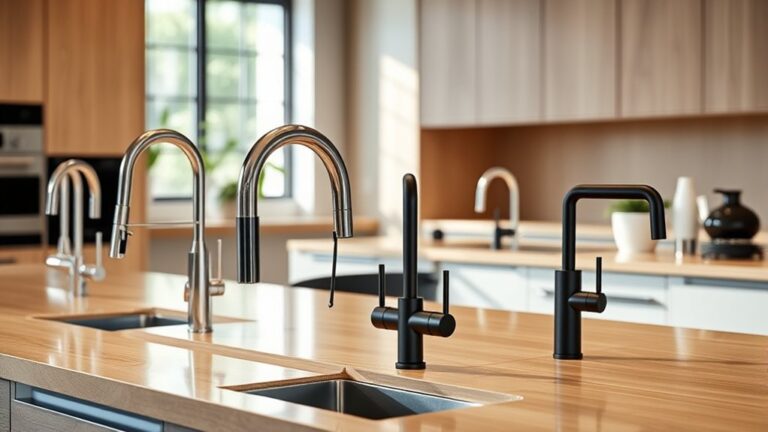
Yes, you can customize cabinet hardware during refacing by choosing from various cabinet styles and hardware materials. This allows you to enhance your kitchen’s aesthetic and functionality, creating a cohesive, personalized look that suits your design preferences.
Does Refacing Cabinets Affect Kitchen Layout or Storage Space?
Refacing cabinets doesn’t change your kitchen flow or storage optimization since it preserves the existing layout. You’ll refresh aesthetics without sacrificing space, ensuring your kitchen remains functional while enhancing its overall look and feel.