What Is a Faucet Cartridge
A faucet cartridge is the key part inside your faucet that controls water flow, temperature, and pressure when you turn the handle.
It uses internal seals or plugs to regulate water passage and adjust settings smoothly.
You’ll find cartridges in both single and dual-handle faucets, typically made from plastic or brass.
If you want to avoid leaks or stiffness, knowing how cartridges work and when to replace them will help maintain your faucet’s performance effectively.
What Is a Faucet Cartridge and How Does It Work
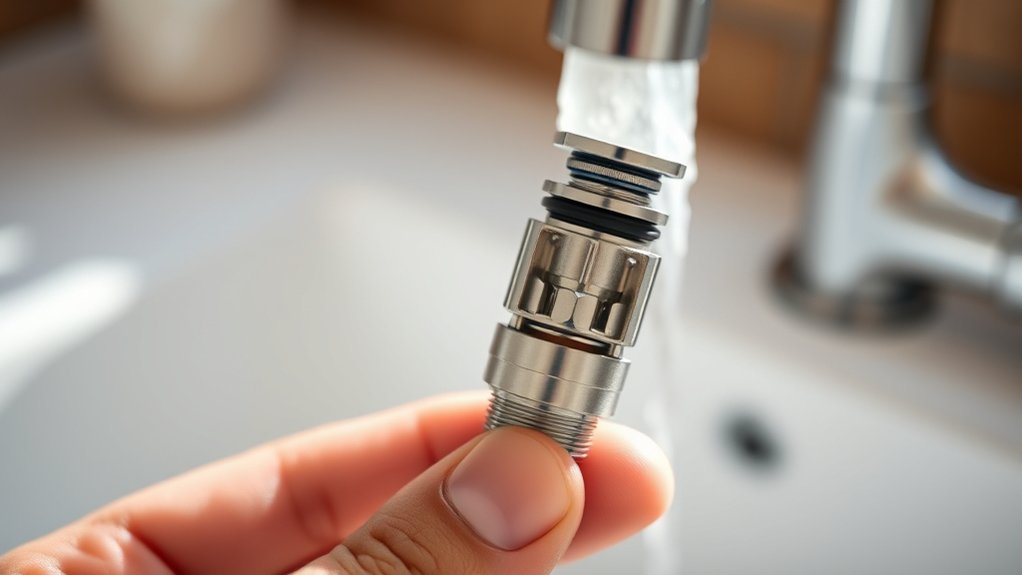
A faucet cartridge is an essential component inside your faucet that controls water flow and temperature. It’s a cylindrical valve mechanism found in various faucet types, including single-handle and dual-handle models.
The cartridge functions by moving internal seals or plugs to regulate how much water passes through and mixes hot and cold streams. When you turn the handle, the cartridge shifts to adjust pressure and temperature precisely.
Understanding this mechanism helps you identify the right cartridge for your faucet type, ensuring compatibility and functionality. Since cartridges differ based on design and materials, knowing their specific cartridge functions allows you to maintain or replace them efficiently, keeping your faucet operating smoothly and preventing leaks or irregular water flow.
Signs a Faucet Cartridge Needs Replacement
Knowing how a faucet cartridge controls water flow and temperature helps you recognize when it’s not performing correctly. Over time, the cartridge lifespan diminishes due to wear and mineral buildup, leading to functional issues.
Understanding faucet cartridges aids in spotting wear and mineral buildup that affect performance over time.
You should consider replacement if you notice:
- Persistent faucet leaks, especially around the handle or spout, indicating worn seals or damaged internal components.
- Difficulty adjusting water temperature or flow, which may signal cartridge internal parts are compromised.
- Unusual stiffness or looseness when turning the handle, reflecting cartridge degradation affecting smooth operation.
These signs suggest the cartridge no longer regulates water efficiently, risking further damage or increased water waste. Timely identification guarantees you maintain faucet performance and prevent costly repairs.
Removing and Replacing a Faucet Cartridge
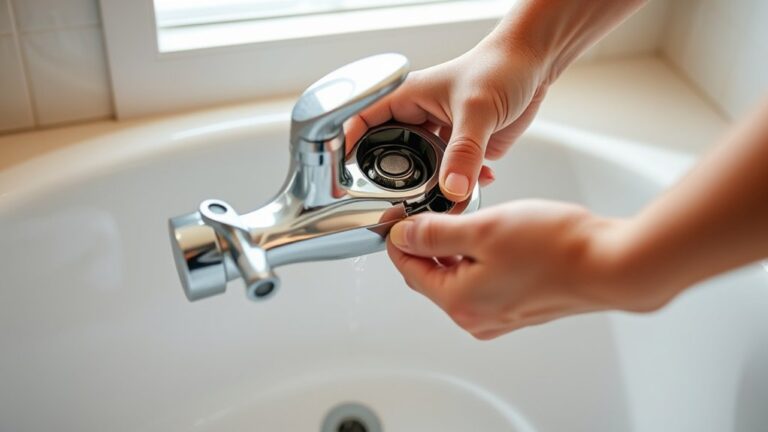
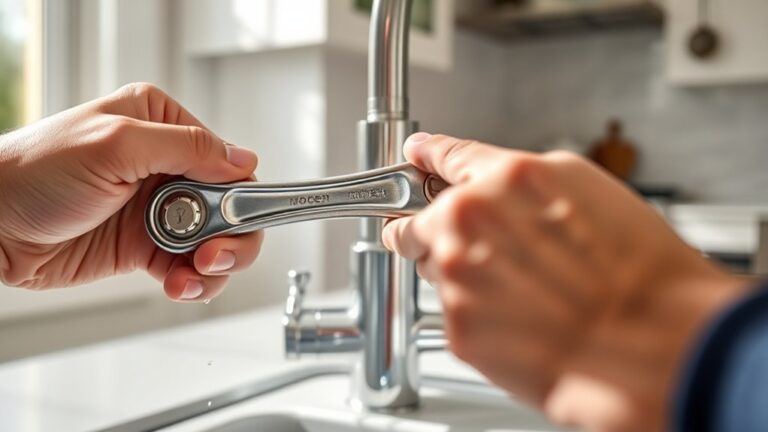
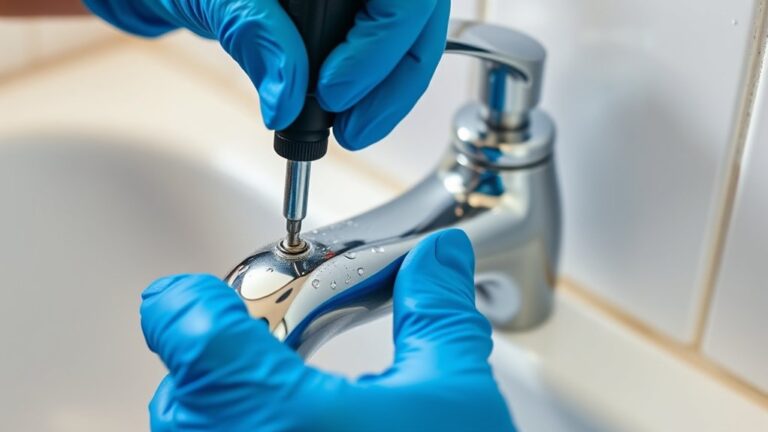
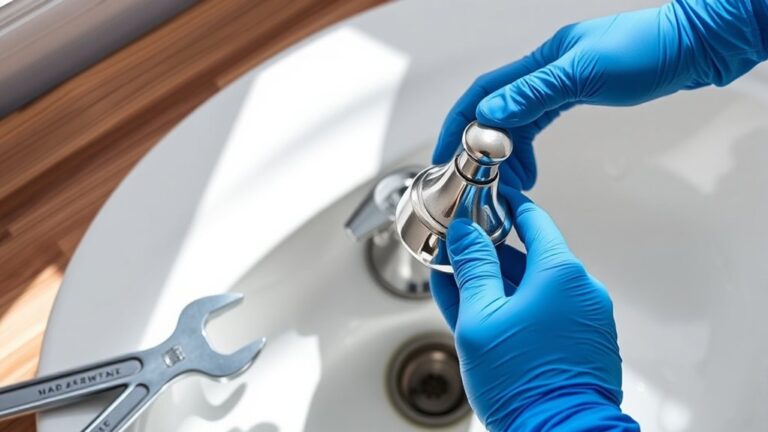
Start by turning off the water supply to your faucet to prevent leaks during the cartridge removal process. Next, use appropriate faucet tools, typically an Allen wrench and adjustable pliers, to remove the faucet handle and expose the cartridge.
Carefully unscrew the retaining nut holding the cartridge in place. Once loose, pull the cartridge straight out to avoid damaging the valve seat. Before installing the new cartridge, clean the valve body to remove debris.
When inserting the replacement, align it precisely with the valve body to guarantee proper function. Follow installation tips like avoiding overtightening the retaining nut and confirming the cartridge seats flush.
Finally, reassemble the handle and restore the water supply. Check for leaks and smooth operation to verify successful replacement.
How to Choose the Right Faucet Cartridge
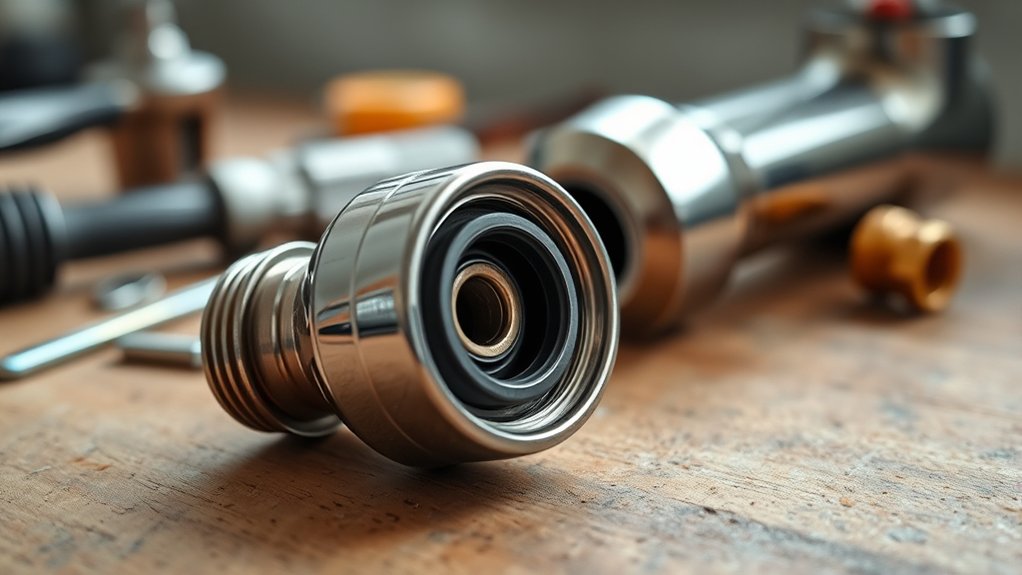
To choose the right faucet cartridge, you need to identify the specific type required by your fixture, such as ceramic disc or ball cartridges.
Check your faucet model for compatibility to guarantee a proper fit and function. Using the correct cartridge prevents leaks and maintains smooth operation.
Types Of Faucet Cartridges
Although faucet cartridges may appear similar, selecting the right type depends on your faucet model, water pressure, and desired control. Understanding faucet cartridge materials and applying cartridge installation tips guarantees peak performance. Common types include:
- Disc cartridges: Made from durable ceramic, they offer smooth operation and longevity, ideal for high water pressure systems.
- Compression cartridges: Typically brass or plastic, these use rubber washers to control flow, requiring precise installation to avoid leaks.
- Ball cartridges: Featuring a metal or plastic ball, they allow single-handle control with variable temperature adjustments, suited for moderate water pressure.
Choosing the correct type means matching cartridge materials to your faucet’s demands and following precise cartridge installation tips. This approach assures efficient water flow and reduces maintenance, ensuring your faucet functions reliably.
Compatibility With Fixtures
Selecting the right faucet cartridge hinges on compatibility with your fixture’s design and specifications. To guarantee fixture compatibility, check the cartridge type, size, and connection style against your faucet’s requirements.
Different faucet brands often use proprietary cartridges, so confirm brand-specific compatibility to avoid leaks or malfunction. Use manufacturer guides for exact matches. Here’s a quick reference:
| Faucet Brand | Cartridge Type | Compatibility Notes |
|---|---|---|
| Moen | Single-handle | Specific Moen cartridges |
| Delta | Pressure-balanced | Match series and model number |
| Kohler | Ceramic disc | Verify OEM cartridge |
| American Standard | Ball type | Confirm cartridge dimensions |
Common Faucet Cartridge Types
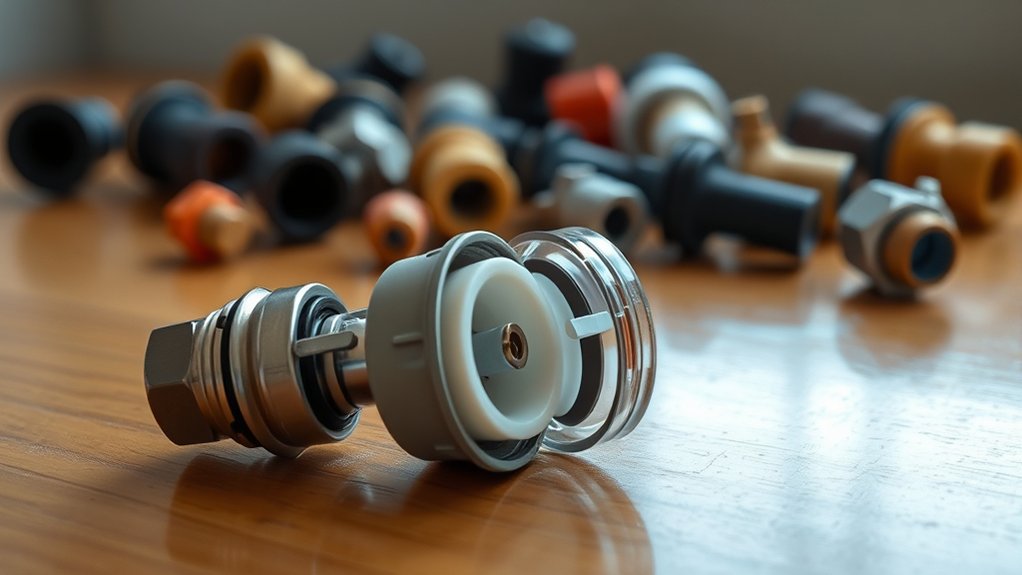
You’ll encounter two main types of faucet cartridges: ceramic disc and ball type. Ceramic disc cartridges use two smooth discs to control water flow and provide durability with minimal leaks.
Ball type cartridges rely on a rotating metal or plastic ball to regulate water temperature and flow, offering more adjustability but requiring occasional maintenance.
Ceramic Disc Cartridges
Ceramic disc cartridges deliver reliable control over water flow and temperature through two smooth, hard ceramic discs that slide against each other inside the cartridge. You’ll appreciate the ceramic advantages, including exceptional resistance to wear and minimal friction, which contribute to superior ceramic durability.
These cartridges require less maintenance and often last longer than other types.
When you operate the faucet:
- The discs align to allow water to flow, offering precise temperature adjustment.
- The hard ceramic surfaces resist scratches and mineral buildup.
- The cartridge seals tightly, preventing leaks and drips.
This design guarantees consistent performance and reduces the need for frequent replacements. If you want a faucet cartridge combining efficiency and longevity, ceramic disc cartridges are a practical choice.
Ball Type Cartridges
Ball type cartridges use a single, rotating metal or plastic ball with slots to control water flow and temperature in many faucets. You operate the ball by turning the handle, which aligns the slots to mix hot and cold water precisely.
Understanding ball mechanics helps you diagnose issues like leaks or inconsistent temperature. Over time, debris can accumulate in the ball or seals, causing wear or sticking.
For maintenance, regularly clean the cartridge and replace worn rubber seats and springs to guarantee smooth operation. Lubricate moving parts with plumber’s grease to reduce friction.
If you notice drips or difficulty in handle movement, inspect the ball cartridge promptly to avoid further damage. Mastering these maintenance tips will extend your faucet’s lifespan and performance.
Maintenance Tips to Extend Faucet Cartridge Life
Anyone aiming to prolong the life of a faucet cartridge should focus on regular cleaning and proper water pressure management. Preventive maintenance is essential to avoid mineral buildup and wear that can impair cartridge function.
Regular cleaning and water pressure control are vital to extending your faucet cartridge’s lifespan.
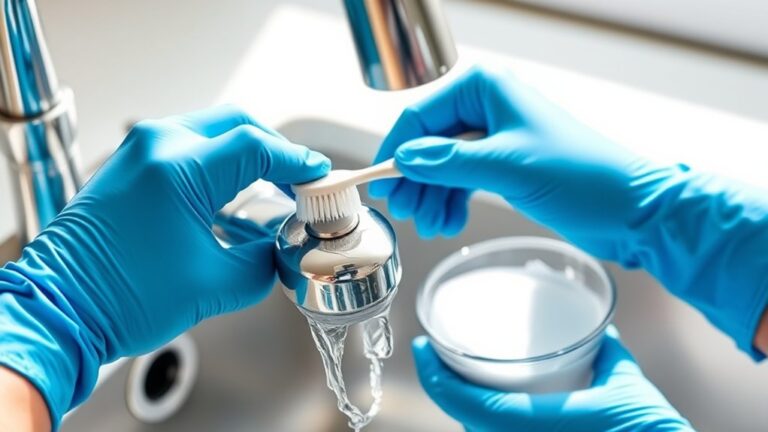
Prioritize cartridge cleaning every few months by removing debris and deposits to maintain smooth operation. Additionally, monitor and regulate your water pressure to prevent undue stress on the cartridge components.
Here are key maintenance tips to keep your faucet cartridge functioning effectively:
- Use a mild vinegar solution to dissolve mineral deposits during cartridge cleaning.
- Install a pressure regulator to maintain consistent, ideal water pressure.
- Replace worn seals or O-rings promptly to prevent leaks and damage.
Frequently Asked Questions
Can a Faucet Cartridge Affect Water Pressure?
Yes, a worn or clogged faucet cartridge can reduce water flow and lower pressure.
Regular faucet maintenance, including cleaning or replacing the cartridge, guarantees ideal water flow and prevents pressure issues during daily use.
Are Faucet Cartridges Compatible With All Faucet Brands?
You won’t find faucet cartridges compatible with all faucet brands because cartridge types vary by manufacturer. Always verify your faucet brand’s specifications to select the correct cartridge type, ensuring proper fit and ideal performance.
How Long Does a Typical Faucet Cartridge Last?
You probably thought faucet cartridges last forever. Surprise! They typically last 5-7 years. Watch for cartridge replacement signs like leaks.
Use faucet maintenance tips, like regular cleaning, to extend their life and avoid unexpected drips.
Can I Repair a Faucet Cartridge Instead of Replacing It?
You can repair certain cartridge types by cleaning mineral buildup or replacing seals. For effective faucet maintenance tips, disassemble carefully, inspect parts, and use compatible replacements to extend cartridge life without full replacement.
Do Faucet Cartridges Help in Preventing Water Leaks?
Yes, faucet cartridges aid leak prevention by ensuring a tight seal. Different cartridge types, like ceramic disc or compression, offer varying durability and reliability. Choosing the right one helps you effectively minimize leaks and maintain faucet performance.