
How Long Does It Take to Install Kitchen Cabinets
Installing kitchen cabinets typically takes between one to three days, depending on your kitchen’s size, design complexity, and whether you hire a professional or go DIY.
The time frame can vary widely based on these factors, so it’s important to set realistic expectations from the start.
Professionals usually complete the installation in 10-12 hours, while DIY projects might take longer due to adjustments and preparation.
Additionally, factors like wall condition and cabinet type also influence the overall timing.
Planning for delivery, layout, and potential delays guarantees a smoother process.
Keep exploring to better understand each step and optimize your timeline.
How Long Does Kitchen Cabinet Installation Typically Take?

The time it takes to install kitchen cabinets typically depends on the size of your kitchen and the complexity of the cabinet design. For an average-sized kitchen, the installation duration usually ranges from one to three days.
Simple cabinet setups with standard sizing and fewer customizations can be completed faster, often within a day or two. However, intricate designs, custom cabinetry, or larger kitchens will extend the installation duration.
Your installer’s experience and the condition of your walls and floors also influence the timeline. Efficient cabinet setup requires precise measurements and alignment to guarantee functionality and aesthetics.
Steps to Install Kitchen Cabinets
Begin by preparing your workspace, verifying the area is clear and measurements are double-checked for accuracy. Next, gather your installation tools: drill, level, stud finder, and clamps.
Start with the upper cabinets, using cabinet alignment tips like leveling each unit and securing them to studs. Follow by installing base cabinets, confirming their alignment with the uppers.
Finally, attach doors and hardware.
| Step | Emotion | Tip |
|---|---|---|
| Clear workspace | Confidence | Double-check measurements |
| Gather tools | Preparedness | Use quality installation tools |
| Mount upper cabinets | Precision | Level and stud secure |
| Install base cabinets | Satisfaction | Align with upper cabinets |
These steps guarantee a smooth, efficient installation process.
Preparing Your Kitchen for Cabinet Installation

Preparing your kitchen thoroughly sets the foundation for a successful cabinet installation. Start by clearing out all existing cabinets, appliances, and personal items to give installers unobstructed access.
Next, review your kitchen layout carefully to confirm measurements and placement for new cabinets. This step guarantees the cabinet styles you’ve chosen will fit perfectly and function well within your space.
Address any wall repairs or leveling issues before installation begins to avoid delays. Additionally, protect your floors and countertops to prevent damage during the process.
How Ordering and Delivery Affect Installation Timing
Because cabinet installation depends heavily on timing, how you order and receive your cabinets can greatly impact the overall schedule. The ordering process sets the foundation: any delays in confirming designs or making payments can push back production.
Once ordered, you need to track delivery timelines closely. Custom cabinets often require longer lead times, sometimes several weeks, so factor that into your plan. Even with standard cabinets, unexpected shipping delays can occur.
To keep installation on track, confirm estimated delivery dates upfront and maintain communication with suppliers. When cabinets arrive, inspect them immediately for damage or errors to avoid last-minute setbacks.
How Different Kitchen Cabinet Types Affect Installation Time
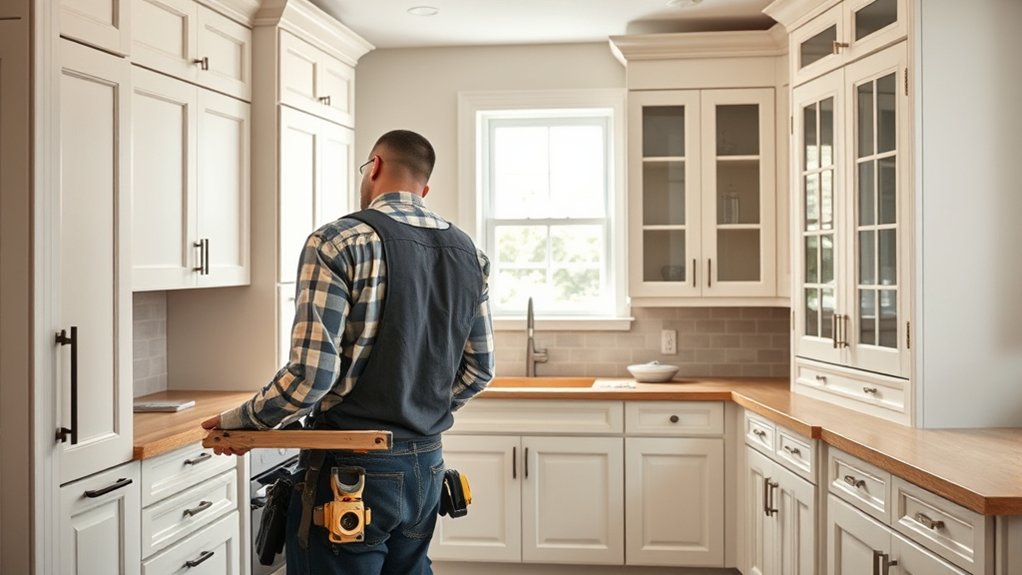
Although installation times can vary widely, the type of kitchen cabinets you choose directly influences how long the process takes. Cabinet material and cabinet style affect installation complexity; solid wood custom cabinets often require more time due to precise fitting and adjustments.
Pre assembled cabinets reduce installation time since they arrive ready to mount, while ready to assemble (RTA) cabinets demand extra effort in assembly before installation. Larger cabinet size and intricate cabinet layout add complexity, extending the timeline.
For example, corner units or tall pantry cabinets need careful alignment. By understanding how these factors interplay, you can better estimate installation duration and prepare accordingly. Choosing simpler cabinet styles and materials can streamline your project, while custom designs, though more rewarding, typically require more installation time.
Common Delays That Slow Kitchen Cabinet Installation
You can expect delays if your cabinets arrive late or damaged due to delivery and shipping issues. On-site measurement errors also cause setbacks, requiring adjustments or reordering.
Being aware of these common problems helps you plan a smoother installation.
Delivery And Shipping Issues
When ordering kitchen cabinets, unexpected delivery and shipping issues can quickly disrupt your installation timeline. Shipping delays often arise from carrier backlogs, weather disruptions, or incomplete delivery logistics, causing your project to stall.
You’ll want to confirm estimated delivery dates and track shipments proactively to avoid surprises. Mismanaged delivery logistics, like improper scheduling or lack of communication between the supplier and carrier, can further extend wait times.
If cabinets arrive late or in multiple shipments, your installer’s schedule might be impacted, adding days or even weeks to the process. To minimize these risks, stay in close contact with your supplier, clarify shipping terms upfront, and prepare for contingencies.
Efficient delivery coordination is essential to keep your kitchen cabinet installation on track.
On-Site Measurement Errors
Since precise measurements form the foundation of a successful cabinet installation, on-site measurement errors can cause significant delays. When measurement accuracy falls short, you risk ordering cabinets that don’t fit properly, forcing error corrections that eat up valuable time.
Even small discrepancies can lead to gaps, uneven surfaces, or misaligned cabinetry. To prevent this, double-check all dimensions during your site visit and use reliable tools.
If errors are detected, you’ll need to pause installation to revise plans or reorder components, pushing back your timeline. Being meticulous about measurement accuracy upfront helps you avoid costly rework and keeps your project on schedule.
Ultimately, minimizing on-site measurement errors streamlines installation and guarantees your kitchen cabinets fit perfectly the first time.
DIY vs Professional Cabinet Installation: Time Comparisons
When you install kitchen cabinets yourself, expect the process to take considerably longer than hiring a professional. Experts bring speed and experience that can cut installation time in half or more.
However, factors like cabinet complexity and your skill level will influence how quickly the job gets done.
Time Required For DIY
Installing kitchen cabinets yourself can take anywhere from two to five days, depending on your experience level and the complexity of the layout. If you’re familiar with basic carpentry and have the right DIY tools, you can streamline the process considerably.
Essential tools include a drill, level, stud finder, and clamps. Following precise installation tips, like pre-drilling holes, securing cabinets firmly to studs, and guaranteeing accurate measurements, helps avoid errors that cause delays.
Complex layouts with multiple corners or built-ins naturally extend your timeline, while straightforward designs speed things up. Keep in mind, working solo will take longer than with an assistant.
Professional Installation Speed
Although tackling cabinet installation yourself offers control and potential savings, hiring professionals drastically reduces the time involved. With advanced installation techniques and contractor efficiency, pros complete tasks swiftly and accurately.
You’ll notice how their expertise minimizes errors and rework, speeding up the entire process.
| Task | DIY Time Estimate | Professional Time Estimate |
|---|---|---|
| Measuring & Planning | 4-6 hours | 1-2 hours |
| Cabinet Assembly | 6-8 hours | 2-3 hours |
| Installation | 10-12 hours | 4-6 hours |
| Final Adjustments | 2-3 hours | 1 hour |
Choosing professional installation means you save valuable time while ensuring quality results through refined methods and contractor efficiency.
Factors Affecting Installation Time
Since various variables influence how quickly kitchen cabinets go in, understanding these factors helps you set realistic expectations and plan accordingly. Installation complexity plays a significant role: intricate designs, custom fittings, or uneven walls can slow down the process, especially if you’re tackling it yourself.
Cabinet layout also impacts time. L-shaped or U-shaped kitchens generally take longer than straight-line setups due to extra measuring and fitting. When you choose DIY installation, expect more time spent on preparation, adjustments, and potential errors.
Professionals, however, streamline these tasks with experience and specialized tools, completing the job faster despite the complexity. By considering installation complexity and cabinet layout, you can better gauge whether to hire experts or take on the project yourself, optimizing your timeline and budget effectively.
Planning Your Renovation Schedule Around Cabinet Installation
When you plan your renovation schedule, coordinating cabinet installation is essential to avoid delays and additional costs. Start by mapping out a detailed renovation timeline that includes ordering, delivery, and installation.
Make sure your space is prepped. Walls, plumbing, and electrical work must be complete before cabinets arrive. Communicate clearly with all contractors to align tasks and prevent overlaps.
Efficient project coordination means scheduling installation immediately after the rough work finishes to keep momentum. Account for potential setbacks like delivery delays or unexpected repairs by building buffer time into your timeline.
Frequently Asked Questions
What Tools Are Required for Kitchen Cabinet Installation?
You’ll need tool essentials like a drill, level, tape measure, stud finder, screwdriver, clamps, and a saw for cabinet installation. These tools guarantee precise alignment and secure mounting, making your installation efficient and professional.
How Do I Measure My Kitchen for New Cabinets?
You start measuring by noting your kitchen layout, including walls, doors, and windows. Use accurate measuring techniques like a tape measure and laser level to record dimensions, ensuring precise cabinet placement and fit for a smooth installation process.
What Materials Are Kitchen Cabinets Typically Made From?
You’ll find kitchen cabinets made from wood types like oak, maple, cherry, and plywood. These materials suit various cabinet styles, from traditional to modern, offering durability and aesthetic options tailored to your kitchen’s design and functionality needs.
Can I Customize the Cabinet Finishes and Hardware?
You can customize cabinet styles, finish options, and hardware types to match your taste. Designers keep up with the latest design trends, ensuring your kitchen cabinets reflect your personal style and complement your space perfectly.
How Do I Maintain and Clean Kitchen Cabinets After Installation?
Want your cabinets looking fresh? Use gentle cleaning techniques like a damp cloth and mild soap. Avoid harsh chemicals.
Regularly check hinges and handles as maintenance tips to keep them functioning smoothly and lasting longer.