How to Remove a Kitchen Cabinet Drawer
To remove a kitchen cabinet drawer, start by clearing out all its contents.
Next, identify the type of slide mechanism—side-mount, under-mount, or center-mount. This step is crucial for understanding how to proceed with removal.
Fully extend the drawer and look for release levers. If levers aren’t present, you may need to unscrew the drawer slides.
Press the release levers or carefully unscrew the necessary parts to free the drawer.
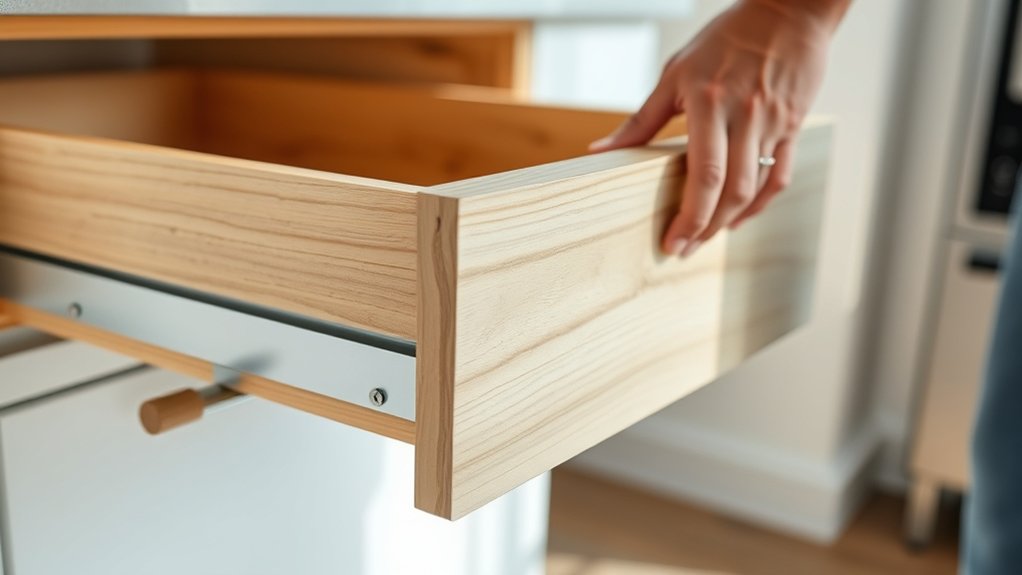
Gently pull the drawer straight out, avoiding any force that could cause damage. Basic tools like screwdrivers and a flashlight can help improve visibility and ease the process.
Proper preparation and careful handling ensure smooth removal.
If you want to optimize this process further, there’s more to explore about maintenance and replacement.
Taking these extra steps can prolong the life of your kitchen cabinet drawers.
Tools You’ll Need to Remove a Kitchen Cabinet Drawer
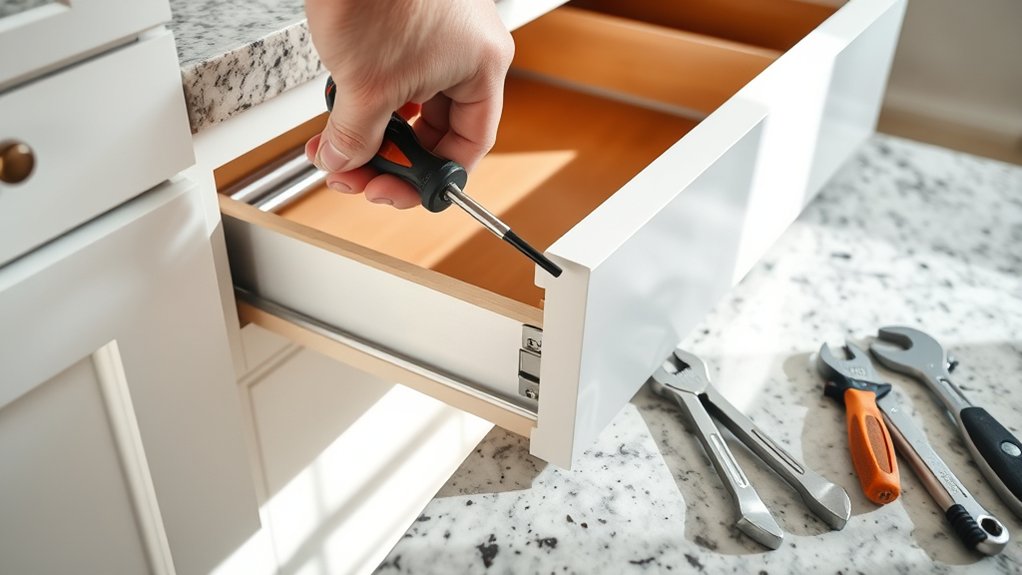
Before you begin removing a kitchen cabinet drawer, gather the essential tools to confirm a smooth process. Start with a Phillips and flathead screwdriver, as most slide mechanisms use screws you’ll need to loosen.
A putty knife or thin pry tool helps release clips or catches on certain drawer types, such as undermount or side-mount slides. If your drawer features ball-bearing slides, you might need a pair of pliers to manipulate retaining clips.
A flashlight ensures you can clearly see the slide mechanisms inside the cabinet. Having a measuring tape is useful to note drawer dimensions for replacement or adjustments. Collecting these tools beforehand allows you to address various drawer types and slide mechanisms efficiently, preventing damage and saving time during removal.
Preparing Your Kitchen Cabinet Drawer for Removal
When you prepare your kitchen cabinet drawer for removal, start by emptying its contents completely to prevent damage or spills. Next, inspect the drawer alignment carefully; misaligned drawers can indicate underlying hardware issues that may affect removal.
Begin by emptying the drawer and checking alignment to identify potential hardware problems before removal.
Assess how the drawer fits within the cabinet frame, noting any obstructions or tight spots. Organize the cabinet space around the drawer to guarantee easy access during removal and reinstallation.
Clear nearby cabinets if necessary to avoid accidental damage or interference. Check for any liners or adhesives inside the drawer that might need loosening.
Finally, make sure you have a clean, stable workspace to place the drawer once removed, preserving cabinet organization and preventing lost parts. This preparation streamlines the removal process and protects your cabinetry.
Step-by-Step Drawer Removal
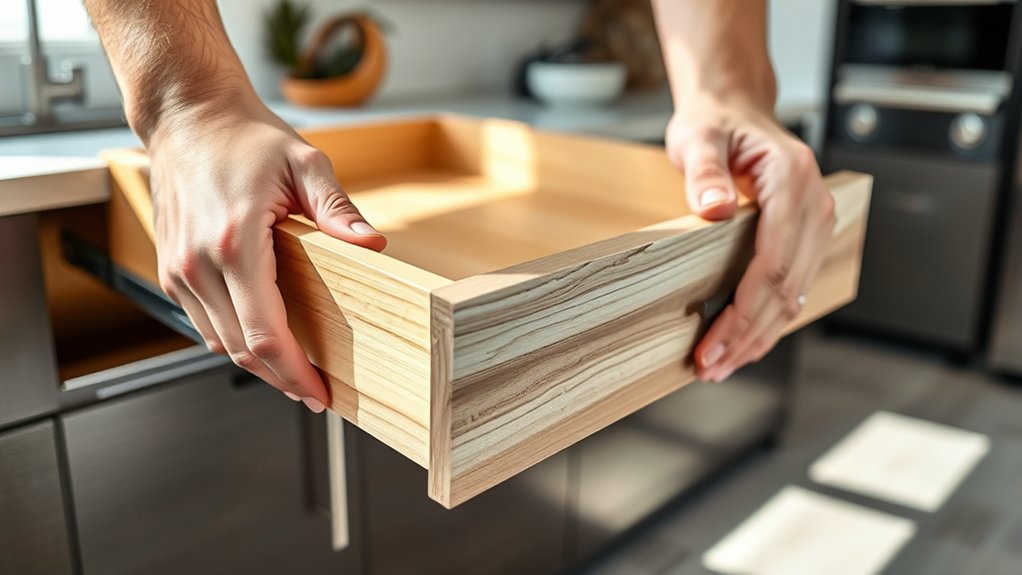
With your drawer cleared and workspace prepared, you’re ready to begin the removal process. Different drawer types use various slide mechanisms, so understanding your drawer’s setup is key. Follow these steps precisely:
- Fully Extend the Drawer: Pull the drawer out until it reaches the stop point; this exposes the slide mechanisms.
- Locate Release Levers or Tabs: Most slide mechanisms have levers or tabs on either side. Press or lift these simultaneously to disengage the drawer from the slides.
- Carefully Pull the Drawer Out: While holding the release levers, gently pull the drawer straight out to avoid damaging the slides or cabinet.
Handling Different Kitchen Cabinet Drawer Slides
Three common types of kitchen cabinet drawer slides, side-mount, under-mount, and center-mount, each require different handling techniques during removal. Side-mount slides are attached to the cabinet sides and drawer edges; you’ll typically need to fully extend the drawer and press release levers or tabs to disengage.
Under-mount slides, mounted beneath the drawer, often include clips or levers hidden from direct view, so carefully lifting the drawer while pressing these release points is essential. Center-mount slides run along the middle of the drawer base; for these, you usually unscrew the slide from the drawer bottom to free it.
Understanding these drawer slide types and their specific installation techniques helps you remove drawers efficiently without forcing components or causing damage. Always identify the slide type before proceeding with removal.
Tips to Avoid Damage When Removing Drawers
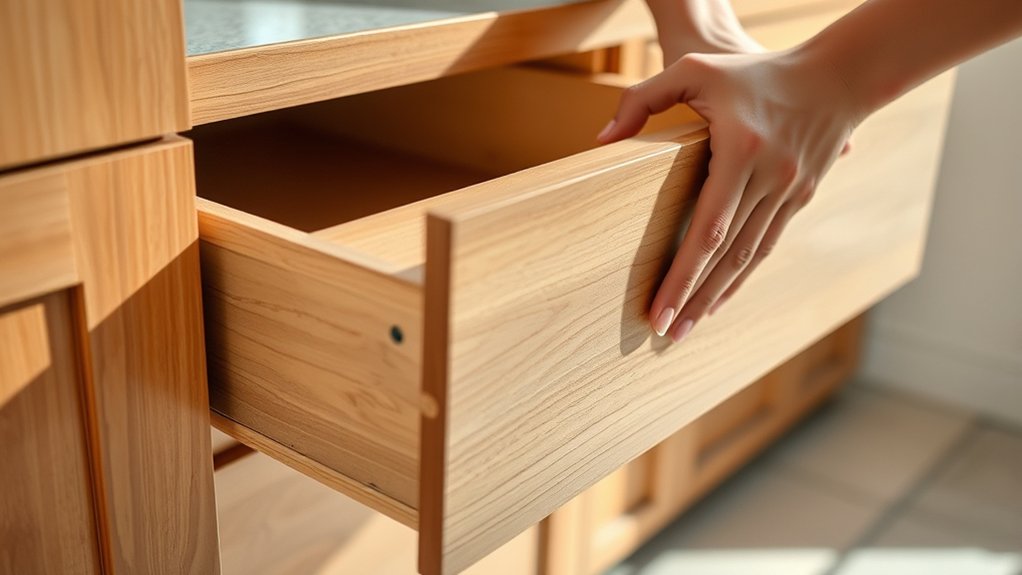
Careful preparation is key to avoiding damage when removing kitchen cabinet drawers. Follow these safety precautions to protect both the drawer and cabinet structure:
- Check drawer alignment: Before removal, verify the drawer is properly aligned in its tracks. Misalignment can cause binding and damage to slides or cabinet sides.
- Use proper tools: Utilize screwdrivers or release levers specific to your drawer slide type to disengage locking mechanisms without forcing components.
- Support the drawer weight: Securely hold the drawer to prevent sudden drops that could damage the front panel or surrounding cabinetry.
Adhering to these steps preserves the integrity of your kitchen cabinet system and prevents costly repairs during the removal process.
After Removal: Maintenance and Replacement Tips
Once you’ve removed the drawer, thoroughly clean the tracks to guarantee smooth operation and prevent wear. Inspect the hardware for damage and decide if you need a direct replacement or an upgrade.
Selecting the right replacement drawer means matching dimensions, weight capacity, and drawer slide type for ideal fit and function.
Cleaning Drawer Tracks
Inspect and clean the drawer tracks thoroughly to guarantee smooth operation and prevent wear. Proper maintenance improves drawer organization by allowing drawers to slide effortlessly. Follow these steps for effective cleaning and lubrication:
- Remove debris and dust using a vacuum or a soft brush to avoid track obstruction.
- Wipe down tracks with a damp cloth and mild detergent, then dry completely to prevent rust.
- Apply a silicone-based lubricant sparingly along the tracks; avoid oil-based lubricants that attract dirt.
Regularly servicing the drawer tracks secures consistent performance and extends their lifespan. Incorporate track lubrication into your routine drawer organization maintenance to minimize friction and prevent squeaking or sticking. This approach helps maintain both function and cleanliness, assuring your kitchen cabinet drawers operate efficiently after reinstallation.
Choosing Replacement Drawers
Maintaining smooth drawer tracks is only part of guaranteeing your kitchen cabinet functions efficiently; selecting the right replacement drawers also plays a key role. When choosing replacements, prioritize compatibility with existing cabinet dimensions and mounting hardware.
Evaluate drawer materials carefully. Solid wood offers durability and a classic look, while plywood and MDF provide cost-effective alternatives with stable construction. Consider design styles that complement your kitchen’s aesthetic, whether modern flat fronts or traditional raised panels.
Confirm the replacement drawer’s weight capacity matches your storage needs to avoid premature wear. Additionally, verify that the drawer slides align with your cabinet’s track system for seamless operation.
Frequently Asked Questions
Can I Remove a Drawer Without Taking Out the Entire Cabinet?
Yes, you can remove a drawer without taking out the entire cabinet. Understanding drawer mechanics lets you disengage slides or stops carefully, making cabinet maintenance efficient and avoiding unnecessary disassembly or damage to the cabinet structure.
How Do I Fix a Drawer That Won’T Slide Back In?
You’ll fix a drawer that won’t slide back in by checking drawer alignment first. Adjust the tracks or runners if misaligned, then apply slide lubricant evenly to guarantee smooth movement without sticking or resistance.
Are There Safety Precautions for Removing Drawers With Heavy Contents?
Yes, you should empty heavy items first to maintain drawer stability and prevent tipping. Support the drawer firmly with both hands while removing it slowly to avoid sudden shifts that could cause injury or damage.
Can I Replace Cabinet Drawers With a Different Style?
You know what they say, “Variety is the spice of life.” You can replace cabinet drawers with different drawer styles to achieve functional cabinet upgrades.
Just ensure compatibility with existing hardware and take precise measurements for a seamless fit and aesthetic appeal.
How Do I Dispose of Old Drawer Slides Responsibly?
You should separate the metal parts from any plastic components, then take the drawer slides to a local recycling center specializing in metal. This guarantees eco friendly disposal and supports recycling metal effectively, reducing environmental impact.