Do It Yourself Outdoor Kitchen Cabinets
You can build durable, weather-resistant outdoor kitchen cabinets by planning your design to maximize space and functionality.
Do it yourself outdoor kitchen cabinets offer a great way to customize your cooking area while saving money. Choose materials like marine-grade plywood, teak, or stainless steel to withstand elements.
Use waterproof sealants, rust-resistant hardware, and guarantee proper ventilation to prevent moisture issues. Incorporate practical storage solutions such as sealable drawers and vertical cabinets for easy access.
Secure your cabinets on a level foundation with weatherproof fasteners to ensure longevity.
Keep going to uncover tips on installation and maintenance best practices. These steps will help you maintain your outdoor kitchen cabinets in excellent condition for years to come.
Plan Your Outdoor Kitchen Cabinet Design for Maximum Space and Function
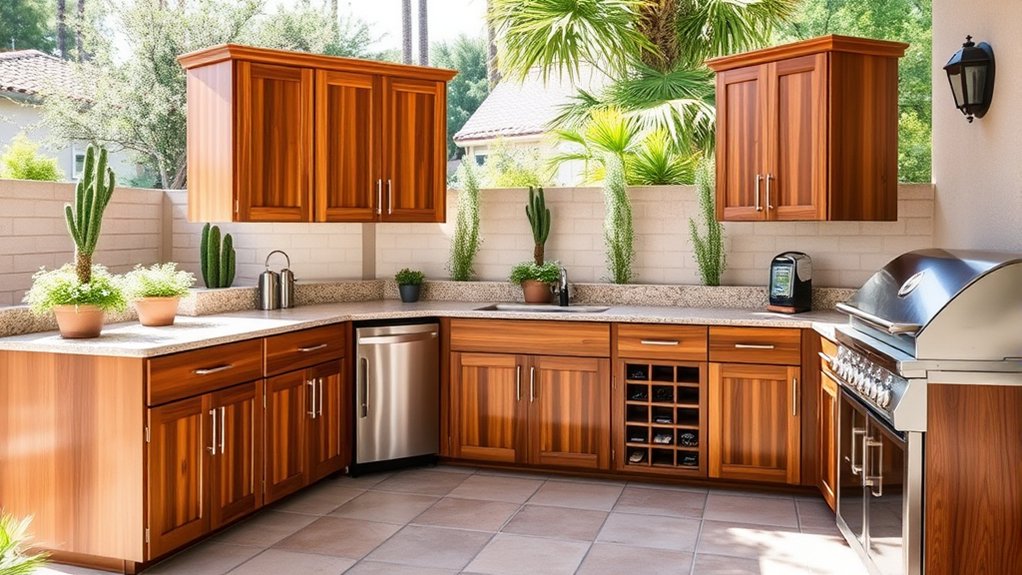
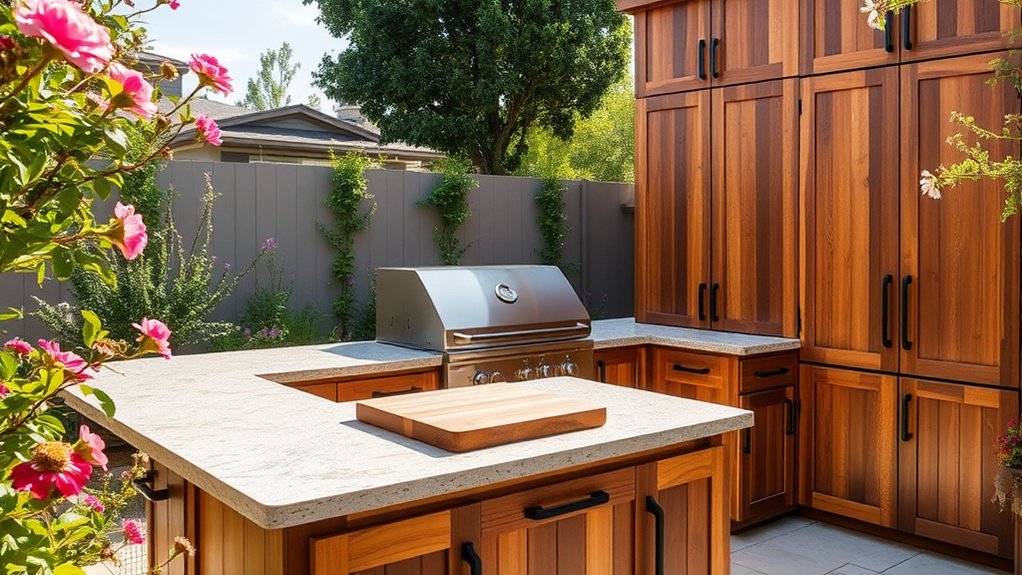
When planning your outdoor kitchen cabinet design, focus on maximizing both space and functionality to create a seamless cooking experience. Start by evaluating your available area to guarantee spatial efficiency without overcrowding.
Prioritize cabinet layouts that offer ample storage yet easy access to essentials, balancing drawers, shelves, and compartments. Integrate design aesthetics that complement your outdoor environment, choosing clean lines and cohesive colors to enhance appeal.
Think vertically as well. Tall cabinets or stacked storage can free up countertop space. Customize cabinet sizes to fit specific tools and appliances you’ll use frequently.
Choose Durable, Weather-Resistant Materials for Outdoor Cabinets
You’ll want to choose materials that can withstand rain, sun, and temperature changes without warping or rusting. Weatherproof wood like teak or cedar offers natural resistance, while metals such as stainless steel provide unmatched durability and low maintenance.
Selecting the right material guarantees your outdoor cabinets stay functional and attractive for years.
Weatherproof Wood Options
Since outdoor kitchen cabinets face constant exposure to moisture, temperature fluctuations, and UV rays, selecting weatherproof wood is essential to guarantee longevity and maintain appearance. You want wood that resists rot, insect damage, and warping.
Teak durability makes it a top choice, as its natural oils repel water and pests. Cedar resistance to decay and insects also makes it ideal. Pressure-treated pine is budget-friendly but requires regular sealing.
Cypress offers good moisture resistance due to its natural oils. Here’s a quick comparison:
| Wood Type | Weather Resistance | Maintenance Needs |
|---|---|---|
| Teak | High (natural oils) | Low (periodic oiling) |
| Cedar | Moderate (resists decay) | Moderate (sealing) |
| Pressure-Treated Pine | Moderate (chemical treatment) | High (frequent sealing) |
| Cypress | High (natural oils) | Moderate |
| Redwood | Moderate (natural tannins) | Moderate |
Choose wisely to make sure your cabinets stand up to the elements.
Metal Cabinet Advantages
While weatherproof woods offer natural protection, metal cabinets bring a different level of durability and resistance that can elevate your outdoor kitchen’s performance. When you choose metal, you get exceptional rust resistance, especially if you opt for stainless steel or powder-coated aluminum.
These materials stand up to moisture, humidity, and temperature fluctuations without warping or deteriorating. Beyond durability, metal cabinets provide sleek aesthetic appeal, enhancing your kitchen’s modern look with clean lines and smooth finishes.
They’re also low maintenance; just a quick wipe keeps them looking new. Installing metal cabinets means you’re investing in long-lasting functionality and style, ensuring your outdoor kitchen stays both practical and visually appealing season after season.
This combination of strength and elegance makes metal a smart choice for your DIY project.
Build Weatherproof Outdoor Kitchen Cabinets
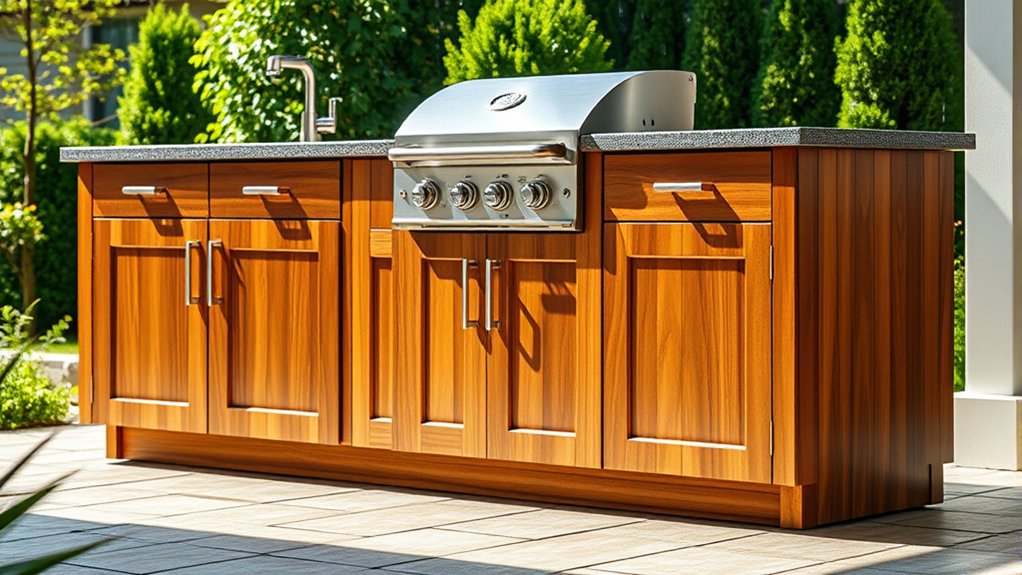
Although building outdoor kitchen cabinets might seem straightforward, ensuring they withstand the elements requires careful planning and the right materials. Start by selecting weather-resistant materials like marine-grade plywood or stainless steel to maintain durability and enhance outdoor aesthetics.
Building outdoor kitchen cabinets requires weather-resistant materials and thoughtful planning for lasting durability and style.
Pay close attention to cabinet ventilation to prevent moisture buildup, which can cause mold and warping. Incorporate vented panels or small gaps that promote airflow without compromising protection.
Seal all edges and joints meticulously with waterproof caulking, and use rust-resistant hardware to extend cabinet lifespan. Design your cabinets with sloped surfaces to direct water away, avoiding pooling.
This approach not only preserves structural integrity but also keeps your outdoor kitchen looking sharp, functional, and ready to withstand all weather conditions.
Add Practical Storage Solutions and Weatherproof Finishes
To maximize both functionality and longevity in your outdoor kitchen, you’ll want to incorporate practical storage solutions paired with weatherproof finishes that stand up to the elements. Effective storage organization enhances your cooking flow and maintains outdoor aesthetics by keeping everything neat and accessible. Consider these key strategies:
- Use stainless steel or marine-grade hardware to resist rust and corrosion.
- Install waterproof, sealable drawers and cabinets to protect utensils and supplies.
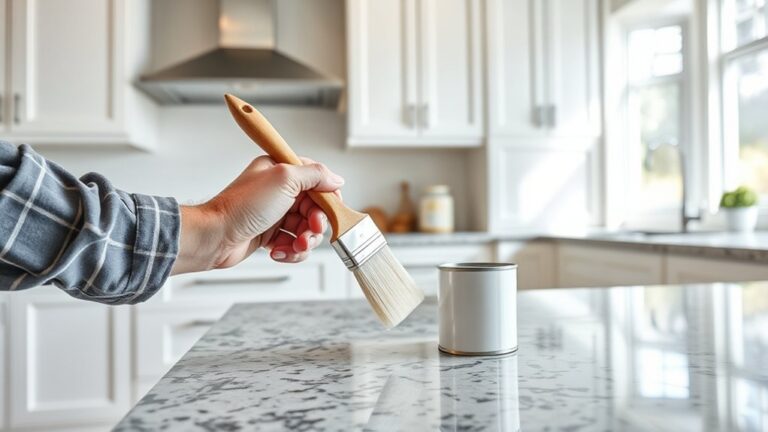
- Apply weatherproof paint or sealant designed for outdoor use to safeguard wood or composite surfaces.
These steps not only protect your investment but also guarantee your outdoor kitchen remains visually appealing and highly functional, no matter the weather. Paying attention to these details will make your DIY cabinets both durable and stylish.
Install Your Outdoor Kitchen Cabinets Safely
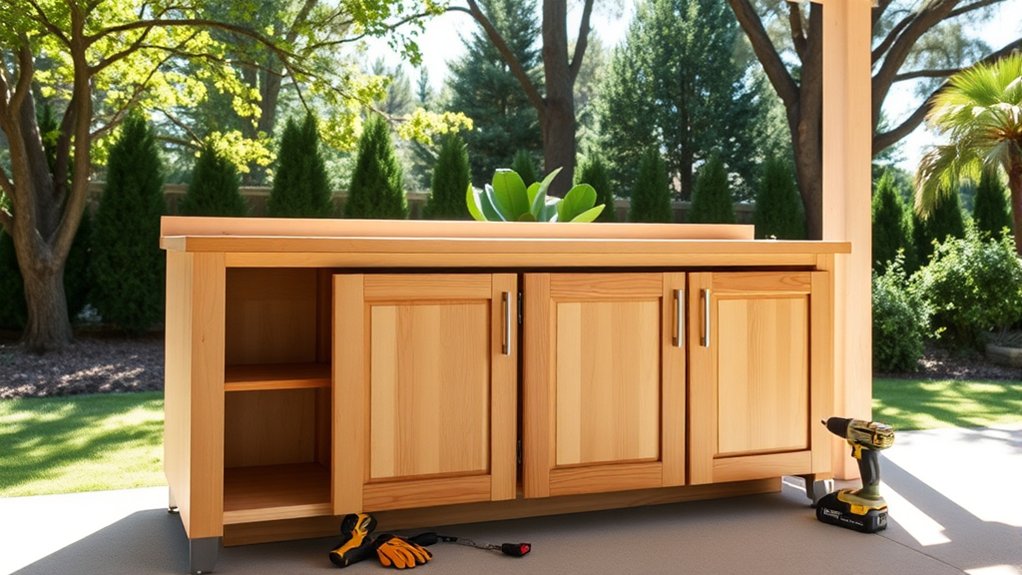
You’ll need to start by preparing a solid, level foundation to support your outdoor kitchen cabinets and prevent shifting. Then, use weatherproof fasteners designed for exterior use to securely anchor each cabinet against wind and moisture.
Taking these steps guarantees your installation stays strong and safe through all seasons.
Proper Foundation Preparation
Laying a solid foundation is the essential first step to guarantee your outdoor kitchen cabinets remain stable and long-lasting. Before you begin, perform soil testing to assess drainage and bearing capacity, ensuring your foundation won’t shift or settle unevenly.
Choose the right foundation type, such as a concrete slab, paver base, or gravel bed, based on your soil conditions and cabinet weight.
Focus on these key preparation steps:
- Clear and level the site to prevent future settling.
- Compact the soil thoroughly to create a firm base.
- Install appropriate drainage solutions to avoid water damage.
Secure Weatherproof Fastening
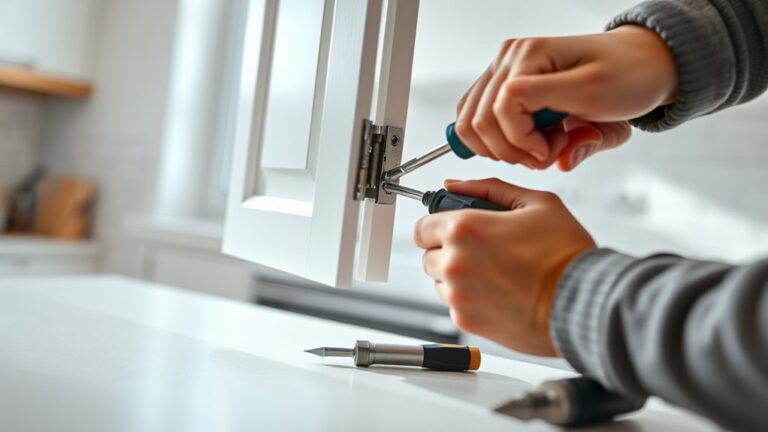
Although securing your outdoor kitchen cabinets may seem straightforward, using weatherproof fasteners is critical to guarantee they withstand harsh elements and remain firmly anchored. Start by selecting stainless steel or coated screws designed to resist rust and corrosion. Combine these with high-quality weatherproof adhesives to enhance bond strength and prevent moisture infiltration.
When applying fastening techniques, pre-drill holes to avoid splitting the wood and confirm a tight fit. Use brackets or mounting plates to distribute weight evenly, reducing stress on individual fasteners. Seal all joints with exterior-grade silicone to block water entry further.
Maintain Your Outdoor Kitchen Cabinets for Longevity
Because outdoor kitchen cabinets face constant exposure to elements like sun, rain, and temperature changes, maintaining them regularly is essential to preserving their appearance and functionality. Start with thorough cabinet cleaning using mild soap and water to remove dirt and prevent mold buildup.
Conduct seasonal inspections to check for damage, loose hardware, or signs of wear, addressing issues promptly to avoid costly repairs. Additionally, apply a protective sealant or finish annually to shield surfaces from moisture and UV damage.
Key maintenance tips include:
- Clean cabinets monthly to prevent grime and mildew.
- Inspect hinges, handles, and seals every season.
- Reapply sealant or weatherproof coatings yearly for ideal protection.
Frequently Asked Questions
What Tools Are Essential for Building Outdoor Kitchen Cabinets?
Think of your tools as the backbone of a fortress. You’ll need a saw for precise wood selection, a drill for assembly, clamps for stability, and sanders to guarantee weather resistance, each tool shaping your durable outdoor kitchen cabinets.
How Do I Incorporate Lighting Into Outdoor Kitchen Cabinets?
You’ll want to install weatherproof fixtures with LED strips for ambient lighting and focused task lighting. Consider solar options for energy efficiency and add motion sensors to enhance convenience and safety around your outdoor kitchen cabinets.
Can I Add a Built-In Grill to My DIY Cabinets?
You can add a built-in grill to your DIY cabinets by carefully planning grill placement and ensuring proper ventilation options, like vents or open backs. This helps prevent heat buildup and maintain safety while optimizing cooking efficiency in your outdoor kitchen.
What Are the Best Cabinet Styles for Outdoor Kitchens?
Classic cabinets crafted from cedar or teak combine durability with natural beauty. Bold, bright cabinet color trends boost backyard brilliance.
You’ll want weather-resistant wood material options that withstand outdoor elements while enhancing your kitchen’s charm.
How Do I Prevent Pests From Damaging Outdoor Cabinets?
You can prevent pests from damaging outdoor cabinets by choosing pest-resistant materials like stainless steel or treated wood and applying regular pest control treatments.
Seal gaps tightly and keep the area clean to deter insects and rodents effectively.