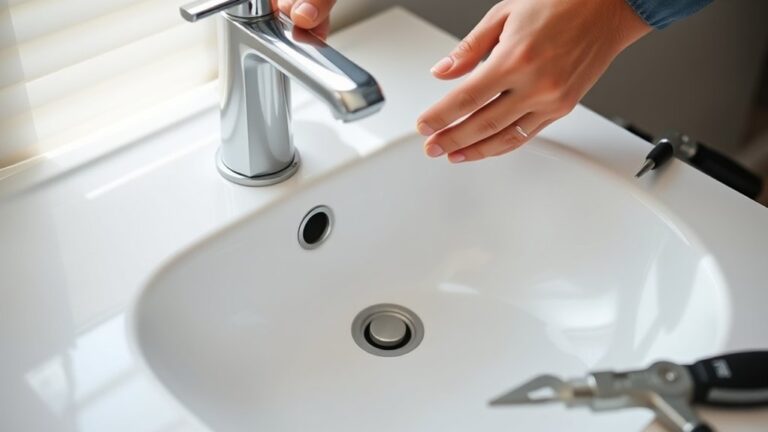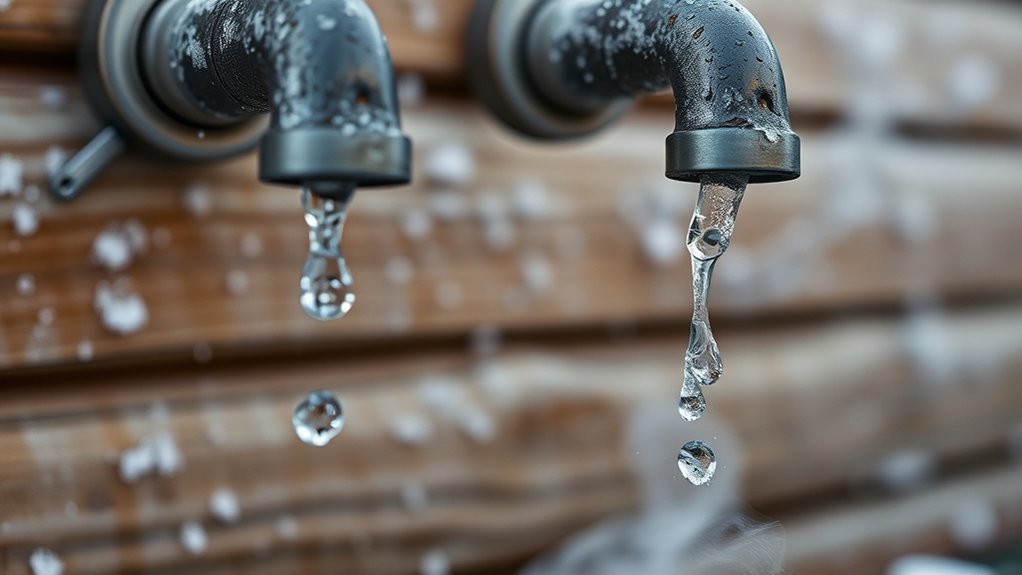
When to Drip Faucets in Winter
You should start dripping your faucets in winter once nighttime temperatures consistently approach freezing, around 32°F (0°C).
Focus on faucets located on exterior walls, in unheated spaces, or pipes running through attics, basements, or crawl spaces.
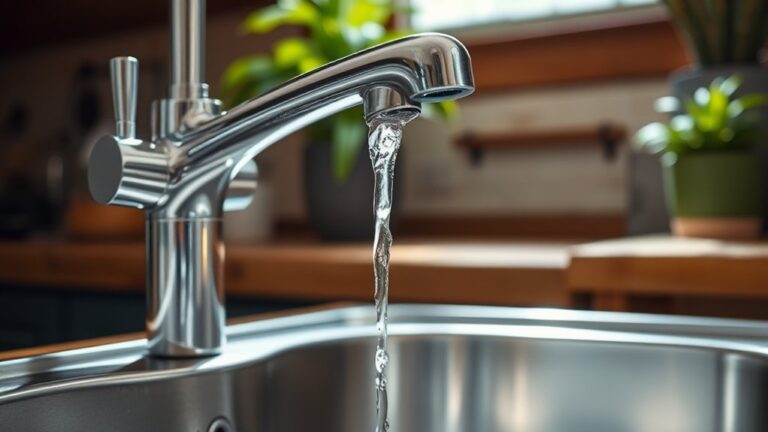
Maintain a steady drip, roughly the size of a pencil lead, to keep water moving without wasting it.
Combining this with insulation and sealing gaps enhances protection.
Understanding these basics helps you safeguard against costly pipe damage during cold weather.
When Should You Start Dripping Faucets in Winter?
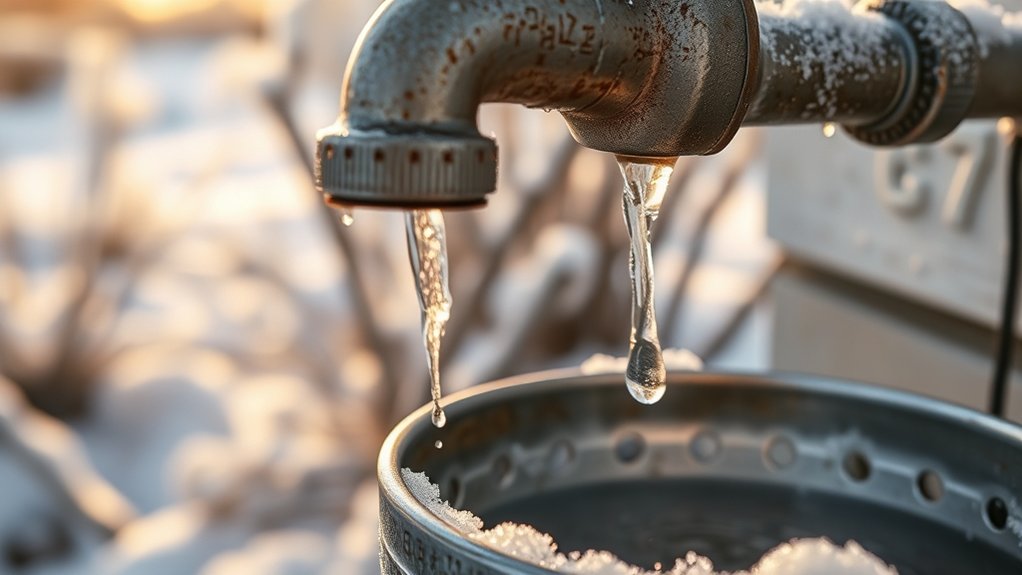
When should you start dripping faucets in winter to effectively prevent frozen pipes? Begin as soon as temperatures consistently drop near freezing, especially when you notice temperature fluctuations between day and night. These swings increase the risk of pipe freezing, as water inside can expand and contract, causing pressure build-up.
Even if you’ve installed pipe insulation, don’t rely on it alone during rapid temperature changes. It only slows heat loss but doesn’t eliminate freezing risk. Monitor local weather forecasts and activate dripping when lows approach 32°F (0°C), particularly before cold snaps.
Starting early guarantees a steady flow that prevents water from stagnating and freezing. By timing your faucet dripping with temperature drops and understanding the limits of pipe insulation, you’ll protect your plumbing system efficiently throughout the winter.
Which Faucets Should You Let Drip to Prevent Freezing?
Although not all faucets require dripping, you should focus on those located on exterior walls, unheated areas, or where pipes run through attics, basements, or crawl spaces. Prioritize outdoor faucets, as they are directly exposed to freezing temperatures and lack insulation.
Focus on dripping faucets on exterior walls and unheated spaces to prevent freezing and pipe damage.
For indoor plumbing, identify faucets connected to pipes in vulnerable zones, such as unheated garages or walls facing the outdoors. These faucets are more prone to freezing due to limited temperature regulation.
Avoid dripping faucets in well-insulated or heated areas, as unnecessary water waste occurs. By selectively dripping faucets tied to exposed or poorly insulated pipes, you reduce the risk of pipe bursts and costly repairs.
This targeted approach guarantees your indoor plumbing system remains functional while minimizing water usage during winter.
How Much Should You Let Your Faucet Drip?
How much you let your faucet drip directly impacts its effectiveness in preventing frozen pipes. To maintain a sufficient drip rate, aim for a slow, steady stream, roughly the size of a pencil lead. This rate guarantees continuous water movement without wasting excessive water.
Different faucet types influence the ideal drip rate; for example, outdoor faucets require a slightly higher drip rate than indoor ones due to greater exposure to cold temperatures. Ball valves or gate valves may need adjustment to maintain this steady drip.
Avoid a trickle that’s too faint, as stagnant water can still freeze. Conversely, a heavy flow wastes water and can increase your bill. Monitoring and adjusting the drip rate according to faucet types and local weather conditions optimizes protection against freezing efficiently and economically.
Additional Ways to Protect Your Pipes From Freezing
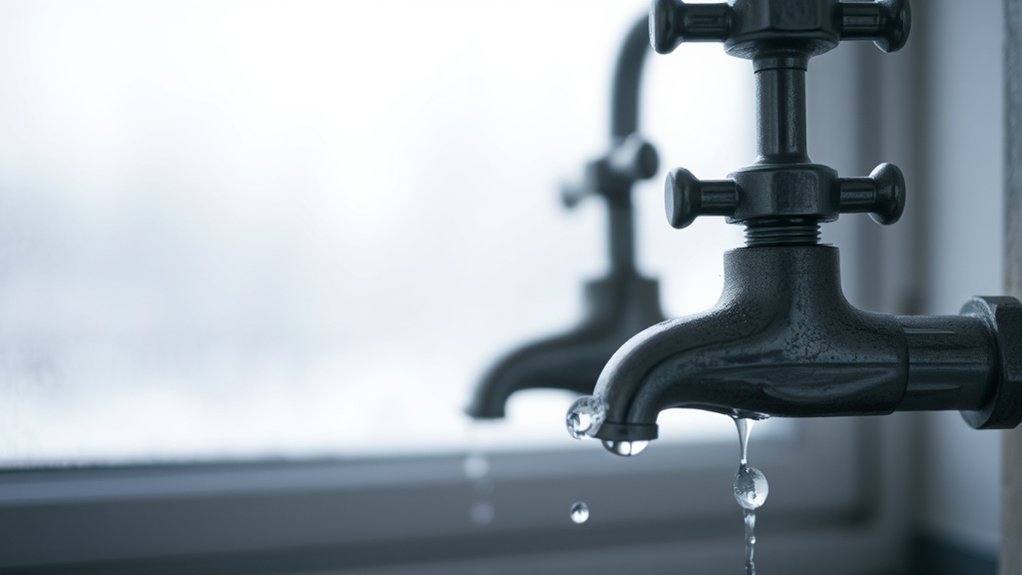
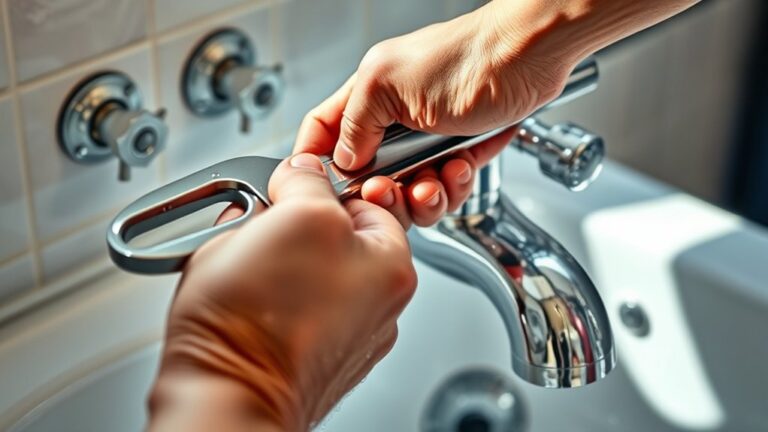
To further safeguard your plumbing, you should implement additional measures beyond dripping faucets to prevent pipe freezing. Start with insulation tips: wrap exposed pipes with foam sleeves or fiberglass insulation to reduce heat loss.
Seal gaps and cracks in walls or foundations near pipes to block cold air infiltration. Use heat tape or heat cables designed for pipes, ensuring they’re installed per manufacturer instructions.
Position portable heat sources, like space heaters, carefully to provide consistent warmth without fire hazards. Keep cabinet doors open under sinks to allow warmer room air to circulate around pipes.
If possible, maintain your home’s thermostat at a steady temperature, especially overnight. Combining these strategies with dripping faucets creates an extensive defense against freezing pipes during harsh winter conditions.
Frequently Asked Questions
Can Dripping Faucets Increase My Water Bill Significantly?
Think of dripping faucets like tiny leaks in a dam. While they aid water conservation by preventing pipe bursts, if unchecked, they can cause a noticeable bill increase.
You should monitor drips to balance savings and costs effectively.
Does Dripping Faucets Help Prevent Pipe Bursts Only Outdoors?
No, dripping faucets help prevent frozen pipes both indoors and outdoors. By keeping water moving in indoor pipes, you reduce freezing risk, which minimizes pipe bursts caused by ice expansion in cold conditions.
Is It Safe to Leave Faucets Dripping Overnight?
Yes, leaving faucets dripping overnight is safe and can prevent winter plumbing issues. However, monitor faucet leakage to avoid water waste or damage, ensuring the drip rate is minimal but sufficient to keep water flowing and pipes from freezing.
Can I Use Hot Water to Drip Instead of Cold Water?
You can gently opt for hot water to drip, as it offers hot water benefits like reducing freezing risk quicker. Still, maintaining a steady faucet temperature guarantees efficiency without wasting energy or risking pipe damage.
Will Dripping Faucets Prevent All Types of Pipe Freezing?
Dripping faucets won’t prevent all pipe freezing, especially without pipe insulation. You need to monitor temperature thresholds closely and combine dripping with insulation to effectively protect pipes during extreme cold conditions.
This approach helps avoid freeze damage and ensures better pipe safety in harsh weather.