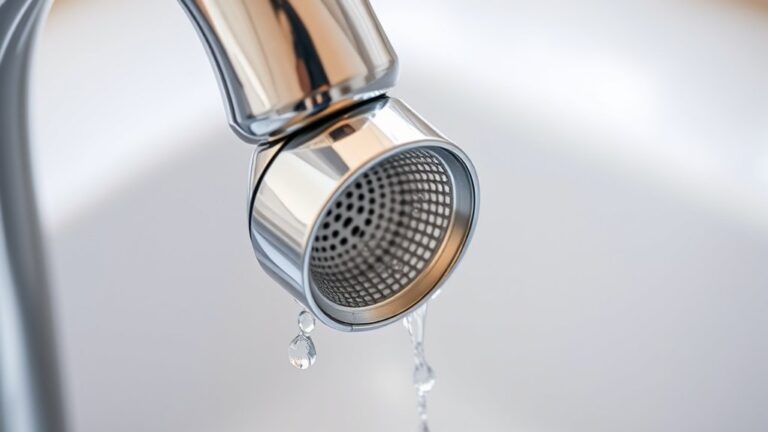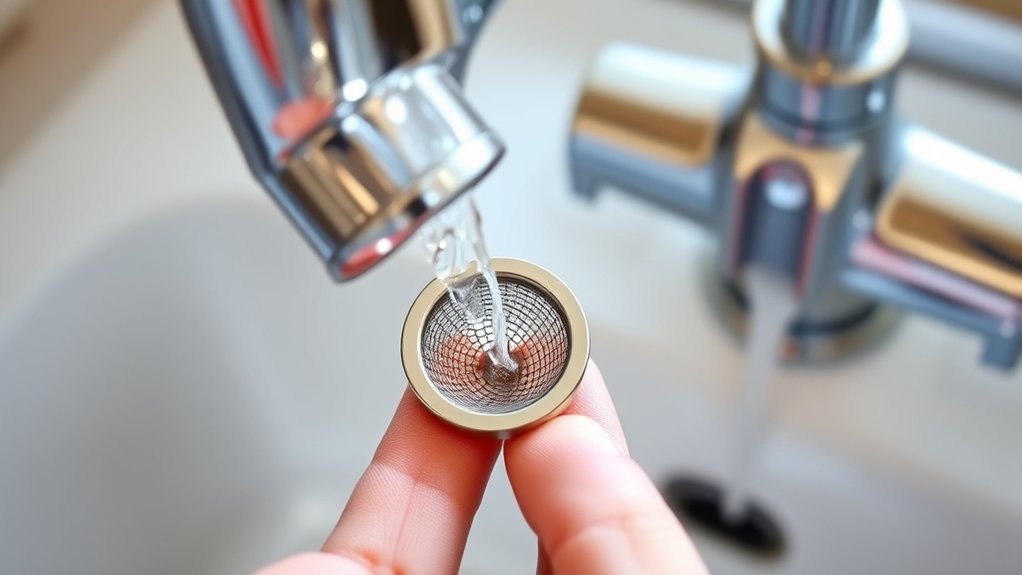
How to Clean Faucet Screen
You’ll first identify faucet screen clog symptoms like reduced flow or sputtering. Then gather tools such as a soft brush, wrench, and vinegar solution.
Unscrew the aerator carefully. Soak the screen in a 50/50 vinegar-water mix for about 30 minutes, and gently scrub off buildup. Rinse thoroughly before reinstalling to avoid leaks.
Regular cleaning prevents mineral deposits and maintains water pressure. If you want a full step-by-step guide and preventive tips, there’s more detailed information ahead.
Identify a Clogged Faucet Screen
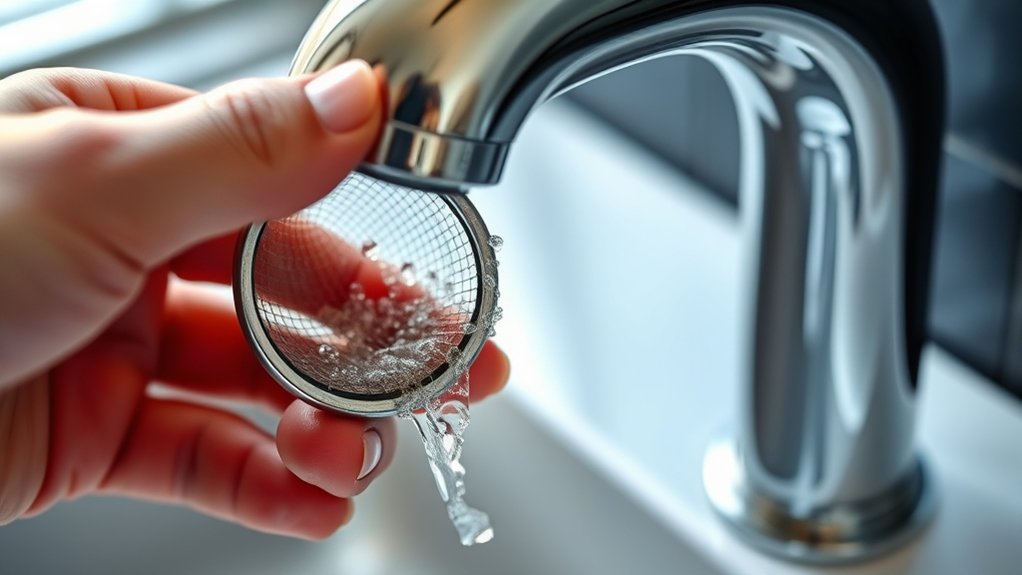
How can you tell if your faucet screen is clogged? Look for common clogged symptoms like reduced water flow, uneven spray patterns, or water sputtering from the spout. These signs indicate debris buildup obstructing the screen’s mesh.
During routine faucet maintenance, regularly inspect the screen for mineral deposits or sediment accumulation. You might notice water pressure dropping despite normal supply, signaling a blockage at the screen.
Regularly check for mineral buildup on the faucet screen, as it can cause pressure drops despite normal supply.
Another symptom is water discoloration or particles in the flow, suggesting trapped contaminants. Identifying these symptoms early helps prevent more severe plumbing issues and guarantees consistent water delivery.
Recognizing when the faucet screen is clogged allows you to address it promptly, maintaining peak faucet performance and extending its lifespan.
Gather Tools for Cleaning Your Faucet Screen
You’ll need a few essential tools like a small brush, a wrench, and a container for soaking the screen. Set up your workspace near the sink with good lighting and easy access to water.
Preparing everything beforehand guarantees a smooth and efficient cleaning process.
Essential Cleaning Tools
Gathering the right tools is essential for efficiently cleaning your faucet screen and preventing damage. Start with a soft-bristled toothbrush or a small nylon brush to remove debris without scratching the screen.
Use a bowl or container to soak the screen in appropriate cleaning solutions, such as white vinegar or a mild descaling agent, which break down mineral buildup effectively. Have a pair of needle-nose pliers ready for screen removal if needed, ensuring you don’t apply excessive force.
A microfiber cloth helps wipe away loosened deposits and dries the screen thoroughly. Following these maintenance tips regularly will extend your faucet’s lifespan and maintain water flow efficiency.
Preparing Your Workspace
Before starting the cleaning process, set up a dedicated workspace with all necessary tools within reach. Proper workspace setup guarantees efficiency and cleaning safety, minimizing accidents and tool misplacement.
Clear a flat surface near the sink, cover it with a towel to catch drips, and provide good lighting.
Gather these essential items:
- Small container to hold screws and parts
- Soft brush or old toothbrush for scrubbing
- White vinegar or mild cleaning solution
- Protective gloves to safeguard your hands
Having everything organized lets you focus on the task without interruption. Prioritize cleaning safety by wearing gloves and keeping the area dry to avoid slips.
Preparing your workspace properly sets the foundation for a smooth, effective faucet screen cleaning process.
Remove Your Faucet Screen Step-by-Step
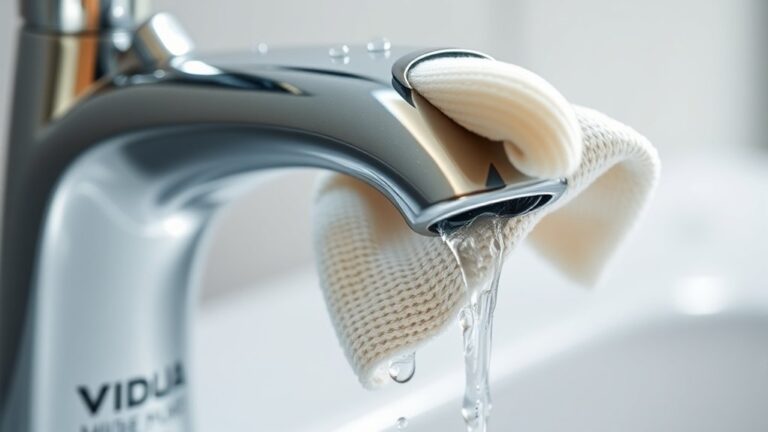
Start by locating the aerator at the end of your faucet spout; this small piece houses the screen you need to remove. Use a cloth to grip the aerator securely and avoid scratching its surface.
Turn it counterclockwise to unscrew it gently. If it’s tight, apply penetrating oil and wait a few minutes before trying again. Once loosened, carefully remove the aerator assembly and set it aside.
Inside, you’ll find the screen, which traps debris and sediment. Removing it properly is vital for effective faucet maintenance. Keep track of all parts to prevent misplacement.
The screen traps debris and sediment; proper removal is key to maintaining your faucet and avoiding misplacement.
Addressing this step thoroughly helps prevent water quality issues caused by clogged or damaged screens. Following these faucet maintenance tips guarantees your fixture functions efficiently and extends its lifespan.
Clean and Soak Your Faucet Screen
Soak your faucet screen in a solution of equal parts white vinegar and water for 30 minutes to dissolve mineral deposits and loosen debris. This step is essential for effective faucet maintenance tips and resolving water flow issues. After soaking, gently scrub the screen with a soft brush to remove stubborn buildup without causing damage.
Rinse thoroughly with clean water to guarantee all residue is gone.
Follow these steps for ideal results:
- Prepare the vinegar-water solution.
- Submerge the faucet screen fully.
- Scrub gently post-soak.
- Rinse and inspect for remaining debris.
This practical approach restores proper water flow and extends your faucet’s lifespan, preventing clogs and inefficiency.
Reinstall Your Faucet Screen Without Leaks

When you’re ready to reinstall your faucet screen, make certain the area is clean and dry to prevent leaks. Begin by aligning the screen properly within the faucet housing, ensuring it sits flush against the sealing surface.
During faucet installation, avoid forcing the screen, as misalignment can compromise the seal and cause leaks. Use a wrench to tighten the screen assembly securely but avoid over-tightening, which can damage threads or the gasket.
Tighten the faucet screen securely without forcing or over-tightening to prevent leaks and damage.
Inspect the rubber washer or O-ring for wear and replace it if necessary, as it plays an essential role in leak prevention. After installation, turn on the water slowly and check for leaks around the screen.
Address any drips immediately to maintain a watertight faucet installation that functions efficiently.
Prevent Mineral Buildup and Clogs in Faucet Screens
You can spot mineral buildup on your faucet screen by looking for white or chalky deposits that restrict water flow. To prevent clogs, clean the screen regularly using a vinegar soak or a soft brush to dissolve and remove deposits.
Consistent maintenance guarantees ideal water pressure and extends the screen’s lifespan.
Identifying Mineral Buildup
Although mineral buildup may start subtly, it quickly restricts water flow and causes uneven spray patterns in your faucet. Understanding mineral types and buildup causes helps you spot issues early.
Common minerals like calcium and magnesium accumulate due to hard water, while iron deposits result from corroded pipes. You should inspect your faucet screen regularly to catch these signs:
- White or chalky deposits on the screen surface
- Rust-colored stains indicating iron buildup
- Noticeable reduction in water pressure or irregular spray
- Visible clogging or debris trapped within the screen mesh
Effective Cleaning Techniques
Regularly cleaning your faucet screen prevents mineral buildup and maintains ideal water flow. Use effective cleaning solutions like white vinegar or mild descaling agents to dissolve deposits without damaging the screen.
Remove the screen carefully, soak it in the solution for 15-30 minutes, then scrub gently with a soft brush. Rinse thoroughly before reinstalling.
Follow these maintenance tips: clean screens monthly, inspect for wear, and avoid harsh chemicals that degrade materials.
| Cleaning Solutions | Maintenance Tips |
|---|---|
| White vinegar | Clean screens monthly |
| Mild descaling agents | Inspect for cracks or damage |
| Soft brush for scrubbing | Avoid harsh chemicals |
Implementing these practices guarantees longevity and peak faucet performance.
Frequently Asked Questions
Can I Use Vinegar to Clean All Types of Faucet Screens?
You can use vinegar for most faucet screens due to vinegar benefits like dissolving mineral buildup. However, avoid screens with delicate finishes or rubber parts.
Combine vinegar with proper cleaning methods to guarantee effective, safe maintenance.
How Often Should I Replace My Faucet Screen?
You should replace your faucet screen every 6 to 12 months, depending on water quality and usage.
Regular faucet maintenance tips include inspecting for clogs or damage to maintain ideal flow and prevent leaks.
Are There Commercial Cleaners Safe for Faucet Screens?
Yes, you’ll find commercial cleaners safe for faucet screens, especially eco-friendly options. Use gentle cleaning techniques like soaking in vinegar or mild detergents to avoid damage and maintain screen integrity while effectively removing buildup.
Does a Clogged Faucet Screen Affect Water Pressure?
You’ll think your faucet’s water flow’s completely stopped when a clogged screen chokes it. Regular maintenance tips include cleaning screens to restore ideal pressure and prevent frustrating drops in water flow that disrupt daily tasks.
Can Clogged Faucet Screens Cause Damage to Plumbing?
Yes, clogged faucet screens can cause plumbing issues by restricting water flow, increasing pressure, and straining pipes.
Regular faucet maintenance prevents damage, ensuring efficient water delivery and extending the lifespan of your plumbing system.