How Much to Install a Faucet
You’ll typically spend between $100 and $300 to install a faucet, depending on your location, faucet type, and complexity.
Installing a faucet involves various factors that influence the overall cost. Single-handle faucets cost less and install faster, while touchless or wall-mounted models require more labor and expertise.
Professional installation guarantees proper alignment, leak prevention, and code compliance, especially for complex setups.
Budget extra for potential permits or unforeseen repairs.
If you want to understand factors influencing costs and when to hire a plumber, keep exploring this topic.
How Much Does Faucet Installation Cost?
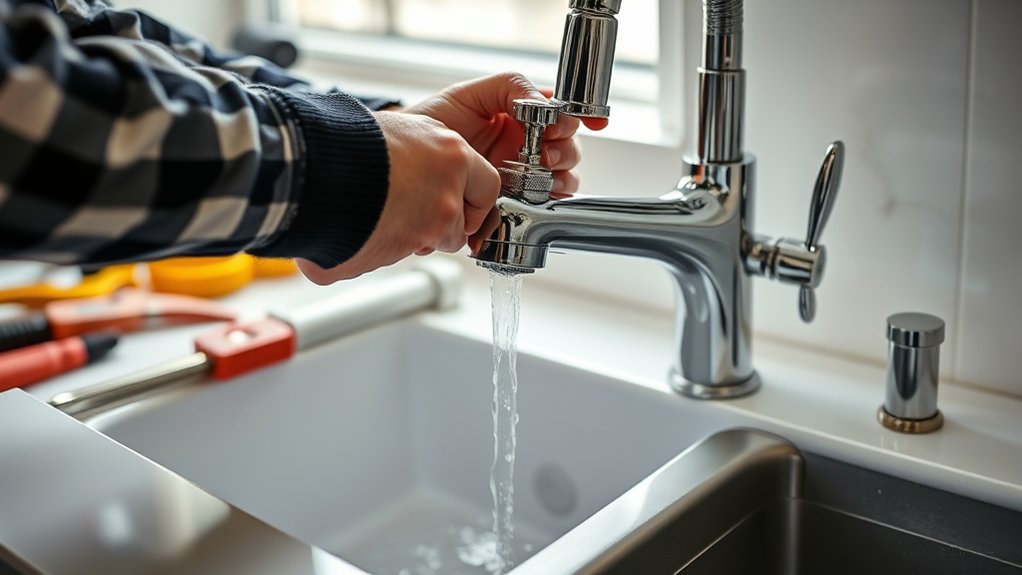
Although faucet installation costs vary by region and complexity, you can generally expect to pay between $100 and $300 for professional labor. The final price depends on factors like your location, the faucet brands you choose, and the plumber’s expertise.
Premium faucet brands may require specialized installation techniques, which can increase labor costs. Always confirm whether the installation warranties cover both the labor and the faucet itself, as some manufacturers only guarantee their product if installed by a certified professional.
You’ll want to verify that your plumber offers an installation warranty, protecting you against potential issues post-installation. By understanding these variables upfront, you can budget effectively and guarantee your new faucet functions reliably with proper coverage.
Which Faucet Types Affect Installation Price?
The design of your faucet directly impacts installation costs by influencing complexity and required tools. Single-hole models typically install faster than widespread or wall-mounted types, which need additional plumbing adjustments.
Understanding these factors helps you anticipate labor time and potential challenges during installation.
Faucet Design Impact
When selecting a faucet, you’ll find that its design directly influences installation complexity and cost. Faucets emphasizing modern aesthetics often feature sleek lines and integrated components, which can require precise alignment and specialized fittings during installation.
You’ll want to balance functionality with style; for example, pull-down or touchless faucets add mechanical and electrical elements that increase labor time and expenses. Simple single-handle models generally install faster and cheaper, while multi-hole widespread designs demand more precise drilling and connection work.
Ultimately, choosing a faucet that harmonizes modern aesthetics with practical functionality balance helps control installation costs without compromising performance. Understanding how design elements affect the setup guarantees you pick a faucet that fits your budget and project requirements efficiently.
Installation Complexity Factors
Since faucet installation varies widely by type, understanding which models affect labor intensity helps you anticipate costs accurately. Single-handle faucets typically require less installation time and basic plumbing skills, making them more cost-effective.
In contrast, widespread or wall-mounted faucets demand precise alignment and additional plumbing modifications, increasing both complexity and labor time. Touchless or sensor-activated faucets involve electrical components, requiring advanced plumbing skills and extended installation time.
Pull-out or pull-down faucets often need extra fittings and careful sealing to prevent leaks, adding to the labor involved. When you select a faucet, consider how its design influences the installation process. More complex systems translate to higher labor costs due to increased installation time and specialized plumbing skills needed to guarantee proper function and durability.
When Should You Hire a Professional Plumber?
How do you know if installing a faucet is beyond your skill level? If you face emergency situations like leaks causing water damage, it’s best to call a professional plumber immediately.
Plumbing expertise is essential when dealing with complicated setups involving multiple connections, outdated piping, or unusual configurations. If you lack specialized tools or experience, attempting the job may worsen issues.
Plumbing expertise is crucial for complex setups; lacking tools or experience can lead to bigger problems.
Additionally, consider time constraints. If you can’t dedicate adequate time to complete the installation correctly, hiring a plumber guarantees efficiency and avoids costly mistakes.
Professionals can diagnose underlying problems and assure compliance with local codes. In short, when the task requires advanced skills, involves urgent repairs, or demands swift completion, entrusting the job to a trained plumber is the safest and most practical choice.
How Can DIY Faucet Installation Lower Costs?
You can cut costs substantially by handling faucet installation yourself with the right tools, such as a basin wrench, plumber’s tape, and adjustable wrench. Following a clear step-by-step process ensures efficiency and prevents errors.
Shut off water, remove the old faucet, and secure the new one. Mastering these essentials lets you avoid labor fees and control the entire project timeline.
Tools Needed
A handful of essential tools can make DIY faucet installation straightforward and considerably reduce labor costs. To tackle various faucet types, whether single-handle, widespread, or wall-mounted, you’ll need basic installation tools like an adjustable wrench, basin wrench, plumber’s tape, and a screwdriver set.
A flashlight helps illuminate tight spaces beneath sinks, while a bucket prevents water damage during disconnection. For more complex faucet types with multiple connections, consider channel-lock pliers and a silicone sealant to guarantee watertight fittings.
Having these tools on hand minimizes the need for professional assistance, cutting expenses. Investing in the right installation tools tailored to your faucet type guarantees efficiency, reduces errors, and streamlines the process, ultimately saving you money and time without compromising on quality.
Step-by-Step Process
Although faucet installation can seem intimidating, following a clear, step-by-step process lets you control each stage efficiently and avoid costly mistakes. Begin by shutting off the water supply, then remove the old faucet carefully to prevent damage.
Next, install the new faucet, ensuring all connections are tight to prevent leaks. Finally, test the faucet and apply essential faucet maintenance tips to prolong its lifespan.
| Step | Action | Common Installation Mistakes |
|---|---|---|
| 1 | Turn off water supply | Forgetting to shut off water |
| 2 | Remove old faucet | Damaging sink or plumbing |
| 3 | Install new faucet & test | Loose connections causing leaks |
What Extra Materials or Repairs Can Increase Costs?
Since faucet installation often involves more than just the fixture itself, unexpected materials or repairs can considerably raise your overall costs. You might face costly upgrades or hidden damages that require immediate attention, impacting labor rates and material expenses.
Additionally, obtaining plumbing permits can add to your budget, especially if local codes demand inspections. Don’t forget faucet accessories or specialized installation materials that guarantee proper water supply connections.
Common factors increasing costs include:
- Replacement of corroded pipes or valves due to hidden damages
- Upgrading to higher-end faucet accessories or finishes
- Fees and paperwork for necessary plumbing permits
- Additional installation materials like flexible supply lines or mounting hardware
How Do You Budget for Faucet Installation?
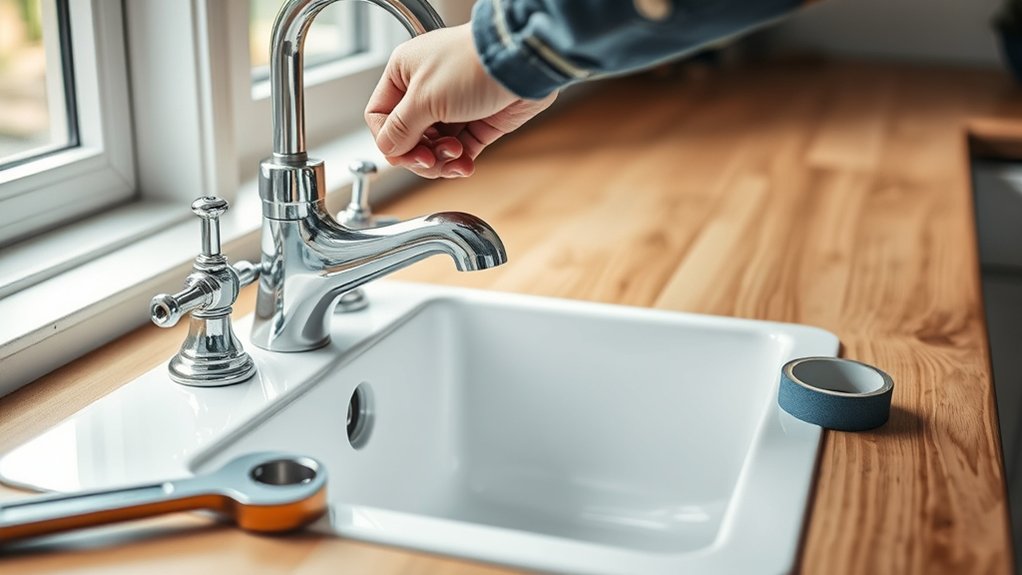
How much should you allocate for faucet installation to avoid unexpected expenses? Start by researching faucet brands to determine the cost of your preferred model, as prices vary greatly.
Factor in labor costs, which depend on your location and the complexity of the installation. Don’t forget to check if installation permits are required in your area; permit fees can add to your budget and delay the project if overlooked.
Account for potential extra materials, such as new supply lines or mounting hardware, especially if your existing setup is outdated. Finally, include a contingency of 10-15% for unforeseen repairs or adjustments.
Frequently Asked Questions
What Tools Are Needed for Faucet Installation?
You’ll need adjustable wrenches, basin wrenches, and plumber’s tape to handle various faucet types. Don’t forget a screwdriver and sealant, key installation materials that guarantee a secure, leak-free fit during your faucet installation process.
How Long Does Faucet Installation Typically Take?
You’ll typically spend 1–2 hours installing faucets, depending on faucet types and installation preparation. Single-handle faucets take less time, while complex pull-out or wall-mounted models require more detailed setup and careful preparation.
Can I Install a Faucet on a Granite Countertop?
You can install a faucet on granite, but it’s like carving stone with precision. Faucet compatibility is essential, and granite drilling demands specialized tools to avoid cracks. Guarantee proper seals and measurements for a flawless, lasting fit.
What Are Common Faucet Installation Mistakes to Avoid?
You’ll avoid common faucet installation mistakes by choosing the right faucet types, ensuring secure connections, and following installation tips like aligning mounting holes correctly. Tighten fittings without over-torquing to prevent leaks and damage.
How Do I Dispose of My Old Faucet Properly?
Think of your old faucet as a puzzle piece needing the right fit. You should explore faucet recycling options or contact local plumbing waste disposal services to guarantee safe, eco-friendly removal. This helps avoid contamination and legal issues.