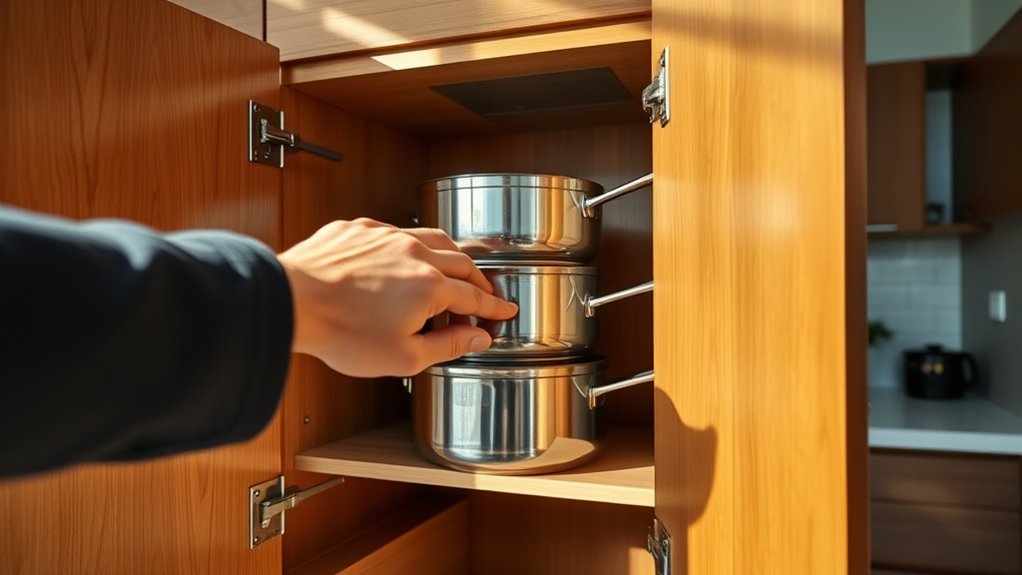
How Much Weight Can Kitchen Cabinets Hold
You can expect standard kitchen cabinets to hold 50 to 100 pounds per linear foot, depending on materials like plywood or solid wood, and installation quality.
How much weight can kitchen cabinets hold also depends on secure mounting to wall studs and sturdy hardware, such as heavy-duty hinges and reinforced brackets, which greatly boost load capacity.
Proper weight distribution prevents sagging or damage, ensuring the cabinets remain stable over time.
If you’re storing heavy items, reinforcing shelves and monitoring cabinet condition becomes essential.
Understanding these factors helps you maximize storage safely and effectively.
Taking the time to assess your cabinets’ strength will protect both your kitchen and your belongings.
How Much Weight Can Standard Kitchen Cabinets Hold?
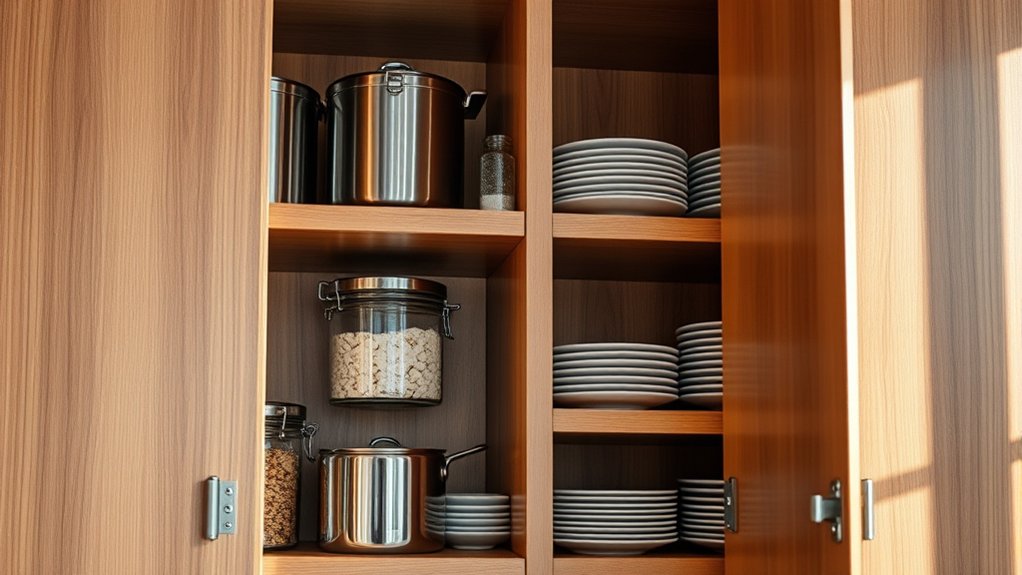
Standard kitchen cabinets typically support between 50 to 100 pounds per linear foot, depending on materials and installation quality. When evaluating kitchen cabinet weight limits, you must consider the cabinet load capacity, which hinges on the structural design and fasteners used.
Cabinets mounted securely to wall studs exhibit higher load capacities than those attached to drywall alone. Additionally, the method of shelf support, whether fixed or adjustable brackets, affects how much weight the cabinet can safely bear.
Secure mounting to wall studs and sturdy shelf supports significantly increase cabinet weight capacity.
Overloading beyond the specified cabinet load capacity risks deformation, sagging, or failure of components. To guarantee safety and durability, you should calculate the expected kitchen cabinet weight before installation, factoring in the weight of stored items and the cabinet hardware itself.
Always adhere to manufacturer specifications for load ratings to maintain structural integrity.
Which Materials Make Cabinets Stronger?
Several key materials greatly influence the strength and durability of kitchen cabinets. When selecting materials, you’ll find plywood offers superior plywood durability due to its multi-layered construction, resisting warping and sagging under weight.
In contrast, particleboard strength is generally lower; it’s more prone to moisture damage and less able to support heavy loads. Medium-density fiberboard (MDF) lies between these two, offering moderate strength and smooth surfaces but less moisture resistance.
Solid wood provides excellent strength but varies by species and is costlier. Your choice directly affects how much weight your cabinets can hold.
| Material | Strength & Durability |
|---|---|
| Plywood | High plywood durability, resistant to warping |
| Particleboard | Lower particleboard strength, moisture prone |
| MDF | Moderate strength, smooth finish |
| Solid Wood | High strength, varies by species |
| Melamine | Moderate strength, scratch-resistant |
How Does Cabinet Construction Impact Load Limits?
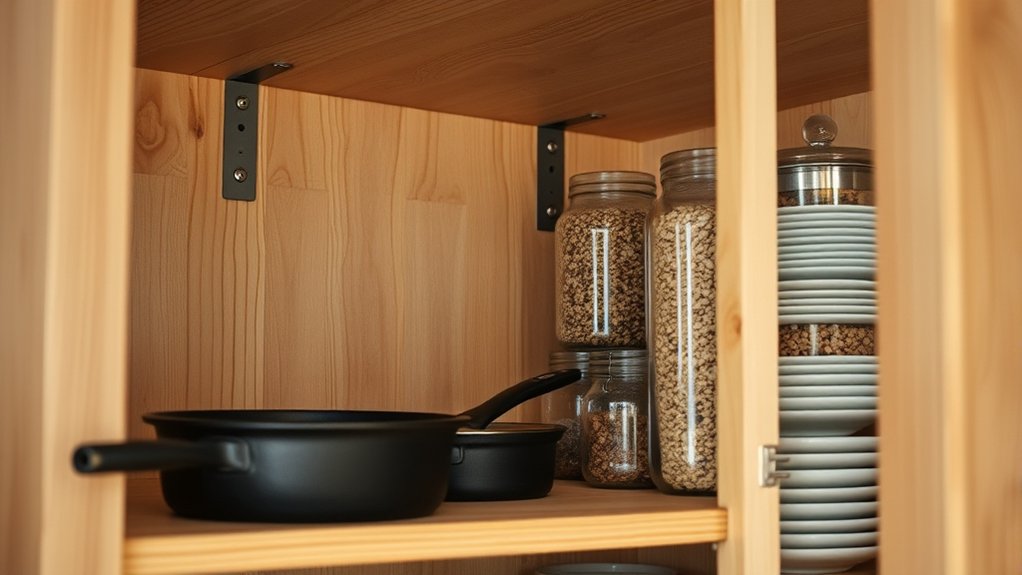
You’ll find that the construction of your cabinets directly influences their load capacity through the choice of materials and joinery techniques. Stronger materials like plywood offer better support, while precise joinery methods such as dovetail or mortise and tenon enhance structural integrity. Understanding these factors helps you assess how much weight your cabinets can safely bear.
Materials Affecting Strength
Although cabinet design varies widely, the materials used in construction directly determine how much weight the cabinets can support. You’ll find that wood density plays a critical role; denser hardwoods like maple or oak typically bear heavier loads compared to softwoods or particleboard.
The structural integrity of cabinet panels depends on this density, influencing resistance to bending or warping under weight. Additionally, cabinet finishes contribute indirectly to strength by protecting surfaces from moisture and wear, which can degrade material performance over time.
High-quality finishes preserve wood stability, maintaining load capacity longer. When selecting cabinets, consider both the wood density and the durability of cabinet finishes to guarantee the units withstand your storage needs without compromising safety or longevity.
Joinery Techniques Impact
Because joinery techniques directly influence the cabinet’s structural integrity, they play a crucial role in determining load limits. When you select joinery types, you’re fundamentally choosing how the cabinet components distribute and resist stress.
Dovetail and mortise-and-tenon joints offer superior joint strength compared to butt joints or simple nails, enhancing the cabinet’s capacity to bear heavier loads. The precision of these joints also matters; tightly fitted joints reduce movement and increase rigidity.
Additionally, reinforced joinery, such as dowels combined with glue, can improve load-bearing performance. If your cabinet construction relies on weaker joinery types, you risk reduced load limits and potential failure under stress.
Consequently, understanding and choosing the appropriate joinery types is critical to maximizing your kitchen cabinet’s weight capacity.
Hardware That Supports Heavy Cabinet Loads
Several types of hardware play a critical role in supporting heavy cabinet loads, including hinges, brackets, and mounting fasteners. Choosing the right cabinet hardware directly affects your cabinet’s load capacity and durability.
Key cabinet hardware like hinges and brackets crucially impact load capacity and durability.
Here are key components to take into account:
- Heavy-duty hinges: Designed to withstand greater stress, these hinges maintain door alignment under heavy loads.
- Reinforced brackets: They distribute weight evenly, preventing sagging or detachment.
- High-strength mounting screws: Using long, thick screws guarantees secure anchoring to wall studs, increasing load capacity.
- Load-bearing shelf supports: Metal or reinforced plastic supports prevent shelf deformation under heavy weights.
Selecting hardware with specified load ratings and installing them correctly guarantees your cabinets handle heavy loads safely and efficiently.
How To Safely Store Heavy Items In Cabinets
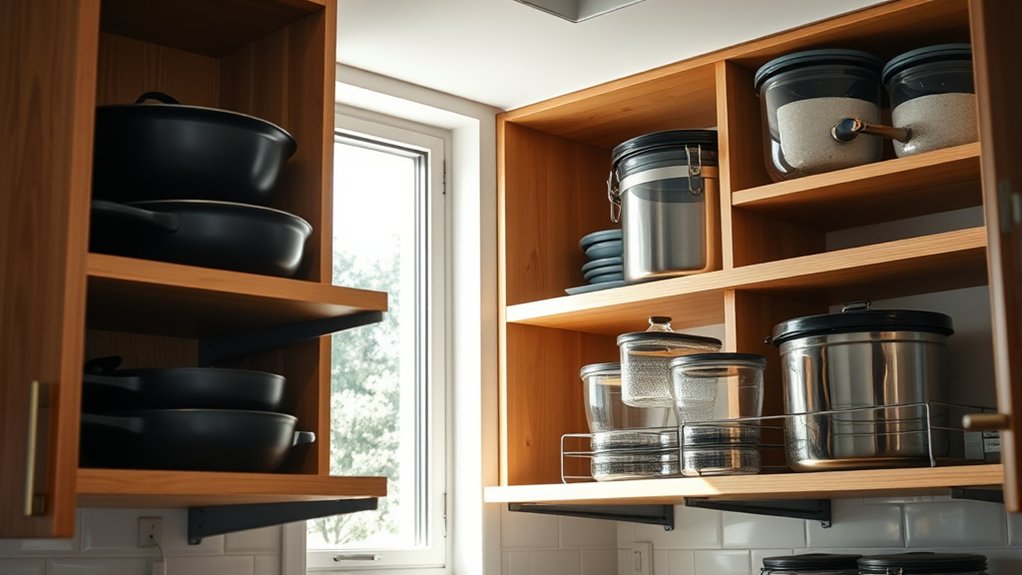
You need to assess your cabinet’s specific weight limits before storing heavy items to prevent structural damage. Use reinforced shelving designed to bear higher loads for added safety and durability.
Finally, distribute the weight evenly across the shelves to maintain balance and avoid stress points.
Assess Cabinet Weight Limits
When evaluating the weight limits of your kitchen cabinets, start by examining the cabinet materials and construction quality, as these factors directly influence load capacity. To accurately assess your cabinets, follow these steps:
- Identify the cabinet materials, such as solid wood, plywood, or particleboard, as denser materials typically support more weight.
- Inspect joinery and fasteners; robust construction enhances overall strength.
- Evaluate weight distribution by considering how items will be arranged on shelves to avoid concentrated loads.
- Measure shelf thickness and depth, since thicker, deeper shelves generally hold more weight without sagging.
Use Reinforced Shelving
Understanding your cabinet’s material and construction sets a foundation for safely storing heavy items, but reinforcing the shelving itself greatly increases load capacity. You should consider installing shelving made from reinforced materials such as plywood with added metal brackets or steel supports.
These shelving options provide superior strength compared to standard particleboard or MDF shelves, which tend to sag under heavy loads. When selecting reinforced shelving, focus on thickness, durability, and the quality of fasteners used for mounting.
Additionally, integrating adjustable metal shelf brackets can enhance stability and allow customization based on the weight of stored items. By upgrading to reinforced shelving options, you markedly reduce the risk of shelf failure, ensuring your kitchen cabinets can safely hold heavier cookware, appliances, or bulk goods without compromising structural integrity.
Distribute Weight Evenly
Although reinforced shelving increases load capacity, distributing weight evenly across cabinet shelves is essential to prevent sagging and structural damage. Proper weight distribution guarantees load balancing that maintains cabinet integrity over time.
To optimize this, follow these steps:
- Place heavier items near the cabinet’s center to minimize stress on edges.
- Avoid clustering heavy objects in one area; spread them uniformly across the shelf surface.
- Use adjustable shelving to reposition supports, aligning them under heavier loads.
- Regularly inspect shelves for signs of strain or deformation and redistribute contents as needed.
When Should You Reinforce Cabinets For Extra Strength?
Since kitchen cabinets often support a variety of heavy items, you should reinforce them whenever you plan to store weighty cookware, appliances, or bulk supplies beyond the manufacturer’s recommended limits. Employing proper cabinet reinforcement methods guarantees structural integrity and prevents sagging or failure.
Integrating effective weight distribution strategies further optimizes load capacity.
| Condition | Recommended Action |
|---|---|
| Storing heavy appliances | Add plywood back panels |
| Bulk supply storage | Install additional shelf supports |
| Anticipated weight overload | Reinforce with metal brackets |
| Irregular weight distribution | Use weight distribution strategies |
| Cabinets older than 10 years | Inspect and reinforce proactively |
What Are The Signs Your Kitchen Cabinets Are Overloaded?
How can you tell if your kitchen cabinets are holding more weight than they should? Identifying early signs of overload is essential to prevent permanent cabinet damage. Look for these indicators:
Recognizing early signs of cabinet overload helps prevent lasting damage and costly repairs.
- Sagging Shelves: Noticeable bowing suggests excessive load beyond design limits.
- Loose or Missing Hardware: Screws and hinges may loosen under stress, reducing structural integrity.
- Cracks or Splits in Wood: Stress fractures signal materials are strained, risking collapse.
- Doors Misalignment: Warped frames cause doors to stick or fail to close properly.
These signs of overload demonstrate that your cabinets are under undue stress. Ignoring them increases the risk of irreversible damage, compromising both safety and functionality. Monitoring these symptoms allows you to address weight issues proactively before costly repairs become necessary.
Tips To Extend Cabinet Lifespan
Recognizing signs of cabinet overload is only the first step; taking proactive measures can greatly prolong your kitchen cabinets’ lifespan. Implement rigorous load management by distributing weight evenly across shelves and avoiding concentrated heavy items.
Use shelf liners and reinforce weak points with metal brackets or additional supports to enhance structural integrity. Regular cabinet maintenance is essential. Inspect hinges, screws, and mounting hardware periodically to detect loosening or wear early.
Clean and dry cabinets to prevent moisture damage, which compromises material strength. Avoid exceeding manufacturer’s recommended weight limits to prevent deformation. By combining consistent load management with thorough cabinet maintenance, you mitigate stress on joints and surfaces, ensuring your cabinets maintain their functionality and appearance over time.
This analytical approach optimizes durability and prevents premature failure.
Frequently Asked Questions
Can Kitchen Cabinets Hold Appliances Like Microwaves or Coffee Makers?
You can place microwaves or coffee makers on kitchen cabinets if you guarantee proper weight distribution and follow appliance safety guidelines. Always verify the cabinet’s material strength and mounting to prevent damage or accidents.
How Does Humidity Affect the Weight Capacity of Cabinets?
Imagine a wooden bridge swelling in rain; humidity effects similarly weaken your cabinets’ material durability, reducing their weight capacity. Moisture causes wood to warp and metal to corrode, so you should limit heavy loads in humid environments.
Are Wall-Mounted Cabinets as Strong as Base Cabinets?
Wall-mounted cabinets aren’t as strong as base cabinets because mounting techniques and cabinet materials limit their load capacity. You’ll need reinforced anchors and high-quality materials to improve strength, but base cabinets inherently support more weight due to floor contact.
What Tools Are Needed to Test Cabinet Strength at Home?
You’ll need a digital scale, a level, and a sturdy weight set to perform weight testing with precise load distribution. These tools symbolize balance and strength, letting you analyze cabinet resilience methodically.
This approach helps guarantee safety in your kitchen setup.
Does Cabinet Age Reduce Its Ability to Hold Weight?
Yes, cabinet age can reduce its ability to hold weight as materials degrade over time. You should assess cabinet materials and guarantee proper load distribution to maintain structural integrity and prevent weakening or failure during use.