How Wide Are Kitchen Cabinets
Kitchen cabinets typically range from 12 to 48 inches wide, making it important to understand how wide kitchen cabinets should be for your space.
Base cabinets usually start at 12 inches and increase in 3-inch increments, with a typical depth of 24 inches.
Wall cabinets tend to be narrower, generally between 12 and 42 inches wide, and are shallower than base cabinets.
Pantry cabinets often come in widths of 12, 18, 24, or 36 inches.
Choosing the right widths ensures a smooth kitchen workflow and fits your space precisely.
Exploring common sizes and installation tips can help you optimize your kitchen layout effectively.
What Are the Standard Widths for Kitchen Base Cabinets?
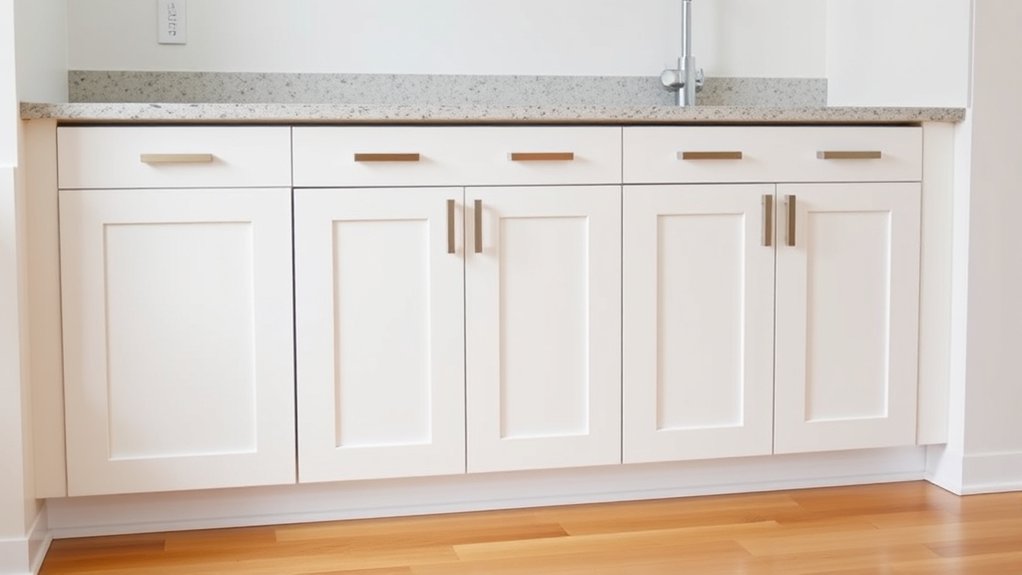
When planning your kitchen layout, understanding the standard widths for base cabinets is essential to guarantee a seamless fit and ideal functionality. Typically, base cabinets come in widths ranging from 9 to 48 inches, increasing in 3-inch increments to accommodate various kitchen sizes and configurations.
The standard cabinet depth is usually 24 inches, allowing sufficient workspace and storage without overcrowding your kitchen. When selecting base cabinets, consider the cabinet depth carefully to maintain ergonomic comfort.
For installation tips, verify you measure your space accurately and account for appliance clearances. Level your cabinets precisely during installation to avoid alignment issues.
Properly securing cabinets to wall studs and adjoining units will enhance stability. Paying attention to these details guarantees your cabinets fit perfectly and function efficiently.
How Wide Are Kitchen Wall Cabinets Compared to Base Cabinets?
When planning your kitchen, you’ll notice that wall cabinets typically come in widths ranging from 9 to 48 inches. These are designed to complement the standard base cabinet widths of 12 to 48 inches.
Unlike base cabinets, wall cabinets are generally shallower and lighter, which affects their width options and installation. Understanding the relationship between these sizes helps you create a balanced, functional kitchen layout.
Standard Wall Cabinet Widths
Standard wall cabinet widths typically range from 12 to 42 inches, offering a narrower profile compared to base cabinets, which usually start at 15 inches and extend wider. When planning your cabinet design, you’ll want to contemplate these standard widths closely to optimize space and maintain balance.
- Wall cabinets usually come in 3-inch increments, allowing precise fitting above counters or appliances.
- Their narrower widths make them lighter and easier to install, reducing installation complexity.
- You can mix and match cabinet sizes to suit your layout while ensuring cohesive aesthetics.
- Always factor in installation considerations like wall studs and mounting height for safe, secure attachment.
Understanding these dimensions helps you select the right cabinets, ensuring functional, stylish, and efficient kitchen storage.
Typical Base Cabinet Sizes
While wall cabinets often prioritize a slimmer profile for ease of installation and visual balance, base cabinets typically offer greater widths to maximize storage and countertop support. You’ll find that standard base cabinet widths range from 12 to 48 inches, increasing in 3-inch increments.
This variety accommodates different base cabinet styles, including drawer bases, sink bases, and corner units. Depth options for base cabinets usually measure 24 inches, deeper than wall cabinets, allowing for ample workspace and storage capacity.
When selecting base cabinet sizes, consider how their width and depth complement your kitchen layout and workflow. The broader dimensions of base cabinets not only support countertops but also provide essential storage, making them a fundamental element in any kitchen design.
Width Comparison Overview
Understanding the width differences between kitchen wall cabinets and base cabinets is essential for creating a balanced and functional kitchen space. Wall cabinets tend to be narrower and shallower than base cabinets due to their placement and usage.
- Base cabinets typically range from 24 to 36 inches wide, designed for countertop support and storage.
- Wall cabinets commonly measure between 12 to 36 inches wide but are less deep, generally 12 inches compared to base cabinets’ 24 inches.
- The reduced cabinet depth of wall cabinets accommodates better accessibility and prevents obstruction.
- Both cabinet types use durable cabinet materials like plywood or MDF, but wall cabinets prioritize lighter materials to ease mounting.
Common Widths for Kitchen Pantry and Specialty Cabinets
When selecting pantry and specialty cabinets, you’ll find standard widths typically range from 12 to 36 inches to fit various storage needs.
Specialty cabinets, like corner or pull-out units, often come in custom sizes to maximize efficiency in your kitchen layout. Understanding these size options helps you choose the right cabinets for both function and space optimization.
Standard Pantry Cabinet Widths
Standard pantry cabinets typically come in widths ranging from 12 to 36 inches, allowing you to select the perfect size based on your kitchen’s layout and storage needs. Choosing the right width enhances pantry storage efficiency and cabinet organization.
Here are common standard pantry cabinet widths:
- 12 inches Ideal for narrow spaces and supplementary storage, perfect for spices or baking sheets.
- 18 inches Offers moderate storage, fitting well in compact kitchens.
- 24 inches A versatile size providing ample space for canned goods and small appliances.
- 36 inches The widest standard option, maximizing storage capacity for bulkier items and extensive pantry needs.
Selecting the appropriate width guarantees your pantry cabinet supports excellent organization and complements your kitchen’s overall functionality.
Specialty Cabinet Size Options
Beyond the typical pantry cabinet widths, specialty cabinets offer tailored solutions that fit unique kitchen layouts and specific storage needs. You’ll find specialty cabinet styles ranging from narrow spice racks at 6 inches wide to wider pull-out trash bins measuring up to 24 inches.
Custom cabinet options allow you to maximize every inch of space, especially in awkward corners or underutilized areas. For instance, angled corner cabinets often come in widths of 36 to 42 inches, while appliance garages typically range between 18 and 30 inches.
Measuring Your Space to Pick the Right Cabinet Widths
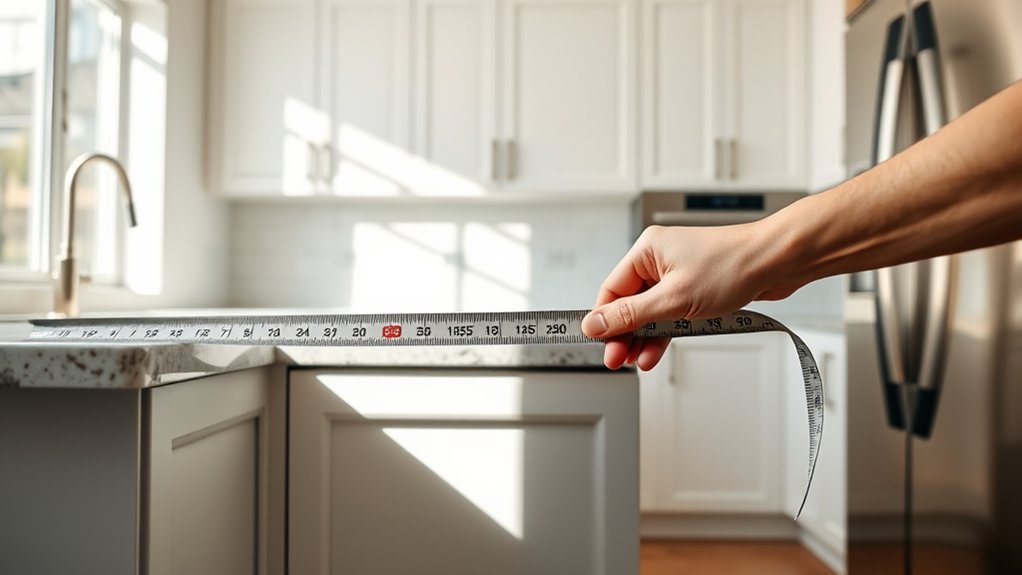
Measuring your kitchen space accurately is crucial to selecting cabinet widths that maximize functionality and aesthetics. Start by employing precise cabinet measurement techniques to guarantee every inch counts.
Follow these steps for ideal cabinet spacing:
- Measure the total wall length available for cabinets, including windows and doors.
- Note plumbing, electrical outlets, and appliances that impact cabinet placement.
- Divide the space into standard cabinet widths (typically 12″, 15″, 18″, 24″, 30″, or 36″) while allowing clearance for doors and drawers to open fully.
- Account for filler strips to accommodate uneven walls and maintain consistent spacing.
These steps help you pick cabinet widths that fit perfectly and support efficient kitchen flow, avoiding costly mistakes during installation.
Why Cabinet Width Matters for Kitchen Layout and Workflow
When you choose the right cabinet widths, you directly influence how smoothly your kitchen functions. Properly sized cabinets optimize kitchen efficiency by guaranteeing easy access to storage without overcrowding your workspace.
Narrow cabinets can create awkward gaps or limit storage, while overly wide ones may obstruct movement or reduce countertop space. Balancing cabinet widths maintains clear pathways, facilitating seamless workflow between cooking, cleaning, and prep zones.
Additionally, consistent and well-proportioned cabinet widths enhance cabinet aesthetics, contributing to a cohesive, visually appealing kitchen design. Thoughtful width selection guarantees your cabinets integrate harmoniously with appliances and fixtures, supporting both form and function.
Ultimately, paying close attention to cabinet width elevates your kitchen’s usability and style, making everyday tasks more comfortable and efficient.
Tips for Combining Different Cabinet Widths Smoothly
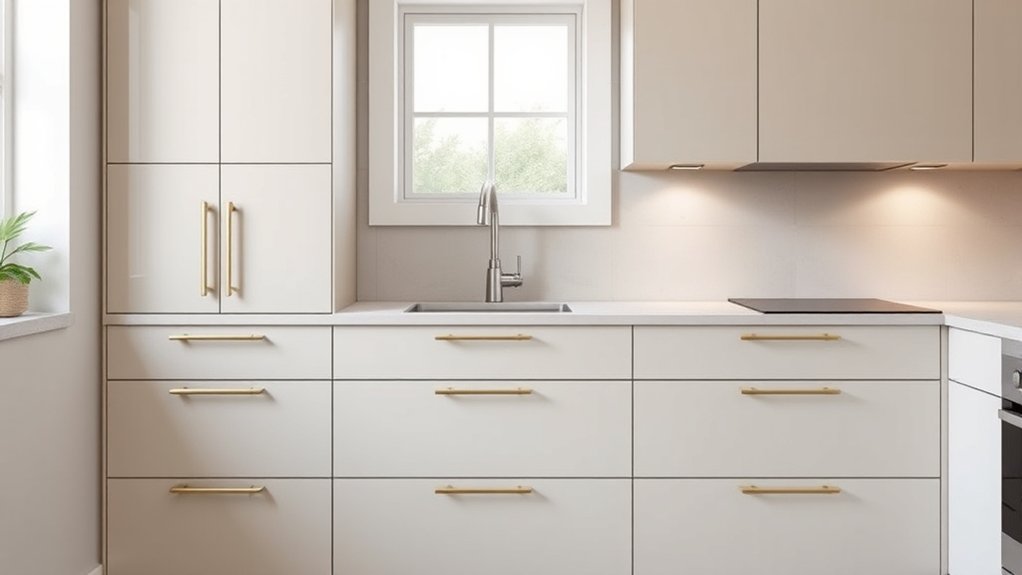
Although combining different cabinet widths might seem challenging, you can create a balanced and functional layout by carefully planning the arrangement. Achieving width harmony is essential in your cabinet design to maintain visual appeal and usability.
Combining varied cabinet widths can be seamless with thoughtful planning for balance and visual appeal.
- Measure Precisely: Start by measuring your space accurately to avoid awkward gaps or overlaps.
- Mix Standard Sizes: Use common cabinet widths like 12, 15, 18, and 24 inches to simplify integration.
- Align Heights and Depths: Keep cabinet heights and depths consistent to enhance cohesion and ease of use.
- Balance Visually: Distribute wider and narrower cabinets evenly to maintain symmetry and flow.
Following these steps guarantees your kitchen feels intentional and well-designed, even with varied cabinet widths.
Where to Find Custom Kitchen Cabinets When Standards Don’t Fit
If standard kitchen cabinet sizes don’t align with your space or design needs, turning to custom cabinets guarantees a perfect fit and personalized style. You can find custom designs through specialized cabinet makers who work directly with you to create units tailored to your kitchen’s unique dimensions.
Local woodworking shops often excel in crafting bespoke cabinets, allowing precise adjustments in width, depth, and height. Additionally, reputable online custom cabinet suppliers provide design tools to help you specify exact measurements and finishes.
When choosing custom cabinets, verify the manufacturer offers durable materials and quality craftsmanship to match your aesthetic and functional requirements. By selecting custom designs, you’ll optimize your kitchen layout while achieving a seamless look that standard options simply can’t provide.
Frequently Asked Questions
What Materials Are Commonly Used for Kitchen Cabinet Construction?
You’ll find kitchen cabinets commonly made from plywood, MDF, and solid wood, chosen for cabinet durability.
Construction techniques like dovetail joints and reinforced corners guarantee strength, making your cabinets last longer while maintaining a polished, professional look.
How Do Cabinet Door Styles Affect Overall Kitchen Design?
You’ll find cabinet door styles directly influence your kitchen’s design impact by setting the tone. Modern flat panels create sleekness, while raised or shaker styles add texture and depth, shaping your space’s overall aesthetic and mood.
What Is the Average Cost of Kitchen Cabinets per Linear Foot?
You’ll find the average cost of kitchen cabinets per linear foot ranges from $100 to $500, depending on custom cabinet options and budget friendly materials. Choosing wisely helps you balance style, quality, and affordability effectively.
How Often Should Kitchen Cabinets Be Refinished or Replaced?
You should consider refinishing options every 5-10 years to maintain appearance and function. Replacement timing depends on damage extent or style updates, typically every 15-20 years, ensuring your kitchen stays modern and efficient.
Are Soft-Close Hinges Standard on Modern Kitchen Cabinets?
About 70% of new kitchens now feature soft-close hinges due to their soft close benefits, like noise reduction and durability.
You’ll find various hinge types, but soft-close is rapidly becoming the standard for modern cabinets.