How to Clean White Kitchen Cabinets
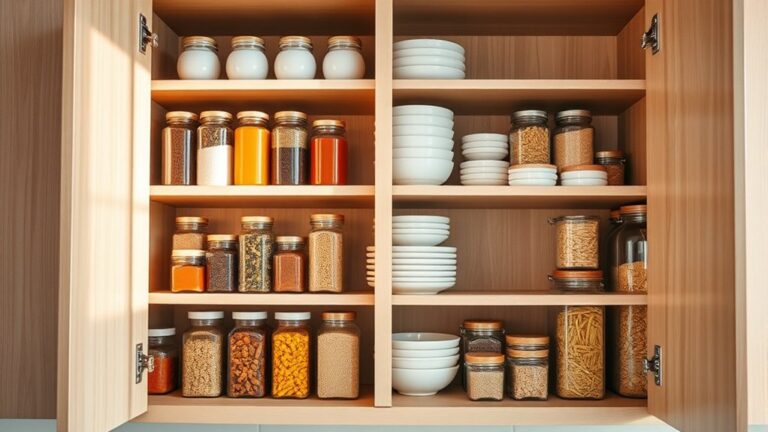
To clean your white kitchen cabinets, start by emptying them and inspecting for stains or damage.
Using the right cleaning method is essential to keep your cabinets looking fresh and bright.
Use soft microfiber cloths with a mild detergent or vinegar solution, avoiding harsh chemicals and abrasive tools.
Gently scrub grease or stains with warm water, and try baking soda paste for tough spots.
Always rinse and dry thoroughly to protect finishes.
Tailor your method based on cabinet material, and keep up regular cleaning to maintain brightness.
For deeper care and troubleshooting, there’s more to explore.
Supplies You’ll Need to Clean Your White Kitchen Cabinets
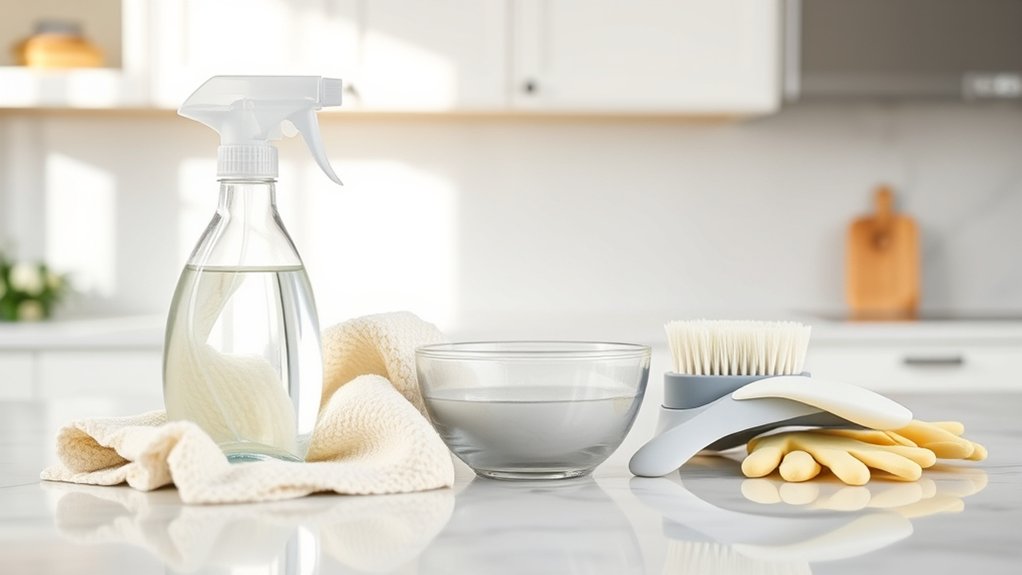
To clean your white kitchen cabinets effectively, you’ll need a few essential supplies. Start with soft cleaning tools like microfiber cloths and non-abrasive sponges to avoid scratching delicate cabinet finishes.
Choose a mild detergent or a gentle all-purpose cleaner that’s safe for various finishes, whether painted, lacquered, or wood veneer. Have a bucket of warm water ready to rinse your cloths frequently.
Avoid harsh chemicals or abrasive pads, as they can damage the finish and dull the cabinets’ appearance. Additionally, keep a toothbrush or small brush handy for tight corners and grooves.
Using the right cleaning tools and products tailored to your cabinet finishes guarantees a thorough clean without compromising their look or durability. Gather these supplies before you start for an efficient process.
How to Prepare Your Kitchen Cabinets for Cleaning
Start by removing all items from your cabinets to give yourself clear access to every surface. Next, gather the cleaning supplies you’ll need, such as a gentle cleaner, soft cloths, and a bucket of warm water.
This preparation guarantees you can clean thoroughly and efficiently without interruptions.
Remove Cabinet Contents
Clear out all items from your kitchen cabinets before you begin cleaning. This step is essential for organizing contents efficiently and evaluating damage to both the cabinets and stored items. Start by removing everything carefully, placing items on a clean surface nearby.
As you clear each cabinet, inspect shelves and walls for stains, scratches, or moisture damage. This helps you target problem areas during cleaning and decide if repairs are needed.
To streamline the process, consider sorting items into these groups:
- Pantry staples like canned goods and spices
- Cookware such as pots, pans, and baking dishes
- Dishware including plates, bowls, and glasses
- Miscellaneous items like kitchen gadgets and containers
This methodical removal prepares your cabinets thoroughly for a successful cleaning session.
Gather Cleaning Supplies
Gathering the right cleaning supplies sets the foundation for an effective cabinet refresh. Start with basic cleaning tools: a soft microfiber cloth, a gentle scrub brush, and a bucket for your cleaning solution.
Choose a mild detergent or an eco-friendly option like vinegar mixed with water to protect your cabinet’s finish and the environment. Avoid harsh chemicals that can damage white surfaces.
Have a spray bottle handy for easy application and a dry cloth to wipe away excess moisture. If your cabinets have stubborn stains, consider a baking soda paste as a natural alternative.
Preparing these supplies beforehand guarantees you work efficiently and protect your cabinets throughout the cleaning process. Having everything ready lets you focus on restoring your white kitchen cabinets to their pristine condition.
How to Remove Grease and Stains From White Kitchen Cabinets
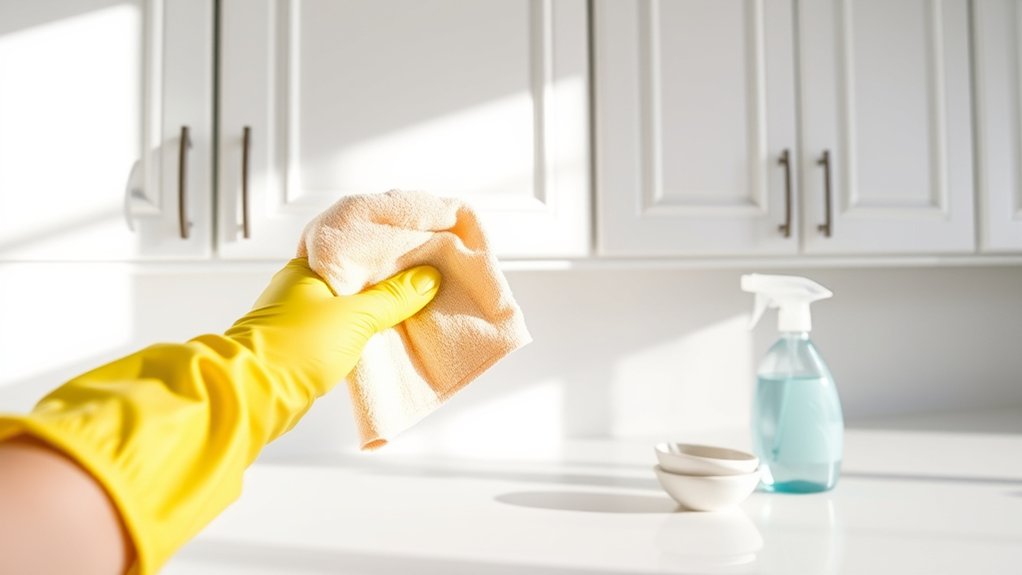
To remove grease and stains from your white kitchen cabinets, start with effective cleaning solutions like a mix of warm water and mild detergent or a vinegar-based cleaner. Use gentle scrubbing techniques with a soft cloth or sponge to avoid damaging the finish while lifting grime.
Finally, prevent future build-up by regularly wiping down cabinets and addressing spills promptly.
Effective Cleaning Solutions
Tackle grease and stains on your white kitchen cabinets by using targeted cleaning solutions designed to break down buildup without damaging the surface. Opt for natural cleaners or DIY solutions to keep your cabinets safe and eco-friendly.
For instance, a mix of white vinegar and water cuts through grease effectively. Baking soda paste targets stubborn stains gently but thoroughly. Castile soap diluted in warm water offers a mild yet powerful cleaning option.
- White vinegar and water (1:1 ratio) spray for daily grease removal
- Baking soda paste for tough, set-in stains
- Castile soap solution for gentle, all-around cleaning
- Lemon juice mixed with water to brighten and deodorize
These methods guarantee your white cabinets stay spotless without harsh chemicals.
Gentle Scrubbing Techniques
Two simple tools, a soft sponge and a microfiber cloth, can make all the difference when scrubbing your white kitchen cabinets. Start by dampening the sponge and applying a small amount of your chosen cleaner. Use gentle abrasives, like baking soda mixed with water, to tackle stubborn grease or stains without damaging the finish.
Scrub in circular motions, focusing on problem areas but avoiding excessive pressure. Once you’ve loosened the grime, wipe the surface with soft cloths to remove residue and moisture. For delicate spots, switch to just a microfiber cloth to prevent scratches.
Always rinse your tools frequently to avoid spreading dirt. This methodical approach guarantees your cabinets stay clean and bright while preserving their smooth surface and paint integrity.
Preventing Future Grease Build-Up
Although grease and stains can quickly dull your white kitchen cabinets, you can prevent buildup by adopting consistent cleaning habits and using protective measures. Focus on grease prevention through regular maintenance to keep your cabinets spotless. Wipe spills immediately and clean cabinets weekly to avoid stubborn stains.
Use a mild degreaser or an all-purpose cleaner suitable for your cabinet finish. Consider adding protective barriers near cooking areas.
Install a backsplash to shield cabinets from splatters. Use range hoods to ventilate and reduce grease particles. Wipe cabinet surfaces with a microfiber cloth after cooking. Avoid harsh chemicals that can damage cabinet surfaces.
Cleaning Tips for Different White Kitchen Cabinet Materials
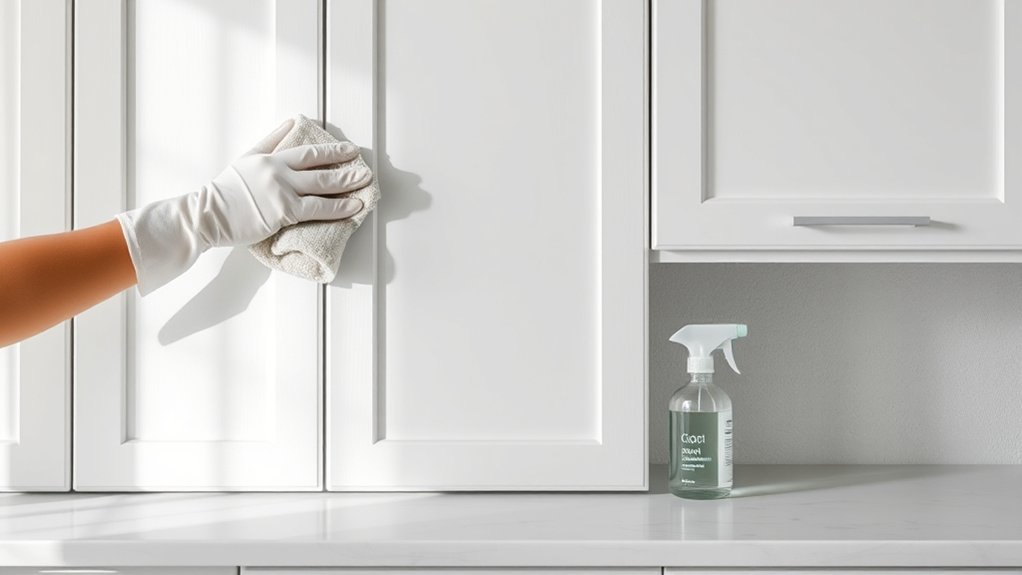
Different materials require specific cleaning approaches to keep your white kitchen cabinets looking pristine. For wood cabinetry care, use a mild soap mixed with water and a soft cloth to avoid damaging the finish. Wipe gently along the grain, then dry immediately to prevent moisture absorption.
Avoid harsh chemicals or abrasive sponges, which can strip the wood’s protective layer. For laminate surface cleaning, a mixture of warm water and dish soap works well. Apply with a soft cloth, scrubbing lightly to remove stains without scratching.
Rinse with a damp cloth and dry thoroughly. Avoid excess water on both materials to prevent warping or bubbling. Tailoring your cleaning method to the cabinet material extends its life and maintains its crisp white appearance.
How to Maintain the Brightness of Your White Kitchen Cabinets
To keep your white kitchen cabinets looking bright and fresh, you need to establish a regular cleaning routine that prevents grime and discoloration from building up. Effective cabinet maintenance focuses on consistent care and timely attention to spills or stains.
For long term care, follow these best practices:
- Wipe cabinets weekly with a damp microfiber cloth and mild detergent to remove dust and grease.
- Avoid harsh chemicals or abrasive scrubbing tools that can dull the finish.
- Immediately clean up spills to prevent staining or yellowing.
- Use cabinet liners inside to protect surfaces from dirt and moisture.
Troubleshooting Common Cleaning Problems on White Kitchen Cabinets
When you notice stubborn stains, discoloration, or residue on your white kitchen cabinets, addressing these common cleaning issues promptly can prevent permanent damage. For greasy spots, mix equal parts vinegar and water; apply with a soft cloth and wipe thoroughly.
To tackle discoloration, try a baking soda paste. Apply gently, then rinse well. Avoid harsh chemicals that may strip paint or finish. For sticky residue, use a mild dish soap solution and a non-abrasive sponge.
Always test cleaning hacks on a small, hidden area first. If stains persist, repeat treatments carefully rather than scrubbing aggressively, which can damage surfaces. Regular maintenance and prompt action on stains guarantee your white cabinets stay bright and fresh without costly repairs or refinishing.
Frequently Asked Questions
How Often Should I Deep Clean My White Kitchen Cabinets?
You should deep clean your white kitchen cabinets every three to six months. Adjust cleaning frequency based on use and kitchen activity.
Regular maintenance tips include wiping spills promptly and using gentle cleaners to keep cabinets pristine.
Can I Use Bleach on White Kitchen Cabinets?
You shouldn’t use bleach on white kitchen cabinets regularly; it can damage finishes. Instead, try bleach alternatives like vinegar or baking soda.
Adjust cleaning frequency to weekly or biweekly to maintain brightness without harsh chemicals.
What Causes Yellowing on White Kitchen Cabinets?
Yellowing causes include sunlight exposure, heat, grease, and smoke buildup. To prevent it, you should clean cabinets regularly, avoid harsh chemicals, use ventilation, and consider UV-protective finishes to keep your white kitchen cabinets looking fresh and bright.
Are There Eco-Friendly Cleaners Safe for White Cabinets?
Yes, you can use natural alternatives like vinegar and baking soda as eco-friendly cleaners. DIY solutions mix these with water to safely clean white cabinets without harsh chemicals, preserving their finish while protecting your health and the environment.
How Do I Protect Cabinets From Humidity Damage?
You might think humidity control alone prevents damage, but it’s not enough. You should also apply proper cabinet sealing to block moisture.
Use dehumidifiers and guarantee good ventilation to keep your cabinets dry and protected.