Where to Place Knobs on Kitchen Cabinets
Place knobs on kitchen cabinets 2 to 3 inches from the corners of your cabinet doors and drawer edges for a balanced, ergonomic grip. This placement ensures ease of use and enhances the overall look of your kitchen.
For upper cabinets, align knobs near the bottom edge; for lower cabinets, position them near the top. Center drawer knobs vertically while spacing them consistently horizontally to maintain symmetry.
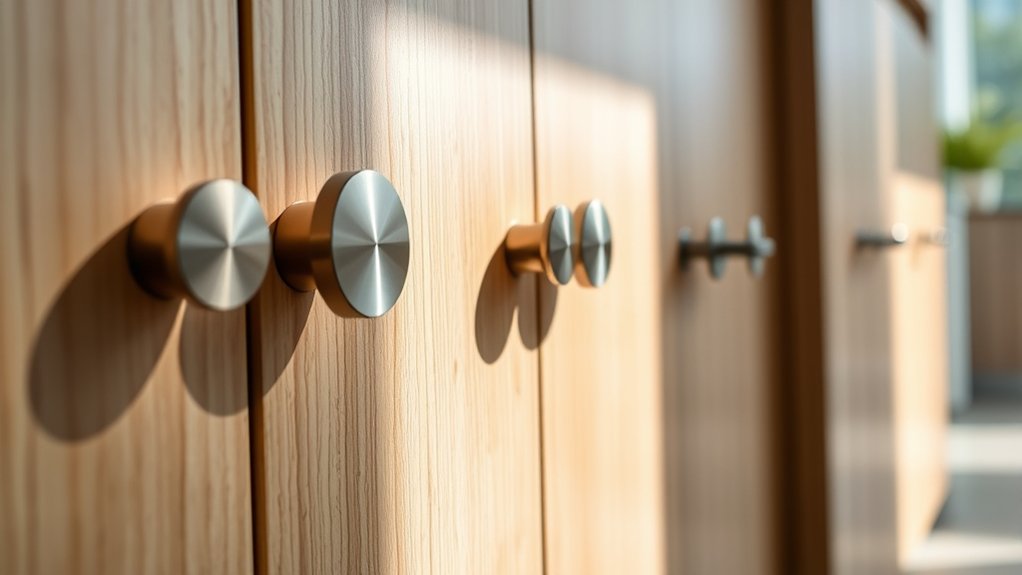
Match knob placement to your cabinet style—modern designs favor top corners, while traditional ones benefit from centered knobs.
Thoughtful positioning boosts both aesthetics and function, and exploring further can transform your entire kitchen’s look and feel.
Why Proper Knob Placement Matters in Your Kitchen
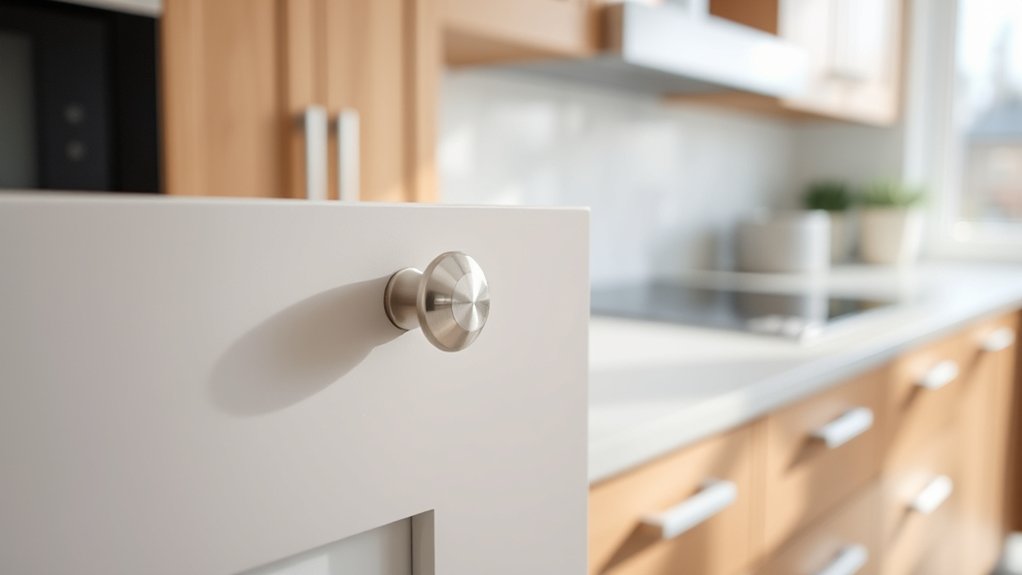
Proper knob placement transforms your kitchen’s look and functionality, making daily tasks smoother and more enjoyable. When you position knobs thoughtfully, you enhance both the aesthetic appeal and functional design of your cabinets.
A well-placed knob draws the eye, complementing your kitchen’s style while ensuring easy access. You’ll find that reaching for a drawer or door becomes intuitive, reducing awkward movements and improving efficiency.
Furthermore, precise placement helps maintain cabinet integrity by minimizing wear from repeated use. By considering height, edge distance, and symmetry, you create a balanced visual flow that elevates your kitchen’s overall design.
In short, strategic knob placement isn’t just about looks; it’s a practical choice that elevates your everyday kitchen experience.
How Cabinet Style Influences Knob Placement
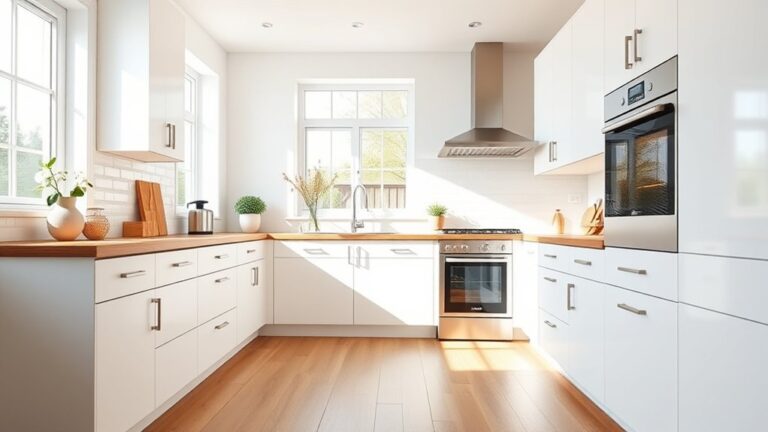
The style of your cabinets plays a significant role in determining where you place knobs, as different designs call for distinct positioning to maintain harmony and usability. With modern cabinet styles, you’ll often find clean lines and minimal detailing, so placing knobs at the top corner of drawers or near the edge of cabinet doors keeps the look sleek and functional.
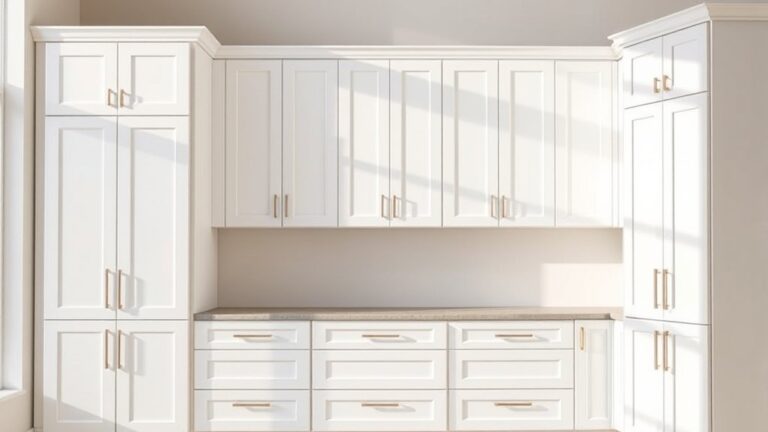
In contrast, traditional cabinet designs feature raised panels and more ornate detailing, guiding you to position knobs closer to the center of the frame or the panel for balanced aesthetics. By aligning knob placement with your cabinet’s style, you guarantee both ease of use and visual coherence, enhancing your kitchen’s overall appeal without disrupting its design integrity.
Best Knob Placement for Cabinet Doors
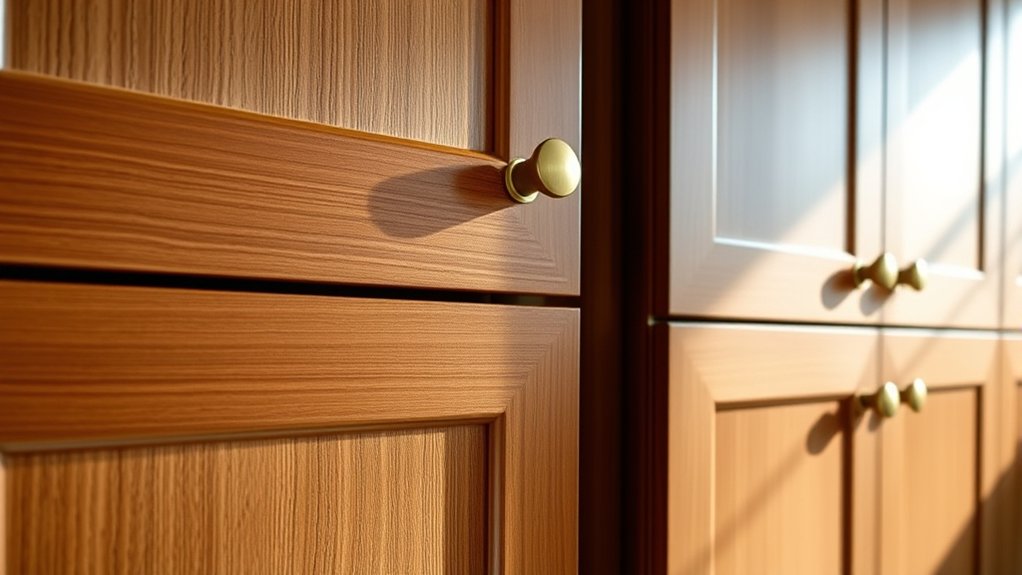
When choosing where to place knobs on cabinet doors, you’ll want to contemplate both functionality and visual balance. Typically, placing knobs 2 to 3 inches from the corner edge of the door, aligned with the bottom edge for upper cabinets and the top edge for lower cabinets, guarantees easy reach and consistent knob height.
This placement enhances design harmony by maintaining symmetry across your cabinetry. Be mindful of the cabinet’s proportions and style. Adjust knob height slightly if your doors are taller or have inset panels to keep everything visually cohesive.
Consistent spacing on all doors creates a polished and intentional look, while practical placement means you won’t struggle to open your cabinets. By balancing these factors, you’ll achieve a kitchen that’s both beautiful and functional.
Ideal Knob Placement on Kitchen Drawers
Although drawer knobs might seem straightforward, their placement greatly influences both ease of use and overall kitchen aesthetics. When placing knobs on kitchen drawers, consider drawer dimensions and ergonomic height to guarantee comfort and style. Here’s how to nail it:
- Position knobs centered vertically on the drawer’s face for balanced visual appeal.
- Align knobs horizontally about 2 to 3 inches from the drawer edge, matching drawer dimensions to avoid awkward reach.
- Confirm knobs sit at ergonomic height for effortless grasp, especially on lower drawers.
- Maintain consistent knob placement across drawers to create a harmonious and intentional design.
Positioning Knobs on Upper vs. Lower Cabinets
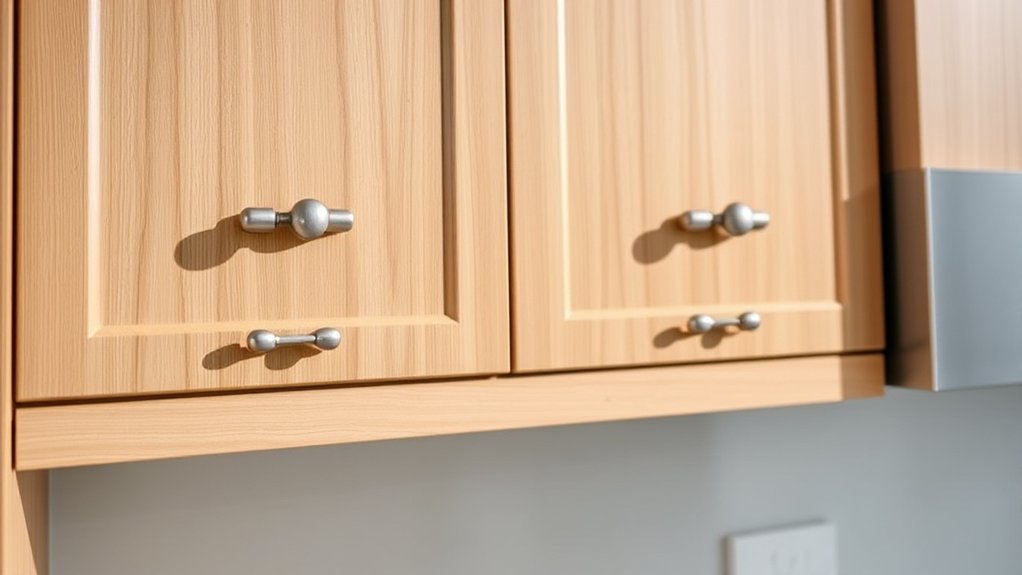
When placing knobs on upper cabinets, you’ll want them near the bottom corner for easy reach and a balanced look. For lower cabinets, position the knobs near the top corner to maintain consistency and functionality.
This subtle shift creates a harmonious flow while keeping each cabinet accessible and visually appealing.
Upper Cabinet Knob Placement
Upper cabinet knobs typically sit closer to the bottom corner of the door, offering both easy reach and a balanced look. Considering the upper cabinet height, this placement guarantees you won’t stretch uncomfortably. Plus, it maintains aesthetic balance by aligning knobs consistently across your kitchen.
When positioning knobs on upper cabinets, keep these points in mind:
- Measure the upper cabinet height to find the ideal knob spot.
- Place knobs about 2-3 inches from the bottom corner for ergonomics.
- Align knobs horizontally across all upper cabinets for visual harmony.
- Consider cabinet style, modern or traditional, to complement knob placement.
Lower Cabinet Knob Positioning
Placing knobs on lower cabinets requires a different approach than upper cabinets to guarantee comfort and style. You need to take into account ergonomic design carefully. Position knobs where your hand naturally rests to enhance user accessibility.
Generally, placing knobs near the top corner of lower cabinets maintains functionality focus and style cohesion with upper cabinets. Pay attention to cabinet height; lower cabinets often require knobs slightly lower or centered vertically to balance reach and visual balance.
Choose hardware materials that complement your kitchen’s overall aesthetic appeal while withstanding frequent use. Precise installation techniques make certain knobs align perfectly across cabinets, elevating both form and function.
Making Knobs Comfortable and Easy to Reach
Although selecting stylish knobs is important, ensuring they’re comfortable and easy to reach makes all the difference in daily kitchen use. Prioritize ergonomic design to reduce strain and enhance user accessibility. Here’s how you can make knobs both functional and pleasing:
Choosing knobs that combine style with comfort and accessibility transforms everyday kitchen use.
- Place knobs where your hand naturally falls, avoiding awkward stretches.
- Choose sizes and shapes that fit comfortably in your grip.
- Position knobs at consistent heights for a harmonious, intuitive feel.
- Consider the cabinet’s usage frequency: easy access for daily-use drawers, slightly higher for less-used ones.
Measuring and Marking for Perfect Knob Placement
To achieve flawless knob placement, start by understanding the standard measurements that suit your cabinet style. Use a reliable measuring tape and pencil to mark exact spots, ensuring symmetry across all doors and drawers.
Taking the time to measure carefully guarantees both a polished look and functional ease.
Standard Knob Placement
Choosing the right spot for your kitchen cabinet knobs involves careful measuring and marking to confirm both functionality and visual harmony. Standard knob placement guarantees your knobs feel natural to use and look balanced across your cabinetry. Here’s a simple guide to nailing that perfect spot:
- Set your knob height about 2.5 to 3 inches from the bottom corner of upper doors or top corner of lower doors for comfortable reach.
- Maintain consistent knob spacing, usually 2 to 3 inches from drawer edges, to create uniformity.
- Align knobs vertically on drawers and doors for a polished, cohesive look.
- Mark each spot precisely before drilling to avoid misalignment and confirm symmetry.
Accurate Measuring Techniques
Precise measuring and marking build on the foundation of standard knob placement, ensuring each knob sits exactly where it should for both comfort and style. Start by gathering quality measuring tools like a tape measure, ruler, and a marking pencil to guarantee accuracy.
Follow spacing guidelines meticulously, typically 2.5 to 3 inches from the edge for drawers and 2 to 3 inches down from the top for cabinet doors. Use a square to maintain consistent alignment horizontally and vertically across all knobs.
Mark each spot lightly but clearly, double-checking measurements before drilling. This attention to detail prevents uneven placement and enhances your kitchen’s cohesive look. By trusting precise measuring techniques, you create a flawless, professional finish that perfectly complements your cabinetry’s design.
Creative Knob Placement Ideas to Elevate Your Kitchen
How can you transform the look of your kitchen cabinets with just a simple adjustment? By experimenting with creative knob placement, you can enhance both function and style. Consider varying the knob height slightly from traditional spots to add unexpected charm while maintaining aesthetic balance.
Here are four ideas to elevate your kitchen:
- Place knobs at an unconventional angle for a modern twist.
- Use mixed materials or finishes to create visual interest.
- Install knobs asymmetrically on cabinets to break monotony.
- Position knobs closer to the cabinet’s center for a sleek, minimalist vibe.
Each option adjusts knob height thoughtfully, ensuring your kitchen feels both unique and harmonious. With these tweaks, you’ll create a space that reflects your personal style with subtle sophistication.
Tips for Consistent Knob Placement Across Cabinets
Although experimenting with creative knob placements can add flair, maintaining consistency across your kitchen cabinets guarantees a polished, cohesive look. Start by measuring each cabinet door and drawer to determine a standard knob position.
Confirm symmetrical alignment by placing knobs at the same height and distance from edges. Using a template or jig helps keep placement uniform and reduces errors.
Focus on achieving visual balance, so knobs don’t appear crowded or awkwardly spaced. For tall cabinets, position knobs closer to the lower or upper corners to complement the cabinet’s proportions.
Consistent placement not only enhances aesthetics but also improves functionality, making your kitchen feel thoughtfully designed and harmonious. With careful planning, your cabinet hardware will elevate the entire space with subtle elegance.
Common Mistakes to Avoid When Installing Cabinet Knobs
One of the biggest mistakes you can make when installing cabinet knobs is inconsistent placement that disrupts the kitchen’s visual harmony. Paying close attention to knob alignment and avoiding height variation guarantees a polished, cohesive look.
Here are common pitfalls to avoid:
- Ignoring a consistent height. Varying heights make your cabinets look mismatched and careless.
- Misaligning knobs on adjacent drawers or doors. This breaks the flow and feels unbalanced.
- Placing knobs too close to edges or corners. This can feel awkward and limit grip comfort.
- Using different knob styles or sizes within the same kitchen. Uniformity is key for aesthetic elegance.
Frequently Asked Questions
What Tools Do I Need for Installing Cabinet Knobs?
You’ll want a trusty drill, a measuring tape for perfect alignment, a pencil to mark spots, and a screwdriver matching your knob styles. These installing techniques guarantee your knobs complement your kitchen’s charm beautifully and practically.
How Do I Remove Old Knobs Without Damaging Cabinets?
Use knob removal techniques like gently unscrewing knobs with a screwdriver, supporting the back to avoid strain. Protect the cabinet surface with painter’s tape around the knob area to prevent scratches, ensuring a pristine, aesthetic finish.
Can I Use Knobs on Glass Cabinet Doors?
You can definitely use knobs on glass cabinet doors, but think of them as delicate brushstrokes on a canvas.
Match glass cabinet styles carefully and follow knob placement tips to keep elegance balanced with practicality.
What Materials Are Best for Durable Kitchen Knobs?
You’ll love ceramic knobs for decorative styles, while metal finishes offer durability and sleekness. Wooden handles provide warmth and sturdiness.
Choose based on your kitchen’s aesthetic and daily use to balance beauty with lasting practicality.
How Do I Clean and Maintain Cabinet Knobs?
Don’t summon a cleaning army; just wipe knobs with a soft cloth and mild soap. Use gentle cleaning techniques and maintenance tips like avoiding harsh chemicals to keep finishes gleaming, ensuring your kitchen’s subtle elegance stays flawless.