How to Hang Kitchen Cabinets
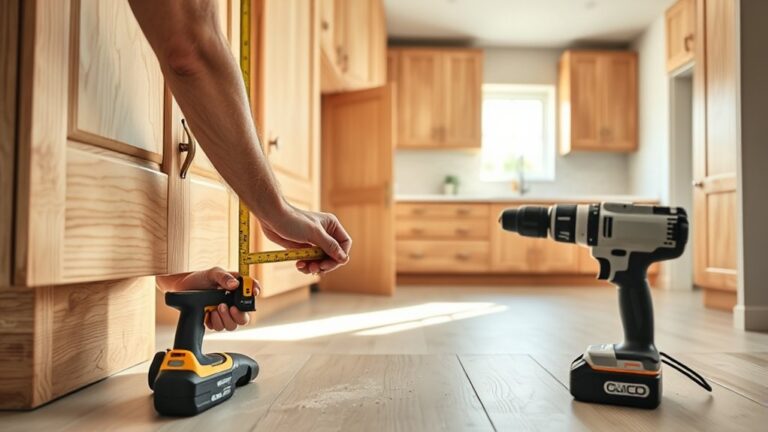
To hang kitchen cabinets, first gather essential tools like a drill, level, stud finder, and screws rated for your wall type.
Measuring and marking your wall carefully is crucial; create horizontal and vertical reference lines to guarantee accurate placement.
Secure each cabinet to wall studs by drilling pilot holes through the hanging rail. Check alignment with a level as you tighten screws to ensure everything is straight.
Clamp adjoining cabinets flush, then fasten them together before installing doors and hardware.
Following these steps will help you achieve a professional, seamless finish.
Gather Essential Tools and Materials
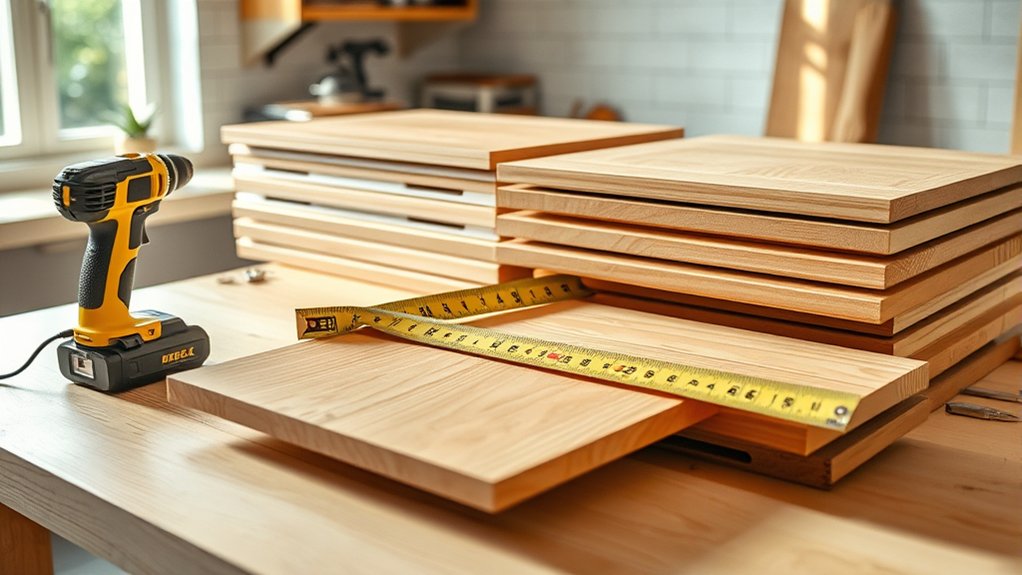
Before you begin hanging your kitchen cabinets, gather all the essential tools and materials to guarantee a smooth installation. Start by selecting the cabinet styles that suit your kitchen’s design and function.
Next, prepare your wall by making sure it’s clean, dry, and free of obstructions, which is vital for secure mounting. Essential tools include a drill, level, stud finder, measuring tape, and screwdrivers.
Ensure your wall is clean, dry, and clear before mounting using essential tools like a drill and stud finder.
Don’t forget hardware options like screws, mounting brackets, and cabinet screws tailored to your cabinet type. Keep installation tips in mind, such as using clamps to hold cabinets together during alignment.
Having everything ready prevents interruptions and promotes precise wall preparation and cabinet mounting, helping you achieve a professional-quality finish efficiently.
Measure and Mark Your Wall for Accurate Placement
Start by measuring the height, width, and spacing on your wall where each cabinet will hang to guarantee precise placement. Use reliable measuring techniques, such as a tape measure and a level, to ascertain accuracy.
Begin with a horizontal reference line at the desired cabinet height, marking it clearly on your wall. Then, measure and mark vertical lines to outline each cabinet’s width and the spacing between them.
Use a pencil to create light but visible wall markings; these will serve as guides when positioning your cabinets. Double-check all measurements to avoid errors that could affect alignment. Accurate measuring techniques and clear wall markings set a solid foundation, making the next steps smoother and guaranteeing your kitchen cabinets fit perfectly where intended.
Level and Secure Hanging Kitchen Cabinets to Wall Studs
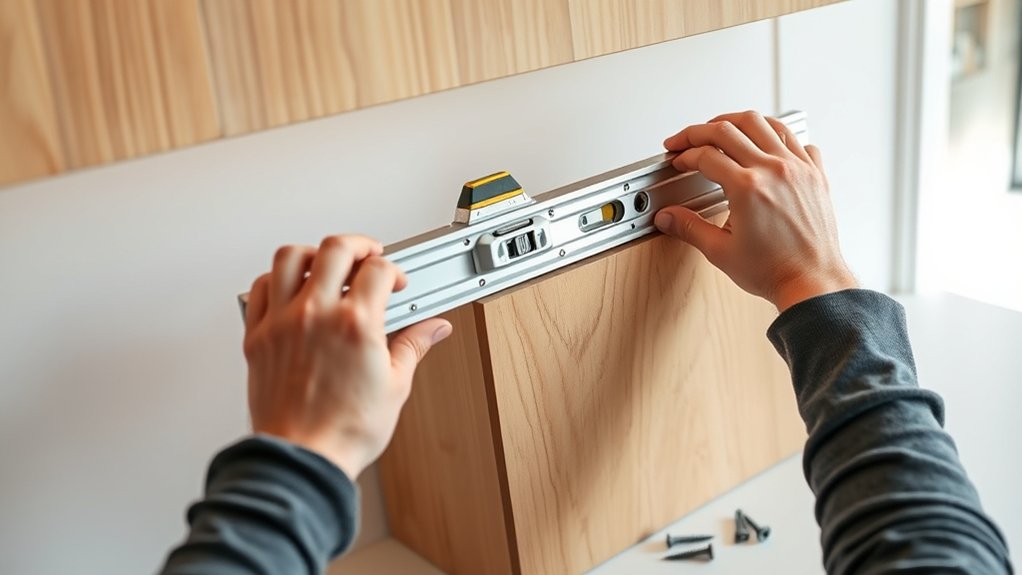
Align your cabinets carefully by using a level to confirm they’re perfectly horizontal before securing them to the wall studs. This guarantees even weight distribution and prevents cabinet doors from misaligning over time. Follow these steps to level and secure your cabinets effectively:
- Double-check the wall materials to select appropriate screws or anchors that can support the cabinet weight.
- Drill pilot holes through the cabinet’s hanging rail into the wall studs to avoid splitting the wood.
- Use long, sturdy screws rated for the cabinet weight and wall materials for a secure hold.
- Tighten screws gradually, checking with the level after each adjustment to maintain perfect alignment.
Properly securing cabinets to wall studs assures durability and safety in your kitchen setup.
Connect and Align Hanging Kitchen Cabinets Seamlessly
Once you’ve secured the first cabinet, you’ll need to connect the next one by carefully lining up their edges and drilling pilot holes through the adjoining side panels. Use alignment techniques such as clamps or a straightedge to maintain flush cabinet design and consistent spacing guidelines.
Pay close attention to your cabinet styles; frameless cabinets require precise edge-to-edge contact, while framed styles may have slight overlaps. Make certain both cabinets are level using your leveling methods before fastening. Wall preparation is essential. Double-check studs and support systems to handle the combined weight.
Installation tips include fastening cabinets together first, then securing them to the wall for stability. This approach helps maintain seamless joins and prevents misalignment, guaranteeing a professional, durable kitchen cabinet installation.
Install Doors, Hardware, and Final Adjustments
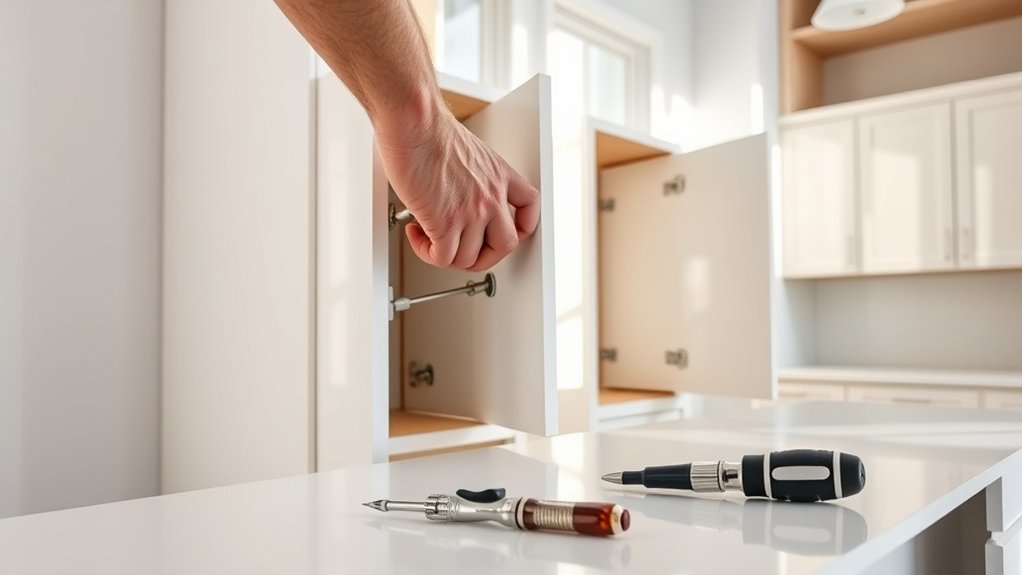
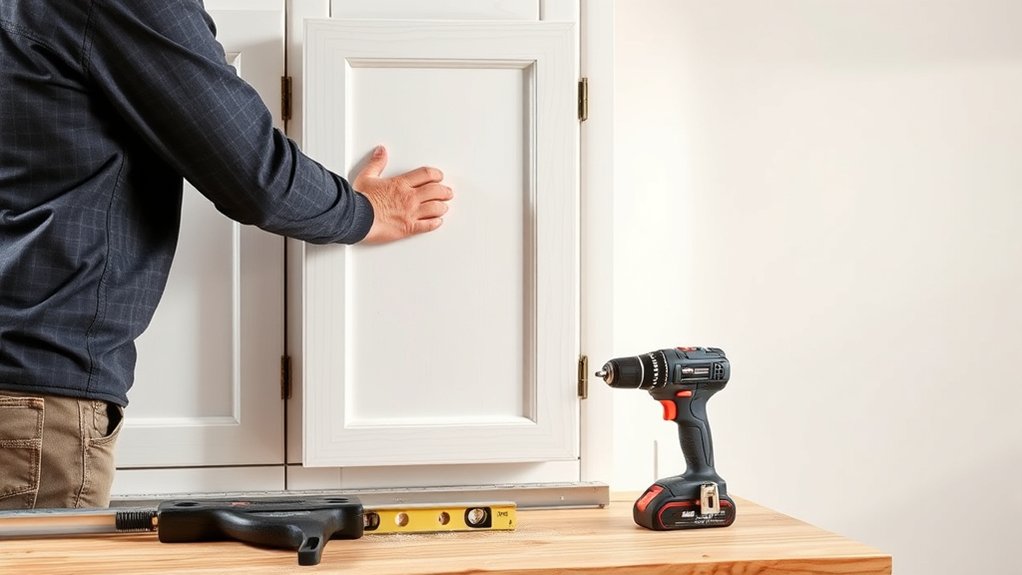
Attach the cabinet doors carefully by first aligning the hinges with the pre-drilled holes on the cabinet frames. Proper door alignment guarantees smooth operation and a professional look.
Next, focus on hardware selection. Choose handles or knobs that complement your cabinet finishing and overall kitchen style. Follow these steps for a flawless finish:
- Secure hinges tightly using installation techniques that prevent misalignment.
- Attach hardware, making sure screws are flush and straight.
- Adjust door gaps with hinge screws to achieve even spacing.
- Inspect all doors for smooth opening and consistent alignment.
Frequently Asked Questions
How Do I Remove Old Kitchen Cabinets Safely?
You should wear safety gear like gloves and goggles, then use kitchen tools such as a drill and pry bar to carefully unscrew and loosen cabinets.
Work slowly to avoid damaging walls or cabinets during removal.
What Type of Wood Is Best for Kitchen Cabinets?
Imagine choosing hardwood options like picking the perfect outfit. Oak and maple stand out for durability and cabinet finishes. They handle wear well, ensuring your cabinets stay stylish and strong, like a suit that fits perfectly for years.
Can I Hang Cabinets on Drywall Without Studs?
You can hang cabinets on drywall without studs using heavy-duty drywall anchors, but they must support the weight securely.
Always use cabinet leveling tools to guarantee proper alignment and avoid stressing the anchors over time.
How Much Weight Can Wall Cabinets Support?
Like a well-balanced scale, your wall cabinets can support 50-100 pounds if you guarantee proper weight distribution and use sturdy cabinet materials.
Always secure them into studs to maximize strength and avoid damage.
Should I Hire a Professional or DIY Cabinet Installation?
You can DIY cabinet installation if you have proper installation tools and skills, saving on labor costs.
However, hiring a professional guarantees precision and speed, especially if your cost comparison favors quality and time over savings.