How to Change a Shower Faucet Stem
To change a shower faucet stem, first turn off the water supply to avoid leaks.
Removing the handle and escutcheon plate is the next step. Then, unscrew the old stem using a wrench, applying penetrating oil if it’s stuck.
Insert the new stem carefully and tighten the bonnet nut without overtightening. Be sure to reattach washers or seals properly to prevent leaks.
Finally, reassemble the handle and plate securely. Check for leaks and ensure smooth operation.
Follow these steps to confidently address common post-replacement issues and guarantee lasting performance.
How to Change a Shower Faucet Stem
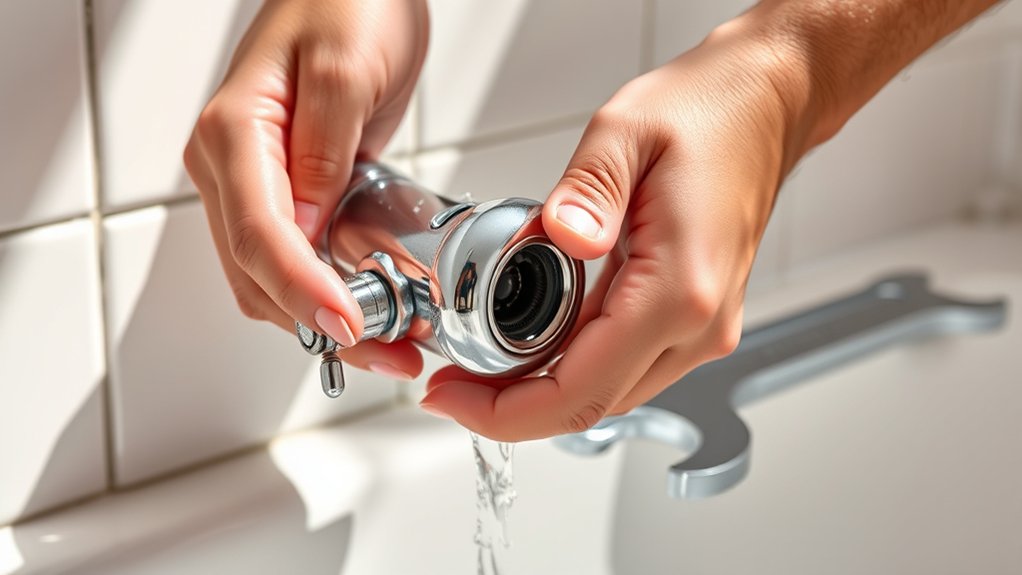
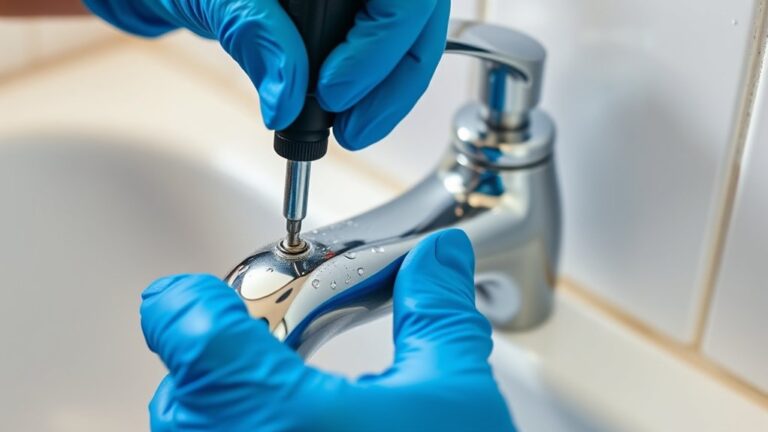
Begin by turning off the water supply to your shower to prevent leaks. Next, identify your shower faucet type: compression, cartridge, ball, or ceramic disc, as each requires a specific approach. Remove the handle by loosening the set screw with an appropriate tool.
Then, extract the stem assembly carefully; this part controls water flow and temperature. Common stem issues include worn washers, corroded parts, or mineral buildup, all of which cause leaks or difficulty turning the handle. Inspect the stem for damage or wear.
Replace the faulty stem with a matching part for your faucet type. Reassemble the faucet in reverse order, ensuring all components fit securely. Finally, restore the water supply and test the faucet for proper operation without leaks.
Tools Needed to Change a Shower Faucet Stem
Before you start replacing the shower faucet stem, gather the necessary tools to guarantee a smooth and efficient process. You’ll need an adjustable wrench or a set of open-end wrenches to handle various faucet types and sizes.
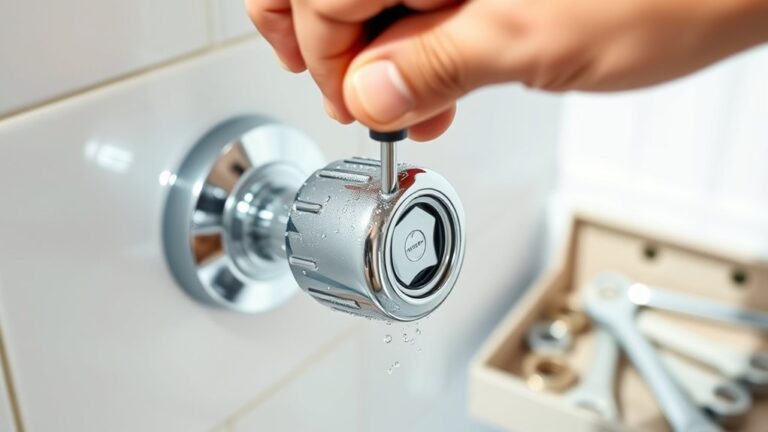
A screwdriver, both flathead and Phillips, will help remove escutcheons or handle screws. To grip rounded stems or stubborn nuts, a pair of locking pliers is essential.
Since stem materials vary from brass to plastic, having penetrating oil handy can ease loosening corroded parts. Additionally, a utility knife will assist in cutting old plumber’s tape or caulk.
Penetrating oil loosens corroded parts, while a utility knife cuts through old plumber’s tape or caulk with ease.
Finally, keep plumber’s grease and replacement O-rings nearby for reassembly. Preparing these tools ensures you can adapt to different faucet types and stem materials without interruption.
Removing the Old Shower Faucet Stem
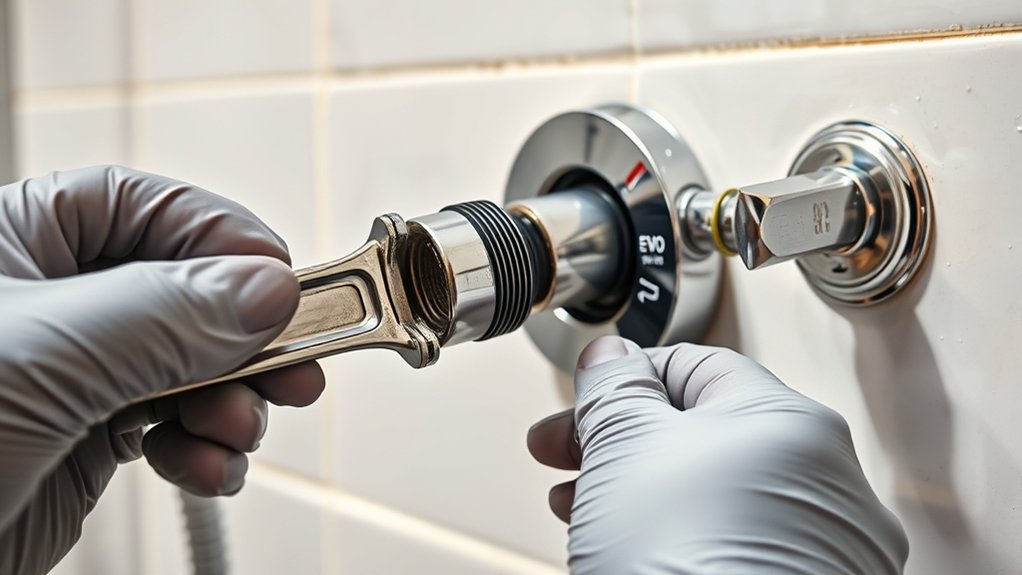
With your tools ready, start by turning off the water supply to prevent leaks. Remove the handle and escutcheon plate to access the faucet stem. Use a wrench or pliers to unscrew the stem, turning counterclockwise.
If the stem is stuck due to corrosion or mineral buildup, a common stem issue, apply penetrating oil and let it sit for a few minutes before trying again. Carefully extract the stem without damaging the surrounding plumbing.
Inspect the old stem for signs of wear, cracks, or stripped threads as these often cause leaks or poor water flow. Follow maintenance tips like cleaning valve seats and replacing washers to extend faucet life. Proper removal guarantees a clean, damage-free area for installing the new shower faucet stem.
Installing the New Shower Faucet Stem
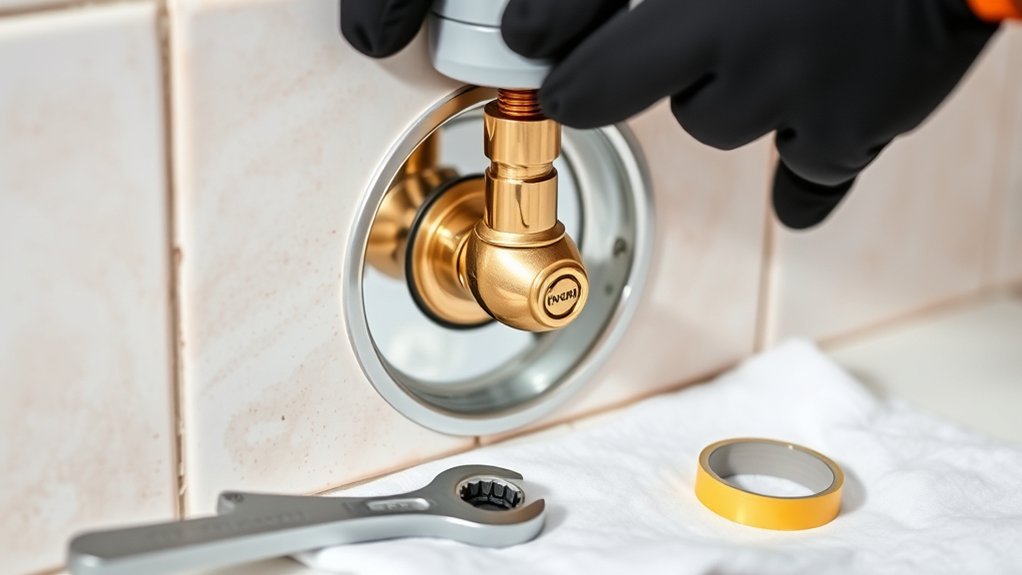
Carefully insert the new shower faucet stem into the valve body, ensuring it aligns properly with the valve seat and threads. Depending on the shower faucet type, you may need to rotate it gently to engage the threads without cross-threading.
Once seated, use a wrench to tighten the bonnet nut securely but avoid overtightening, which can damage components. Reattach any washers or seals removed during disassembly to maintain a watertight fit.
Confirm that the stem moves smoothly to control water flow. Following proper maintenance tips, such as periodically inspecting seals and cleaning mineral deposits, will prolong the lifespan of your new stem.
Finally, reinstall the handle and escutcheon plate, restoring the faucet to its original condition and preparing it for testing.
Troubleshooting Leaks and Handle Issues After Replacement
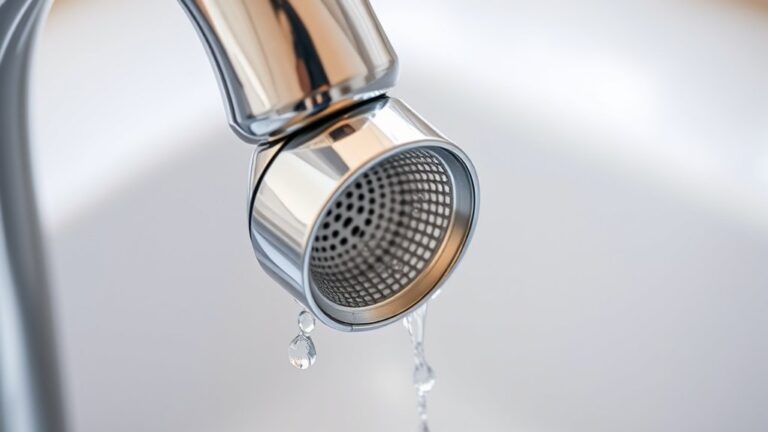
After reinstalling the handle and escutcheon plate, you might notice leaks or handle operation problems that need immediate attention. Start with leak detection by inspecting around the stem and valve body. Tighten packing nuts or replace worn washers to stop drips.
If water leaks when the faucet is off, check if the stem seats properly; a damaged seat may require replacement. For handle adjustment, make certain the handle is securely fastened without excess play, which can cause wobbling or difficulty turning.
Adjust the handle’s position by loosening the set screw, repositioning, then retightening. Test the handle’s range of motion to confirm smooth operation. Addressing these issues promptly prevents water damage and restores proper function, making sure your shower faucet stem replacement is successful.
Frequently Asked Questions
How Do I Identify the Type of Shower Faucet Stem I Have?
Think of your shower stem as the faucet’s heartbeat. You’ll identify it by removing the handle, inspecting for brand marks or shapes, then comparing these to common shower stem types.
This guides your faucet repair techniques precisely.
Can I Prevent Future Faucet Stem Leaks With Regular Maintenance?
Yes, you can prevent future faucet stem leaks by performing regular stem lubrication and timely washer replacement. These steps reduce friction and wear, ensuring a tight seal and extending the stem’s lifespan effectively.
What Are Common Signs That a Faucet Stem Needs Replacement?
You’ll notice faucet leaks, reduced water flow, or difficulty turning the handle. These signs indicate a worn faucet stem.
Addressing these early can help you avoid higher repair costs and prevent further plumbing damage.
Are There Eco-Friendly Faucet Stems That Conserve Water?
You don’t have to sacrifice performance for eco-friendliness. Faucet stems with water-saving technologies and eco-friendly materials reduce flow without pressure loss, helping you conserve water efficiently.
They also maintain durable, reliable operation in your shower.
How Long Does a Typical Shower Faucet Stem Last?
You can expect a typical shower faucet stem to last 10-15 years with proper shower maintenance. Regular cleaning and timely repairs help maximize faucet longevity, preventing leaks and ensuring consistent water flow over time.