What Causes a Leaky Faucet
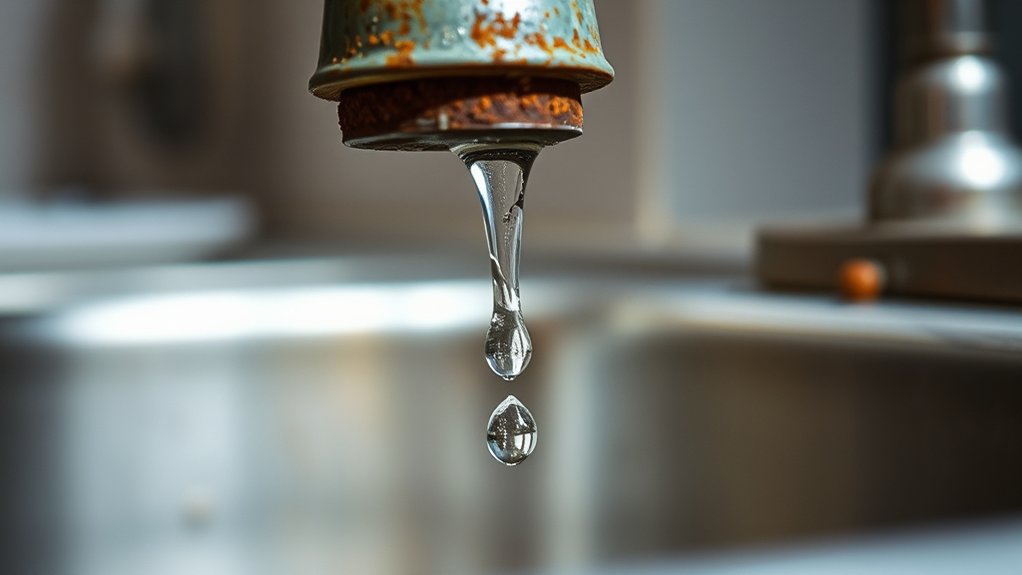
You’re likely dealing with a leaky faucet because worn washers and damaged O-rings fail to seal properly, while corroded valve seats prevent tight closure.
Loose or broken parts, high water pressure, and mineral buildup from hard water also weaken seals and cause drips.
Regular inspection, proper maintenance, and controlling water pressure are key to preventing leaks.
Understanding these factors helps you tackle the problem efficiently and avoid costly repairs over time.
How Worn-Out Washers Cause Faucet Leaks
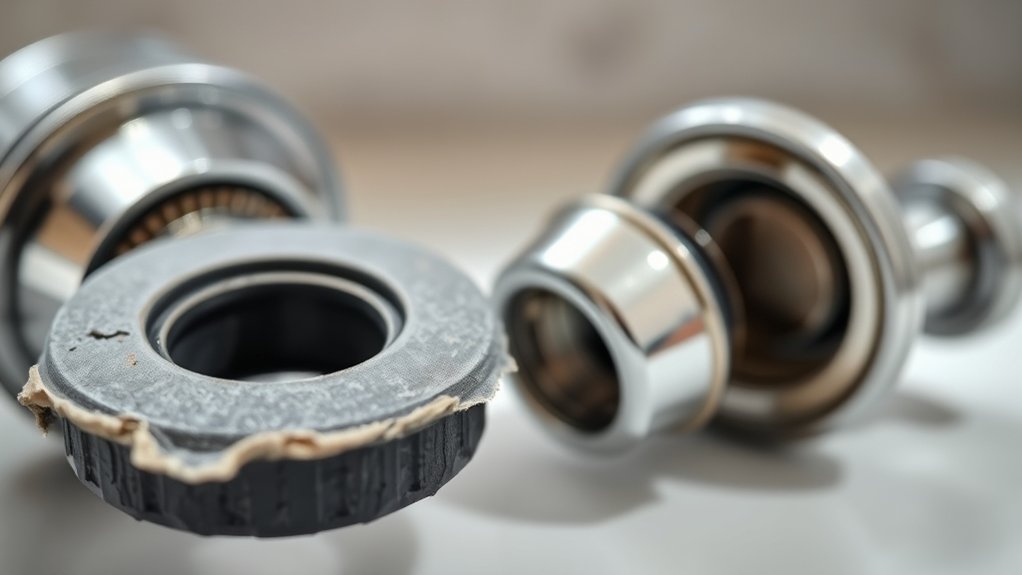
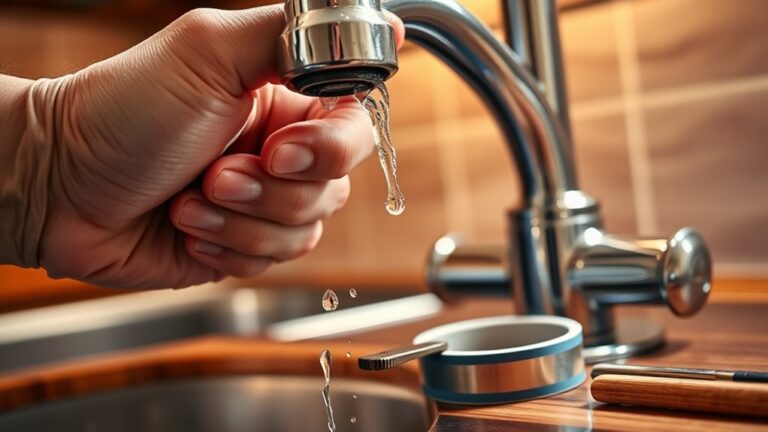
When your faucet starts dripping, worn-out washers are often the main culprit. Washers create a watertight seal between the faucet’s moving parts, preventing leaks.
Over time, constant friction and water pressure cause these washers to degrade, crack, or flatten, compromising their sealing ability. For effective faucet troubleshooting, start by turning off the water supply and disassembling the faucet handle to inspect the washer.
Replace any washers showing signs of wear to stop leaks promptly. Regular washer maintenance, including periodic inspection and timely replacement, extends your faucet’s lifespan and prevents persistent dripping.
Ignoring worn washers can lead to water waste and potential damage to faucet components, so addressing them early is key to efficient plumbing upkeep.
How Damaged O-Rings Cause Faucet Leaks
O-rings create a watertight seal between faucet components, preventing leaks around the valve stem. Over time, these rubber rings can crack, harden, or wear out, causing water to escape.
You can fix leaks by inspecting, lubricating, or replacing damaged O-rings to restore a proper seal.
Role of O-Rings
A single worn or damaged O-ring can cause your faucet to leak by failing to maintain a watertight seal between moving parts. O-rings are typically made from materials like rubber, silicone, or neoprene, each chosen for durability and resistance to water and temperature variations.
Understanding these O-ring materials helps you select the right replacement that guarantees a tight seal. Proper O-ring maintenance involves regular inspection and lubrication with plumber’s grease to prevent drying and cracking.
When you spot early signs of wear or stiffness, timely replacement can save you from persistent leaks. By focusing on material compatibility and upkeep, you’ll maintain peak faucet function and extend the lifespan of your O-rings, preventing costly water damage and inefficiency.
Common O-Ring Wear
Understanding how wear affects O-rings helps you identify why your faucet starts leaking despite proper installation. O-rings are made from different materials, such as rubber, silicone, or neoprene, each designed to withstand specific pressures and temperatures.
Over time, exposure to water, minerals, and temperature changes causes these seals to degrade. Common wear includes cracking, flattening, or hardening, which compromises their ability to maintain a watertight seal. You should pay close attention to the O ring types used in your faucet because some materials resist wear better than others.
Regular O ring maintenance, including cleaning and lubrication with appropriate grease, can extend their lifespan and prevent leaks. Recognizing worn O-rings early helps you troubleshoot leaks effectively without assuming installation errors.
Repair and Replacement
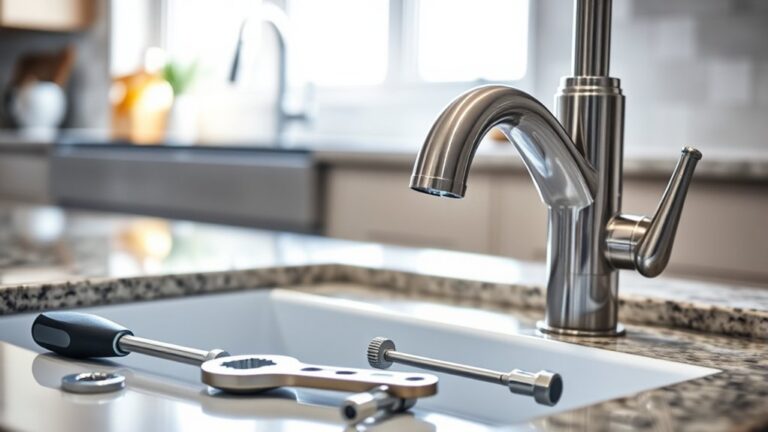
Start by inspecting the faucet carefully to identify worn or damaged O-rings, as these small components are often the root cause of leaks. Once you locate a compromised O-ring, remove the faucet handle and cartridge to access it.
Use a pick tool to extract the old O-ring without damaging surrounding parts. Replace it with a new O-ring of the exact size and material to guarantee a proper seal. Lubricate the replacement with silicone-based grease to enhance durability and ease future maintenance.
Reassemble the faucet and test for leaks. Regular faucet maintenance, including periodic O-ring checks, is essential for effective leak prevention. By promptly repairing or replacing damaged O-rings, you maintain the faucet’s integrity and avoid costly water damage or higher utility bills.
Why Corroded Valve Seats Make Faucets Drip
When water continuously seeps through your faucet, corroded valve seats are often to blame. The valve seat forms a vital seal between the faucet’s valve and the spout. Over time, exposure to water minerals and debris causes corrosion, deteriorating this seal.
As corrosion progresses, the valve seat develops pits and rough surfaces, preventing a tight closure. This results in persistent drips that waste water and increase your utility bills.
To minimize corrosion, regular valve maintenance is essential. You should clean valve seats periodically and apply protective coatings to reduce mineral buildup. Corrosion prevention extends the valve seat’s lifespan and maintains effective sealing.
Ignoring these steps allows corrosion to worsen, making leaks inevitable and repair more costly. Proper valve seat care is key to stopping faucet drips efficiently.
How Loose or Broken Faucet Parts Lead to Leaks
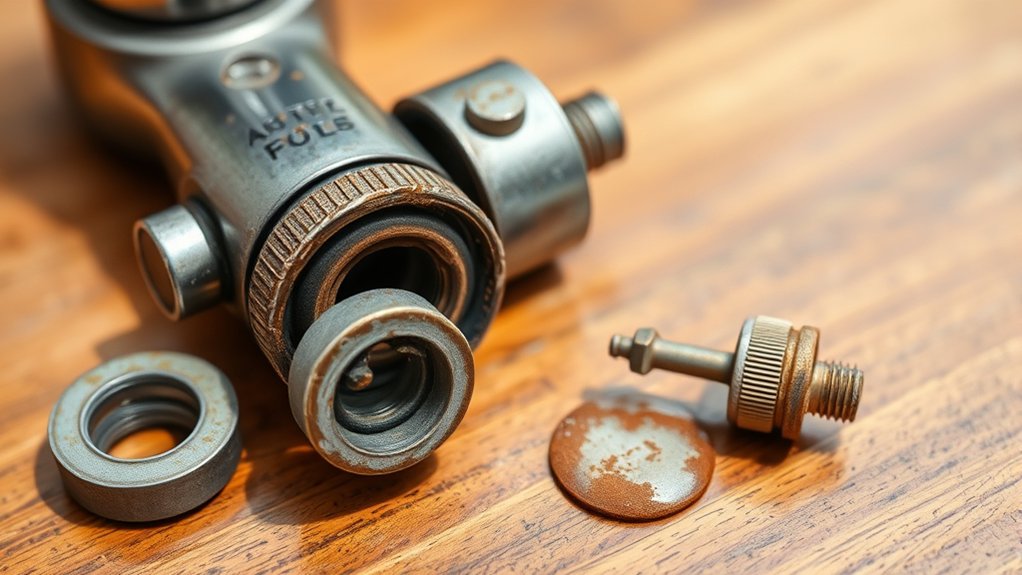
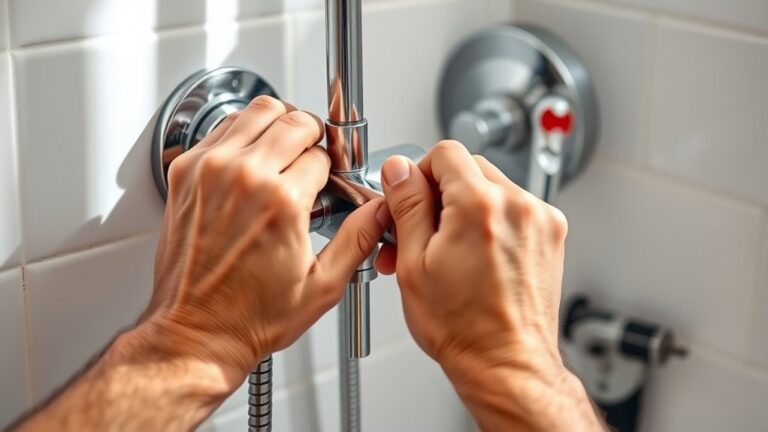
If you notice your faucet dripping despite intact seals, loose or broken parts may be the culprit. Proper faucet maintenance includes checking these components regularly to guarantee leak prevention. Here are three common issues to inspect:
1. Loose packing nuts
These nuts secure the faucet stem. If loose, water can seep through.
2. Damaged washers or O-rings
These small parts create watertight seals. Wear or breakage causes leaks.
3. Worn valve seats
Even if not corroded, a loose or cracked valve seat can allow water to drip.
How High Water Pressure Causes Faucet Leaks
Although your faucet may appear sound, excessive water pressure can cause internal components to fail prematurely, leading to leaks. When water pressure exceeds the recommended level (typically 40-60 psi), it puts undue stress on seals, washers, and valves.
Excessive water pressure stresses faucet parts, causing premature failure and leaks despite an outwardly sound appearance.
This stress accelerates wear and can cause these parts to crack or deform, creating pathways for water to escape. To prevent this, monitor your home’s water pressure using a pressure gauge attached to an outdoor faucet.
If pressure is consistently high, install a pressure regulator to protect your plumbing. Regular faucet maintenance, including inspecting and replacing worn components, helps mitigate damage caused by high water pressure.
Addressing this issue early guarantees your faucet remains leak-free and extends its operational lifespan.
How Mineral Buildup Makes Faucets Leak
You’ll notice mineral deposits can damage faucet seals, causing leaks over time. Hard water accelerates corrosion, weakening metal components and worsening the problem.
Understanding this buildup helps you address leaks more effectively.
Mineral Deposits Impact Seals
Because water contains minerals like calcium and magnesium, these substances can accumulate over time inside your faucet. This buildup primarily affects the seals, causing leaks that compromise faucet performance.
For effective faucet maintenance, you need to understand how mineral deposits impact seals:
- Hardened deposits reduce seal flexibility, preventing a tight closure.
- Deposits create uneven surfaces, increasing wear and tear on seals.
- Mineral buildup can cause seals to shrink or crack prematurely.
To prevent leaks, regularly clean faucet components using vinegar or commercial descalers as part of your plumbing tips. Inspect seals during routine maintenance and replace them if mineral buildup has damaged their integrity.
Following these steps will help maintain your faucet’s reliability and extend its lifespan.
Corrosion From Hard Water
When hard water flows through your faucet, the minerals it carries don’t just settle on seals; they actively corrode metal parts over time. Water hardness, primarily caused by calcium and magnesium ions, accelerates pipe corrosion by forming mineral scales that create localized corrosion cells.
These scales trap moisture and oxygen against metal surfaces, promoting degradation that weakens components like valve seats and washers. As corrosion progresses, it compromises the faucet’s structural integrity, leading to leaks.
To minimize damage from water hardness, you should regularly inspect and clean faucet parts, using descaling agents when necessary. Additionally, installing water softeners can reduce mineral concentration, slowing pipe corrosion and extending your faucet’s lifespan.
Addressing corrosion early prevents costly repairs and maintains efficient water flow without leaks.
Frequently Asked Questions
Can Temperature Changes Cause a Faucet to Leak?
Yes, temperature fluctuations cause faucet expansion and contraction, stressing seals and washers. You’ll notice leaks as these components wear out over time.
Managing temperature changes helps prevent damage and keeps your faucet functioning properly.
Does Faucet Age Affect Leak Frequency?
Think of your faucet as a tire; as it ages, wear patterns deepen. You’ll notice leaks more often without proper faucet maintenance.
Regularly inspect and replace parts to prevent frequent dripping and extend its lifespan effectively.
Are Certain Faucet Materials More Prone to Leaking?
Yes, faucets with rubber washers tend to leak more because they wear out quickly. Ceramic cartridges resist leaks better due to their durability, so you’ll find faucets using them generally require less maintenance and last longer without dripping.
Can Improper Installation Lead to Faucet Leaks?
Yes, improper installation can cause faucet leaks. If you use poor installation techniques or fail to guarantee proper sealing, water can escape through gaps.
Always follow precise steps to achieve a secure, leak-free faucet connection.
How Does Water Quality Impact Faucet Lifespan?
You’ll find faucets in hard water areas fail 30% faster due to mineral buildup. Water hardness causes deposits that wear seals and valves, reducing your faucet’s lifespan and increasing maintenance frequency.
Regular cleaning helps.