How to Fix the Faucet in the Bathtub
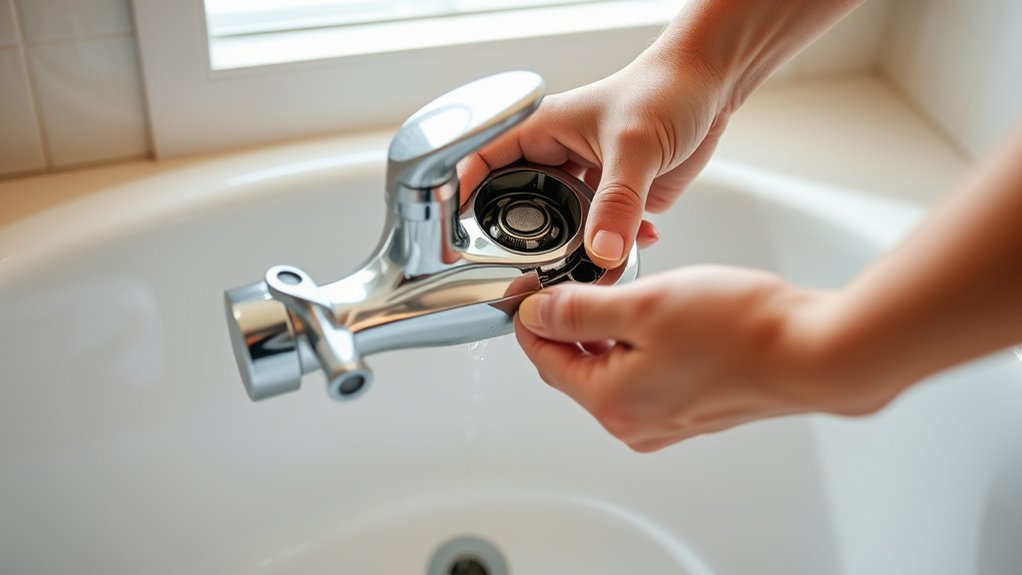
To fix your bathtub faucet, start by identifying the source of the leak. Check for worn washers, damaged cartridges, or mineral buildup that could be causing the problem.
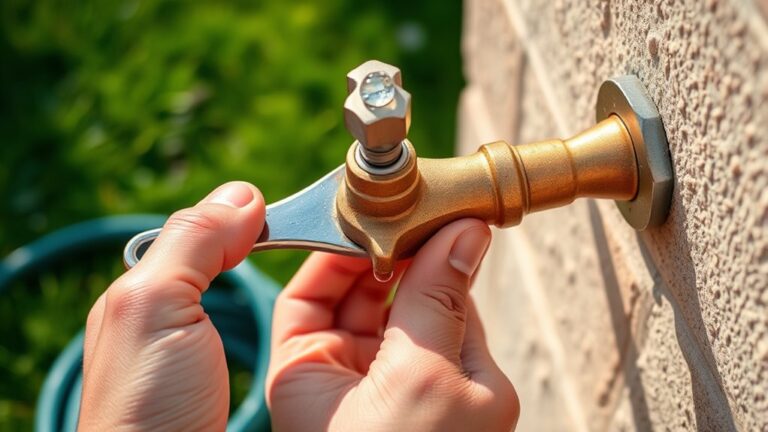
Turn off the water supply before beginning any repairs. Gather necessary tools such as wrenches and screwdrivers to make the job easier.
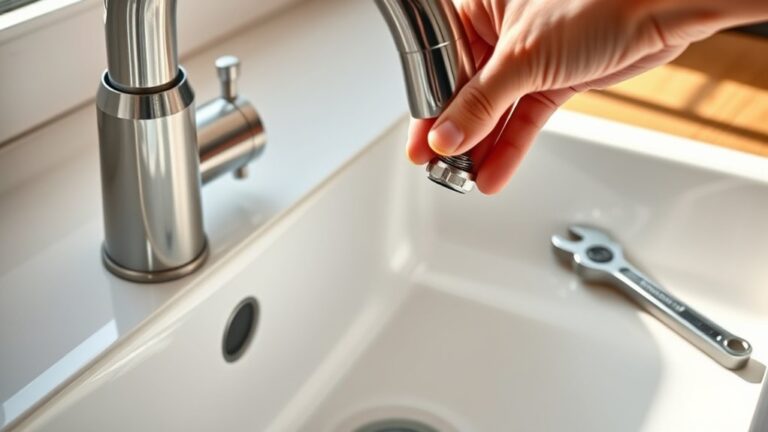
Replace any faulty parts specific to your faucet type. Clean aerators and tighten fittings to improve water flow and prevent further leaks.
After completing the repairs, test the faucet under both hot and cold settings. This ensures consistent performance and a lasting fix.
Follow these detailed steps to guarantee a thorough repair of your bathtub faucet.
Find Out What’s Causing Your Bathtub Faucet to Leak
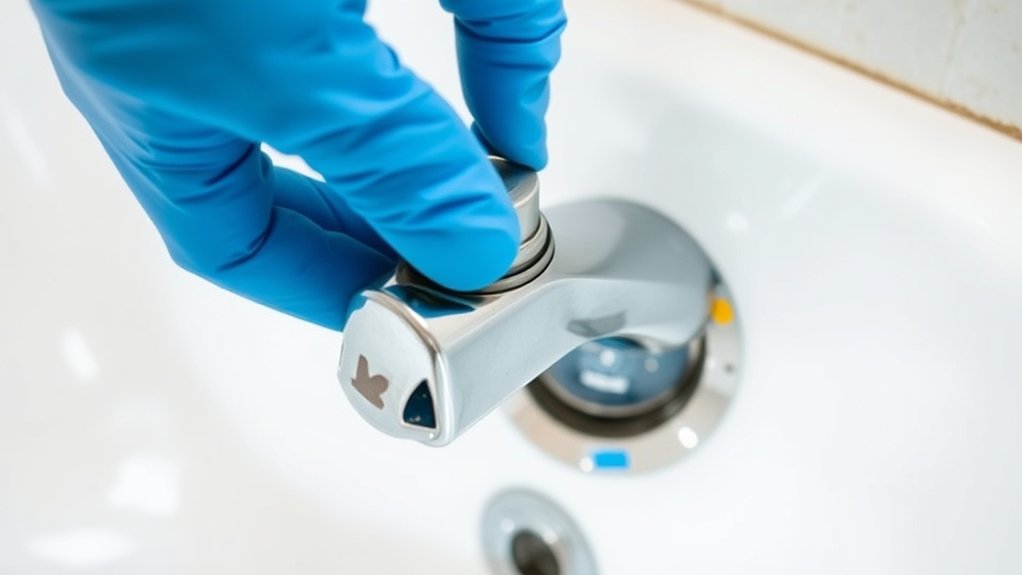
Before you start fixing your bathtub faucet, you need to identify the exact cause of the leak. Begin by determining the faucet type, whether it’s a compression, cartridge, ball, or ceramic disc faucet, as each has distinct components prone to wear.
Use leak detection techniques like visual inspection to spot drips or corrosion, and listen for continuous dripping sounds. Check the handles, spout, and connections for signs of damage or mineral buildup.
Pay attention to whether the leak occurs when the faucet is off or only during use; this helps isolate the faulty part. Accurately diagnosing the source, such as a worn washer, faulty cartridge, or damaged O-ring, guarantees you target repairs effectively without wasting time or parts.
Gather Tools and Parts for Bathtub Faucet Repair
Once you’ve identified the specific cause of your bathtub faucet leak, gather the necessary tools and replacement parts to address the issue efficiently. Start by determining your faucet type: compression, cartridge, ball, or ceramic disk, as this influences the parts and repair kits needed.
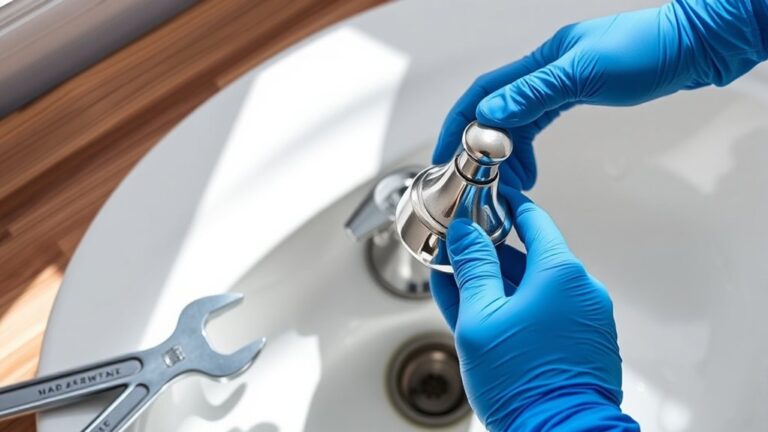
Acquire a repair kit compatible with your faucet type; these kits typically include washers, O-rings, seals, and cartridges. Essential tools often include an adjustable wrench, screwdrivers, pliers, and a hex key or Allen wrench.
Have plumber’s grease on hand for smooth reassembly and to prevent future leaks. Before beginning, verify you have a bucket and towels to manage any water drips. Proper preparation with the correct tools and parts streamlines the repair process and reduces the risk of further damage.
Fix Common Bathtub Faucet Problems Step-by-Step
Begin by turning off your bathtub’s water supply to prevent flooding during the repair. Identify the issue. Common problems include leaks, low water pressure, or a faulty diverter. Follow this practical faucet replacement guide to fix each problem efficiently.
| Problem | Solution |
|---|---|
| Leaking Faucet | Replace worn-out washers or cartridges |
| Low Water Pressure | Clean aerator or remove debris |
| Faulty Diverter | Replace diverter valve |
| No Hot or Cold Water | Check valve connections, replace if necessary |
Use these bathtub maintenance tips regularly to extend faucet life and avoid major repairs. Always verify parts fit your faucet model for effective repair and safety.
Test Your Bathtub Faucet and Keep It Leak-Free
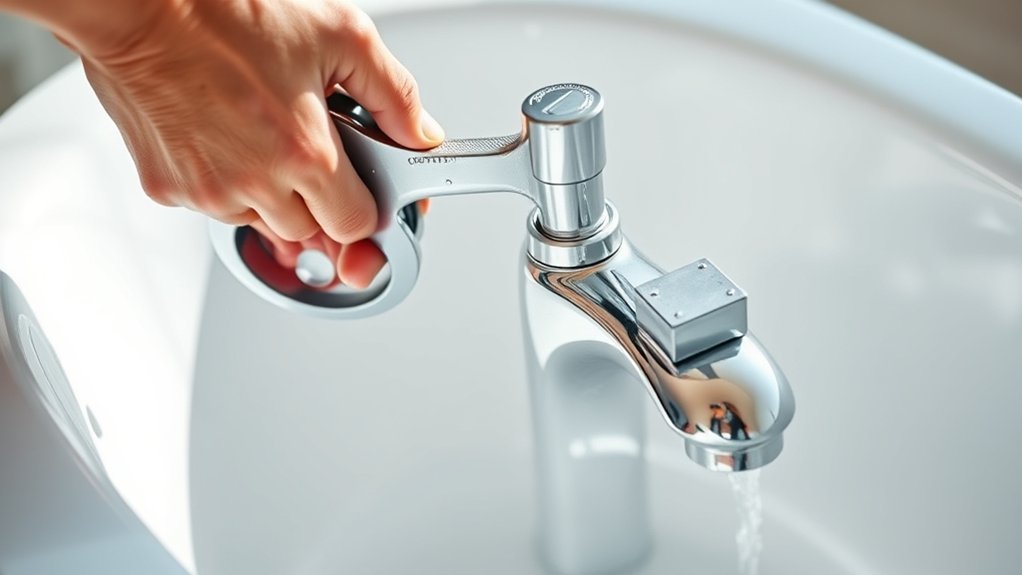
After addressing common faucet problems and replacing faulty components, you’ll want to verify that your bathtub faucet functions properly without leaks. Turn on the water fully and observe all joints and connections for any drips or moisture accumulation.
Check both hot and cold water settings to ascertain consistent flow and no pressure drops. Implement faucet maintenance tips like periodically tightening fittings and cleaning aerators to prevent mineral buildup.
Use leak prevention strategies such as applying plumber’s tape to threaded connections and replacing worn washers promptly. Regularly inspect the faucet for early signs of wear or corrosion.
Testing your faucet thoroughly after repairs helps you confirm the fixture’s reliability and extends its service life, saving you from costly water damage and utility bills.
Frequently Asked Questions
How Do I Choose the Right Bathtub Faucet Style?
You’ll want to match faucet design trends with your bathroom’s style and functionality. Consider installation tips like compatibility with existing plumbing and ease of maintenance to guarantee you pick a faucet that’s both stylish and practical for your space.
Can I Use Plumber’s Tape on All Faucet Types?
Don’t worry, you can use plumber’s tape on most faucet types to guarantee a watertight seal.
Just avoid using it on compression fittings where it might cause leaks instead of preventing them.
What Causes Low Water Pressure in a Bathtub Faucet?
Low water pressure in your bathtub faucet usually results from clogged aerators, mineral buildup, or faulty valves.
Regular faucet maintenance guarantees steady water flow and prevents blockages, keeping your tub’s water pressure consistent and reliable.
How Often Should I Replace My Bathtub Faucet?
Think of your faucet lifespan as a marathon, not a sprint. You should replace it every 10-15 years, but regular maintenance tips like cleaning aerators and checking seals can extend its life and keep performance efficient.
Are There Eco-Friendly Faucets for Bathtubs?
Yes, you’ll find eco-friendly faucets made from sustainable materials like recycled brass and stainless steel. They include water-saving features like flow restrictors and aerators, helping you reduce water usage without sacrificing performance or durability.