How to Fix Kitchen Cabinet Hinges
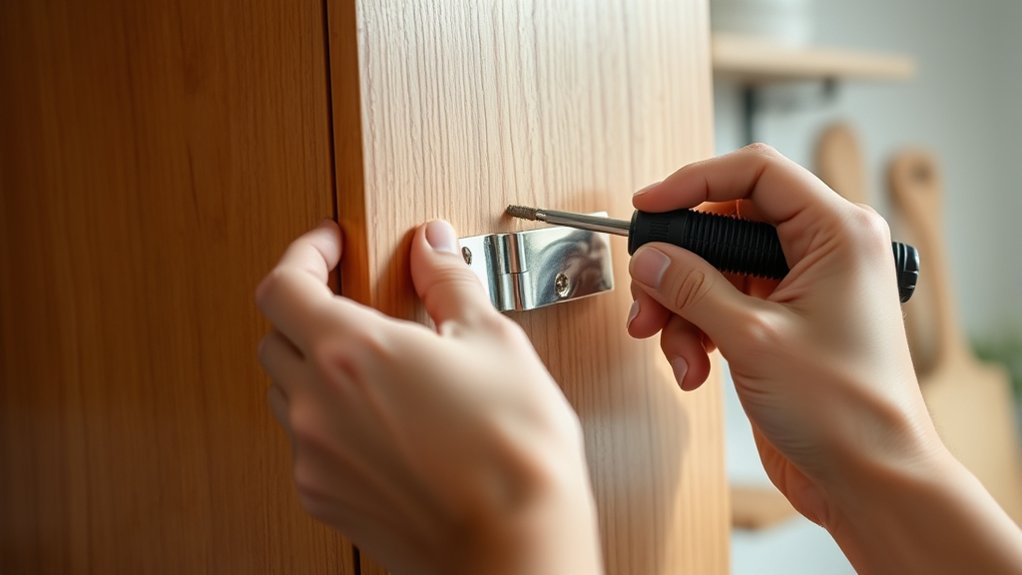
To fix kitchen cabinet hinges, start by tightening any loose screws to prevent sagging or rattling doors.
Next, check hinge alignment so doors close evenly and flush.
Apply a small amount of silicone-based spray or light machine oil to lubricate pivot points, avoiding overuse to prevent residue.
If hinges are corroded or damaged beyond repair, replace them with matching types for proper fit.
Following these steps guarantees smooth operation and durability—there’s more on precise adjustments and maintenance ahead.
Common Problems With Kitchen Cabinet Hinges
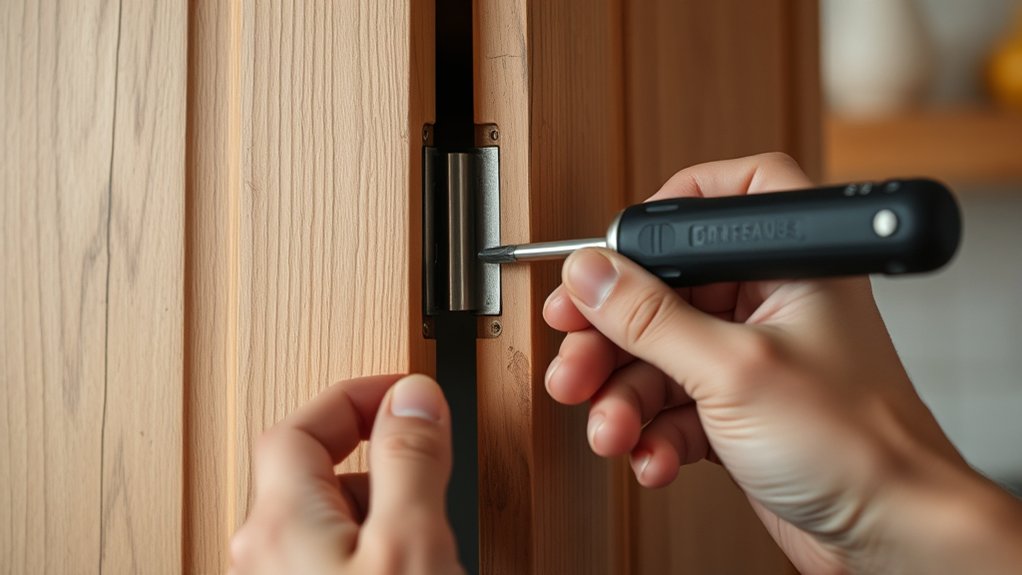
Although kitchen cabinet hinges are designed for durability, they often face issues like misalignment, loosening screws, and corrosion. You’ll notice hinge alignment problems when doors don’t close flush or swing unevenly. This typically occurs due to wear or improper installation.
Different hinge types, such as concealed, European, or overlay hinges, require specific adjustments to restore proper function. Loose screws are a frequent culprit, causing doors to sag or rattle. Corrosion, especially in humid environments, can lead to stiff or noisy hinges.
Identifying the exact problem involves examining the hinge type and its mounting points. By understanding these common issues, you can diagnose which hinge components need tightening, realignment, or replacement to guarantee smooth operation and maintain cabinet integrity.
Tools and Materials Needed to Fix Kitchen Cabinet Hinges
Fixing kitchen cabinet hinges requires a specific set of tools and materials to guarantee efficient and accurate adjustments. To handle various hinge types and installation techniques, you need precise equipment that provides proper alignment and secure fastening.
- Screwdrivers (Phillips and flathead) Essential for removing and tightening screws on different hinge types.
- Drill with drill bits Useful for creating pilot holes or reinforcing existing ones when reinstalling hinges.
- Replacement hinges and screws Match the hinge types originally installed, as compatibility affects installation techniques and cabinet function.
Having these tools and materials ready will streamline the repair process, allowing you to implement proper installation techniques tailored to your cabinet’s hinge design. This preparation prevents damage and promotes longevity.
How to Repair Loose or Squeaky Kitchen Cabinet Hinges
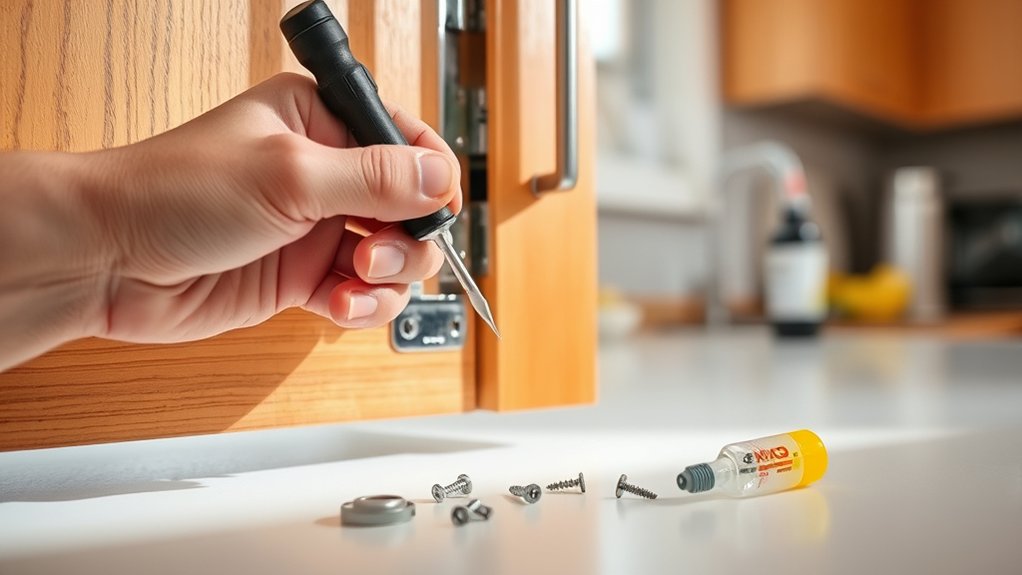
Identify the source of looseness or squeaking by inspecting the hinge mechanism closely. Check for misaligned screws or worn components affecting hinge alignment. Tighten any loose screws using a screwdriver, ensuring the door sits flush and operates smoothly.
If squeaking persists, apply appropriate lubrication techniques: use a silicone-based spray or a few drops of light machine oil directly onto the hinge pivot points. Avoid over-lubricating to prevent drips and residue buildup.
After lubrication, operate the door several times to distribute the lubricant evenly. Reassess the hinge alignment, adjusting screws as needed to eliminate gaps or uneven movement.
Regular maintenance through these steps will restore smooth function to your kitchen cabinet hinges, preventing further wear and extending their lifespan.
When to Replace Kitchen Cabinet Hinges and How to Do It
If tightening screws and lubricating the hinges no longer stops your cabinet doors from sagging, sticking, or making noise, it’s time to contemplate replacing the hinges. Identify the hinge types first: overlay, inset, or European, since each requires specific installation techniques. Follow these steps:
When tightening and lubricating fail, identify your hinge type to properly replace sagging or noisy cabinet doors.
- Remove the cabinet door by unscrewing the existing hinges, noting their placement.
- Select replacement hinges matching your hinge type to maintain proper door alignment and function.
- Install new hinges by securely fastening them in the original locations, ensuring screws are tight and doors align smoothly.
Accurate hinge type identification and precise installation techniques prevent future alignment issues and guarantee smooth operation. Replace hinges promptly when adjustments fail to restore proper function.
Tips to Prevent Future Hinge Problems and Keep Cabinets Smooth
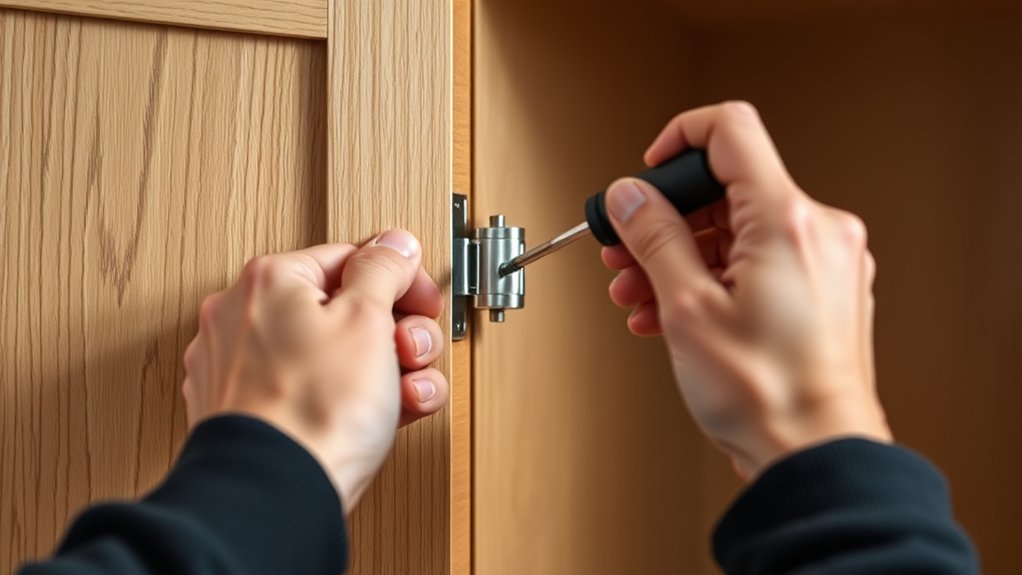
Though replacing hinges can restore cabinet function, maintaining them regularly helps prevent future issues and guarantees smooth operation. Implement preventive maintenance by inspecting hinges every six months for wear, misalignment, or rust.
Tighten loose screws promptly to avoid stress on the hinge plates. Apply hinge lubrication using a silicone-based spray or light machine oil to reduce friction and prevent squeaking. Avoid heavy oils that attract dust and grime.
Clean hinges before lubrication to remove debris that can impair movement. Additionally, verify cabinet doors are properly aligned to prevent excessive strain on hinges.
Frequently Asked Questions
Can I Paint Over Kitchen Cabinet Hinges?
You can enhance your hinges’ appearance by painting them, but make certain you select paint types compatible with metal surfaces. Confirm hinge compatibility with paint to avoid operational issues or damage, maintaining smooth cabinet functionality.
Are Soft-Close Hinges Worth the Investment?
Yes, soft-close hinges are worth the investment. Their soft close benefits prevent cabinet slamming, reducing wear and noise.
With proper hinge installation, you’ll enhance durability and functionality, making your kitchen more efficient and quieter overall.
How Do I Remove Cabinet Doors Safely?
Want to avoid misalignment? First, support the door, then carefully unscrew hinges while noting their positions.
Check door alignment and apply hinge lubrication before reattaching to guarantee smooth operation and prevent damage.
Can Hinge Noise Damage the Cabinet Material?
Hinge noise itself won’t damage cabinet material, but poor hinge maintenance can cause stress and wear over time.
Regular lubrication and tightening guarantee noise prevention and protect your cabinets’ structural integrity effectively.
What Types of Hinges Are Best for Heavy Cabinet Doors?
Like a strong anchor in a storm, heavy-duty options such as stainless steel or brass hinges offer durability. You’ll want hinge materials that resist wear and support weight, ensuring your heavy cabinet doors stay secure and functional.