What Is a Good Color for Kitchen Cabinets
A good color for kitchen cabinets depends on your space, lighting, and style. Lighter tones like soft whites or warm beiges open up smaller kitchens, creating a bright and airy feel.
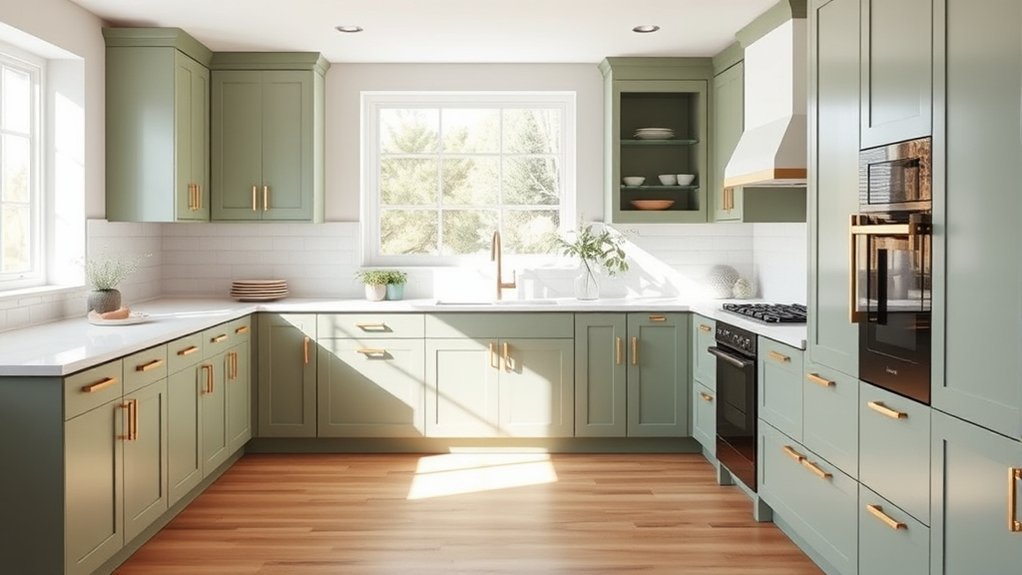
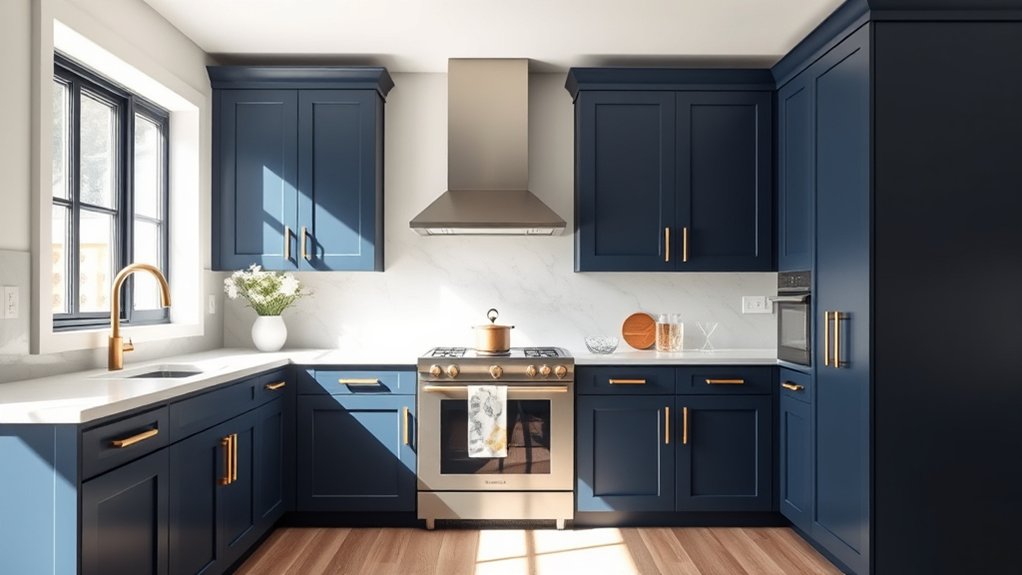
In contrast, deeper hues like navy or deep green add bold personality in larger areas.
Consider how natural and artificial light shift colors throughout the day. Balancing timeless neutrals with accents helps maintain a cohesive look.
Coordinating your cabinets with countertops and backsplashes guarantees harmony in the overall design.
You’ll find useful tips to fine-tune your choice for a lasting, inviting kitchen vibe. Choosing the right color can transform your kitchen into a welcoming and stylish space.
Key Criteria for Choosing Kitchen Cabinet Colors
When choosing kitchen cabinet colors, you’ll want to evaluate how the hues interact with your space’s lighting and overall style. Start by considering color psychology. Warm tones like reds and yellows evoke energy, while cooler blues and greens promote calmness. Think about how you want your kitchen to feel.
Next, explore current cabinet trends to find colors that balance timeless appeal with modern flair. Neutral shades such as soft grays or creamy whites remain popular for their versatility and ability to complement various design styles.
Don’t forget to factor in your existing countertops, backsplash, and flooring, ensuring your cabinet color harmonizes rather than clashes. Ultimately, you want a color that enhances your kitchen’s personality without overwhelming it, creating a welcoming, stylish environment you’ll love every day.
How Lighting Influences Cabinet Color Appearance
Because lighting dramatically alters how colors appear, you should carefully consider your kitchen’s light sources before choosing cabinet hues. Natural light brings out true colors, making whites crisp and blues vibrant, but it shifts throughout the day, changing your cabinets’ look from soft to intense.
Artificial light, whether warm or cool, affects color perception differently; warm bulbs can deepen reds and yellows, while cool LEDs emphasize blues and greens. To guarantee your chosen color works well, observe paint swatches under both natural and artificial light at different times. This helps you avoid surprises and select cabinets that maintain their intended tone.
Balancing these lighting effects lets you create a kitchen atmosphere that feels inviting and visually harmonious all day long.
Considering Kitchen Size and Layout for Cabinet Colors
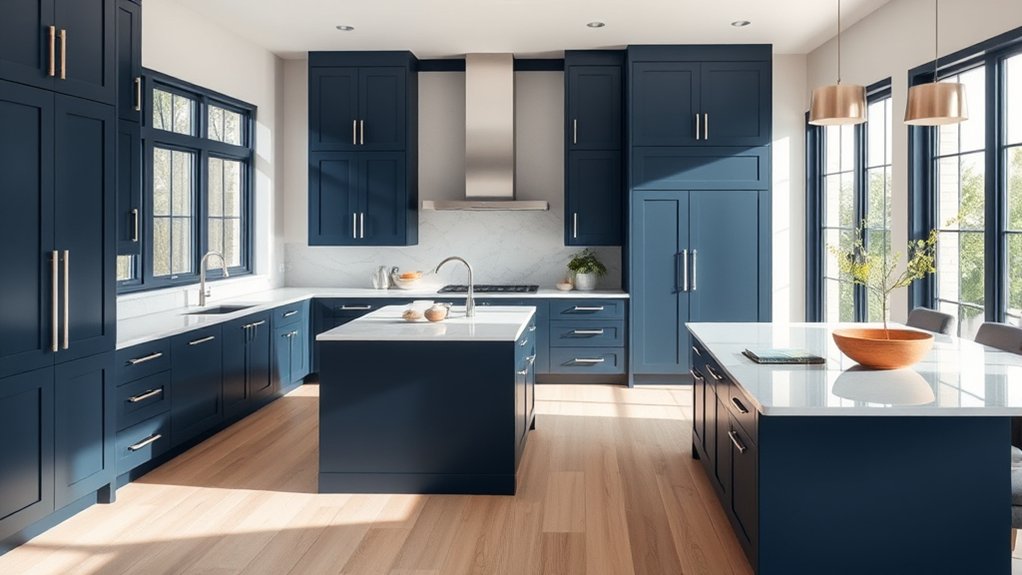
Although cabinet color choices often reflect personal taste, the size and layout of your kitchen play an essential role in how those colors come across. When considering kitchen dimensions, lighter cabinet colors can open up smaller spaces, making your kitchen feel airier and more inviting.
Conversely, in larger kitchens, you have the freedom to experiment with deeper, richer hues without overwhelming the space. Pay close attention to layout flow. How you move through the kitchen affects how colors interact with light and adjoining surfaces.
For example, if your kitchen has an open-plan layout, coordinating cabinet colors with nearby rooms creates harmony. Ultimately, selecting colors that complement your kitchen’s size and layout flow guarantees a balanced, functional, and aesthetically pleasing environment where every element feels intentional.
Timeless Kitchen Cabinet Colors That Always Work
You can’t go wrong with classic neutral shades like soft whites, grays, and warm beiges. They create a timeless backdrop that suits any style.
If you want to make a statement, popular bold choices like navy blue or deep green add personality without overwhelming the space. Choosing these colors keeps your kitchen looking fresh and stylish for years to come.
Classic Neutral Shades
When choosing kitchen cabinet colors that stand the test of time, classic neutral shades offer both versatility and elegance. These hues create a calming backdrop, allowing other design elements to shine while maintaining a sophisticated feel. You can effortlessly blend them with various styles, from modern to traditional.
Consider these timeless options to elevate your kitchen:
- Creamy white and rich ivory: Brighten your space with warm, inviting tones.
- Classic gray and muted taupe: Provide a sleek, contemporary appeal.
- Warm greige, light khaki, and sandy stone: Add depth and a subtle earthy touch.
Incorporating soft beige, pale almond, or light mocha enhances warmth without overwhelming your kitchen’s aesthetic. These neutrals guarantee your cabinets remain stylish and adaptable for years.
Popular Bold Choices
Neutral shades provide a timeless foundation, but bold colors can bring personality and energy to your kitchen cabinets without sacrificing longevity. Embracing vibrant hues lets you create eye-catching accents that transform your space.
With daring choices and adventurous palettes, you can introduce striking contrasts to elevate your kitchen’s aesthetic. Bold combinations keep your design fresh yet classic, ensuring your cabinets stand out for years.
| Color | Effect | Pairing Suggestion |
|---|---|---|
| Navy Blue | Sophisticated | Brass hardware |
| Forest Green | Earthy, rich | Light wood accents |
| Charcoal | Modern, sleek | White countertops |
| Deep Red | Warm, inviting | Matte black fixtures |
| Mustard Yellow | Cheerful, bright | Neutral backsplashes |
Choose boldly to make a lasting impression.
Bold and Trendy Colors to Make Your Kitchen Stand Out
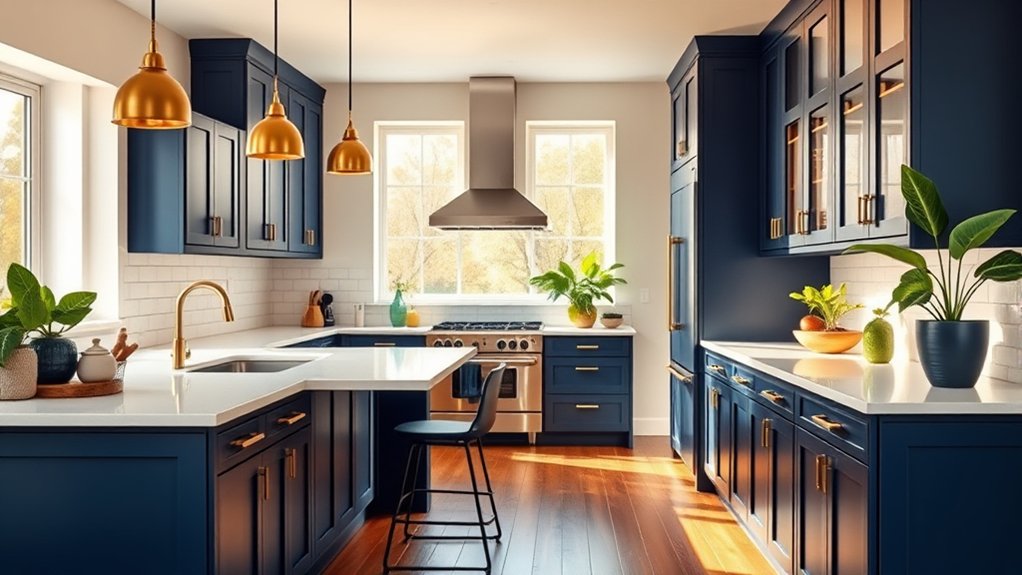
Although bold colors might feel intimidating at first, they can instantly transform your kitchen cabinets into an alluring focal point. By leveraging color psychology, you can choose hues that evoke energy and creativity, turning your kitchen into a vibrant space.
Bold, trendy colors act as vibrant accents, making your cabinets pop without overwhelming the room.
Consider these eye-catching options to make your kitchen stand out:
- Deep emerald green: adds richness and a touch of luxury
- Mustard yellow: brings warmth and cheerfulness
- Matte navy blue: offers sophistication with a modern twist
These shades not only enhance your kitchen’s aesthetic but also reflect your personality. When selecting bold colors, balance them with your kitchen’s lighting and overall décor to create a harmonious yet striking environment.
Neutral Cabinet Colors That Match Any Kitchen Style
You can’t go wrong with timeless neutral shades when choosing kitchen cabinets. These colors effortlessly blend with any style, giving you the flexibility to update other elements without repainting.
Timeless Neutral Shades
When choosing cabinet colors that effortlessly blend with any kitchen style, timeless neutral shades stand out as a versatile and sophisticated option. These hues align perfectly with neutral palette trends, offering a refined backdrop that complements your kitchen’s design without overpowering it.
Classic color combinations like soft taupe, warm greige, and creamy white provide a sense of balance and elegance that lasts beyond passing fads. You’ll appreciate how these shades adapt to different lighting and décor, making your kitchen feel inviting and fresh year-round.
- Soft taupe adds warmth while maintaining subtlety
- Warm greige offers a modern twist on traditional neutrals
- Creamy white brightens and enlarges your kitchen space
Choosing timeless neutrals guarantees your cabinets remain a stylish focal point for years to come.
Versatile Kitchen Pairings
Timeless neutrals set the stage for endless design possibilities, especially when it comes to pairing kitchen cabinets with various styles. When you choose neutral cabinet colors like soft grays, warm beiges, or classic whites, you open the door to versatile color combinations that effortlessly blend with traditional, modern, or rustic aesthetics.
These shades adapt well to different finish options, from matte to glossy, allowing you to tailor the look to your kitchen’s personality. You can balance bold backsplash tiles or vibrant countertops by grounding your design with neutral cabinets, creating harmony without overwhelming the space.
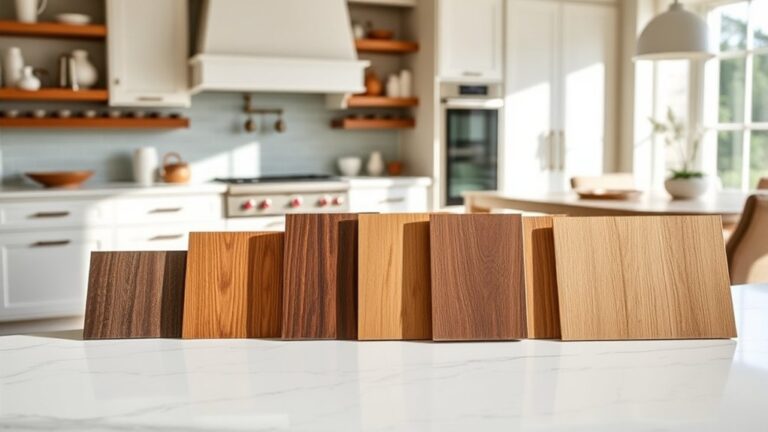
Warm Wood Tones vs Painted Cabinet Colors: Which to Choose?
Although both warm wood tones and painted cabinet colors offer distinct advantages, choosing between them depends largely on your kitchen’s style and the atmosphere you want to create. Warm wood brings natural beauty and timeless appeal, fitting well with traditional or rustic cabinet styles.
Warm wood tones evoke timeless beauty, perfect for traditional kitchens, while painted colors suit modern, personalized spaces.
Painted finishes, on the other hand, align with modern design trends, allowing you to experiment with color psychology and tailor your space to personal preferences.
Consider these factors to decide:
- Maintenance comparisons: Wood may require more care but ages gracefully; painted surfaces can chip but allow easy color updates.
- Aesthetic appeal: Warm wood adds richness and texture; painted cabinets offer versatility and brightness.
- Design trends: Choose wood for classic warmth or painted colors for contemporary flair.
Balance your vision with practical needs to find the perfect fit.
How Cabinet Color Affects Your Kitchen’s Mood
Since your kitchen cabinets cover a large visual area, their color plays a powerful role in shaping the room’s mood. By understanding color psychology, you can select hues that evoke specific emotional impacts, creating a space that feels inviting, energizing, or calming.
For instance, soft blues and greens foster tranquility, perfect for a relaxing kitchen vibe, while warm yellows and oranges stimulate appetite and conversation. Neutral tones like greys or whites offer a clean, timeless backdrop that lets other design elements shine.
Choosing cabinet colors with intention helps you craft an atmosphere that suits your lifestyle and daily routines. Remember, the right cabinet color doesn’t just look good; it influences how you feel every time you step into your kitchen.
Matching Cabinet Colors With Countertops and Backsplash
When you choose cabinet colors, you’ll want to contemplate how they harmonize with your countertops and backsplash to create a cohesive and balanced look. Achieving color harmony guarantees your kitchen feels unified, while incorporating texture contrast adds visual interest and depth. Consider these practical tips:
- Pair neutral cabinets with vibrant backsplashes to highlight texture contrast without overwhelming the space.
- Match cabinet tones with subtle hues in your countertop for seamless color harmony.
- Use contrasting finishes, like matte cabinets against glossy backsplashes, to enhance texture contrast and elevate aesthetic appeal.
Tips for Testing and Finalizing Your Kitchen Cabinet Color
Start by sampling paint swatches on your cabinets to see how colors shift throughout the day under different lighting. Pay close attention to natural and artificial light, as they can dramatically change the tone you thought you loved.
Finally, test your favorite shades alongside your kitchen accessories to guarantee everything harmonizes beautifully before making a final choice.
Sample Paint Swatches
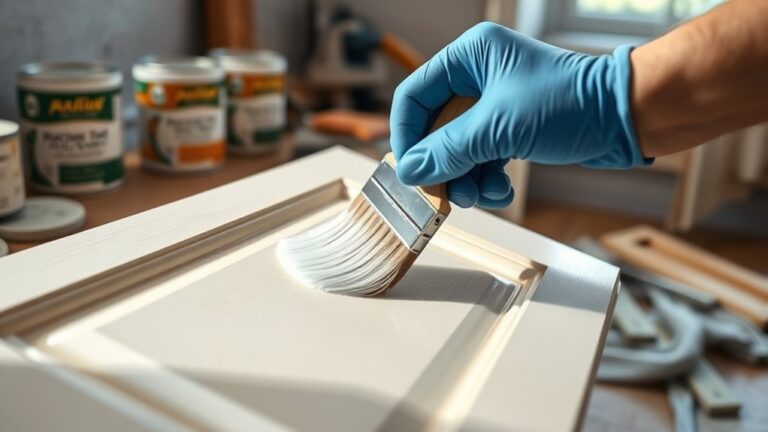
Choosing three to five sample paint swatches is a smart way to narrow down your kitchen cabinet color. This hands-on approach lets you see how each hue plays with your kitchen’s style and lighting. When selecting, consider current cabinet color trends but stay true to your personal taste.
Use sample color palettes to compare tones side-by-side before committing.
Here’s how to make the most of your paint swatches:
- Apply swatches on cabinet doors or large boards for a realistic preview
- Observe swatches in different lighting to check color consistency
- Live with the samples for a few days to assess how they feel
This practical testing guarantees you finalize a color that enhances your kitchen’s aesthetic and suits your lifestyle perfectly.
Observe Lighting Effects
Although paint swatches provide a useful preview, lighting can dramatically alter how your kitchen cabinet color appears throughout the day. To get it right, observe your chosen color under both natural light and artificial light.
Morning sunlight’s cool tones differ from the warm glow of evening lighting fixtures, affecting color saturation and room ambiance. Notice how reflective surfaces nearby amplify or mute hues.
Consider the color temperature of your bulbs. Cool whites can make colors pop, while warm tones soften them. Don’t forget seasonal changes: brighter summer light versus dimmer winter days can shift perception.
Test With Accessories
When you bring accessories into the mix, they reveal how your cabinet color interacts with the textures and tones around it. Testing with kitchen accessories helps you see if your chosen shade complements your space’s overall vibe.
Before you commit, try placing items like dish towels, small appliances, or decorative bowls near the cabinets. This hands-on approach guarantees your color coordination feels balanced and intentional.
Focus on:
- Mixing different materials, such as wood, metal, and ceramic, to test harmony
- Using colorful accessories to spotlight potential contrasts or blends
- Swapping items to observe how changing accents affect the cabinet’s appeal
This step fine-tunes your decision, so your kitchen cabinets don’t just look good but feel right in your daily routine.
Frequently Asked Questions
How Do Cabinet Colors Impact Kitchen Resale Value?
You’ll find that cabinet colors subtly influence resale value; neutral tones gently appeal to most buyers, while bold contrasts make a striking statement but risk alienating some. Balancing taste with trends keeps your kitchen inviting and market-ready.
What Cabinet Color Trends Are Popular in 2024?
You’ll find pastel hues and bold contrasts dominate 2024’s cabinet trends, offering both softness and drama. Mixing these colors creates a dynamic, stylish kitchen that’s practical yet visually appealing, perfectly balancing modern aesthetics and functionality.
Can I Change Cabinet Color Without Repainting?
Why repaint when cabinet refinishing offers a palette of color alternatives? You can transform your kitchen’s soul with stains, glazes, or peel-and-stick veneers, achieving beauty and practicality without the mess or time of traditional painting.
How to Maintain and Clean Colored Kitchen Cabinets?
You’ll want to use gentle cleaning products and soft cloths to avoid damage. Regular maintenance tips include wiping spills promptly and avoiding harsh chemicals. This helps keep your colored kitchen cabinets vibrant and stylish while preserving their finish beautifully.
Are There Eco-Friendly Cabinet Paint Options Available?
You can trust eco-friendly brands like ECOS Paints, which use sustainable materials and zero VOCs. They offer beautiful, durable finishes that enhance your kitchen’s vibe while keeping it healthy and environmentally conscious. Perfect for your aesthetic goals.