How to Adjust Kitchen Cabinet Doors
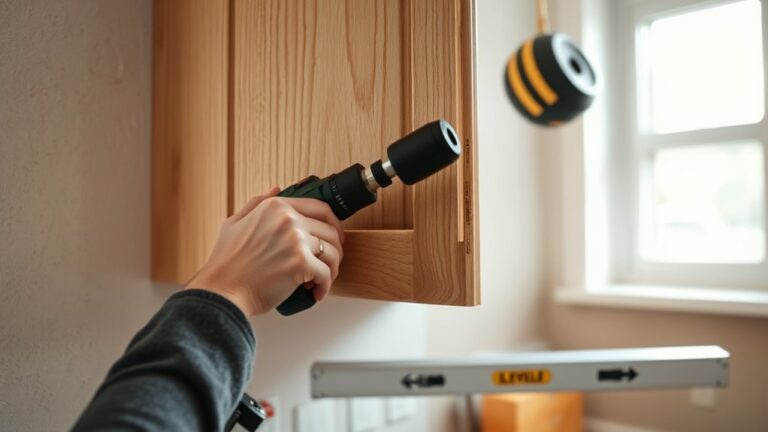
To adjust your kitchen cabinet doors, start by gathering a screwdriver, level, and measuring tape. Identifying the hinge type is essential before you begin any adjustments. This will help you understand how to properly align the doors.
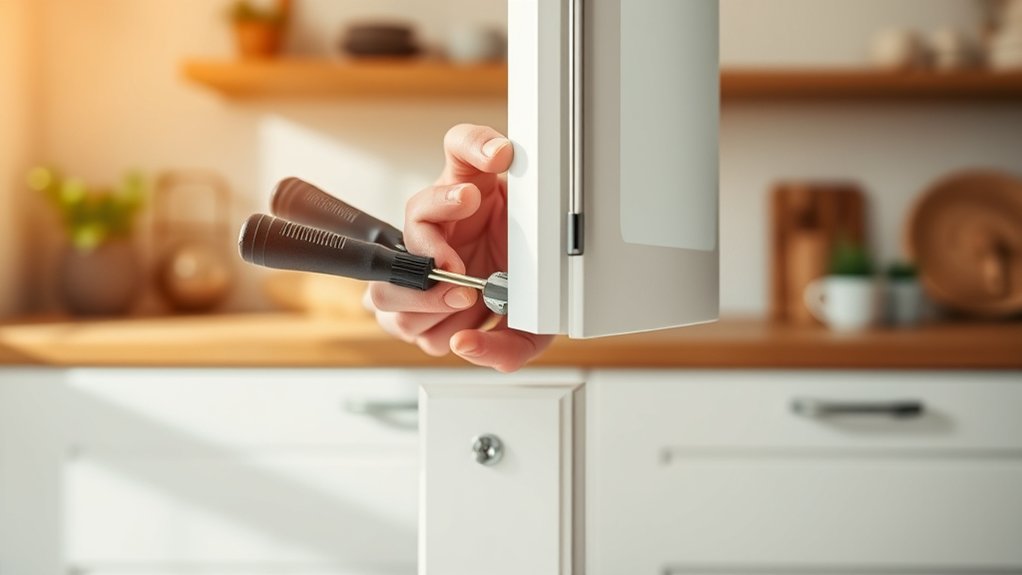
Next, tighten all screws and use the hinge adjustment screws to fine-tune the door’s alignment—up, down, and side to side. Check the gaps between doors and verify that they close flush without sticking.
If the doors sag or misalign, reposition the hinge plates or adjust the screws accordingly. Keep hinges clean and lubricated to ensure smooth operation.
For detailed steps and troubleshooting tips, you can explore further guidance.
Tools You’ll Need to Adjust Kitchen Cabinet Doors
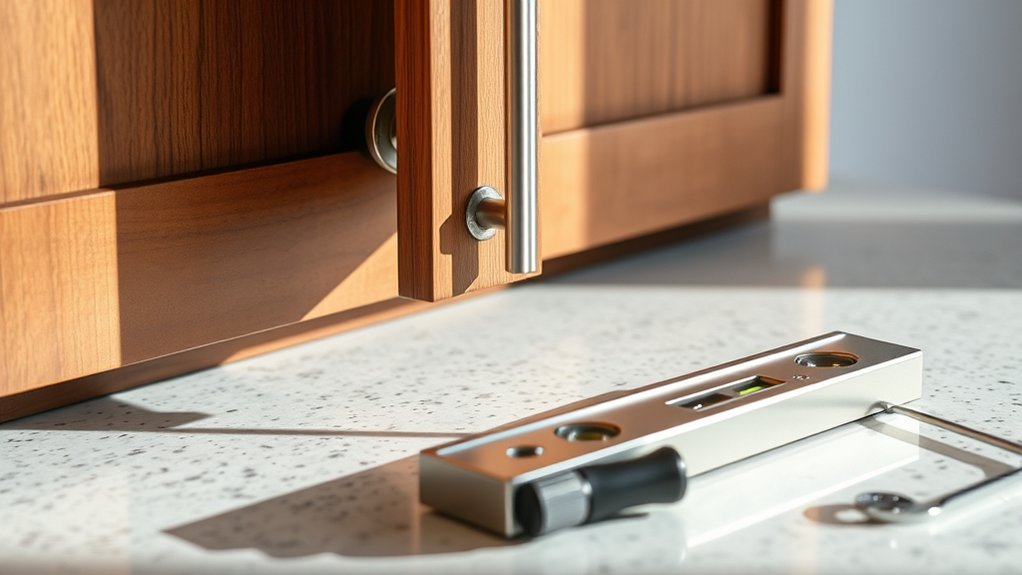
To adjust kitchen cabinet doors effectively, you’ll need a few essential tools on hand. Start with a screwdriver set, preferably with both Phillips and flathead options, as these are critical for loosening and tightening hinge screws during cabinet alignment.
A power drill with adjustable torque can speed up the process but isn’t mandatory. You’ll also require a level to guarantee doors sit straight, which is fundamental for precise cabinet alignment.
A tape measure helps verify even gaps between doors and frames. For hinge maintenance, a small brush or compressed air can remove dust and debris from hinge mechanisms, assuring smooth operation.
Finally, having a pair of needle-nose pliers can assist when adjusting or replacing stubborn hinge components. These tools will streamline your door adjustment process efficiently.
Adjust Kitchen Cabinet Door Hinges Step-by-Step
Start by identifying the type of hinges on your cabinet doors, as adjustment methods vary.
Next, use the appropriate screws to fine-tune the door’s alignment.
Finally, check the door position to verify it sits flush and opens smoothly.
Identify Hinge Types
Hinges come in several common types, each requiring a specific adjustment approach. Before you start, identify your cabinet’s hinge type to guarantee proper handling. Focus on these main categories:
- Overlay hinges: Mounted on the cabinet frame with the door overlaying the frame; typically made from steel or brass, common in brands like Blum and Hettich.
- Inset hinges: Allow the door to sit flush within the cabinet frame; often crafted from stainless steel for durability.
- Partial overlay hinges: Combine features of the first two, used when two doors share a partition.
Check the hinge materials, as steel hinges behave differently from brass or stainless steel. Recognizing hinge brands also helps, as adjustment mechanisms vary slightly among manufacturers. This knowledge sets the foundation for precise hinge adjustments.
Adjust Hinge Screws
Begin by locating the adjustment screws on your cabinet hinges, which control the door’s alignment in three directions: up and down, side to side, and in and out. Different hinge types, such as European concealed or overlay hinges, feature specific screw adjustments. Use a screwdriver to turn these screws incrementally, testing door movement after each change.
| Adjustment Direction | Screw Location | Effect |
|---|---|---|
| Up and Down | Mounting plate screws | Raises or lowers door position |
| Side to Side | Hinge arm screws | Moves door left or right |
| In and Out | Depth adjustment screws | Adjusts door depth relative to frame |
Mastering these screw adjustments guarantees precise door alignment and smooth operation.
Align Door Position
After adjusting the hinge screws to fine-tune the door’s vertical, horizontal, and depth positions, you’ll want to focus on aligning the door itself for ideal fit and function. Proper alignment assures consistent door spacing and maintains the cabinet level, critical for smooth operation and aesthetics.
Follow these steps to align the door position accurately:
- Close the door and observe the gaps around it; adjust the hinges to achieve uniform door spacing on all sides.
- Use a level across the cabinet face to confirm the door sits flush and aligns with adjacent doors or cabinet edges.
- Tighten all hinge screws once the door is perfectly aligned, preventing shifts during use.
This method guarantees your cabinet doors operate smoothly and look professionally installed.
Fix Sagging and Misaligned Kitchen Cabinet Doors
If your kitchen cabinet doors sag or don’t align properly, you’ll need to adjust the hinges to restore their position. Start by inspecting the hinges for looseness or damage, as proper hinge maintenance is critical for door stability.
Adjust sagging or misaligned kitchen cabinet doors by inspecting and maintaining hinges for optimal stability.
Tighten all screws securely, focusing on both the hinge-to-door and hinge-to-cabinet connections. If the door still sags, slightly raise the hinge plate by loosening its screws, repositioning it upward, then retightening.
For minor misalignment, adjust the hinge’s side-to-side screws to shift the door laterally. Avoid forcing adjustments; precise, incremental movements yield the best results.
Regularly maintaining hinges prevents sagging and misalignment, ensuring doors close flush and operate smoothly. This method prolongs cabinet life and improves overall kitchen functionality.
How to Adjust Kitchen Cabinet Doors With Different Hinges
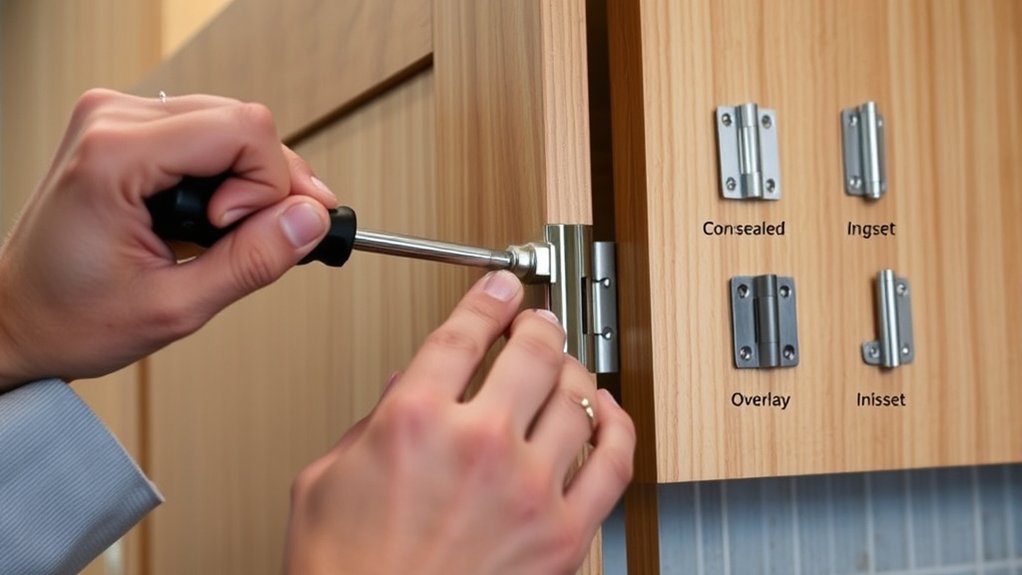
Adjusting cabinet doors effectively depends on the type of hinges installed, as each hinge design requires specific techniques to correct alignment and fit. Different hinge types and door materials demand precise adjustments for ideal operation.
- European hinges: Use the adjustment screws for side-to-side, up-and-down, and in-out movements. These allow fine-tuning without removing the door, essential for overlay doors with heavier materials.
- Surface-mounted hinges: Loosen the screws securing the hinge to the door, reposition for alignment, then retighten. These work best on lightweight door materials.
- Inset hinges: Adjust the door by tightening or loosening the hinge screws, guaranteeing the door sits flush within the frame, especially important for solid wood doors.
Mastering these steps guarantees your cabinet doors align perfectly regardless of hinge types or door materials.
How to Identify When Kitchen Cabinet Doors Need Adjustment
You’ll know your cabinet doors need adjustment when you spot visible misalignment or uneven gaps between them. If doors don’t close flush or feel tight when opening, that’s another clear sign.
Addressing these issues promptly guarantees smooth operation and prevents further wear.
Visible Door Misalignment
When kitchen cabinet doors appear uneven or fail to close flush, it signals visible misalignment that requires correction. You’ll want to inspect for noticeable door gaps, uneven edges, or inconsistent spacing that disrupts the cabinet’s uniform look. Addressing these issues not only improves function but also serves as a key cosmetic upgrade.
To identify visible door misalignment:
- Examine the horizontal and vertical alignment of adjacent doors for irregular gaps or overlaps.
- Check if the doors sit parallel to the cabinet frame without leaning or tilting.
- Look for inconsistent spacing between doors and surrounding cabinets, which compromises aesthetic symmetry.
Correcting these factors will restore a sleek, professional finish and guarantee your kitchen cabinets operate smoothly and look their best.
Difficulty Opening Or Closing
Struggling to open or close your kitchen cabinet doors signals a mechanical issue that demands attention. Sticking doors often result from worn hinges or cabinet warping caused by humidity changes. These problems can cause doors to catch or drag against the frame, making operation difficult. Identifying the root cause lets you target adjustments effectively.
| Symptom | Possible Cause |
|---|---|
| Door sticks halfway | Warped cabinet door |
| Door won’t close | Misaligned hinges |
| Door swings open | Loose screws |
| Uneven gaps | Hinge wear |
| Door rubs frame | Warping or swelling |
Check these signs to determine if your cabinet doors need tightening, hinge replacement, or warping correction for smooth function.
Tips for Preventing Kitchen Cabinet Door Problems
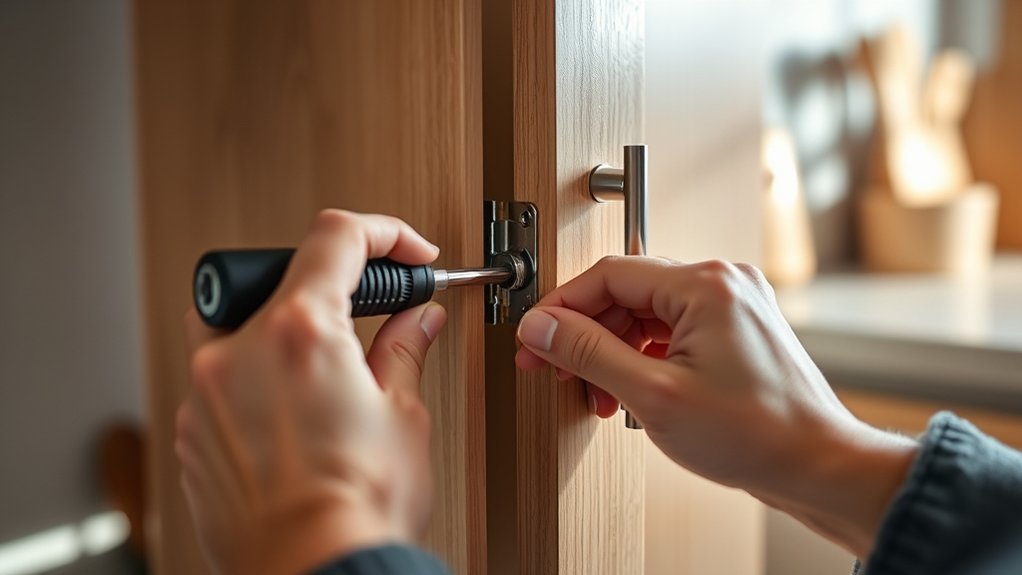
Although regular use can cause wear on kitchen cabinet doors, you can prevent most common problems with routine maintenance and proper handling. Focus on these three key areas for effective preventive maintenance:
- Regular inspections and hinge lubrication: Check hinges for rust or looseness monthly, and apply suitable lubricant to maintain smooth door movement and prevent squeaks or sticking.
- Door alignment and installation tips: Confirm hinges are correctly installed and doors are properly aligned to avoid uneven gaps or binding. Adjust screws as needed to maintain ideal fit.
- Humidity control and cabinet organization: Keep kitchen humidity levels stable to prevent wood warping. Organize cabinet contents evenly to reduce stress on doors and hinges.
Using quality materials during installation also enhances durability, minimizing future adjustment needs. Following these steps keeps your cabinets functional and extends their lifespan.
When to Call a Professional for Kitchen Cabinet Door Repairs
How do you know if a kitchen cabinet door issue requires professional repair? If adjusting hinges or tightening screws doesn’t resolve misalignment, warping, or persistent gaps, it’s time to call a professional.
Complex problems, like damaged door frames, stripped screw holes, or malfunctioning soft-close mechanisms, typically need expert tools and experience. During kitchen remodeling or cabinet installation, professionals guarantee precise alignment and secure fittings, preventing future issues.
If doors sag unevenly or hardware repeatedly fails despite your efforts, a licensed technician can assess underlying structural problems. Attempting advanced repairs without proper skills risks further damage, increasing costs.
Hiring a professional guarantees durable fixes, preserves cabinet integrity, and maintains aesthetic quality. Don’t hesitate to seek expert help when basic adjustments won’t restore proper door function.
Frequently Asked Questions
What Type of Wood Is Best for Kitchen Cabinet Doors?
Looking for the best wood for kitchen cabinet doors? You’ll want hardwood options like maple or oak for durability, or plywood choices for stability.
Consider door finishes and design trends to match your kitchen’s style perfectly.
How Do I Clean and Maintain Kitchen Cabinet Hardware?
You should use gentle cleaning techniques tailored to hardware materials like brass or stainless steel. Avoid harsh chemicals; instead, use mild soap, warm water, and a soft cloth.
Regularly lubricate moving parts to maintain smooth function.
Can I Change Cabinet Door Styles Without Replacing the Frame?
Imagine swapping faded cabinet doors with sleek new ones. You can change door style options without replacing the frame, as long as you guarantee frame compatibility, precise measurements, and matching hinge placement for a seamless, professional fit.
What Are Common Causes of Cabinet Door Warping?
You’ll find cabinet door warping often caused by moisture damage, temperature fluctuations, inadequate support, or poor installation. These factors distort wood, so controlling humidity, ensuring proper mounting, and using quality materials helps prevent warping effectively.
How Long Do Kitchen Cabinet Doors Typically Last?
You’ll find a kitchen door lifespan typically ranges from 15 to 30 years. Factors affecting longevity include material quality, humidity, usage frequency, and maintenance.
Proper care helps you extend your cabinet doors’ functional life effectively.