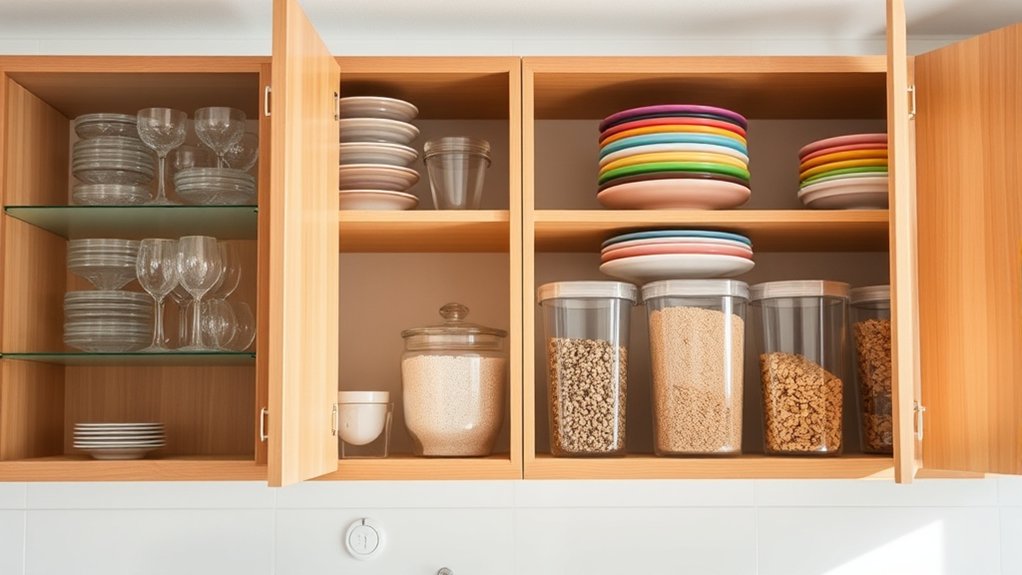
Where to Put Things in Kitchen Cabinets
To organize your kitchen cabinets efficiently, knowing where to put things in kitchen cabinets is essential.
Place frequently used items like everyday dishes and cookware between waist and eye level for easy reach. Store heavier items at waist height to avoid strain, and keep less-used gadgets in higher or lower cabinets.
Use clear containers and labels for pantry staples, and add door-mounted racks or drawer dividers to maximize space.
Thoughtful placement keeps your kitchen functional and tidy. Uncover practical tips for storing everything from baking supplies to cleaning products.
Choosing the Best Spot for Every Kitchen Item

Anyone organizing kitchen cabinets should start by grouping items based on how often you use them. Begin by evaluating your kitchen layout to determine which cabinets offer the best cabinet accessibility for daily essentials.
Place frequently used items like spices and cooking utensils in easily reachable spots near your stove or prep areas. Store less-used gadgets or seasonal cookware in higher or lower cabinets where accessibility isn’t as critical.
Be mindful of weight, keeping heavier items closer to waist level to avoid strain. Use cabinet organizers or pull-out shelves to maximize space and maintain order.
Storing Everyday Dishes in Kitchen Cabinets for Easy Access
You’ll want to store your everyday dishes on shelves at a comfortable height to grab them quickly without stretching or bending. Group plates, bowls, and cups by how often you use them to keep your routine smooth and efficient.
This simple setup helps you stay organized and saves time during busy meal prep.
Optimal Shelf Height
How high should you set your shelves to make everyday dishes easily accessible? Start by considering the average height of the dishes you use daily, such as plates, bowls, and cups. Aim for shelf placement that allows you to grab these items without bending or stretching.
Typically, setting shelves about 12 to 15 inches apart works well for most dishware. Use height adjustments to maximize space, especially if your cabinet shelves are adjustable. Place frequently used dishes on shelves between waist and eye level for quick reach.
Reserve higher or lower shelves for less-used items. By customizing shelf height to your dish sizes and usage, you make your kitchen more efficient and reduce hassle during meal prep or cleanup. Ideal shelf height is key to effortless access and organized cabinets.
Grouping By Usage
Adjusting shelf height sets the stage for organizing your dishes by how often you use them. To enhance item accessibility and storage efficiency, group everyday dishes within easy reach. This ergonomic design reduces strain and streamlines meal prep.
Use decluttering strategies to separate frequently used items from seasonal storage, keeping your kitchen layout functional and visually organized. Apply category grouping to maintain order and simplify retrieval.
Consider organizing your kitchen cabinets like this:
- Plates and bowls you use daily on middle shelves
- Cups and mugs near the coffee station
- Special occasion dishes in higher or less accessible cabinets
- Baking supplies grouped together for quick access
- Seasonal storage tucked away, clearly labeled
Following these steps guarantees your kitchen remains efficient and clutter-free.
Best Kitchen Cabinets for Pots, Pans, and Cooking Utensils
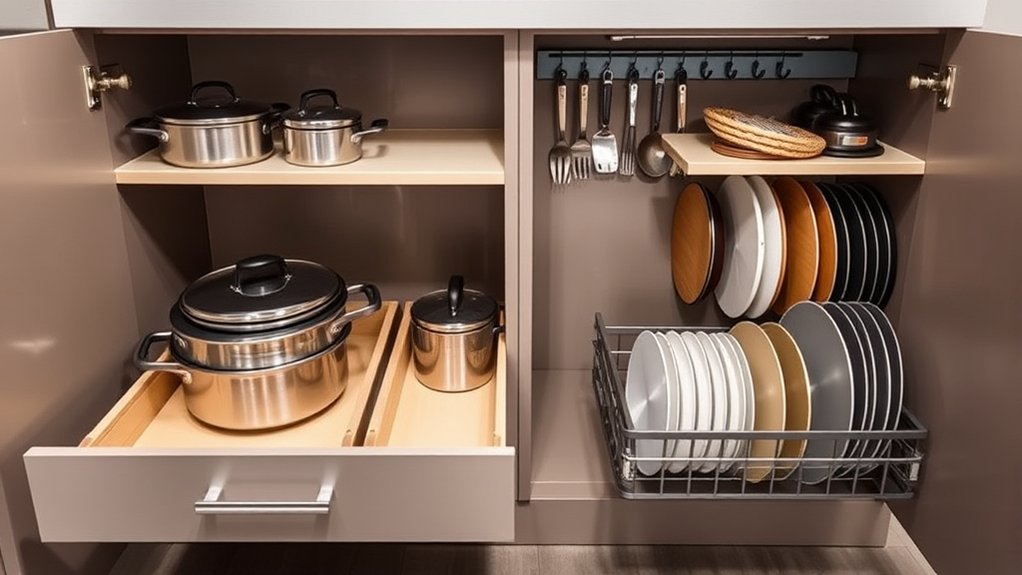
You’ll want deep drawers to store your pots and pans, making it easy to pull them out without stacking. Installing pull-out racks keeps everything within reach and organized.
For cooking utensils, place organizers near your prep area to grab tools quickly while you cook.
Deep Drawers For Pots
Deep drawers offer an ideal solution for storing pots, pans, and cooking utensils, combining easy access with efficient use of space. You can maximize their potential by using deep drawer dividers to separate different items, keeping everything orderly and easy to find.
Here are some pot organization tips to help you:
- Stack pots with lids beside them, using dividers to prevent sliding
- Store larger pans at the bottom and smaller ones on top
- Dedicate sections for cooking utensils like spatulas and ladles
- Use adjustable dividers to customize the space based on your cookware sizes
- Keep frequently used items in the top drawers for quick access
Pull-Out Racks Convenience
Although traditional cabinets can work, pull-out racks bring unmatched convenience to storing pots, pans, and cooking utensils. These racks slide out smoothly, letting you see and reach everything without digging through stacks.
The pull-out racks benefits include maximizing accessibility by reducing bending and reaching, which saves time and effort during cooking. You can organize your cookware by size or type, keeping heavier items on lower racks for safety.
Installing pull-out racks also helps maintain cabinet cleanliness since items stay neatly in place. When choosing these racks, look for sturdy materials and smooth glides to guarantee durability and ease of use.
Utensil Organizers Placement
Pull-out racks make accessing pots and pans easier, but utensil organizers offer similar benefits for smaller cooking tools. You’ll want to place utensil drawer dividers in a shallow drawer near your prep area to keep forks, spoons, and knives neatly sorted.
Magnetic utensil strips mounted on the inside of cabinet doors or backsplash free up drawer space and keep frequently used tools within reach. Consider these ideal spots for utensil organizers:
- Shallow drawers next to the stove for spatulas and spoons
- Cabinets near prep sinks for peelers and whisks
- Inside cabinet doors for magnetic utensil strips holding knives
- Deep drawers with adjustable utensil drawer dividers for bulkier tools
- Near cutting boards for easy access to measuring spoons and scissors
Organizing utensils this way saves time and keeps your kitchen efficient.
How to Keep Your Pantry Staples Neat and Handy
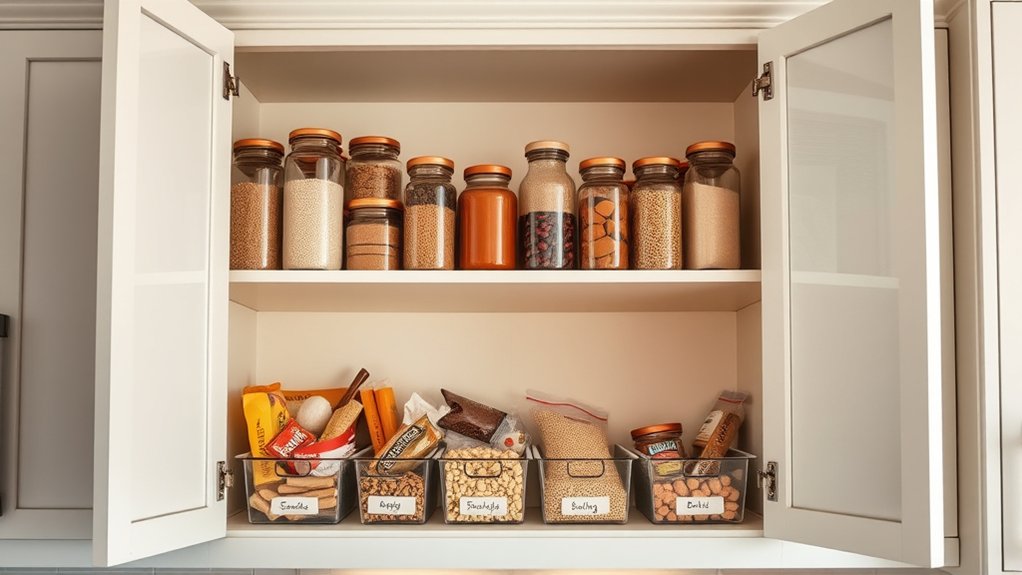
Start by grouping your pantry staples into categories like grains, canned goods, baking supplies, and snacks. Use pantry organization strategies that make sense for your cooking habits and space. Store similar items together so you can easily find what you need.
Invest in clear, airtight containers and labeling storage containers to keep everything visible and fresh. Labels help you quickly identify contents and expiration dates, reducing waste. Arrange the containers at eye level or within easy reach, placing frequently used items upfront.
Use baskets or bins for smaller packages to prevent clutter and maintain order. Regularly check and rotate your staples to keep your pantry neat and handy. These simple steps streamline your kitchen workflow and save you time during meal prep.
Where to Store Small Appliances in Kitchen Cabinets
Small appliances can quickly clutter your kitchen counters if not stored properly. To keep your space neat, designate specific cabinets for these items. Use appliance stacking to maximize vertical space, stacking lightweight appliances carefully to avoid damage.
For rarely used gadgets, consider seasonal storage in higher or less accessible cabinets. This frees up prime cabinet real estate for daily essentials. Here’s how to organize:
- Store frequently used appliances at eye level for easy access
- Stack mixers and blenders with their attachments to save space
- Reserve lower cabinets for heavier appliances like slow cookers
- Use adjustable shelves to accommodate varying appliance heights
- Keep seasonal appliances, like ice cream makers, in upper cabinets
Storing Glassware and Drinkware Safely in Cabinets
You’ll want to choose sturdy shelves at a comfortable height to store your glassware safely. Protect your glasses by leaving enough space between them to prevent chips and cracks.
Organize your drinkware based on how often you use each type to keep everything accessible and secure.
Choosing the Right Shelves
When selecting shelves for storing glassware and drinkware, consider both stability and accessibility to prevent accidents and make daily use easier. Opt for sturdy shelf materials like solid wood or metal to support the weight and reduce vibration. Adjustable shelves let you customize spacing to fit tall wine glasses or short tumblers, maximizing space.
Keep shelves easy to clean and resistant to moisture. Arrange shelves so frequently used items are within easy reach.
Here’s what to look for:
- Durable shelf materials that won’t warp or sag
- Adjustable shelves for flexible height options
- Non-slip liners to keep glassware steady
- Smooth edges to avoid chipping glass
- Open shelving or glass-front cabinets for visibility and quick access
Choosing the right shelves guarantees your drinkware stays safely stored and conveniently accessible.
Preventing Glassware Damage
Although glassware adds elegance to your kitchen, improper storage can lead to chips, cracks, or breaks. To prevent damage, follow essential glass storage tips. Always store glasses upright to reduce pressure on rims, which are the most fragile parts.
Use protective padding like shelf liners or soft cloths between stacked items to cushion and prevent scratches. Avoid overcrowding cabinets; give each item enough space to avoid knocking.
Consider adjustable shelves to fit different glass sizes securely. For stemware, hang them by the base or use specialized racks to keep them stable.
Regularly inspect your glassware for signs of wear or damage and replace protective padding as needed. These practical steps will keep your glassware safe and extend its lifespan.
Organizing by Usage Frequency
Organizing your glassware and drinkware by how often you use them makes daily access easier and helps maintain their condition. To optimize your kitchen workflow, place frequently used items within easy reach to improve item accessibility. Store less-used or seasonal pieces higher or lower in cabinets to save prime space.
Consider these tips:
- Keep everyday glasses at eye level for quick grab-and-go.
- Reserve a separate shelf for delicate or special occasion drinkware.
- Use shelf risers to maximize vertical space safely.
- Group similar items together to streamline your routine.
- Store rarely used items in the back or top cabinets to reduce clutter.
Organizing Baking Supplies and Tools in Kitchen Cabinets
Five essential steps can help you efficiently arrange your baking supplies and tools in kitchen cabinets. Start by grouping similar items for better baking tool storage. Use clear containers for ingredient organization, so you can quickly identify what you need.
Dedicate a cabinet near your prep space to keep everything accessible. Label shelves or containers to maintain order. Finally, use drawer dividers or small bins to prevent clutter.
| Baking Tools | Baking Ingredients |
|---|---|
| Measuring cups/spoons | Flour, sugar, cocoa |
| Mixing bowls | Baking powder, soda |
| Spatulas, whisks | Vanilla, spices |
Organizing this way minimizes time spent searching and maximizes efficiency during baking sessions.
Safe Storage for Cleaning Supplies in Kitchen Cabinets
Since cleaning supplies often contain strong chemicals, you should store them carefully to keep your kitchen safe and organized. Prioritize cleaning supply safety by selecting a cabinet away from food and out of children’s reach. Use childproof storage solutions like locks or latches to prevent accidental access. Keep everything visible and accessible to avoid spills or mixing chemicals.
Consider these tips for safe storage:
- Store supplies in a lower cabinet with a childproof lock
- Use clear, labeled bins to group similar items
- Avoid storing near heat sources or food
- Keep spray bottles upright to prevent leaks
- Regularly check expiration dates and dispose of old products
Maximizing Kitchen Cabinet Doors and Drawer Space
Keeping cleaning supplies secure is just one way to maintain order in your kitchen. To maximize cabinet doors and drawer space, start by installing door mounted racks. These racks hold small items like spices, lids, or cleaning sprays, freeing up shelf space.
Use narrow racks for bottles and wider ones for cutting boards or trays. Inside drawers, add dividers to keep utensils and gadgets neatly separated. Don’t overlook cabinet lighting; installing LED strips or puck lights inside cabinets helps you see contents clearly, reducing clutter and wasted time.
Good lighting also makes it easier to find items stored deep inside drawers or on high shelves. By using door mounted racks and enhancing cabinet lighting, you’ll optimize every inch of your kitchen storage efficiently and practically.
How to Maintain Your Kitchen Cabinet Organization
Although organizing your kitchen cabinets effectively takes some effort, maintaining that order requires consistent habits and simple routines. To keep your kitchen clutter-free, adopt these cabinet maintenance tips:
Regularly declutter and remove expired items. Wipe down shelves to prevent dust and spills. Rotate pantry goods using seasonal organization strategies.
Group similar items together for easy access. Review and adjust your system every few months.
Frequently Asked Questions
How Do I Prevent Cabinet Doors From Slamming Shut?
You can prevent cabinet doors from slamming shut by installing soft close hinges, which slow the door’s movement. Additionally, attach cabinet bumpers inside the frame to cushion the door, reducing noise and impact effectively.
What Materials Are Best for Kitchen Cabinet Interiors?
Imagine a fortress protecting your essentials: you’ll want wood options like maple or birch for durability, paired with moisture-resistant cabinet liners. These storage solutions keep your cabinets fresh, organized, and ready to handle daily kitchen challenges.
Can I Install Lighting Inside Kitchen Cabinets?
Yes, you can install cabinet lighting options like LED strips or puck lights. For easy installation, plan wiring paths and use battery-powered lights if needed. Guarantee proper placement to illuminate contents without shadows or glare.
How Do I Childproof Kitchen Cabinets Effectively?
You’ll guarantee child safety by installing cabinet locks on every accessible door. Choose strong, easy-to-use locks, position them high or behind handles, and regularly check for wear.
This systematic approach keeps little hands away from hazards.
What Are the Best Cleaning Products for Cabinet Surfaces?
You won’t need a Victorian-era scrubbing brush when you choose eco-friendly options like vinegar, mild soap, or specialized wood cleaners.
Match your product to surface types, such as laminate, wood, or glass, for safe, effective cabinet cleaning every time.