What Is the Best Paint for Kitchen Cabinets
You’ll want the best paint for kitchen cabinets to be durable and have high adhesion, resisting chipping, fading, and moisture.
Satin or semi-gloss finishes work best, offering easy cleaning and scratch resistance.
Acrylic enamel paints or waterborne alkyds combine smoothness with longevity.
Oil-based paints provide hardness but may yellow over time, while latex dries faster and resists yellowing.
Top brands like Benjamin Moore Advance and Sherwin-Williams ProClassic excel here.
Exploring further will help you choose the ideal type, finish, and maintenance tips for lasting results.
Key Qualities of Paint for Kitchen Cabinets
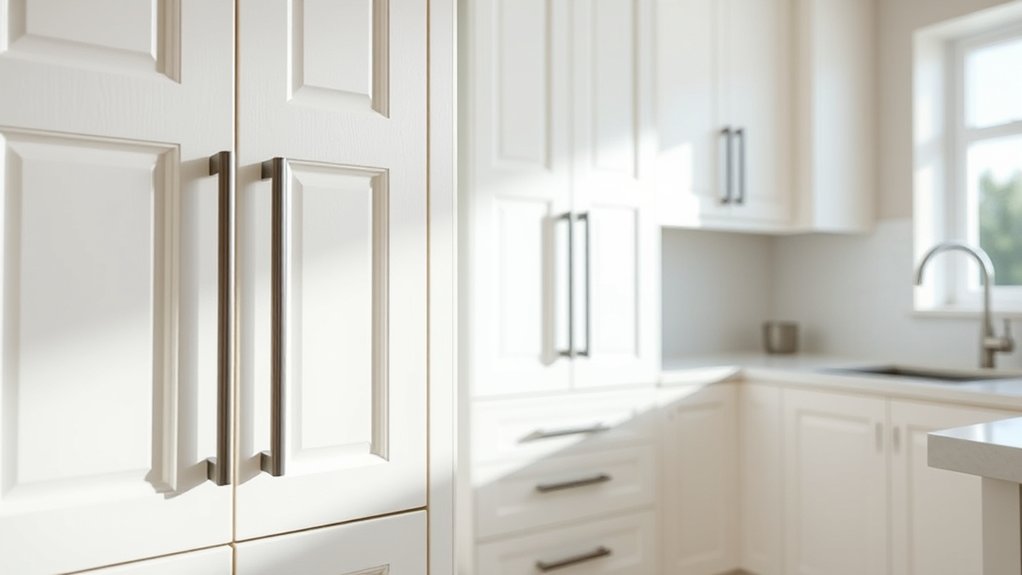
Durability stands as the most essential quality when selecting paint for kitchen cabinets, as these surfaces endure frequent use and exposure to moisture, heat, and cleaning agents. You need paint that maintains color durability to prevent fading or discoloration over time.
Finish selection also plays a critical role; opting for semi-gloss or satin finishes enhances resistance to stains and facilitates easier cleaning. Additionally, these finishes improve the painted surface’s ability to withstand scratches and wear.
You should look for paints formulated specifically for high-traffic areas and moist environments to guarantee longevity. By prioritizing these factors, color durability and appropriate finish selection, you’ll achieve a cabinet surface that not only looks excellent but also performs reliably under kitchen conditions.
How Different Paint Types Hold Up on Cabinets
When choosing paint for your kitchen cabinets, understanding how different types perform is essential to ensuring long-lasting results. Paint durability varies markedly between formulations, impacting how well your cabinets withstand daily wear, moisture, and cleaning.
Acrylic enamel paints offer excellent resistance to chipping and fading, reducing the need for frequent cabinet maintenance. Alkyd paints provide a hard, smooth finish but can yellow over time, which may affect aesthetic longevity.
Water-based paints dry faster and emit fewer odors, yet some may sacrifice durability compared to solvent-based options. You should also consider the paint’s adhesion properties, as poor adhesion leads to peeling or cracking, increasing maintenance demands.
Latex vs. Oil-Based Paint: Which Is Best for Your Cabinets?
How do latex and oil-based paints compare in performance for kitchen cabinets? You’ll want to weigh cabinet durability and paint application ease when choosing.
- Cabinet Durability: Oil-based paints generally offer a harder, more durable finish, resisting chips and wear better than latex. If you want long-lasting cabinets, oil-based is a solid choice.
- Paint Application: Latex paints dry faster and clean up with water, making application quicker and less toxic. Oil-based requires mineral spirits for cleanup and longer drying times, demanding more patience.
- Flexibility and Yellowing: Latex paint resists yellowing over time and remains flexible, preventing cracks. Oil-based can yellow, especially in low light, and may become brittle.
Choose based on your tolerance for application complexity versus desired durability.
Why Satin and Semi-Gloss Finishes Are Perfect for Kitchen Cabinets
Choosing the right paint finish greatly impacts both the appearance and maintenance of your kitchen cabinets. Satin sheen offers a subtle, smooth look that hides imperfections while providing moderate resistance to moisture and stains.
This finish balances aesthetics and functionality, making it ideal for busy kitchens. On the other hand, semi gloss durability excels in high-traffic areas, providing a tough, reflective surface that resists scratches, grease, and frequent cleaning.
Its increased gloss level enhances light reflection, brightening your kitchen space. Both finishes are water-resistant and easier to clean than flat or matte options, guaranteeing longevity.
Best Paint Brands for Kitchen Cabinets
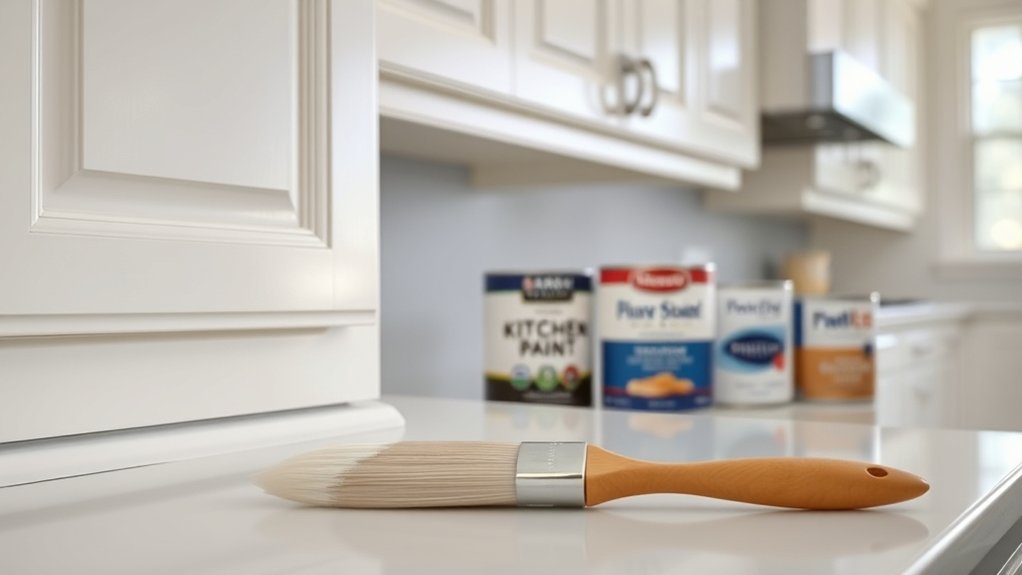
Several top-tier paint brands stand out for their durability, finish quality, and ease of application on kitchen cabinets. When selecting paint, you want high quality finishes that resist wear and maintain vibrancy.
Top paint brands excel in durability, finish quality, and ease of application for vibrant, long-lasting kitchen cabinets.
Here are three brands to take into account:
- Benjamin Moore Advance offers a smooth, furniture-like finish with excellent adhesion and durability. This alkyd-based waterborne formula provides eco friendly options with low VOCs.
- Sherwin-Williams ProClassic is known for its hard, enamel-like finish that resists chipping and yellowing. It delivers consistent coverage and is available in eco friendly, low-VOC formulations.
- Behr Alkyd Semi-Gloss Enamel combines oil-based durability with waterborne cleanup, guaranteeing a tough, washable finish ideal for kitchen cabinets.
Choosing any of these brands guarantees you achieve professional-level results with sustainable and long-lasting performance.
How to Prep Kitchen Cabinets for Long-Lasting Paint
Selecting a high-quality paint brand is only part of achieving a durable finish on your kitchen cabinets. Proper preparation is essential to guarantee paint adhesion and longevity. Start with thorough cabinet cleaning to remove grease, dirt, and residues that can interfere with the paint.
Next, perform surface sanding using fine-grit sandpaper to create a smooth, slightly roughened texture that promotes primer and paint bonding.
| Step | Tool/Material | Purpose |
|---|---|---|
| Cabinet Cleaning | Degreaser, Sponge | Remove oils and contaminants |
| Surface Sanding | 220-grit sandpaper | Smooth surface, promote adhesion |
| Dust Removal | Tack cloth or vacuum | Eliminate sanding dust |
| Priming | High-quality primer | Seal surface, improve durability |
Following these steps precisely guarantees a long-lasting, professional paint finish.
Tips for Applying Paint Smoothly on Kitchen Cabinets
Applying paint smoothly on kitchen cabinets requires careful technique and attention to detail to avoid brush marks, drips, and uneven coverage. Start by choosing the right primer selection; a high-quality, bonding primer guarantees better adhesion and a uniform base.
Then, master your sanding techniques. Lightly sand between coats with fine-grit sandpaper to create a smooth surface without damaging the previous layer. Finally, follow these key steps:
- Use a high-quality synthetic brush or a foam roller designed for cabinetry to minimize streaks.
- Apply thin, even coats of paint, allowing adequate drying time between layers.
- Maintain a wet edge while painting to prevent lap marks and secure a consistent finish.
Choosing Paint Colors to Boost Kitchen Style
You’ll want to select paint colors that complement current kitchen trends while enhancing your space’s style. Consider coordinating cabinet hues with wall colors for a cohesive look or introduce bold accent shades to create visual interest.
These choices directly impact the kitchen’s aesthetic and overall ambiance.
Trending Kitchen Color Palettes
Although choosing the right paint color can seem challenging, understanding current kitchen color trends helps you make informed decisions that elevate your space’s aesthetic and functionality. When selecting cabinet paint, consider these trending palettes:
- Modern neutrals: Soft grays, beiges, and off-whites create a versatile, clean backdrop that complements various design elements while enhancing light reflection.
- Vibrant contrasts: Pair deep navy or forest green cabinets with crisp white countertops or backsplashes to introduce dynamic visual interest without overpowering the room.
- Earthy tones: Warm terracotta, muted olive, or rich taupe offer a grounded, organic feel that works well with natural wood accents and matte finishes.
Matching Cabinets With Walls
Color harmony plays an essential role in matching cabinets with walls to enhance your kitchen’s overall style. When selecting cabinet color schemes, consider the undertones and saturation levels to guarantee seamless integration with your wall paint harmony. You want complementary or analogous colors on the color wheel to create visual cohesion.
For example, pairing soft gray cabinets with cool-toned walls maintains a balanced, modern look. Avoid clashing hues that disrupt flow or overwhelm the space. Additionally, factor in natural and artificial lighting, as they influence perceived color relationships.
Testing samples in your kitchen environment is critical for accuracy. By precisely coordinating your cabinet color schemes with wall paint harmony, you elevate the kitchen’s aesthetic, making it appear more spacious, inviting, and professionally designed.
Using Bold Accent Hues
Bold accent hues inject personality and energy into your kitchen cabinets, transforming a neutral palette into a dynamic focal point. When selecting bold color combinations, consider the following to enhance kitchen style effectively:
1. Evaluate Accent Color Psychology
Understand how colors like navy blue evoke calmness or red stimulates appetite; this guarantees your choice aligns with your kitchen’s mood.
2. Balance with Neutrals
Pair bold hues with neutral tones to avoid overwhelming the space and maintain visual harmony.
3. Test Paint Finishes
Use semi-gloss or satin finishes on bold colors to highlight cabinet details and ensure durability in high-traffic areas.
How to Maintain Painted Kitchen Cabinets Over Time
To keep your painted kitchen cabinets looking fresh, clean them regularly with a mild, non-abrasive cleaner to avoid damaging the finish.
When chips or scratches appear, use touch-up paint that matches your original color for seamless repairs. Additionally, prevent surface damage by avoiding harsh chemicals and using protective pads on hardware or frequently touched areas.
Regular Cleaning Tips
Although painted kitchen cabinets can transform your space, maintaining their appearance requires consistent care. To preserve their finish and color, you need to establish a proper cleaning routine. Focus on cleaning frequency and the use of safe cleaners to avoid damage.
- Cleaning Frequency: Wipe your cabinets weekly with a soft cloth to prevent grease and dirt buildup. Increase frequency near cooking areas.
- Safe Cleaners: Use mild, non-abrasive cleaners like diluted dish soap or specialized cabinet cleaners. Avoid harsh chemicals that can degrade paint.
- Cleaning Technique: Apply cleaner to a cloth, not directly on the surface, to prevent streaks and protect the finish. Dry cabinets thoroughly to avoid moisture damage.
Adhering to these practices helps maintain your painted cabinets’ durability and aesthetic appeal over time.
Touch-Up Paint Techniques
Three essential touch-up paint techniques can help you maintain the flawless look of your kitchen cabinets over time. First, clean the damaged area thoroughly to remove grease and debris, ensuring proper adhesion.
Next, lightly sand the area with fine-grit sandpaper to smooth edges around chips or scratches. When applying touch-up paint, use a small, fine brush or a paint pen for precision.
Focus on paint blending by feathering the edges of the touch-up spot into the surrounding surface to avoid visible seams. Allow sufficient drying time between layers if multiple coats are necessary.
Finally, finish with a light sanding and a clear protective topcoat if your original paint has a glossy finish. These touch-up techniques extend your cabinets’ appearance without demanding a full repaint.
Preventing Surface Damage
When you want your painted kitchen cabinets to stay pristine, regular care is essential to prevent surface damage. Effective damage prevention hinges on consistent cleaning and mindful usage.
Here’s how to maintain surface protection over time:
- Use gentle cleaning agents: Avoid harsh chemicals; opt for mild detergents and a soft cloth to remove grease and dirt without compromising the paint layer.
- Address spills immediately: Wipe spills promptly to prevent staining or warping, which can degrade the paint’s integrity and appearance.
- Install protective hardware: Use bumpers on cabinet doors and avoid abrasive contact with handles or utensils to reduce physical wear.
When to Repaint or Refresh Your Kitchen Cabinets
How can you determine the right moment to repaint or revitalize your kitchen cabinets? Monitor signs like cabinet wear, including scratches, dents, and chips, which compromise both aesthetics and protection.
Color fading due to sunlight exposure or frequent cleaning also indicates that the finish is deteriorating. If you notice uneven discoloration or dullness, it’s a clear signal that your cabinets need attention.
Additionally, peeling or bubbling paint suggests moisture damage or poor adhesion, warranting repainting. Revitalizing your cabinets before extensive damage occurs preserves their structural integrity and can save costs in the long run.
Regular inspections every few years help you decide when to act, ensuring your kitchen maintains its visual appeal and durability through timely repainting or refinishing.
Frequently Asked Questions
Can I Paint Kitchen Cabinets Myself or Should I Hire a Professional?
You can paint kitchen cabinets yourself. Think of it as wielding a brush like a craftsman’s tool. Use DIY tips and weigh cost comparison.
Professionals guarantee precision, but your careful effort saves money and adds personal flair.
How Long Does It Take for Cabinet Paint to Fully Cure?
You’ll find the cure time varies by paint types: oil-based paints typically take 7 days, while water-based acrylics cure in 3-5 days.
Full durability depends on proper drying and environmental conditions during curing.
Are There Eco-Friendly or Low-Voc Paint Options for Cabinets?
Yes, you can choose eco-friendly options like water-based acrylic or latex paints for cabinets. These provide low VOC benefits, reducing harmful emissions while maintaining durability and a smooth finish.
This makes them ideal for indoor air quality improvement.
Can I Paint Over Existing Cabinet Stains or Varnish?
You can paint over existing stain types, but proper varnish removal is essential for adhesion.
Studies show 85% of paint failures stem from poor prep, so thoroughly sanding and cleaning guarantees your paint bonds well and lasts longer.
What Tools Are Best for Cleaning Brushes After Painting Cabinets?
You should use a brush comb, mild detergent, and warm water for effective brush cleaning. These tools guarantee thorough paint removal, preserving bristle shape and longevity. This is essential for proper paint maintenance and consistent cabinet finishing results.