How Deep Are Kitchen Cabinets
Kitchen cabinet depth typically varies depending on the type of cabinet and its intended use.
Kitchen cabinets typically come 24 inches deep for base units, providing ample storage for pots and appliances, while wall cabinets are generally 12 inches deep to keep items accessible without overwhelming the space.
Pantry cabinets range from 18 to 24 inches, perfect for bulkier goods.
Choosing the right depth boosts both function and design, balancing storage needs with kitchen flow.
If you want to optimize your kitchen’s style and usability, exploring cabinet depth options further can offer valuable insights.
Standard Depths for Kitchen Cabinets
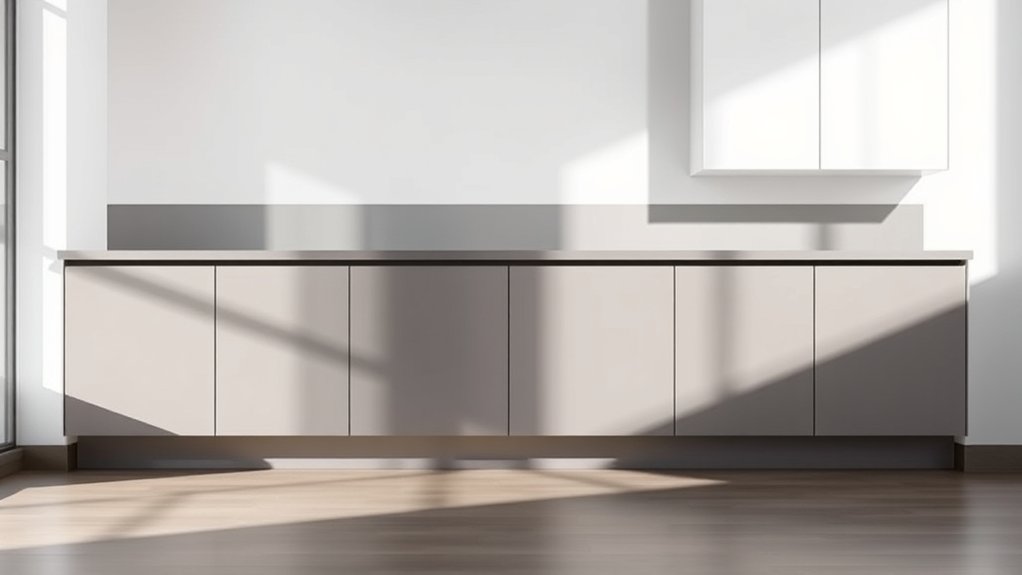
When planning your kitchen layout, understanding the standard depths for kitchen cabinets is crucial to maximize both functionality and aesthetics. Typically, wall cabinets have a depth of 12 inches, offering ample storage without overwhelming your space.
In contrast, pantry or utility cabinets vary but often measure deeper to accommodate bulkier items. By conducting a cabinet depth comparison, you can strategically select cabinet sizes that complement your kitchen’s dimensions and workflow.
This thoughtful approach guarantees kitchen space optimization, allowing smooth movement and efficient access to essentials. Knowing these standard depths helps you balance storage needs with spatial harmony, creating an organized, visually appealing kitchen tailored to your lifestyle.
You’ll avoid overcrowding while enhancing usability, making your kitchen both beautiful and practical.
Typical Depth of Base Cabinets
You’ll find that the standard depth for base cabinets typically measures 24 inches, providing ample storage without overwhelming your workspace. However, customizing these measurements can help tailor your kitchen to fit specific needs and design preferences.
Let’s explore how adjusting cabinet depth impacts both functionality and aesthetics.
Standard Base Cabinet Depth
Most standard base cabinets measure 24 inches deep, a dimension that balances functionality and space efficiency in kitchen design. This depth allows you to maximize storage solutions without overwhelming your kitchen layout.
It provides enough room to store pots, pans, and small appliances while maintaining comfortable countertop space for meal prep. The 24-inch depth also guarantees your cabinets align with standard countertop thicknesses, creating a seamless, professional look.
When planning your kitchen, this standard measurement helps maintain consistent traffic flow and accessibility. By sticking to this depth, you’ll create a harmonious balance between ample storage and open space, making your kitchen both practical and inviting.
This thoughtful design choice supports an organized, efficient cooking environment tailored to your daily needs.
Customizing Cabinet Measurements
While the standard 24-inch depth suits many kitchens, customizing the measurements of your base cabinets can better accommodate your unique space and lifestyle. By tailoring cabinet depth, you create custom cabinet styles that enhance both functionality and aesthetic appeal.
For example, shallower cabinets work well in narrow kitchens, preventing overcrowding and improving flow. Deeper cabinets, on the other hand, offer peak storage solutions, allowing you to store larger cookware and pantry items efficiently.
When customizing, consider countertop overhangs and appliance clearance to maintain usability. Collaborating with a skilled designer guarantees your cabinet dimensions harmonize with your kitchen’s layout, maximizing space without compromising style.
Ultimately, custom measurements provide a balanced approach, blending practicality with your personal design vision for a truly tailored kitchen experience.
Standard Depth of Wall Cabinets
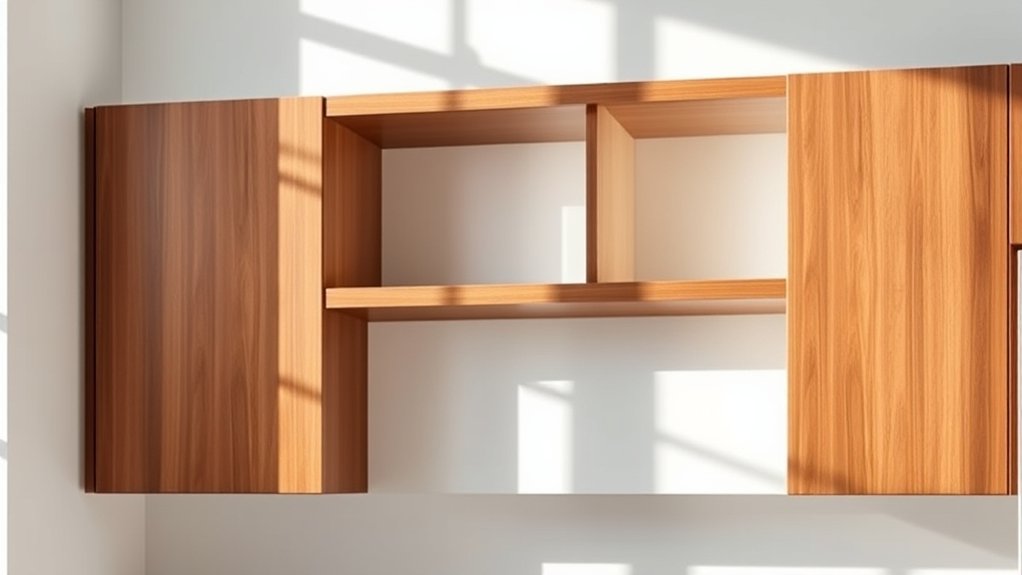
Wall cabinets typically measure 12 inches deep, a dimension carefully chosen to balance storage capacity with kitchen ergonomics. This standard depth guarantees that your wall cabinet dimensions won’t overwhelm your workspace while providing enough room for everyday items. Understanding cabinet depth variations helps you select cabinets that complement your kitchen’s flow.
Here are key points about standard wall cabinet depths:
- Ergonomics: At 12 inches deep, wall cabinets remain accessible without requiring you to stretch too far.
- Uniformity: This depth aligns well with common countertop overhangs and base cabinet depths, maintaining visual harmony.
- Versatility: While 12 inches is standard, slight variations exist to accommodate unique kitchen layouts or appliance needs.
Choosing the right depth keeps your kitchen functional and aesthetically pleasing.
How Deep Should Pantry Cabinets Be?
Pantry cabinets typically range from 18 to 24 inches deep, offering you ample storage without sacrificing accessibility. Choosing the right depth is essential for pantry organization, as it helps you avoid hard-to-reach shelves and wasted space.
A depth of 18 to 20 inches works well if you want to keep items visible and within easy reach, promoting efficient space optimization. Deeper cabinets, up to 24 inches, allow for bulkier items but may require pull-out shelves or organizers to maintain order.
Consider how you plan to use the pantry, whether for canned goods, dry items, or small appliances, and select a depth that supports your storage needs while enhancing your kitchen’s overall functionality and style.
How Cabinet Depth Affects Kitchen Storage
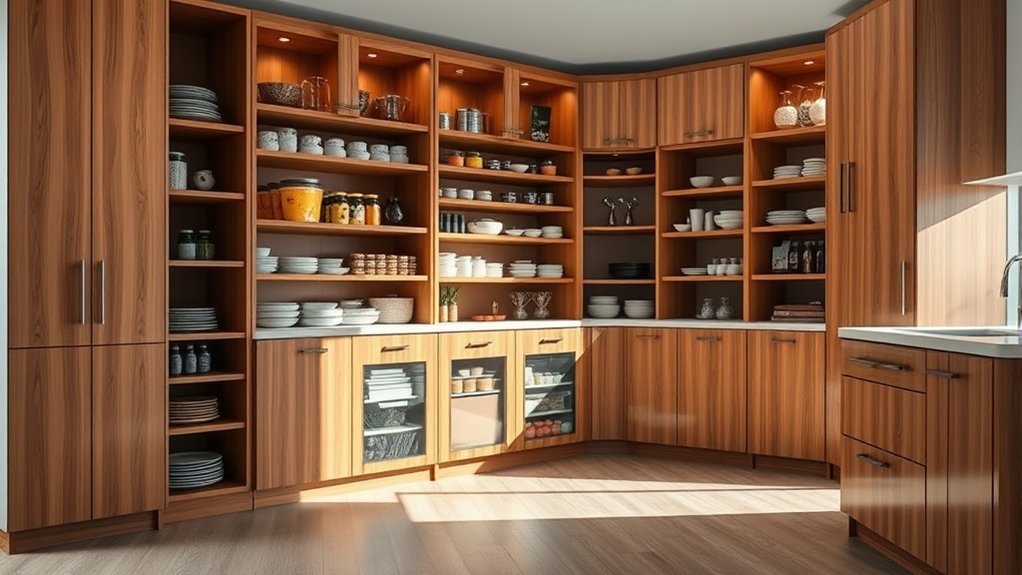
Choosing the right cabinet depth directly influences how much storage you can fit and how accessible your kitchen items remain. When you focus on storage enhancement, deeper cabinets allow you to store larger appliances and bulkier items, while shallower ones improve accessibility and reduce clutter.
Consider these key points for effective cabinet organization:
- Maximize Usable Space: Deeper cabinets increase capacity but may require pull-out shelves or organizers to prevent items from getting lost at the back.
- Enhance Accessibility: Shallower cabinets make frequently used items easy to reach, supporting an efficient workflow.
- Balance Aesthetics and Function: Selecting a depth that complements your kitchen’s layout guarantees your cabinets don’t overwhelm the space while maintaining ideal storage.
Which Kitchen Cabinet Depths Work Best for Different Layouts?
How do you determine the ideal cabinet depth for your kitchen’s unique layout? Start by evaluating your cabinet layout to guarantee maximum flow and accessibility. In galley or narrow kitchens, shallower cabinets, around 12 to 15 inches deep, maintain walkway space while maximizing storage efficiency.
For U-shaped or L-shaped layouts, deeper base cabinets, typically 24 inches, provide ample storage without overwhelming the space. Meanwhile, island cabinets can vary, often benefiting from deeper designs to accommodate larger items and enhance functionality.
Wall cabinets usually range from 12 to 15 inches deep, complementing the base cabinets and preserving counter space. By carefully selecting cabinet depths tailored to your layout, you’ll enhance storage efficiency and maintain a balanced, cohesive kitchen aesthetic that suits both form and function.
How Cabinet Depth Affects Countertops and Appliances
Because cabinet depth directly influences the dimensions of your countertops and the fit of your appliances, understanding this relationship is essential for a seamless kitchen design. When you choose deeper cabinets, your countertops extend further, impacting both aesthetics and functionality. Here’s what to take into account:
- Countertop Clearance: Deeper cabinets require matching countertop depth for proper clearance, ensuring you don’t lose workspace or create awkward overhangs.
- Appliance Compatibility: Standard appliances are designed for typical cabinet depths; deeper units may limit door clearance or cause alignment issues.
- Visual Balance: Cabinet and countertop depths must harmonize to maintain a cohesive look and avoid bulky, disproportionate surfaces.
Custom Kitchen Cabinet Depth Options and When to Use Them
When planning your kitchen, understanding the difference between standard and custom cabinet depths can transform both function and style. You’ll want to select depths based on how you use each space.
Choose deeper cabinets for bulky items or shallower ones to maintain a sleek, open feel. Tailoring cabinet depth guarantees your kitchen works seamlessly for your daily needs.
Standard Vs. Custom Depths
Although standard kitchen cabinet depths suit most layouts, exploring custom depths can greatly enhance both functionality and style in your space. When choosing between standard and custom cabinet depths, consider these factors:
- Storage Solutions & Functionality Balance: Custom depths allow you to tailor cabinet depth to fit specific items or appliances, maximizing storage without overcrowding your kitchen.
- Design Considerations & Aesthetics Impact: Adjusting cabinet depth influences visual flow and can make your kitchen appear more spacious or cohesive, enhancing overall design harmony.
- Installation Challenges & Material Choices: Custom depths may require special materials or adjustments during installation, impacting cost and complexity, but they offer layout flexibility that standard depths can’t match.
Choosing Depth By Usage
Selecting the right cabinet depth hinges on how you intend to use each storage space, ensuring that your kitchen remains both practical and visually balanced. In various usage scenarios, deeper cabinets suit bulky items like pots and small appliances, while shallower ones provide easy access to everyday essentials.
Custom depths allow you to tailor storage precisely. For instance, shallow upper cabinets keep frequently used dishes within reach without overwhelming the room. Your design preferences also play an essential role; minimalist kitchens often benefit from slimmer profiles, whereas traditional layouts accommodate more generous depths.
Tips for Measuring and Planning Kitchen Cabinet Depths
Because cabinet depth directly influences both storage capacity and kitchen flow, you’ll want to measure carefully before making decisions. Accurate measuring techniques and thoughtful planning strategies guarantee your cabinets fit perfectly and function efficiently.
Here are three essential tips to guide you:
- Use a Laser Measure: For precision, opt for a laser measure to capture exact wall dimensions, avoiding errors common with tape measures.
- Account for Appliances and Fixtures: Plan cabinet depths around appliances, sinks, and countertops to maintain smooth kitchen traffic and accessibility.
- Visualize Storage Needs: Consider what you’ll store; deeper cabinets suit bulky items, while shallower ones improve reachability and keep the kitchen feeling spacious.
Frequently Asked Questions
How Does Cabinet Depth Impact Kitchen Cleaning and Maintenance?
You’ll find that deeper cabinets reduce cleaning accessibility, making it harder to reach corners and increasing maintenance frequency.
Shallower cabinets improve ease of cleaning and upkeep, helping you maintain a pristine, functional kitchen environment effortlessly.
Are Deeper Cabinets More Expensive to Install?
When you compare cost analysis, deeper cabinets often raise expenses due to increased material and installation complexity. You’ll notice the extra time and precision needed, making your kitchen upgrade both a practical and aesthetic investment worth considering.
Can Cabinet Depth Affect Kitchen Lighting and Ambiance?
Yes, cabinet depth directly influences lighting design and ambiance enhancement. You’ll want to balance depth to avoid shadows or dark spots while ensuring light fixtures highlight surfaces beautifully.
This creates a well-lit, inviting kitchen atmosphere tailored to your style.
Do Cabinet Depths Vary by Cabinet Material or Style?
Yes, cabinet depths vary by cabinet design and material durability. You’ll find deeper cabinets in solid wood for sturdiness, while sleek, modern styles often use thinner materials, balancing aesthetics with practical storage needs.
How Does Cabinet Depth Influence Kitchen Resale Value?
You’ll find cabinet depth directly impacts resale trends, as buyers prefer deeper cabinets for maximized storage and aesthetics. Meeting buyer preferences with functional depth enhances your kitchen’s appeal, boosting overall home value and marketability.