What Color Kitchen Cabinets Are in Style
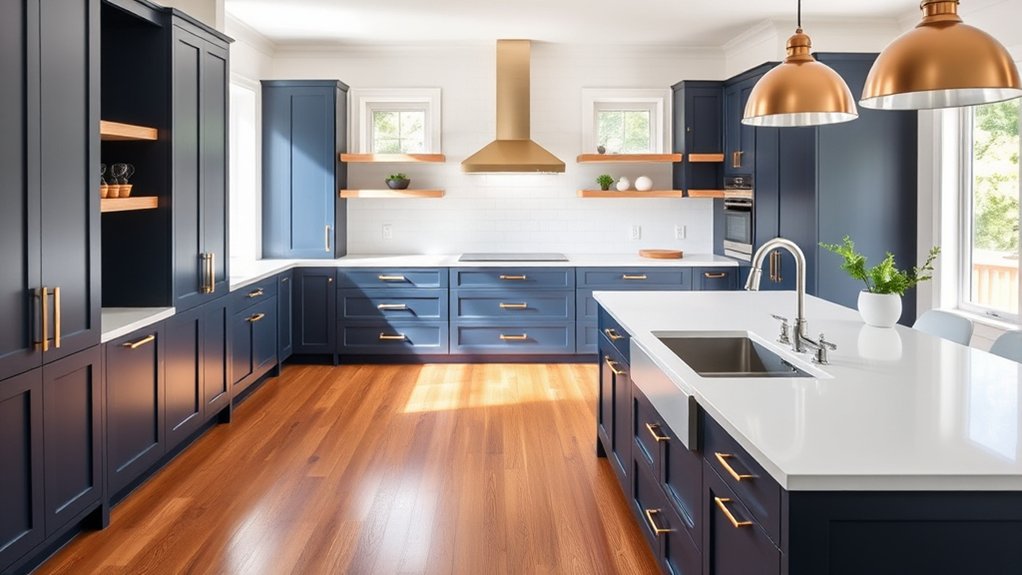
You’ll find kitchen cabinet colors trending toward deep forest greens, muted navy blues, soft earth tones like warm taupes, and crisp whites that balance rustic charm with minimalist modern style.
Neutral shades remain popular for their versatility, while bold colors add personality and energy without overwhelming your space.
Lighting plays a key role in how these colors appear, so consider your kitchen’s natural and artificial light carefully.
Explore how these choices can transform your kitchen’s look and feel.
Top Kitchen Cabinet Colors Trending This Year
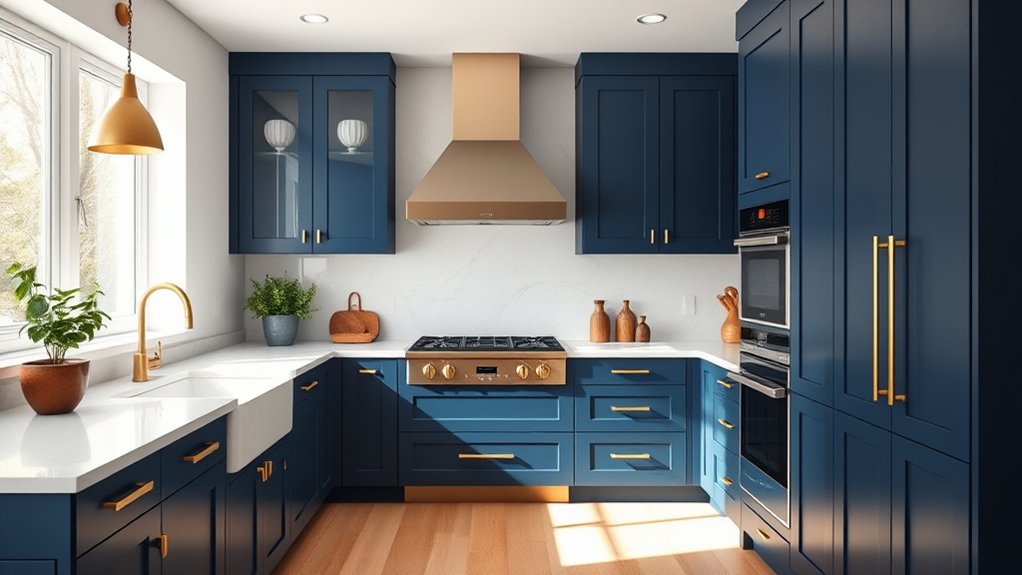
Several standout kitchen cabinet colors are dominating the design scene this year, offering you fresh ways to update your space. Deep forest greens and muted navy blues bring a touch of rustic charm, perfectly blending warmth with sophistication. These hues add character without overwhelming your kitchen.
On the other hand, cool grays and crisp whites align with minimalist aesthetics, providing a clean, airy feel that complements modern appliances and sleek hardware. You’ll also notice soft earth tones, like warm taupes and sandy beiges, gaining popularity for their versatility and subtle elegance.
Whether you prefer the inviting nature of rustic charm or the streamlined vibe of minimalist aesthetics, these trending colors help you achieve a stylish, contemporary kitchen that stays timeless.
Matching Kitchen Cabinet Colors to Your Style
You’ll want to choose kitchen cabinet colors that reflect your personal style while staying on-trend with modern palettes. Balancing classic tones with contemporary hues can create a timeless yet fresh look.
Don’t forget to add accent shades to personalize your space and make it uniquely yours.
Modern Color Palette Trends
When selecting modern kitchen cabinet colors, understanding current palette trends helps you create a cohesive and stylish space that reflects your personality. Today’s popular palettes emphasize minimalist aesthetics, favoring neutral tones like soft grays, muted taupes, and crisp whites.
These shades provide a clean backdrop that complements various design elements without overwhelming the space. At the same time, vibrant contrasts are gaining traction, allowing you to introduce bold hues such as deep navy, emerald green, or matte black as accent cabinets or island features.
This balance between subtle neutrals and striking colors lets you tailor your kitchen to feel both contemporary and inviting. By thoughtfully combining these trends, you guarantee your cabinets resonate with modern style while aligning perfectly with your unique taste.
Classic Versus Contemporary Hues
Although modern trends favor sleek, contemporary hues, classic cabinet colors continue to hold timeless appeal that complements a wide range of kitchen styles. When choosing between classic whites and bold blacks or exploring muted pastels and rich jeweltones, consider how these shades influence your kitchen’s atmosphere.
Earthy neutrals and warm greys offer subtle sophistication, while vibrant reds and soft blues inject personality without overwhelming the space. Use this guide to match cabinet colors to your style:
| Classic Whites | Bold Blacks | Warm Greys |
|---|---|---|
| Timeless, versatile | Dramatic, modern | Cozy, neutral |
| Soft Blues | Muted Pastels | Vibrant Reds |
| Calm, airy | Gentle, trendy | Energetic, bold |
This balance helps you create a kitchen that feels both current and enduring.
Personalizing With Accent Shades
Since accent shades can transform your kitchen’s mood instantly, selecting them thoughtfully allows you to infuse personality without overwhelming the space. You can explore accent color ideas like deep navy, muted sage, or warm terracotta to complement neutral cabinetry and add dynamic contrast.
Personalized combinations give you the freedom to reflect your style. Consider pairing soft gray cabinets with bold mustard accents for a modern twist or integrating pastel blues with natural wood tones for a cozy vibe. Don’t hesitate to experiment with hardware, backsplashes, or open shelving in these accent colors to unify the look.
Why Neutral Kitchen Cabinet Colors Are Popular
Because neutral tones effortlessly blend with various design elements, they’ve become a top choice for kitchen cabinets among homeowners and designers alike. When you choose neutral colors, you tap into their timeless appeal, ensuring your kitchen remains stylish despite shifting trends.
These shades, think soft whites, warm grays, and muted beiges, offer versatile designs that complement both contemporary and traditional interiors. You’ll find they create a balanced backdrop, allowing other features like countertops and backsplashes to shine without clashing.
Additionally, neutral cabinets make it easy to update your kitchen’s look over time with simple accessory changes. By opting for neutrals, you invest in a classic, adaptable aesthetic that enhances your kitchen’s value and visual harmony.
How Bold Kitchen Cabinet Colors Transform Your Kitchen
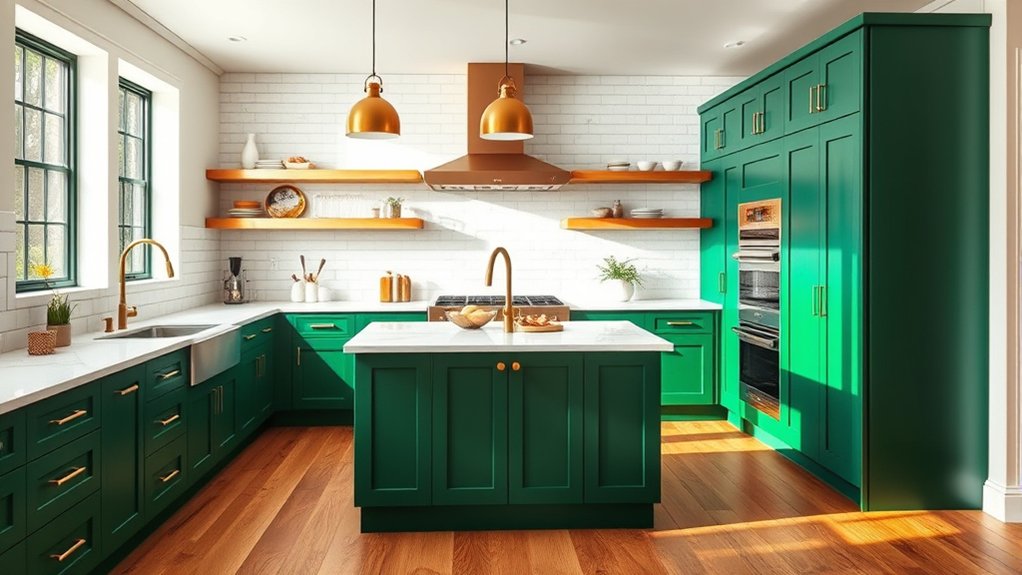
You can instantly elevate your kitchen by choosing bold cabinet colors that make a striking visual impact. Vibrant finishes not only add personality but also create a stylish focal point that reflects current design trends.
Let’s explore how selecting the right bold shades can transform your space with confidence and flair.
Impact of Bold Colors
When you choose bold colors for your kitchen cabinets, you instantly inject personality and energy into the space. Bold color psychology shows that vibrant hues can evoke mood, stimulate creativity, and create a focal point.
Following vibrant color trends, kitchens with daring shades feel modern and inviting, reflecting your unique style. Here’s how bold colors impact your kitchen:
| Impact Area | Effect | Example Colors |
|---|---|---|
| Mood Enhancement | Boosts energy and creativity | Red, Orange |
| Visual Interest | Adds depth and focus | Navy, Emerald Green |
| Space Perception | Can make rooms feel larger/smaller | Black, Bright Yellow |
| Style Statement | Defines contemporary design | Teal, Burgundy |
| Complementary Use | Pairs with neutrals for balance | Mustard, Coral |
Choosing bold colors transforms your kitchen into a lively, stylish hub.
Choosing Vibrant Finishes
Although selecting bold colors sets the tone, choosing the right vibrant finish truly elevates your kitchen cabinets, enhancing both texture and depth. When you opt for finishes like matte, satin, or high-gloss, you introduce vibrant textures that can either soften or intensify bold contrasts in your design.
Matte finishes offer a sophisticated, understated look that lets color richness stand out without overwhelming, while high-gloss finishes create a sleek, reflective surface that amplifies light and makes colors pop. Satin finishes strike a perfect balance, providing subtle sheen and durability.
Popular Two-Tone Kitchen Cabinet Color Combinations
Why settle for a single hue when two-tone kitchen cabinets can elevate your space with depth and character? Two-tone kitchens are trending palettes that offer dynamic contrast combinations, allowing you to highlight architectural elements or create visual zones.
You can combine light and dark shades or mix cool and warm tones for a balanced yet striking look. Here are popular pairings to inspire your next kitchen update:
| Upper Cabinets | Lower Cabinets |
|---|---|
| White | Navy Blue |
| Light Gray | Charcoal |
| Sage Green | Cream |
| Matte Black | Natural Wood Finish |
| Soft Blue | White |
These contrast combinations bring versatility and style to any kitchen, making your cabinetry both functional and fashionable.
How Kitchen Cabinet Colors Work in Small and Large Kitchens
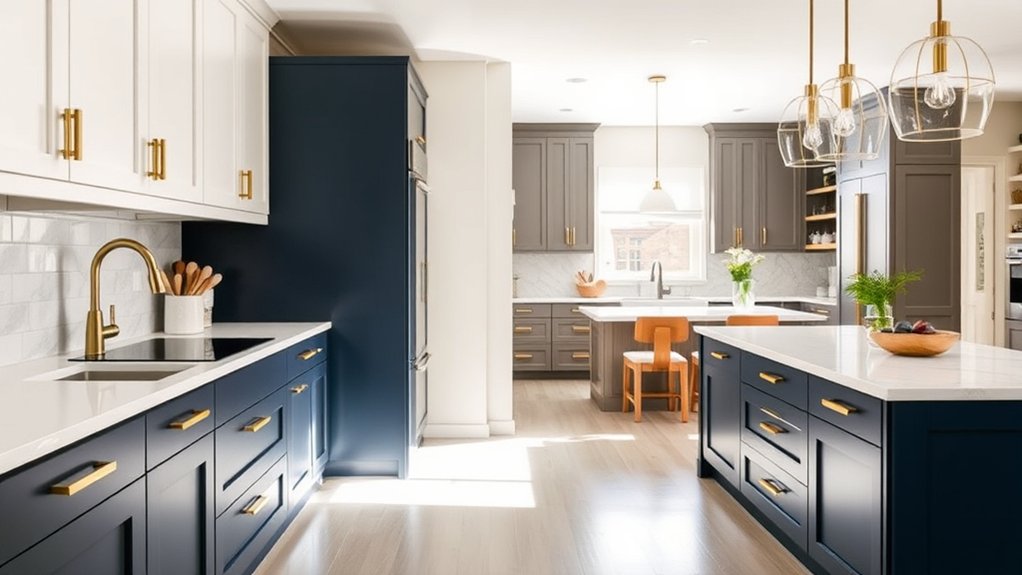
You’ll find that light-colored cabinets can visually expand a small kitchen, making the space feel open and airy. In larger kitchens, dark cabinets introduce a cozy, sophisticated warmth that grounds the room.
Choosing the right shade can balance your kitchen’s size while staying on trend.
Light Colors Enhance Space
When you choose light colors for your kitchen cabinets, you instantly create a sense of openness and brightness that can transform both small and large spaces. Light color psychology shows that these hues evoke calm and cleanliness, enhancing your kitchen’s appeal.
They improve space perception by reflecting more natural and artificial light, making rooms feel airy and expansive.
Consider these key benefits:
- Small kitchens: Light cabinets prevent visual crowding, making compact areas appear larger.
- Large kitchens: They maintain a fresh, open ambiance without overwhelming the space.
- Versatility: Light shades easily complement various design styles and accent colors, keeping your kitchen timeless and stylish.
Dark Cabinets Add Warmth
While light cabinet colors open up your kitchen with brightness and space, dark cabinets bring a contrasting sense of warmth and sophistication. Choosing dark wood cabinets adds a cozy ambiance that transforms both small and large kitchens into inviting atmospheres.
Their rich textures create dramatic contrast against lighter walls or countertops, enhancing the room’s visual depth. Dark cabinetry embodies timeless elegance, blending effortlessly with modern rustic design trends while imparting sophisticated charm.
In small kitchens, dark cabinets can make the space feel intimate yet stylish, while in larger kitchens, they anchor the room with bold presence. By incorporating dark cabinets thoughtfully, you achieve a balanced, warm environment that remains on-trend and enduringly appealing.
How Lighting Impacts Kitchen Cabinet Color Choices
Many factors influence how kitchen cabinet colors appear, but lighting plays one of the most critical roles in shaping your perception and overall ambiance. Understanding lighting effects and color temperature can help you choose cabinets that look stunning in any setting.
- Natural vs. Artificial Light: Daylight reveals true cabinet colors, while artificial light can alter hues dramatically depending on bulb type.
- Color Temperature: Warm lighting (2700K-3000K) enhances rich, earthy tones, while cool lighting (4000K-5000K) sharpens blues and grays.
- Light Placement: Overhead, under-cabinet, or accent lighting highlights different surfaces, affecting how colors pop or recede.
How Kitchen Cabinet Colors Set the Mood
Although kitchen cabinet colors might seem like a simple design choice, they play a powerful role in shaping the room’s atmosphere and your emotional response. By understanding color psychology, you can select hues that boost mood enhancement and create a space that feels just right.
For example, soft blues foster calmness, while vibrant yellows stimulate energy. Here’s a quick guide to how popular cabinet colors influence mood:
| Color | Mood Enhancement | Ideal Ambiance |
|---|---|---|
| White | Clean, invigorating | Bright, airy |
| Navy Blue | Calm, sophisticated | Relaxed, elegant |
| Warm Gray | Balanced, neutral | Contemporary, cozy |
Choosing the right color aligns your kitchen’s style with the emotional vibe you want to evoke.
Cabinet Finishes That Preserve Kitchen Cabinet Colors
Selecting the perfect kitchen cabinet color sets the tone for your space, but maintaining that vibrant look depends heavily on the finish you choose. To guarantee long-lasting appeal, focus on finishes that enhance durability and support color preservation techniques.
Here are three finishes to contemplate:
- Polyurethane: Offers a hard, protective coat that resists scratches and moisture, ideal for high-traffic kitchens.
- Water-based finishes: These preserve the true color of your cabinets without yellowing over time, perfect for lighter tones.
- Conversion varnish: Provides excellent adhesion and chemical resistance, maintaining color integrity even with regular cleaning.
Pair these with proper cabinet maintenance tips like gentle cleaning and avoiding harsh chemicals to keep your kitchen looking fresh and stylish for years.
How to Refresh Kitchen Cabinet Color Without Remodeling
Breathe new life into your kitchen by revitalizing cabinet colors without the expense or hassle of a full remodel. Start with advanced cabinet painting techniques like sanding, priming, and applying durable, trend-forward paints to guarantee a smooth, lasting finish.
Choose hues that align with current styles, such as muted greens or classic grays. To keep your cabinets looking fresh, adopt color maintenance tips including regular cleaning with gentle solutions and prompt touch-ups to prevent wear.
| Technique | Benefit |
|---|---|
| Sanding and Priming | Enhances paint adhesion |
| Trendy Paint Colors | Updates kitchen style |
| Routine Cleaning & Touch-ups | Prolongs vibrant cabinet color |
These strategies offer a cost-effective way to refresh your kitchen while staying on trend.
Frequently Asked Questions
How Do Kitchen Cabinet Colors Affect Home Resale Value?
You’ll boost resale value by choosing neutral tones, as they appeal broadly and create a timeless look. Avoid overly vibrant contrasts, which might deter buyers.
Balanced, trendy colors help your kitchen feel fresh and inviting to potential buyers.
What Are the Best Paint Types for Kitchen Cabinets?
Even Ben Franklin would agree: you’ll want acrylic or enamel paints for kitchen cabinets. These offer top cabinet finish options with superior paint durability comparisons, resisting chips and stains while keeping your kitchen stylish and fresh for years.
How Often Should Kitchen Cabinets Be Repainted?
You should repaint kitchen cabinets every 5-7 years to maintain their look. Follow cabinet maintenance tips like cleaning regularly and avoiding harsh chemicals to extend repainting frequency and keep your kitchen stylish and fresh.
Can Kitchen Cabinet Colors Influence Cooking Appetite?
Colors speak to your appetite through color psychology; warm hues like red or yellow ignite hunger, while cool tones calm. Choosing cabinets with strong aesthetic appeal can subtly boost your cooking enthusiasm and dining pleasure every day.
Are There Eco-Friendly Paint Options for Kitchen Cabinets?
Yes, you can choose eco-friendly paint options for your kitchen cabinets that use sustainable materials and natural finishes. These trend-focused paints reduce toxins and promote a healthier environment, aligning perfectly with modern, responsible design preferences.