How to Measure Kitchen Cabinets
To measure kitchen cabinets accurately, use a reliable steel tape or laser measurer. Start by measuring the width from the outer edges, the height from the base to the top, and the depth from front to back. Keep the tape straight and flush to ensure precise measurements.
Don’t forget to measure the inside dimensions for storage planning, paying attention to any shelves or dividers. Record all measurements carefully, including labels and units, to avoid errors.
To guarantee a perfect fit and smooth installation, grasp these essential techniques and organization methods first. Taking the time to measure correctly will save you from costly mistakes later.
Tools You Need to Measure Kitchen Cabinets
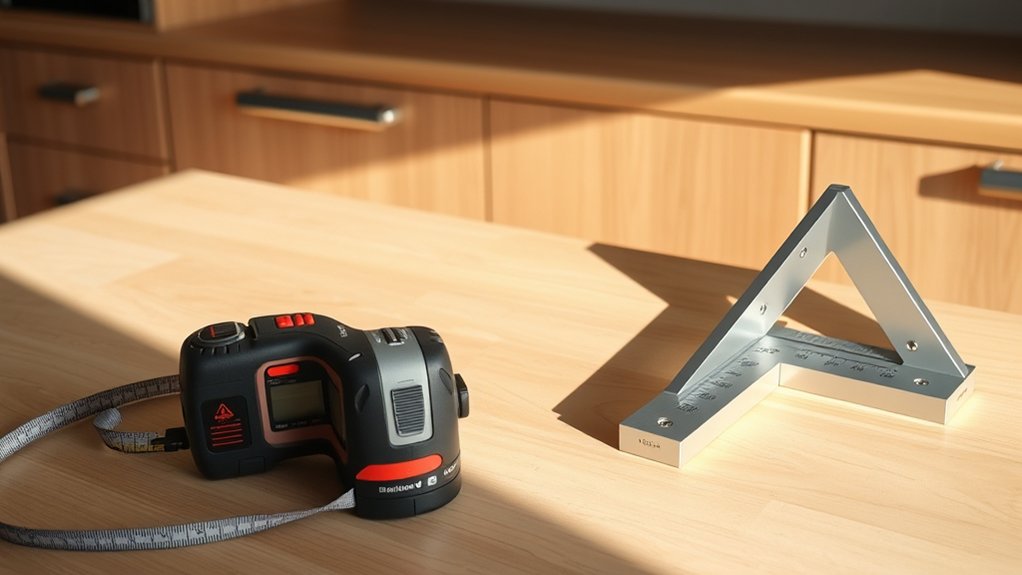
To accurately measure kitchen cabinets, you’ll need a few essential tools that guarantee precise dimensions and avoid costly errors. Start with a reliable tape measure, preferably steel, for durability and exact readings. A laser distance measurer can enhance accuracy, especially in tight or large spaces.
Use a level to confirm your measurements align horizontally or vertically, preventing installation issues. A pencil and notepad are crucial for recording measurements meticulously. Employing proper measurement techniques means measuring twice. Always double-check your data.
When measuring, hold the tape measure taut without bending, and note inside and outside cabinet dimensions. These measuring tools and techniques form the foundation for precise cabinet sizing, ensuring your project proceeds smoothly without miscalculations or material waste.
How to Measure the Width of Kitchen Cabinets
Measuring the width of each kitchen cabinet accurately requires positioning your tape measure at the cabinet’s outermost edges, spanning from one side to the other. Use width measurement techniques like ensuring the tape is taut and aligned parallel to the base for precise readings.
Record measurements in inches or centimeters, depending on your project needs. Here are cabinet sizing tips to streamline the process:
| Step | Detail |
|---|---|
| 1. Start Point | Place tape at cabinet’s left edge |
| 2. End Point | Extend tape to right edge |
| 3. Tape Positioning | Keep tape straight, avoid slack |
| 4. Record Measurement | Note exact width without rounding |
How to Measure the Height and Depth of Kitchen Cabinets
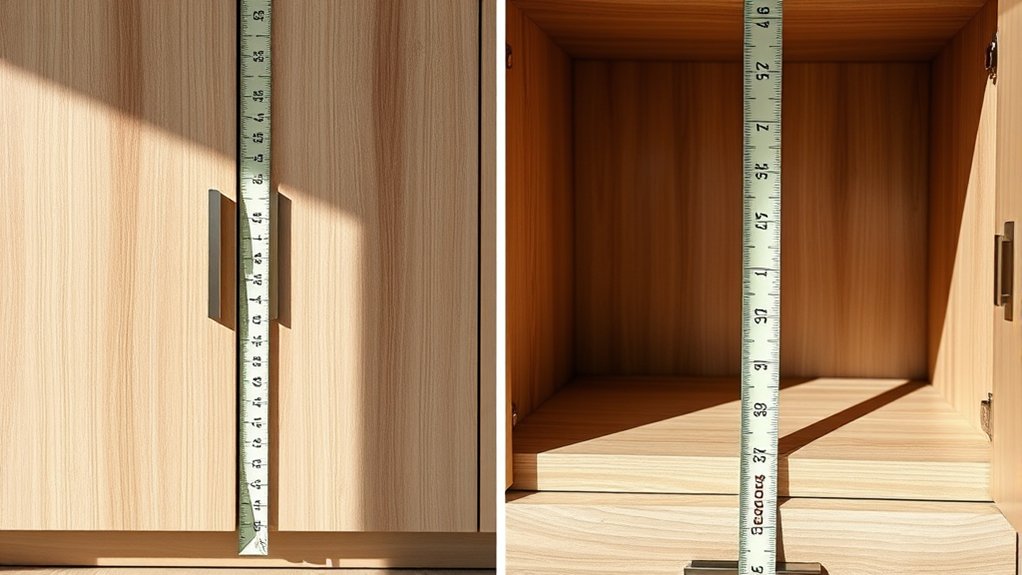
Start by measuring the cabinet height from the base to the top edge, ensuring your tape measure is vertical and flush against the surface.
Next, determine the cabinet depth by measuring from the front face to the back panel, accounting for any overhangs or moldings. Accurate height and depth measurements are essential for fitting appliances and planning countertop space.
Measuring Cabinet Height
Accurately gauging the height and depth of kitchen cabinets requires a reliable measuring tape and a steady hand. To measure cabinet height precisely, start by placing the tape vertically at the cabinet’s base, making certain it’s flush with the floor or countertop.
Extend the tape to the cabinet’s top edge, noting the exact measurement in inches or centimeters. Use consistent measurement techniques by avoiding angles or bends in the tape, which can result in errors.
If cabinets are wall-mounted, measure from the floor to the bottom edge, then to the top, accounting for any toe kicks or molding. Recording these measurements accurately guarantees proper fit and alignment during installation or replacement. Always double-check your cabinet height measurement for accuracy before proceeding.
Determining Cabinet Depth
To determine the cabinet depth, position your measuring tape at the cabinet’s front edge and extend it straight back to the wall or backsplash, making certain the tape remains parallel to the countertop or floor. Measure from the outermost point of the cabinet face frame or door panel, as depth variations occur between different cabinet styles, such as frameless, inset, or overlay.
Note that base cabinets typically range between 24 to 25 inches deep, while wall cabinets vary from 12 to 24 inches, depending on design and intended use. Record the exact measurement to accommodate appliances or countertops accurately.
Paying attention to these depth variations helps guarantee your kitchen layout is functional and fits your cabinetry style precisely. Repeat the process for each cabinet type, as inconsistencies can impact installation and usability.
How to Measure Inside Kitchen Cabinets for Storage
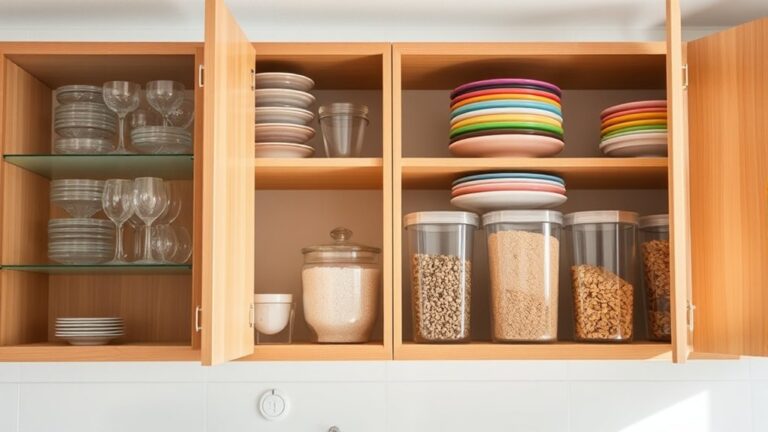
To measure inside your kitchen cabinets for storage, start by recording the exact cabinet width between the inner walls. Next, verify the cabinet depth by measuring from the front edge to the back panel inside the cabinet.
Finally, assess the interior height by measuring from the bottom shelf or base to the underside of the cabinet’s top.
Measure Cabinet Width
Measuring the width inside your kitchen cabinets requires careful attention to guarantee precise storage planning. Begin by identifying the cabinet style, face-frame or frameless, as this affects internal dimensions.
Use a steel tape measure to record the horizontal distance between the interior sidewalls at both the top and bottom of the cabinet. This assures you account for any tapering or inconsistencies.
Employ precise measurement techniques: hold the tape taut and parallel to the base, avoiding any slack or angles. Note the smallest width measurement for accuracy in storage solutions.
If your cabinet includes dividers or built-in shelves, measure between these elements separately. Accurate width measurements allow you to select storage accessories that fit perfectly within different cabinet styles, optimizing your kitchen’s functionality.
Check Cabinet Depth
Start by positioning your tape measure inside the cabinet, extending from the interior back wall directly to the front edge of the cabinet box, excluding the door thickness. This measurement captures the true usable depth, critical due to varying cabinet styles and depth variations.
- Measure multiple cabinets to account for inconsistencies, especially in custom or older installations.
- Note that standard base cabinets typically range from 24 to 25 inches deep, while wall cabinets are usually shallower, around 12 inches.
- Record depth differences caused by design elements like recessed backs or built-in features that reduce storage space.
Accurate depth measurement guarantees you understand your storage capacity and accommodates the specific cabinet styles throughout your kitchen.
Assess Cabinet Height
Accurately gauging the height inside your kitchen cabinets involves measuring from the interior base to the underside of the cabinet top or shelf. Use a metal tape measure for precision, making sure it lies flat against the cabinet’s interior surface.
Different cabinet styles, such as frameless or face-frame, may affect available height due to construction variances. Note that installation techniques, like built-in trims or adjustable shelving, can alter vertical clearance.
Measure each compartment separately if shelves are adjustable or fixed at varying heights. Record measurements to the nearest eighth of an inch for accuracy, as small differences impact storage options.
This detailed approach guarantees you properly assess storage capacity and compatibility with items you plan to store inside your kitchen cabinets.
How to Record and Organize Your Cabinet Measurements
To keep your cabinet measurements useful and accessible, create a systematic method for recording each dimension immediately after measuring. Efficient recording methods prevent errors and maintain measurement organization throughout your project.
Use a dedicated notebook, digital spreadsheet, or measurement app to log data consistently.
- Label each cabinet clearly by location (e.g., “Upper Left Wall”) to avoid confusion.
- Record height, width, and depth separately, noting units (inches or centimeters).
- Include additional notes on obstacles or irregularities next to measurements.
Tips for Measuring Odd-Shaped and Built-In Cabinets
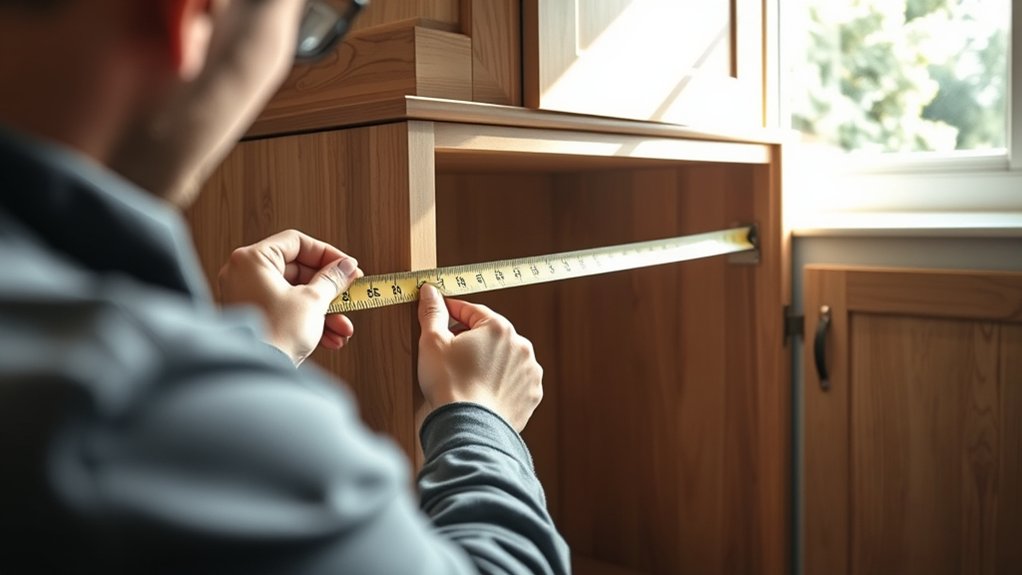
Measuring odd-shaped and built-in cabinets requires careful attention to unique angles and depth variations that standard tools might not capture. Start by using precision tools like laser distance meters and digital angle finders to accurately gauge irregular contours and recesses.
For odd shapes, break down the cabinet into simpler geometric sections, such as triangles, rectangles, or trapezoids, then measure each segment separately. When dealing with built-in features, record exact depths and protrusions by measuring from fixed reference points such as walls or floors.
Employ flexible measuring tapes for curved edges and verify all measurements twice to guarantee accuracy. Document every dimension clearly, noting whether it corresponds to height, width, depth, or angle. Using these measuring techniques helps you capture the true complexity of your cabinets without guesswork.
Why Getting Accurate Measurements Matters
When you take exact measurements, you eliminate costly errors during cabinet installation or replacement. Measurement accuracy is critical for effective cabinet planning, guaranteeing your kitchen layout functions flawlessly.
Exact measurements prevent costly mistakes and ensure your kitchen cabinets fit perfectly for a flawless layout.
Inaccurate dimensions can lead to gaps, misalignments, or wasted materials.
Here’s why precise measurement matters:
- Optimized Space Utilization: Accurate measurements allow you to maximize storage and maintain proper clearances around appliances and fixtures.
- Seamless Fit and Finish: Precise data guarantees cabinets align correctly, preventing uneven surfaces or structural stress.
- Cost Efficiency: Avoid reordering parts or modifications caused by measurement errors, saving time and money.
Using Your Measurements to Order and Install Cabinets
Start by organizing your measurements into a clear, detailed layout that matches the cabinet specifications from your supplier. Use precise measurement techniques to document width, height, and depth for each cabinet space, including allowances for molding, appliances, and plumbing.
When ordering, cross-check these dimensions against the manufacturer’s standard sizes to guarantee compatibility. Consider installation considerations such as wall flatness, floor levelness, and the presence of electrical outlets or vents that may impact cabinet placement.
Provide your supplier with exact measurements to avoid costly adjustments later. During installation, verify measurements on-site before securing cabinets, allowing for minor adjustments.
Accurate measurement techniques combined with thorough installation considerations guarantee a seamless fit and professional finish, preventing gaps, misalignment, or structural issues in your kitchen cabinetry.
Frequently Asked Questions
What Materials Are Best for Kitchen Cabinet Construction?
You’ll want cabinet materials like plywood or MDF for durable cabinet construction methods. Plywood offers strength and moisture resistance, while MDF provides smooth surfaces for finishes.
Solid wood’s great but costly and prone to warping.
How Do I Choose the Right Cabinet Style for My Kitchen?
Choosing the right cabinet style is like painting your kitchen’s soul. Balance cabinet design trends with your space’s architectural language.
Analyze style compatibility by evaluating materials, finishes, and hardware to guarantee cohesive, functional aesthetics and lasting appeal.
What Is the Average Lifespan of Kitchen Cabinets?
You can expect kitchen cabinets to last 20-50 years, depending on cabinet durability factors like material and construction.
Watch for signs replacement is needed, such as warping, loose hinges, or persistent water damage affecting function and appearance.
How Often Should Kitchen Cabinets Be Cleaned or Maintained?
You should clean kitchen cabinets weekly; studies show 60% of bacteria accumulate within days. Use gentle cleaners and microfiber cloths.
Regular maintenance tips include inspecting hinges monthly and reapplying finish every few years to prevent wear and tear.
Can I Paint or Refinish Existing Kitchen Cabinets?
You can paint or refinish existing kitchen cabinets using latex or oil-based paint types. Employ refinishing techniques like sanding, priming, and applying polyurethane for durability.
This ensures a smooth, long-lasting finish that resists wear and moisture.