Why Is My Faucet Dripping
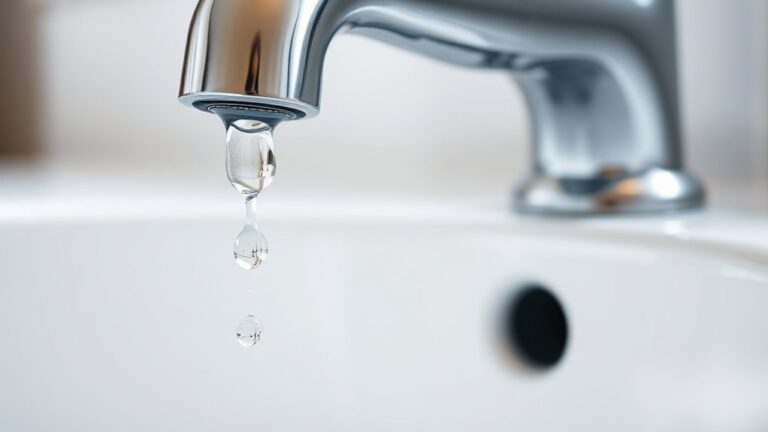
Your faucet is dripping because worn seals, washers, or corroded valve seats are allowing water to leak through.
Loose or damaged parts inside the faucet can also cause dripping. This is especially common if water pressure is too high or fluctuates frequently, stressing the internal components.
Inspecting and replacing faulty parts, along with managing water pressure using a regulator, can stop leaks effectively.
Understanding these causes helps you address the problem precisely. It also prevents further damage to your plumbing system.
Quick Fixes for a Dripping Faucet
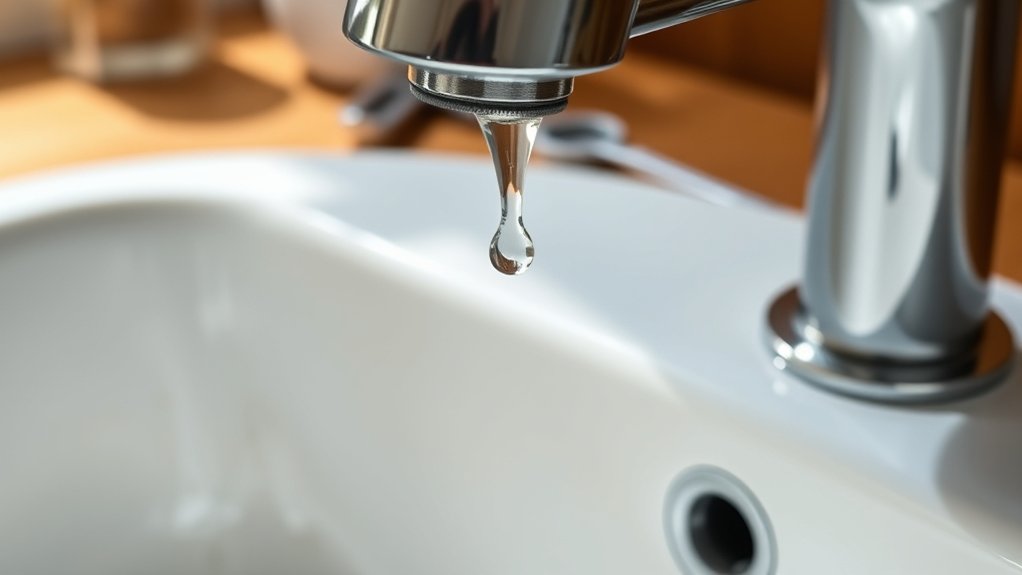
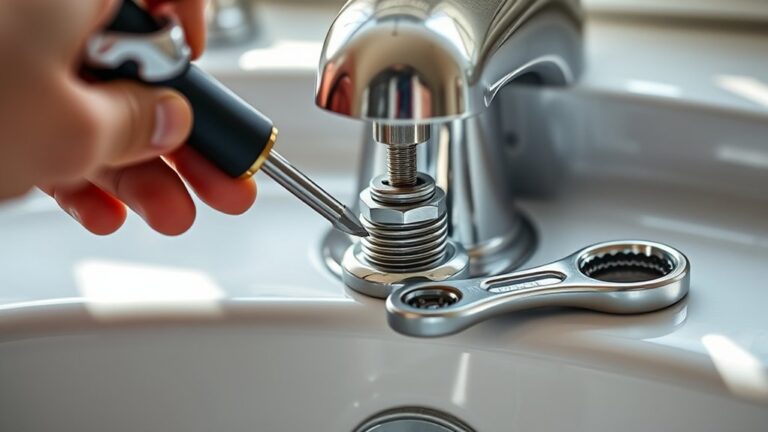
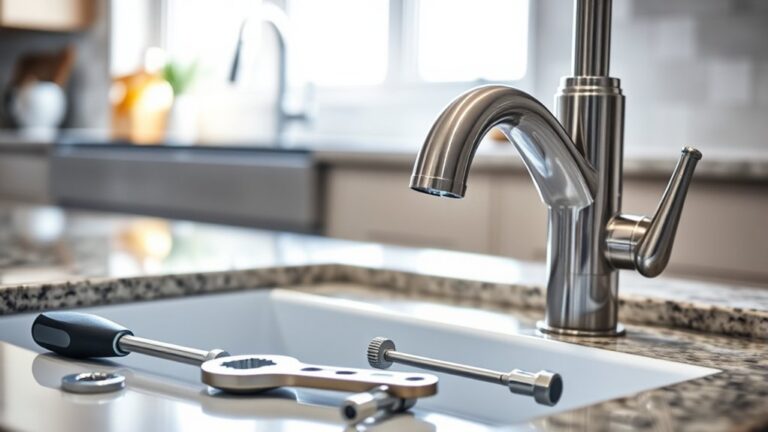
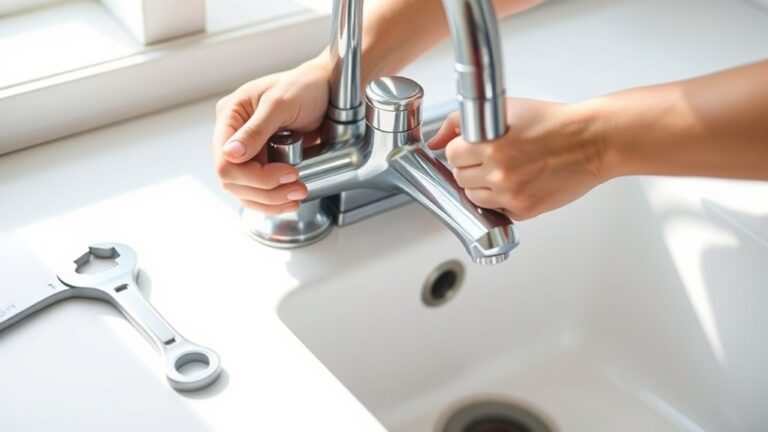
To quickly stop a dripping faucet, start by turning off the water supply to prevent further leaks. Next, disassemble the faucet handle using the appropriate tools, typically a screwdriver or Allen wrench.
Inspect the washer, O-ring, and cartridge for wear or damage. These are common components causing drips. Replace any faulty parts with compatible replacements found at hardware stores to execute effective DIY repairs.
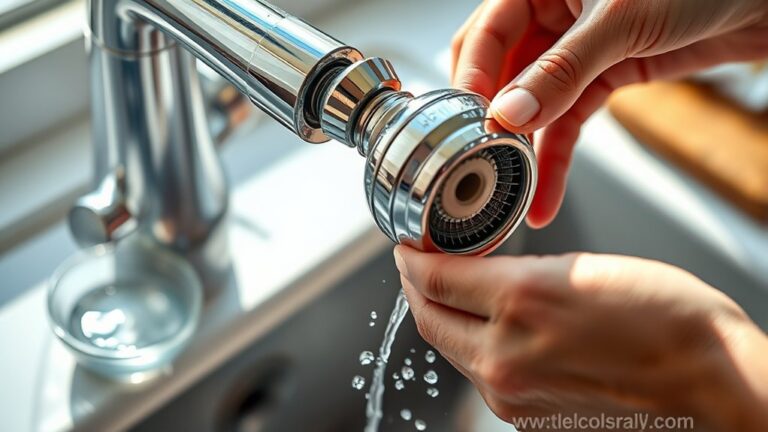
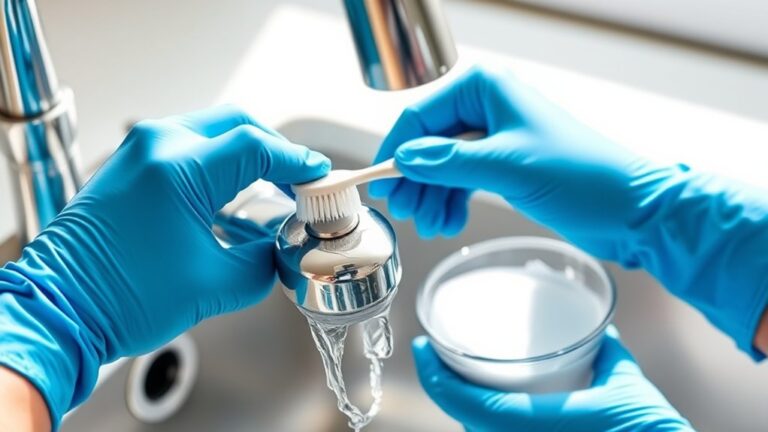
Clean mineral deposits from all components before reassembling to guarantee smooth operation. Regular faucet maintenance, including periodic tightening of fittings and inspection of seals, can prevent future leaks.
Common Causes of Faucet Drips
Several factors can cause your faucet to drip, each related to different internal components wearing out or failing. Understanding these causes helps you apply proper faucet maintenance tips to extend its lifespan.
Common faucet types, including compression, cartridge, ball, and ceramic disc, each have unique failure points.
| Cause | Common Faucet Type | Description |
|---|---|---|
| Worn Seals | Cartridge, Ball | Seal deterioration allows water seepage |
| Corroded Valve Seat | Compression, Ball | Metal corrosion causes imperfect shutoff |
| Loose Parts | All | Vibration or wear loosens internal parts |
Identifying the specific cause lets you target repairs effectively, avoiding unnecessary replacements and reducing water waste.
How Worn-Out Washers Cause Faucet Dripping
A worn-out washer often causes faucets to drip by failing to create a tight seal within the valve assembly. When the washer deteriorates due to friction or mineral buildup, it no longer presses firmly against the valve seat, allowing water to leak.
To fix this, follow a washer replacement guide that details removing the faucet handle, accessing the valve stem, and replacing the damaged washer with an exact match. Proper washer maintenance tips include regularly inspecting washers for wear, cleaning mineral deposits, and ensuring correct installation torque to prevent premature damage.
Addressing washer issues promptly stops drips, conserves water, and extends faucet lifespan. By systematically replacing worn washers, you maintain faucet efficiency and avoid more costly repairs later.
How Damaged Valve Seats Cause Faucet Drips

While worn-out washers often cause faucet drips by failing to seal properly, the valve seat can also be a common culprit. The valve seat is the critical surface where the washer presses to stop water flow.
Over time, mineral deposits, corrosion, or physical damage can create grooves or pitting on the seat, preventing a tight seal. When this happens, you’ll notice persistent dripping despite replacing washers.
Effective valve maintenance involves inspecting the valve seat for damage during repairs. If you detect wear or corrosion, perform a seat replacement using a seat grinder or replace the entire valve seat component.
Proper seat replacement restores the seal’s integrity, eliminating drips and prolonging faucet lifespan. Regular valve maintenance can prevent this issue from recurring.
How Corroded Cartridges and Seals Cause Drips
You’ll find that cartridge wear and seal deterioration directly cause faucet drips by compromising the water-tight barrier. Mineral buildup accelerates corrosion, leading to leaks and reduced functionality.
Addressing these issues promptly can restore your faucet’s proper operation and stop persistent dripping.
Cartridge Wear And Tear
Because cartridge components endure constant water flow and pressure changes, they gradually corrode and degrade, leading to leaks. You’ll notice that worn cartridges lose their ability to seal properly, causing persistent drips.
Regular cartridge maintenance can extend lifespan, but eventually, replacement solutions become necessary to restore efficient water control.
| Issue | Cause |
|---|---|
| Dripping faucet | Cartridge corrosion |
| Reduced water flow | Mineral buildup inside cartridge |
| Stiff handle motion | Cartridge wear or damage |
| Continuous leaks | Seal failure within cartridge |
| Difficulty turning | Cartridge degradation |
To fix these problems, inspect cartridges for wear and replace them with compatible models promptly to prevent water waste and further damage.
Seal Deterioration Effects
As seals age and corrode alongside cartridge components, they lose their ability to maintain a watertight barrier, which directly causes faucet drips. When seals deteriorate, small gaps form, allowing water to seep through even when the faucet is off.
Corroded cartridges accelerate this process by damaging the seal surface, compounding leakage issues. To stop drips, you should prioritize seal replacement as part of your repair routine. Carefully inspect seals for cracks, stiffness, or deformation during cartridge servicing.
For effective maintenance, regularly lubricate seals with plumber-approved grease and avoid harsh chemicals that accelerate corrosion. Following these maintenance tips extends seal life, preserves cartridge integrity, and prevents persistent dripping.
Address seal deterioration promptly to maintain faucet efficiency and avoid costly water waste.
Mineral Buildup Impact
Seal deterioration often goes hand in hand with mineral buildup, which further compromises the integrity of cartridges and seals. Mineral deposits accumulate over time, causing corrosion and preventing proper sealing. This leads to persistent drips.
If you don’t address this, it worsens, affecting faucet performance and lifespan. To mitigate these issues, focus on thorough faucet maintenance, including:
- Regularly cleaning cartridges and seals to remove mineral deposits
- Using descaling agents suitable for your faucet materials
- Inspecting for corrosion and replacing damaged components promptly
These steps help restore sealing surfaces and maintain smooth operation. By tackling mineral buildup early, you prevent leaks and guarantee your faucet functions efficiently, saving you from costly repairs or replacements in the long run.
How Water Pressure Can Cause Faucet Dripping
You might not realize that high water pressure can stress your faucet’s internal components, causing drips over time. Installing or checking a pressure regulator helps maintain consistent pressure and prevents damage.
Fluctuating water pressure, especially in older plumbing, can also cause seals to wear out faster, leading to leaks.
High Pressure Effects
One common cause of faucet dripping is excessive water pressure within your plumbing system. When pressure exceeds ideal levels, it stresses faucet components, leading to leaks despite regular faucet maintenance. High pressure forces water past worn seals and washers, causing persistent drips.
To manage these effects, consider how pressure impacts your fixtures:
- Accelerated wear on valve seats and washers, reducing lifespan
- Increased strain on faucet cartridges, compromising their sealing ability
- Potential damage to pipe joints, escalating leak risks
Understanding these impacts helps you act promptly. While pressure regulation devices play an essential role, regular faucet maintenance focusing on inspecting seals and cartridges is critical in mitigating drips caused by high pressure. Addressing this promptly preserves your plumbing’s integrity and prevents water waste.
Pressure Regulator Role
Excessive water pressure can accelerate faucet wear, but controlling that pressure is where a pressure regulator comes into play. This device maintains stable pressure levels within your plumbing system, preventing excessive force from damaging internal faucet components.
Without proper pressure regulation, seals and washers degrade faster, causing persistent dripping. By installing or inspecting a pressure regulator, you guarantee that water pressure stays within ideal limits, which directly supports effective faucet maintenance.
Regularly checking the regulator’s function helps you catch pressure anomalies early, reducing the risk of leaks. In sum, integrating pressure regulation into your maintenance routine safeguards your faucet’s longevity, minimizes drip-related water waste, and avoids costly repairs caused by unchecked high pressure.
Don’t overlook this critical component when addressing faucet dripping issues.
Fluctuating Water Pressure
When water pressure fluctuates frequently, it can cause the internal components of your faucet to shift and wear unevenly, leading to dripping. Pressure fluctuations create stress on washers, seals, and cartridges, accelerating their deterioration.
To address this, you need precise pressure measurement to identify irregularities in your water supply. Installing a pressure gauge helps you monitor these changes effectively.
Consider these critical factors:
- Sudden spikes stress faucet seals, causing small leaks.
- Consistent pressure above recommended thresholds wears down valve seats.
- Frequent pressure drops lead to inadequate sealing, triggering drips.
Loose or Broken Parts That Cause Faucet Drips
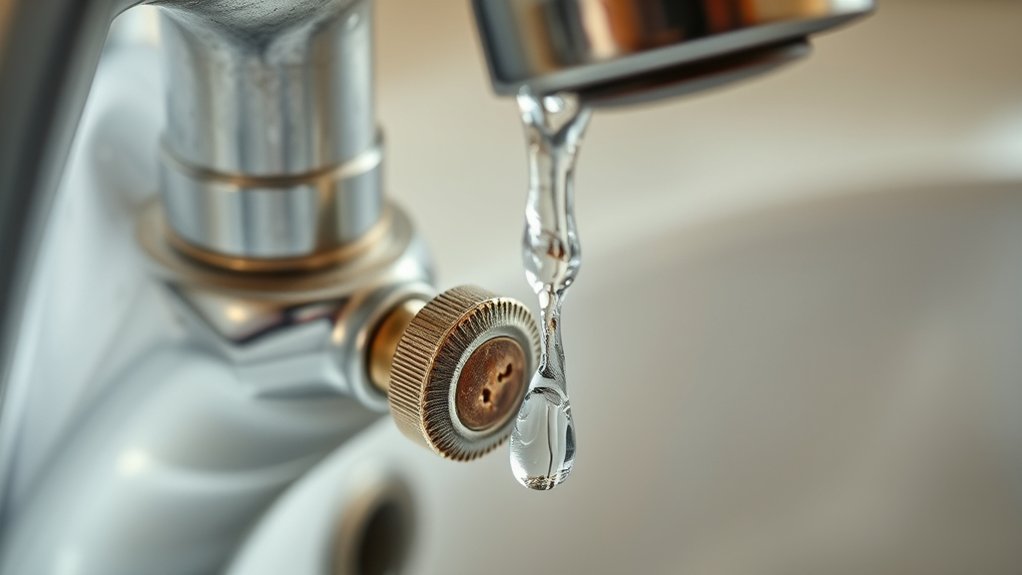
Although faucet drips can stem from various causes, loose or broken internal parts often play a significant role. You should first inspect the faucet’s valve seat, O-rings, and washers, as these components frequently wear out or loosen over time.
When you detect damage or displacement, applying targeted repair techniques like tightening fittings or reseating components can stop leaks. In cases where parts show visible cracks or corrosion, part replacements become necessary.
Use manufacturer-specific components to guarantee compatibility and durability. After replacing or repairing parts, test the faucet to confirm the drip has ceased.
Frequently Asked Questions
Can a Dripping Faucet Increase My Water Bill Significantly?
Yes, a dripping faucet can increase your water bill considerably. You’re wasting water continuously, which raises cost implications.
Fixing leaks promptly supports water conservation and reduces unnecessary expenses, offering a precise and efficient solution to minimize losses.
Is It Safe to Fix a Dripping Faucet Myself?
Like a clockmaker adjusting gears, you can safely tackle DIY plumbing for faucet maintenance if you have proper tools and instructions.
Just guarantee the water supply is off, and follow precise steps to avoid damage or leaks.
How Long Does It Typically Take to Repair a Dripping Faucet?
You’ll typically complete repair timeframes within 30 to 60 minutes, depending on faucet components like washers or cartridges. Prepare to disassemble, inspect, replace faulty parts, and reassemble efficiently for a precise, lasting fix.
Can Hard Water Cause My Faucet to Drip?
Yes, hard water causes mineral buildup, clogs valves, and wears seals, making your faucet drip. You’ll need to clean affected parts, replace worn components, and consider a water softener to prevent recurring leaks and damage.
When Should I Replace the Entire Faucet Instead of Repairing It?
You should replace the entire faucet when repair costs exceed half the faucet lifespan value or multiple repairs fail. Prioritize replacement to avoid frequent issues, ensuring cost-effectiveness and long-term reliability in your plumbing system.