How Do You Spell Faucet
You spell faucet as F-A-U-C-E-T, breaking it into two syllables: “faw” and “cet.” The “au” produces an “aw” sound, so avoid spelling it with double letters like “faucett” or “faucitt.”
It traces back to Old French “fausset” and Latin “faux,” meaning a narrow passage. When spelling, focus on the “c” before the “e” and end with “-et.”
If you want to understand common errors and related terms like spigot, keep exploring further.
How to Spell “Faucet” Correctly
Spelling the word “faucet” correctly hinges on understanding its phonetic components and common misinterpretations. You’ll notice it breaks down into two syllables: “faw” and “sit.” Many confuse it with “faucet” sounding like “fosset” or “fossit,” so a precise faucet pronunciation guide helps clarify that the “au” produces an “aw” sound, not “aw” or “awss.”
When you apply faucet usage examples, such as “Turn off the faucet to save water,” you reinforce the correct spelling by associating it with its function. Focus on the “c” before the “e” to avoid misspellings like “faucit.” By analyzing both phonetics and contextual usage, you guarantee you spell “faucet” accurately every time.
Where Does the Word “Faucet” Come From?
The word “faucet” traces its origins back to Middle English, derived from the Old French term “fausset,” which referred to a small valve or spigot. Through etymology exploration, you’ll find that “fausset” itself likely comes from the Latin “faux,” meaning throat or narrow passage, emphasizing its function in controlling water flow.
Historically, the term evolved alongside plumbing technology, appearing in texts describing household water systems as early as the 14th century. When you examine historical usage, you’ll see “faucet” originally described a device that regulated liquid release in barrels or casks before expanding to modern taps.
Understanding this lineage not only clarifies the word’s meaning but also highlights its technical and linguistic evolution, grounding your grasp of “faucet” in both language and practical context.
Common Faucet Misspellings and How to Fix Them
Many people confuse “faucet” with similar-sounding or visually alike words, leading to common misspellings such as “faucet,” “faucett,” or “faucitt.” To fix these errors, it helps to focus on the word’s structure and usage.
When dealing with different common faucet types, you’ll find the spelling consistent regardless of design. Accurate spelling matters, especially when searching for faucet maintenance tips online.
To avoid mistakes:
- Remember “faucet” ends with “-et,” not “-ett” or “-itt.”
- Associate the word with plumbing or water fixtures to reinforce meaning.
- Use spell-check tools but verify with trusted sources to avoid autocorrect errors.
- Practice writing the word in context, like “I replaced the kitchen faucet,” to solidify its correct form.
Following these steps sharpens your spelling precision.
Tips to Remember How to Spell “Faucet
Although it might seem straightforward, remembering how to spell “faucet” can be tricky without clear strategies. To guarantee accuracy, you should apply targeted spelling strategies. Break the word into syllables: “fau” and “cet.” This segmentation helps you focus on each part separately.
Additionally, use mnemonic devices to reinforce retention. For example, think “FAU” as “FAUlsy water flows” and “CET” as “Connects every tap.” This creates a memorable association linking the word’s function to its spelling.
Repetition also strengthens memory, so practice writing “faucet” multiple times. By combining phonetic breakdown with mnemonic devices and repetition, you’ll build a reliable framework to spell “faucet” correctly every time. These precise methods prevent common errors and boost your spelling confidence.
Faucet, Spigot, and Tap: What’s the Difference?
Understanding how to spell “faucet” accurately sets a good foundation for exploring related terms like spigot and tap. These words often confuse people, but they serve distinct purposes based on region and function.
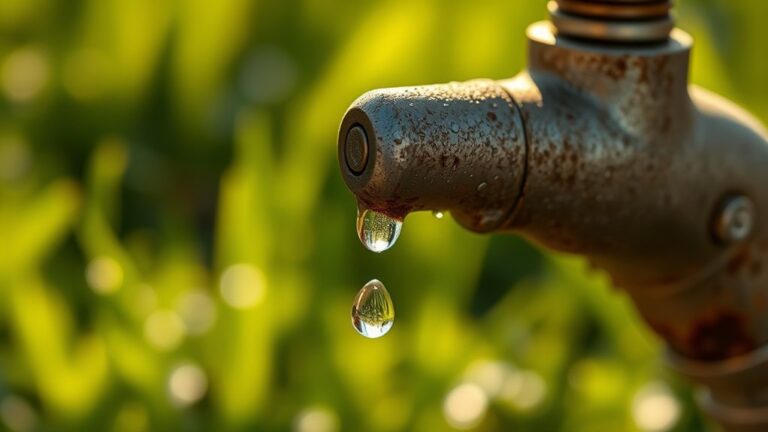
Faucet types generally refer to indoor plumbing fixtures controlling water flow in kitchens or bathrooms. Spigot uses tend to involve outdoor water outlets, such as garden hoses. Taps are a broader term, more commonly used in British English for both faucets and spigots.
Faucets are indoor fixtures, spigots outdoor outlets, and taps a British term covering both.
Here’s how you can differentiate them clearly:
- Faucet types: Indoor fixtures, various designs for sinks and bathtubs.
- Spigot uses: Outdoor water release points, often attached to pipes.
- Tap: British English term for both faucets and spigots.
- Function: Faucets and taps regulate water indoors; spigots primarily outdoors.
This distinction helps you use these terms correctly and understand their contexts.
Frequently Asked Questions
What Materials Are Faucets Typically Made From?
You’ll find faucet materials like brass, stainless steel, and zinc alloys commonly used. These choices optimize faucet durability by resisting corrosion and wear, ensuring long-lasting performance in various water conditions and frequent daily use.
How Do I Fix a Leaking Faucet?
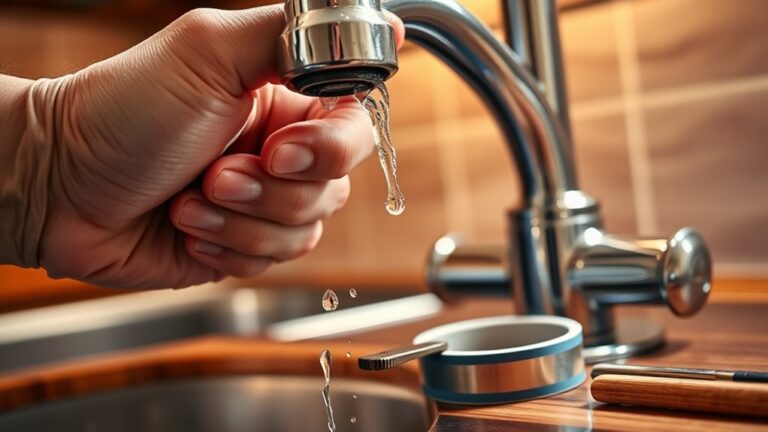
Before you summon a knight, stop the dripping sounds by turning off the water supply. Then, dismantle the faucet, inspect, and perform a washer replacement precisely to halt leaks.
Reassemble carefully and test for any residual drips.
What Are the Different Types of Faucet Finishes?
You’ll find faucet finishes like chrome, brushed nickel, oil-rubbed bronze, and matte black. When comparing faucet brands, consider durability and maintenance tips to keep finishes looking new and resisting corrosion during regular faucet maintenance.
How Much Does a New Faucet Usually Cost?
You’ll usually spend $50 to $300 on new faucet brands, depending on style and quality. For installation, follow tips like turning off water, using plumber’s tape, and guaranteeing tight connections to avoid leaks and guarantee durability.
Can I Install a Faucet Myself or Should I Hire a Plumber?
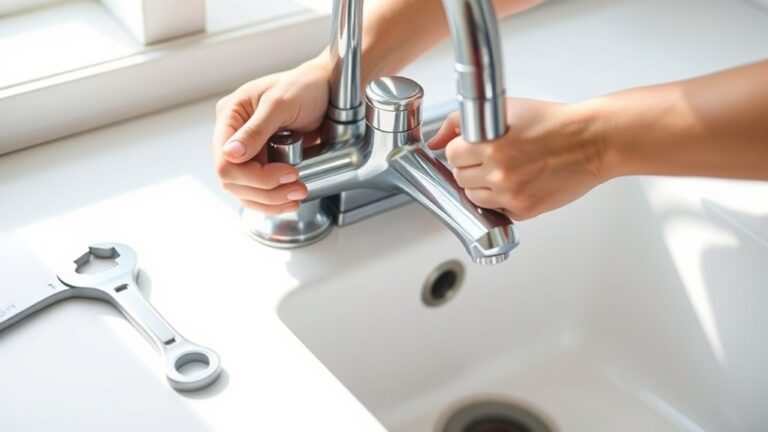
You can tackle DIY installation if you follow plumbing tips carefully. For example, Sarah installed her faucet by turning off water, using a wrench properly, and sealing connections. She saved money and avoided plumber delays.