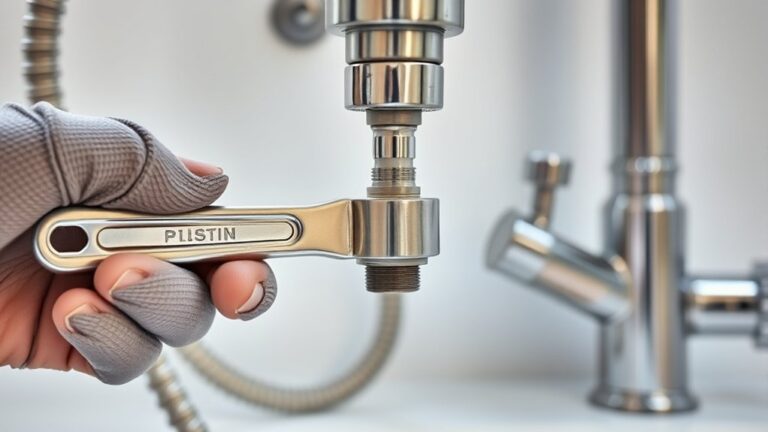
Why Spray Wd 40 up Faucets
You spray WD-40 up faucets to quickly stop squeaks, loosen stiff or corroded parts, and reduce metal-on-metal friction that causes wear.
WD-40 is effective at breaking down mineral buildup and displacing moisture, which helps prevent rust and ensures smoother handle movement.
While it’s not a long-term lubricant, regular use—especially in hard water areas—helps maintain faucet function and avoid costly repairs.
Understanding proper application and maintenance will keep your faucet performing efficiently.
Does WD-40 Fix Squeaky Faucets?
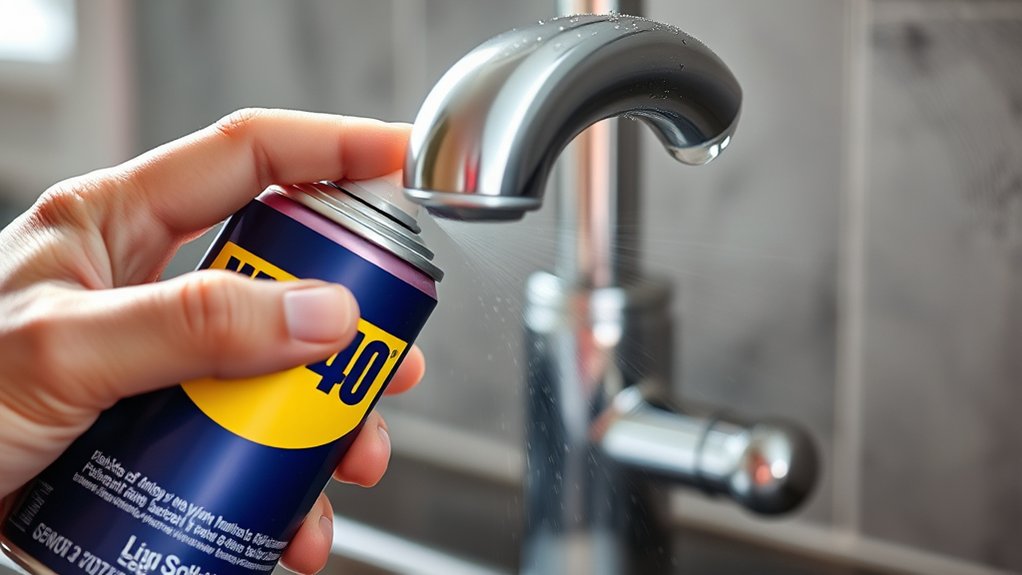
How effective is WD-40 at fixing squeaky faucets? WD-40 offers a quick, temporary solution by penetrating and loosening corroded parts causing the noise. When you apply it during faucet maintenance, it can reduce squeaks caused by metal-on-metal friction.
However, WD-40 isn’t a long-term lubricant; it evaporates and loses effectiveness over time. For sustained performance, you should consider specialized lubrication alternatives like silicone grease or plumber’s grease, which provide durable lubrication and protect internal components.
WD-40 is best used as an initial step to identify the source of squeaks before switching to these alternatives. To conclude, WD-40 can fix squeaky faucets quickly but isn’t a replacement for proper, ongoing faucet maintenance involving appropriate lubricants.
Common Faucet Problems WD-40 Solves
Several common faucet issues respond well to WD-40, making it a handy tool for quick repairs. When performing faucet maintenance, WD-40 acts as an effective lubricant alternative, loosening stuck parts and preventing corrosion.
Its water-displacing properties help protect metal surfaces from rust, extending faucet lifespan.
| Problem | WD-40 Benefit | Maintenance Tip |
|---|---|---|
| Stiff handle | Loosens moving parts | Apply WD-40 around joints |
| Mineral buildup | Breaks down deposits | Spray and wipe clean |
| Corrosion on metal | Displaces moisture | Use regularly to prevent rust |
Using WD-40 regularly helps you avoid costly repairs by addressing these issues early in your faucet maintenance routine.
Why WD-40 Is Great for Squeaky Faucets
Beyond addressing corrosion and mineral buildup, WD-40 excels at eliminating squeaks in faucet mechanisms. When you perform faucet maintenance, you need a lubricant that penetrates tight spaces and displaces moisture effectively.
WD-40’s low-viscosity formula seeps into the faucet’s moving parts, reducing friction and quieting noise instantly. Compared to traditional lubrication alternatives like grease or silicone sprays, WD-40 offers a quick-drying, clean solution without leaving excessive residue that attracts dirt.
WD-40’s low-viscosity formula quickly reduces friction and noise without leaving residue that attracts dirt.
This makes it ideal for routine upkeep and immediate fixes. Using WD-40 guarantees your faucet operates smoothly and prolongs the lifespan of essential components by minimizing wear caused by squeaking and stiffness.
For practical, efficient faucet maintenance, WD-40 stands out as a reliable, versatile option to keep your faucets silent and functional.
How to Safely Apply WD-40 to Your Faucet
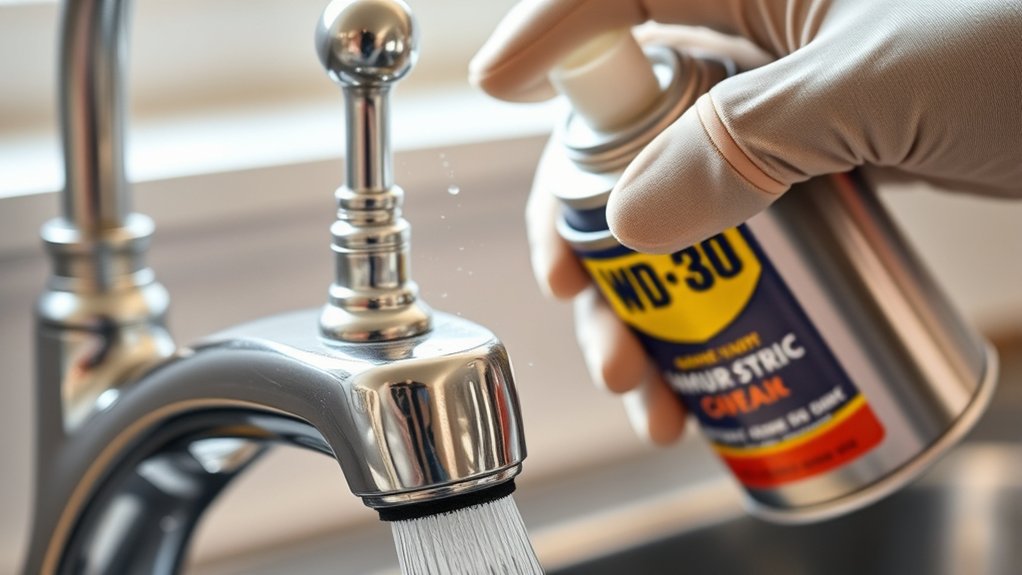
Applying WD-40 to your faucet requires just a few careful steps to guarantee safety and effectiveness. Start by turning off the water supply to prevent leaks during faucet maintenance.
Next, thoroughly clean the faucet surface to remove dirt and grime, promoting better lubricant adhesion. Shake the WD-40 can well, then apply a small amount directly onto the faucet’s moving parts, focusing on areas prone to squeaking or stiffness.
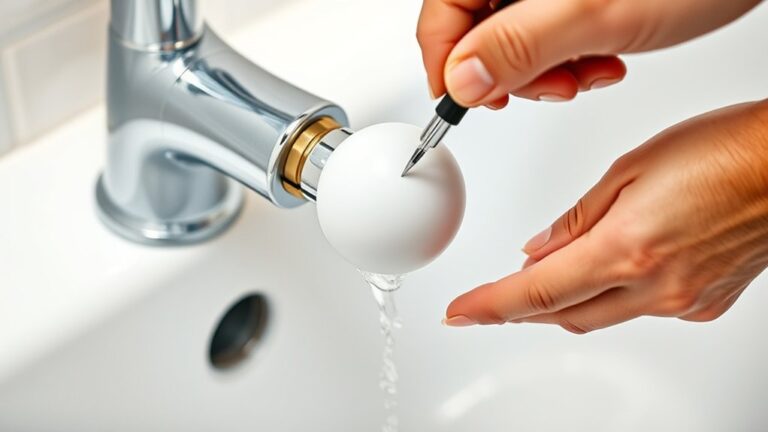
Use precision lubrication techniques, such as a straw applicator, to avoid over-spraying and damaging surrounding materials. After application, operate the faucet handles several times to distribute the lubricant evenly.
Finally, wipe away any excess WD-40 to prevent residue buildup. Following these steps secures safe, efficient faucet maintenance and prolongs your fixture’s lifespan.
When and How Often to Use WD-40
You should apply WD-40 when you notice stiffness, squeaking, or reduced faucet movement. Typically, spraying every few months prevents buildup and keeps parts lubricated.
The best times to use it are during routine maintenance or when you detect early signs of wear.
Frequency of Application
Regularly applying WD-40 to your faucets helps prevent corrosion and keeps moving parts operating smoothly. Establish an application frequency based on your local water quality and faucet usage. Incorporate WD-40 into your maintenance schedule to avoid stiffness and buildup.
| Environment | Application Frequency | Notes |
|---|---|---|
| Hard Water Areas | Monthly | Prevents mineral deposits |
| Normal Conditions | Every 3 months | Maintains smooth action |
| High Usage | Monthly | Reduces wear and tear |
| Low Usage | Every 6 months | Avoids drying out seals |
Adjust your routine based on faucet performance and environmental exposure. Consistency guarantees prolonged faucet life and peak function.
Signs Faucet Needs WD-40
Knowing when your faucet needs WD-40 can save you from unnecessary repairs and extend its lifespan. Pay close attention to signs like stiffness when turning the handle or squeaking noises, which indicate that the internal components require lubrication.
Leaky faucets are another clear signal; WD-40 can help loosen corroded parts causing drips. As part of routine maintenance tips, inspect your faucets monthly for these symptoms to address issues early.
Avoid waiting until the faucet worsens, as timely application prevents wear and tear. Use WD-40 specifically on moving parts such as the handle stem and valve seats.
Applying it when you notice resistance or minor leaks guarantees smooth operation and reduces the chance of costly repairs later.
Best Times to Spray
Applying WD-40 to your faucet twice a year typically guarantees peak performance and durability. Ideal application timing aligns with seasonal changes, spring and fall, when fluctuations in temperature and humidity affect metal components.
Use precise spray techniques: apply a short burst directly onto moving parts, then operate the faucet to distribute lubricant evenly. Avoid oversaturating, which can attract dirt.
Additionally, spray immediately if you notice stiffness, squeaking, or leaks. Regularly scheduled spraying prevents corrosion and buildup, extending faucet life.
Tips to Maintain Faucet Performance After WD-40
Once you’ve sprayed WD-40 on your faucet, you’ll want to guarantee it stays in peak condition by following a few key maintenance steps. Start with a faucet longevity tips checklist: regularly wipe the faucet to remove dirt and prevent buildup that can degrade the lubricant.
Inspect seals and washers monthly for wear, replacing them promptly to avoid leaks. Avoid harsh cleaners that strip the WD-40’s protective layer. After use, run water briefly to flush out any debris loosened by the spray.
Keep aerators clean to maintain flow efficiency. Incorporate these steps into your maintenance checklist to extend your faucet’s operational life and assure smooth function. Routine care after WD-40 application maximizes its benefits and prevents corrosion or stiffness from returning.
Frequently Asked Questions
Can WD-40 Damage Faucet Finishes Over Time?
Yes, WD-40 can damage faucet finishes over time if used repeatedly. For proper faucet maintenance and surface protection, you should limit WD-40 use and opt for products specifically designed to preserve and protect faucet surfaces.
Is WD-40 Safe for All Faucet Materials?
You shouldn’t use WD-40 on all faucet materials; it’s best for metal parts during faucet maintenance.
For lubrication tips, choose silicone-based lubricants on plastic or rubber components to avoid damage and guarantee smooth operation.
Can WD-40 Be Used on Outdoor Faucets?
Imagine your garden hose valve stuck from rust; you can use WD-40 for faucet maintenance on outdoor plumbing to loosen parts and prevent corrosion.
It’s practical for maintaining metal outdoor faucets, ensuring smooth operation and longevity.
How Long Does WD-40 Last on a Faucet?
WD-40 lasts on a faucet for several days to a week, depending on usage and exposure. For effective faucet maintenance, you should reapply regularly and combine lubrication techniques with cleaning to guarantee smooth operation and prevent corrosion.
Are There Eco-Friendly Alternatives to WD-40 for Faucets?
Think of faucets as delicate gears in nature’s clock. You can choose biodegradable lubricants, which reduce environmental impact while maintaining smooth function. These eco-friendly alternatives clean, protect, and lubricate without toxic residues or harsh chemicals.