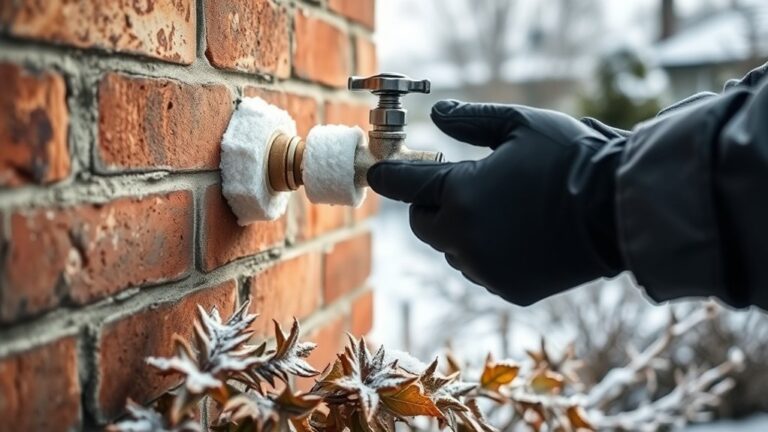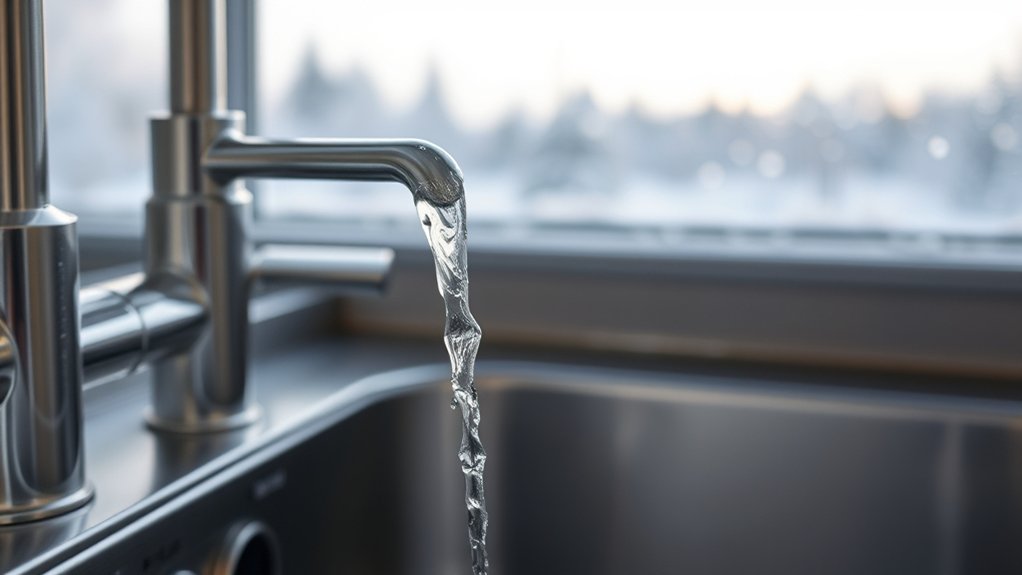
When to Leave Faucets Dripping
You should leave your faucets dripping when temperatures drop below 20°F (-6°C), especially if your pipes are poorly insulated or exposed to outdoor cold.
Leaving faucets dripping keeps water moving, preventing freezing, pressure buildup, and potential bursts.
Use a slow, steady drip from the faucet most vulnerable to freezing to balance protection and water conservation.
Proper technique and insulation reduce water waste while securing your plumbing.
Explore these strategies to safeguard your system efficiently during extreme cold.
Why Letting Faucets Drip Prevents Frozen Pipes
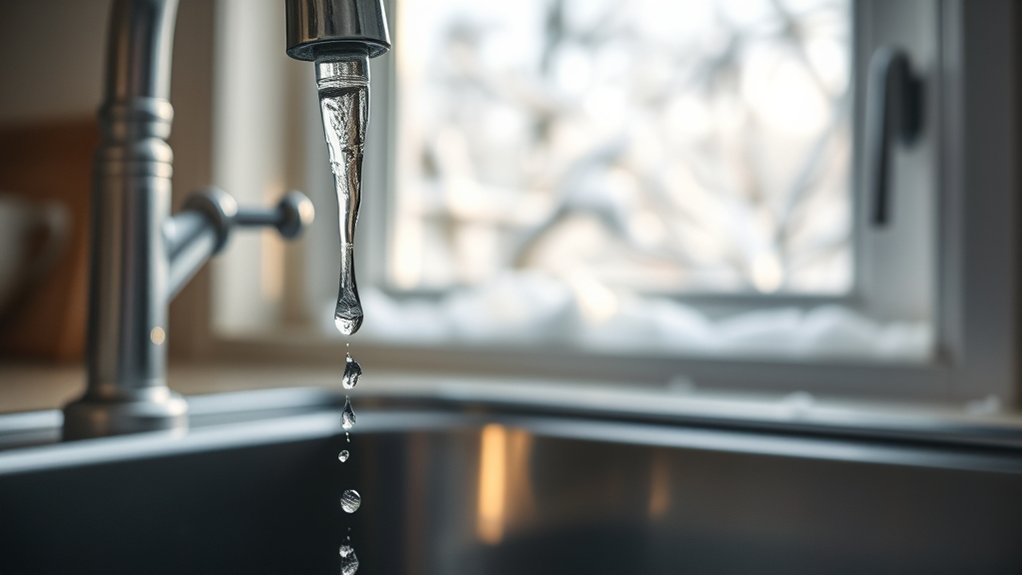
Although it may seem counterintuitive, letting your faucets drip helps prevent frozen pipes by keeping water moving through the plumbing system. When water remains stagnant in pipes during cold conditions, it’s more likely to freeze and expand, causing potential pipe bursts.
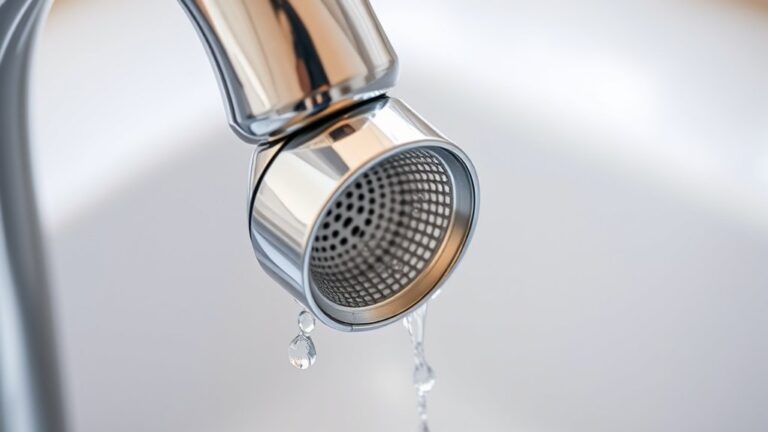
By allowing a slow drip, you maintain constant flow, reducing pressure buildup and ice formation. This technique is a critical component of effective winter preparation, especially in vulnerable areas like exterior walls or unheated basements.
You don’t need a heavy flow; just a steady drip suffices to keep water moving. Implementing this measure alongside proper insulation and sealing drafts strengthens your defense against frozen pipes, minimizing costly repairs and water damage during harsh winter conditions.
When Is It Best to Leave Faucets Dripping?
When should you leave faucets dripping to effectively prevent frozen pipes? You should do this during extreme cold snaps, especially when weather conditions drop below 20°F (-6°C). Faucets connected to poorly insulated pipes or those exposed to outdoor elements require dripping to keep water moving and reduce freezing risk.
If pipe insulation is adequate and temperatures hover just above freezing, dripping may be unnecessary.
| Weather Conditions | Faucet Drip Recommendation |
|---|---|
| Below 20°F (-6°C) | Leave faucets dripping |
| Just above freezing | Monitor, drip if uninsulated |
| Mild cold with insulation | No drip needed |
Use this guidance to balance energy use with pipe protection effectively.
Other Plumbing Problems Dripping Faucets Can Help
Since dripping faucets maintain a steady flow of water, they can also alleviate pressure buildup within your plumbing system, reducing the risk of pipe bursts beyond just freezing prevention. When water pressure rises excessively, it stresses joints and weak points, increasing the likelihood of plumbing leaks.
By allowing a controlled drip, you balance system pressure, protecting these vulnerable areas. Additionally, dripping faucets can help identify existing plumbing leaks; if the drip rate changes unexpectedly, it may indicate a hidden leak elsewhere. This early warning can prompt timely repairs, preventing more extensive damage.
While dripping faucets aren’t a permanent fix, using them strategically helps manage pressure and monitor system integrity, supporting overall plumbing health during critical conditions.
How to Drip Faucets Efficiently Without Wasting Water
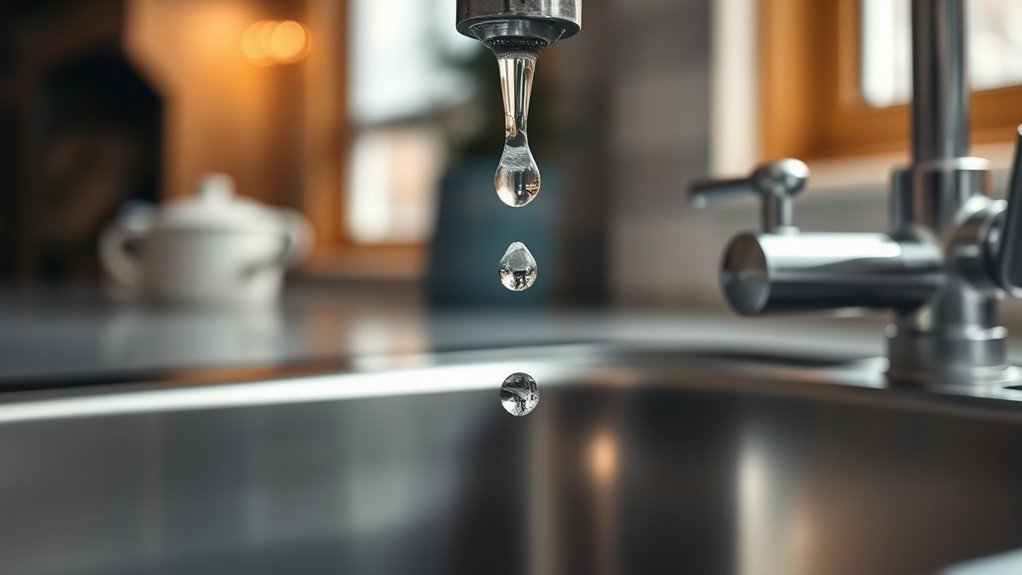
Managing faucet drips effectively requires balancing the need to prevent pressure buildup and freezing with minimizing water waste. To drip faucets efficiently, start by selecting the cold water tap most susceptible to freezing.
Use drip techniques such as a slow, steady drip rather than a steady stream. This reduces water loss while maintaining flow. Position the faucet at a slight angle to encourage continuous movement.
Monitor your water pressure and adjust the drip rate accordingly to avoid excess flow. Additionally, focus on pipes exposed to cold air and insulate them to reduce the need for dripping.
Implementing these drip techniques supports water conservation without compromising pipe safety. This allows you to protect your plumbing system during freezing conditions while conserving valuable water resources.
Frequently Asked Questions
Can Leaving Faucets Dripping Damage My Water Bill?
Yes, leaving faucets dripping can increase your water bill. You should balance water conservation with plumbing maintenance needs, ensuring drips only prevent pipe freezing or damage without wasting excessive water that raises costs unnecessarily.
Is Dripping Faucets Effective in All Climates?
Dripping faucets aren’t effective in all climates; you need to contemplate climate considerations like freezing temperatures. In cold regions, dripping prevents pipes from freezing, but in warm climates, it’s often unnecessary and wastes water.
Should Both Hot and Cold Water Be Left Dripping?
You should leave both hot and cold water dripping only if your faucet types allow separate temperature control. Adjust dripping rates based on water temperature to prevent freezing and maintain consistent flow in vulnerable plumbing sections.
How Long Should Faucets Be Left Dripping During a Freeze?
Like a silent guardian, keep your faucets dripping throughout the freeze duration, usually until temperatures stay above freezing for several hours. This dripping duration guarantees continuous flow, essential for effective freeze prevention and protecting your pipes from bursting.
Can Dripping Faucets Prevent Water Heater Damage?
Dripping faucets don’t directly prevent water heater damage, but they’re a smart plumbing precaution during freezes. You’ll enhance water heater maintenance by reducing pipe pressure and preventing freezing, which protects your entire plumbing system effectively.